The Strategic Imperative of Revenue Operations: Unifying Go-to-Market for Predictable Growth


Revenue operations, often abbreviated as Rev Ops, represents the essential, behind-the-scenes infrastructure that underpins the entire sales organization and, increasingly, the broader go-to-market (GTM) functions of a business. Far from being a mere administrative function, Rev Ops is a strategic discipline focused on defining and optimizing processes, implementing cutting-edge strategies, and enabling sales teams—and indeed, all revenue-generating departments—to perform their roles with maximum efficiency and impact. The systematic approach fostered by Rev Ops allows organizations to meticulously track progress, replicate successful methodologies, and gain profound insights into which activities genuinely resonate with customers and which represent wasted effort for sales representatives. Without a robust revenue operations framework, marketing, sales, and customer success teams often operate in isolation, lacking a cohesive strategy, standardized processes, or the unified vision necessary for sustainable growth.
The Foundational Value of Revenue Operations
At its core, Rev Ops imbues an organization’s actions with intentionality, ensuring that every initiative, decision, and customer interaction is meticulously backed by data, strategic foresight, and a clearly defined process. This holistic perspective is crucial because Rev Ops ideally encompasses all revenue-facing processes, spanning the entire customer journey from the initial lead generation at the top of the funnel to deal closure at the bottom, and frequently extending to post-sale customer renewals and expansion within customer success. By overseeing this continuum, Rev Ops ensures a seamless, consistent experience for the buyer and maximizes the lifetime value of each customer.
A prevalent challenge that many organizations confront is the persistent disconnect between marketing and sales departments. Historically, these two critical functions often operated in silos, each with its own objectives, metrics, and sometimes, even conflicting priorities. This fragmentation significantly diminishes their collective power and can lead to inefficient lead handoffs, inconsistent messaging, and a disjointed customer experience. Revenue operations acts as the strategic linchITECT, effectively marrying marketing and sales, and increasingly customer success, into a unified GTM engine. This integration fosters a cohesive and efficient experience for buyers, who are increasingly demanding seamless interactions across all touchpoints.
The modern sales landscape is irrevocably shaped by the empowered buyer. Today’s consumers and B2B purchasers are more informed and have greater access to information than ever before, placing them firmly in control of the purchasing process. They prioritize consistent, value-adding experiences above almost all else. Customer experience (CX) has rapidly ascended to become a top strategic imperative in the sales world. A pivotal shift was observed as early as 2020, when industry reports, such as those by WalkerInfo, highlighted that consumers notably valued experience over pricing. This trend has only intensified. Further data underscores this: studies from SuperOffice indicate that a substantial 86% of buyers are willing to pay more for an exceptional customer experience. Similarly, the influence of social proof cannot be overstated, with 93% of consumers stating that online reviews significantly impact their purchasing decisions, a sentiment echoed in the B2B sphere where 92% of B2B buyers are more likely to commit to a purchase after reading positive reviews. Consequently, providing an effortless and enjoyable process for customers is not merely a nicety; it is a vital prerequisite for retention, expansion, and sustained growth.
Revenue operations professionals are tasked with cultivating a profound understanding of the entire customer journey. This includes identifying critical touchpoints, pinpointing where customers might disengage or "fall off" the funnel, and discerning which strategies and activities are most effective. This granular understanding empowers Rev Ops to master all facets of an account’s interaction with the company, optimizing the entire customer journey as a centralized owner of the process and strategy.
Navigating the Challenges Faced by Rev Ops Teams
Despite its strategic importance, the implementation and ongoing management of Revenue Operations are not without their complexities. The primary adversary of effective operations is a poorly defined or inconsistently executed process. It is insufficient for Rev Ops to merely define and strategize an effective process; they must also ensure its robust execution and possess the agility to adapt that process continually to guarantee its ongoing efficacy within the organization’s evolving landscape. Coordination, therefore, emerges as an absolute imperative.
The contemporary GTM structure involves several teams that interact directly with sales, including sales enablement, customer success, and marketing. These diverse groups all contribute directly to revenue growth and maintenance. While their overarching mission is to ensure long-term customer success, there is often significant overlap in responsibilities, leading to confusion, inefficiency, and miscommunication.
A crucial function of Rev Ops is to clearly delineate tasks and deliverables for every department involved in the revenue engine. These groups must engage in collaborative planning and coordination to eliminate redundancy and prevent the emergence of "Frankenstein" processes—disjointed workflows created by individual teams focusing solely on their departmental objectives. Rev Ops orchestrates communication and collaboration across teams and departments, streamlining processes and executing strategies to avoid overlap, thereby enabling the entire organization to achieve collective success rather than isolated departmental victories.
The absence of a clear process or methodology inevitably leads to a void in strategy. And what is sales without strategy? It devolves into mere guesswork, random outreach efforts, and an optimistic but ultimately unsustainable "hope for the best" approach. Such ill-defined processes and operational randomness represent the quintessential nightmare for any dedicated operations professional.
Rev Ops: Driving Sales Success as Organizational Success
A high-performing revenue operations team is instrumental in establishing clear processes, defining measurable success metrics, and ensuring accountability across all revenue-generating functions. When empowered to effectively execute their mandate, Rev Ops initiates a powerful domino effect that results in consistent revenue streams, higher customer satisfaction, and predictable business growth.
Rev Ops measures team success through performance-centric goals. A common baseline expectation is for go-to-market teams to consistently achieve at least 60% attainment against their targets. If attainment falls below this threshold, Rev Ops is responsible for diagnosing the root causes. This involves evaluating whether the organization is effectively supporting the right sales channels, accurately modeling its ideal customer profiles (ICPs), and implementing an effective GTM strategy. The ideal operational "machine" that Rev Ops strives to build is predicated on generating significant volume of the right activities. The greater the volume and sample size of these targeted activities, the more predictable the outcomes become, allowing for more accurate forecasting and strategic planning.
Both sales enablement and revenue operations are ultimately measured by their contribution to revenue attainment. Strategically aligning these two functions can significantly help in bridging communication gaps, ensuring that sales teams are not only equipped with the right tools and training but also guided by optimized processes, thereby maximizing their collective success.
Traditionally, operations teams have often relied on basic territory and account planning for initial prioritization. However, for many organizations, advanced prioritization strategies beyond this initial phase have been lacking. Modern Rev Ops approaches leverage sophisticated tools and data analytics, such as those offered by platforms like Playbooks, which utilize granular data and buyer intelligence to inform and optimize prioritization efforts for superior planning and execution.
Essential Tools for Modern Revenue Operations
The consistent execution of the sales motion is paramount for revenue predictability and growth. To achieve this, Rev Ops teams rely on a suite of technological tools that enable them to consistently track progress, implement robust processes, and execute their strategies effectively. The undisputed cornerstone of this technology stack is the Customer Relationship Management (CRM) system. Every successful professional in a Rev Ops role understands and capitalizes on the CRM’s capabilities. High CRM adoption rates and unwavering data integrity are not merely beneficial; they are vital. They establish a common source of truth that every individual and department within the company can confidently rely upon, fostering transparency and alignment.
Comprehensive visibility into the entire revenue funnel is an absolute prerequisite for effective operations strategy. Rev Ops professionals must possess a granular understanding of the customer journey, from the moment a lead enters the system through every subsequent stage of progression within the funnel. This visibility allows them to identify bottlenecks, optimize conversion points, and understand the true impact of various GTM activities.
Precise tracking is equally critical for operations. To continually refine and perfect their sales processes, Rev Ops teams need to know definitively what is working, what is not, and precisely where prospects or customers are disengaging. A common pitfall for many organizations is entrusting sales representatives with the manual logging of activities in the CRM, which often results in incorrect, incomplete, or unreadable information. Decisions made based on such unreliable data are inherently flawed, leading teams to inadvertently undermine their own efforts. Reliable CRM integrations are the antidote to this problem. They ensure that no critical activity goes unlogged or is tracked inaccurately, eliminating bad, siloed, or duplicated data. The CRM transforms into a singular, indisputable source of truth, providing a solid foundation for all operational and strategic decisions.
Achieving Elite Performance with Playbooks
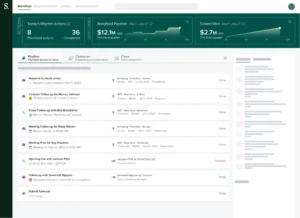
Platforms like Playbooks are specifically engineered with operational effectiveness as a core design principle. They empower leaders with enhanced visibility into the performance and outcomes of their sales representatives, moving beyond superficial metrics to provide deep, actionable insights. These platforms facilitate the easy enhancement of workflows through intelligent automation and built-in compliance mechanisms. Furthermore, they allow for precise progress tracking and enable data-backed decision-making, often leveraging native CRM reporting packages for seamless integration and analysis.
Playbooks’ ability to standardize and structure workflows is critical. It ensures that established processes are consistently followed and that work is executed in a uniform manner across the entire GTM team. This consistency mitigates the risk of process decay and ensures that best practices are systematically applied.
By providing a more comprehensive window into operational dynamics, Playbooks helps Rev Ops teams identify weak points in processes, uncover "black holes" where opportunities are lost, and pinpoint areas where strategic investment should be doubled down. The platform eliminates the waste associated with "random acts of selling" and the inherent risks of operating without clear processes and controls. Instead, representatives are intuitively guided to the next best activity and the most opportune contact through a meticulously designed, guided sales experience, thereby optimizing every interaction and maximizing efficiency.
The RevOps Summit: A Nexus for Industry Expertise
As the discipline of Revenue Operations continues to mature and gain prominence, events dedicated to sharing knowledge and best practices become increasingly vital. XANT, a leading innovator in sales technology, is championing this evolution by hosting an upcoming RevOps Summit. This event is designed as a crucial gathering point for industry experts and seasoned operations professionals, offering a unique opportunity to deepen understanding and elevate expertise in the field of Rev Ops.
The summit is particularly notable for its accessibility: it is entirely virtual and completely free to attend. Scheduled for July 14th, from 9 AM to 12 PM PT, the event promises to offer invaluable insights into the intricate, behind-the-scenes work of operations and how these strategic functions can dramatically impact an organization’s bottom line. Attendees will have the chance to learn from thought leaders and practitioners about the latest trends, challenges, and solutions in revenue operations, further solidifying the understanding that Rev Ops is not just a trend, but a fundamental shift towards a more integrated, data-driven, and predictable approach to revenue generation. Registering for such a summit is an essential step for any professional seeking to become a true Rev Ops expert and contribute to their organization’s sustained success.
Related posts: