Leading Beyond Autopilot: How Nicholas Lawrence and Chick-fil-A Define the Future of Gold-Standard Organizational Culture at SPARK HR 2026

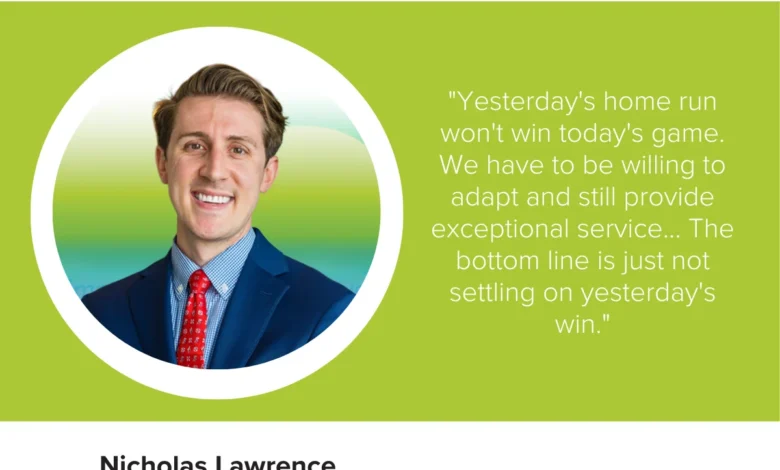
The concept of leadership in the modern corporate environment is undergoing a fundamental shift from transactional management to a more intentional, culture-centric model. As the Human Capital Institute (HCI) prepares for its landmark SPARK HR 2026 conference in St. Pete Beach, Florida, the focus has intensified on the dangers of "leadership autopilot." Nicholas Lawrence, the Executive Director of People and Culture at Chick-fil-A, has emerged as a leading voice in this discourse, arguing that the success of an organization is not a static achievement but a daily discipline. According to Lawrence, when HR leaders allow themselves to become comfortable with "good enough" results, they inadvertently initiate a decline in organizational relevance and employee engagement.
The premise of Lawrence’s upcoming presentation at SPARK HR 2026 centers on the idea that a winning culture is not a trophy to be displayed but a standard that must be earned repeatedly. This philosophy is deeply rooted in the operational DNA of Chick-fil-A, a company frequently cited as a benchmark for service excellence and employee loyalty. By examining the intersection of servant leadership and strategic HR innovation, Lawrence intends to provide a roadmap for leaders who seek to move beyond complacency and toward a "gold-standard" culture.
The Architecture of Culture: Moving Beyond the Old Playbook
In the current economic landscape, HR leaders are facing unprecedented challenges, including shifting workforce demographics, the integration of artificial intelligence, and a heightened demand for purpose-driven work. Lawrence suggests that the traditional "playbook" for HR—which often focused on compliance and basic benefits—is no longer sufficient to sustain high-performing teams. Instead, he advocates for the role of the "culture architect," a leader who proactively designs and maintains the environment in which employees operate.
A culture architect does not merely react to problems; they anticipate the needs of the workforce and innovate the employee experience. This requires a willingness to discard legacy systems that no longer serve the organization’s mission. In Lawrence’s view, the "My Pleasure" secret that has made Chick-fil-A a household name in customer service is equally applicable to internal operations. It represents a commitment to excellence and a spirit of service that begins with the way leaders treat their staff.
Background and Context: The Significance of SPARK HR 2026
The SPARK HR conference, hosted by the Human Capital Institute, has long been a premier gathering for talent management professionals and HR executives. The 2026 iteration in St. Pete Beach is expected to draw thousands of attendees seeking actionable insights into the future of work. The selection of Nicholas Lawrence as a keynote speaker reflects a broader industry trend: the desire to learn from organizations that have successfully scaled a high-touch, high-service culture in a high-growth environment.
HCI’s mission has consistently focused on the "human" element of human resources. By bringing together thought leaders like Lawrence, the conference aims to bridge the gap between theoretical leadership concepts and practical, boots-on-the-ground implementation. The 2026 event arrives at a critical juncture for the industry, as companies grapple with the long-term effects of remote work transitions and the rising importance of mental health and well-being in the workplace.
A Chronology of Cultural Evolution in the Service Sector
To understand the weight of Lawrence’s message, one must look at the evolution of the service industry over the past two decades. In the early 2000s, efficiency and speed were the primary metrics of success. However, as the labor market tightened and consumer expectations rose, the focus shifted toward "experience."
- The Efficiency Era (Pre-2010): Focus on standardized processes and cost reduction. Employee experience was often secondary to operational throughput.
- The Engagement Era (2010–2020): Organizations began to realize that happy employees lead to happy customers. Terms like "employee value proposition" (EVP) became common.
- The Purpose Era (2020–Present): Post-pandemic shifts led to the "Great Resignation" and "Quiet Quitting." Employees began demanding more than just a paycheck; they sought alignment with company values.
- The Architecture Era (2026 and Beyond): As Lawrence posits, leadership must now be "on purpose." Culture is no longer an accidental byproduct of a company’s existence but a meticulously designed strategic asset.
Supporting Data: The Cost of Complacency and the ROI of Culture
The data supporting Lawrence’s call for innovation is compelling. According to recent Gallup reports on the state of the global workplace, only approximately 23% of employees worldwide are "engaged" at work. This lack of engagement is estimated to cost the global economy nearly $8.8 trillion in lost productivity, or about 9% of global GDP.
Furthermore, research from the Society for Human Resource Management (SHRM) indicates that the cost of replacing an employee can range from 50% to 200% of their annual salary, depending on the role. In contrast, organizations with high-trust cultures and strong leadership standards see significantly lower turnover rates and higher profitability. Chick-fil-A, specifically, has consistently maintained one of the highest retention rates in the quick-service restaurant (QSR) industry, a feat often attributed to its investment in people and culture.
For HR leaders, the takeaway is clear: investing in culture is not a "soft" initiative but a hard financial necessity. When leaders lead on "autopilot," they miss the subtle shifts in employee sentiment that lead to disengagement and eventual turnover.
Official Responses and Industry Perspectives
While Lawrence’s framework is heavily influenced by his tenure at Chick-fil-A, other industry experts have echoed his sentiments. Analysts from major consulting firms suggest that the "culture gap"—the difference between the culture a company claims to have and the culture employees actually experience—is one of the biggest risks to corporate longevity.
Reacting to the themes of Lawrence’s upcoming SPARK HR session, several HR tech founders and consultants have noted that "gold-standard" cultures are those that prioritize transparency and continuous feedback. The sentiment across the industry is that the "set it and forget it" mentality regarding corporate culture is a relic of the past. Leaders are now expected to be "in the trenches," constantly asking, "How do we raise the bar today?"
Strategic Analysis: The Implications for Future HR Leadership
The implications of Nicholas Lawrence’s "culture architect" framework extend far beyond the retail and hospitality sectors. In technology, healthcare, and finance, the need for a resilient and innovative culture is equally pressing. The transition from a reactive HR department to a proactive "People and Culture" powerhouse requires a shift in three key areas:
1. From Compliance to Connection
While compliance remains a necessary function of HR, it cannot be the primary focus. Leaders must prioritize building genuine connections with their teams. This involves active listening, empathy, and a commitment to professional development. At SPARK HR 2026, Lawrence is expected to detail how Chick-fil-A utilizes these connections to foster a sense of belonging and ownership among its "Team Members."
2. From Stability to Agility
In a rapidly changing world, stability can sometimes look like stagnation. Lawrence’s warning against complacency highlights the need for organizational agility. A gold-standard culture is one that is comfortable with change and views challenges as opportunities for growth. This requires a leadership team that is willing to experiment with new ideas and learn from failures.
3. From Perks to Purpose
Free lunches and ping-pong tables are no longer enough to attract and retain top talent. Modern employees are looking for a sense of purpose. Lawrence argues that a winning culture is built on a shared mission. When every team member understands how their work contributes to the "gold standard," they are more likely to be engaged and motivated.
Conclusion: Preparing for the Future of Work
As the HR community looks toward the SPARK HR 2026 conference, the message from Nicholas Lawrence serves as both a warning and an inspiration. The "autopilot" mode of leadership is a luxury that modern organizations can no longer afford. To stay at the top, leaders must be willing to engage in the difficult, daily work of culture-building.
The "My Pleasure" secrets that Lawrence will share in St. Pete Beach are more than just customer service tips; they are the foundation of a leadership philosophy that prioritizes people over processes. By adopting the role of a culture architect, HR leaders can ensure that their organizations do not just survive but thrive in the years to come. The goal is to move beyond "good enough" and strive for a standard of excellence that is earned every single day, ensuring that the employee experience is as gold-standard as the brand itself.
Related posts: