The Financial Modeling & Valuation Analyst (FMVA) Certification: Elevating Finance Professionals for the Modern Economy


The Financial Modeling & Valuation Analyst (FMVA) certification from the Corporate Finance Institute (CFI) is emerging as a pivotal credential for finance professionals seeking to master essential skills in financial modeling, valuation, and analysis. Designed by seasoned industry practitioners, the program aims to equip individuals with practical, job-ready expertise demanded by today’s competitive financial landscape, spanning sectors from investment banking and private equity to corporate development and Financial Planning & Analysis (FP&A). With a global reach and a curriculum continuously updated to reflect market trends, including the integration of AI, the FMVA is solidifying its position as a go-to certification for career advancement.
Understanding the FMVA Certification
The FMVA certification is not merely a theoretical course but a comprehensive program built around the practical application of financial skills. It emphasizes building robust, auditable valuation models from scratch, a capability highlighted by graduates as a significant accelerator in their professional development. George Slabbert, an FMVA Graduate, attests, "The FMVA accelerated my ability to produce robust, auditable valuation work and shortened the time from idea to implementation." This sentiment underscores the program’s focus on bridging the gap between academic knowledge and real-world application, a critical factor in today’s fast-paced financial environment.
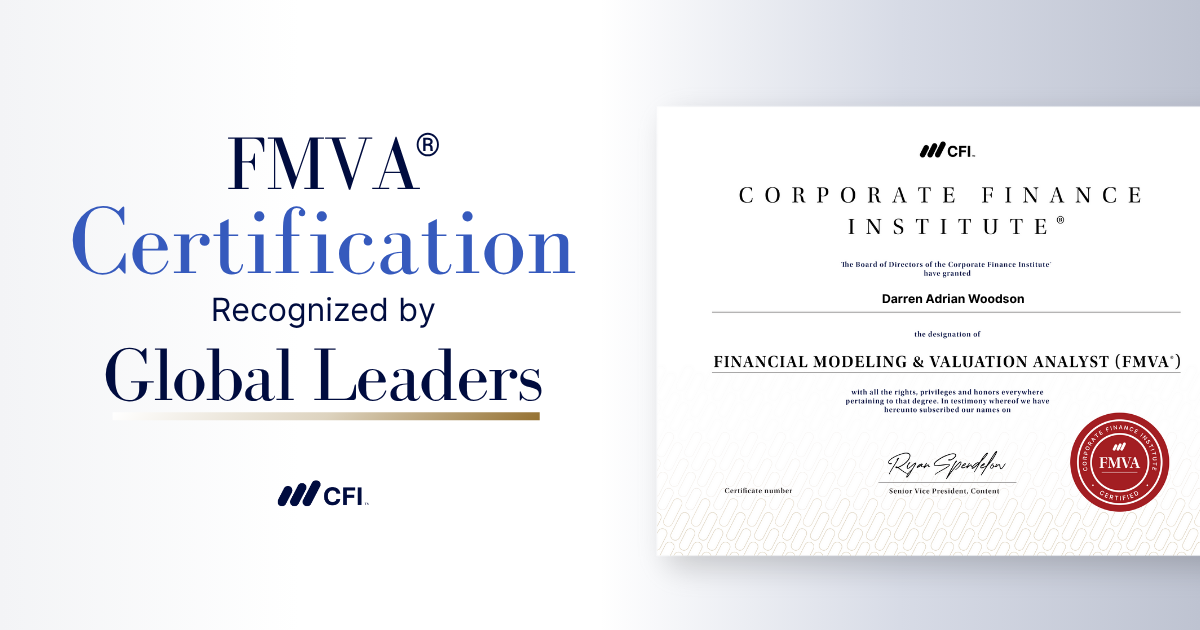
The curriculum is structured to provide a holistic understanding of finance, covering core areas such as:
- Financial Modeling: This foundational element teaches professionals how to construct models from the ground up, a skill paramount for supporting strategic decisions, evaluating mergers and acquisitions, and presenting financial insights to leadership.
- Accounting: A strong grasp of accounting principles is crucial for interpreting financial statements and understanding the drivers behind financial performance. The FMVA ensures a solid foundation in this area, enabling analysts to move beyond simply reading statements to deeply understanding their implications.
- Valuation: This module focuses on determining a company’s worth, a skill highly valued in corporate finance, investment banking, and private equity. The ability to defend valuation conclusions is a key takeaway.
- Financial Planning & Analysis (FP&A): Professionals in this field are positioned at the nexus of finance and business strategy. The FMVA curriculum prepares them to not only report financial numbers but also to explain the underlying factors and recommend future actions.
- Excel Proficiency: Recognizing Excel as the primary tool in finance, the program enhances users’ efficiency and competence, differentiating adept analysts who can handle complex tasks from those who struggle.
- Data Visualization: The program teaches how to translate complex financial data into clear, digestible narratives, ensuring that analyses reach and resonate with decision-makers.
- Qualitative Business Analysis: Understanding the business context behind financial figures is essential for building accurate models and credible recommendations. This module provides the necessary framework for integrating qualitative insights.
Program Structure and Course Offerings
The FMVA program is designed with flexibility and depth in mind, offering a structured learning path that can be tailored to individual needs. It comprises a combination of required core courses, optional introductory courses, and specialized electives, along with practical case study challenges.
Core Curriculum: The program mandates 15 core courses designed to build a robust skill set in financial modeling and valuation analysis. These include essential modules such as Financial Analysis Fundamentals, Introduction to 3-Statement Modeling, DCF Valuation Modeling Fundamentals, and Comparable Valuation Fundamentals, among others. The depth of these courses ensures that participants gain a comprehensive understanding of the entire financial analysis process.
Optional Courses: To cater to varying levels of foundational knowledge, nine optional courses are available. These cover fundamental topics like Excel Fundamentals, Accounting Fundamentals, Reading Financial Statements, and Corporate Finance Fundamentals. These introductory modules are particularly beneficial for students or career changers looking to establish a strong base before delving into more advanced topics. A notable addition to the optional courses is "AI for Finance Workflows & Governance," reflecting CFI’s commitment to integrating cutting-edge technologies into its curriculum.

Elective Courses: For those seeking to deepen their expertise in specialized areas, a selection of 11 elective courses allows for further specialization. Topics range from Monthly Cash Flow Modeling and Advanced Excel Formulas to Startup/e-Commerce Financial Modeling and Communication and Presentation Skills for Finance Professionals. This allows learners to tailor their certification to specific career aspirations.
Case Study Challenges: To bridge the gap between theoretical knowledge and practical application, the FMVA program includes case study challenges. These real-world simulations enable participants to apply their learned skills to solve complex problems, mirroring the challenges faced by finance professionals in their daily roles. Examples include "Renewable Energy – Solar Financial Modeling" and "AI Prompting for Financial Analysis."

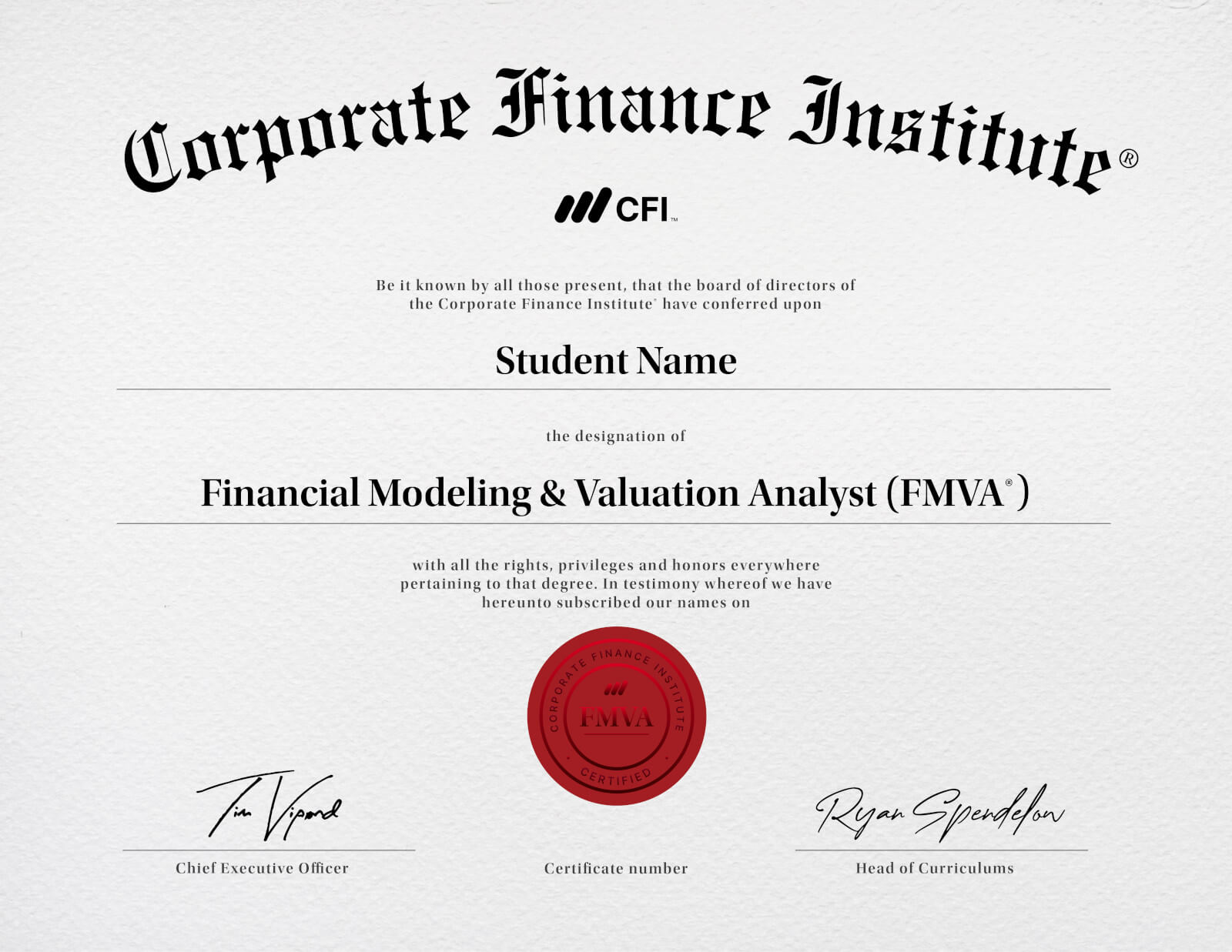
Final Examination and Certification: Upon successful completion of all required courses and a final exam with a minimum passing grade of 70%, participants earn their FMVA certification. The program visually represents this achievement through a digital certificate and an FMVA program badge, signifying their validated expertise.
Industry Recognition and Career Impact
The FMVA certification is gaining significant traction and recognition across the financial industry. It serves as a powerful signal to hiring managers, indicating that a candidate possesses the practical skills needed to contribute effectively from day one. The credential is respected in fields such as investment banking, FP&A, private equity, and corporate development, making it a valuable asset for professionals at all career stages.

- Early-Career Professionals: The FMVA equips them with job-ready skills, enhancing their employability and confidence.
- Mid-Level Analysts: It helps formalize and validate existing knowledge, providing a structured framework for continuous learning.
- Senior Professionals: The certification adds a globally recognized credential to their established careers, demonstrating a commitment to staying current with industry best practices.
Testimonials from graduates further highlight the program’s impact. Alonso Saponara Rivva, an Investment Banking Analyst at Goldman Sachs, shared, "The FMVA® was incredibly valuable during the Goldman Sachs interview process… I aced all my interviews thanks to the knowledge and skills I gained." This anecdote illustrates how the practical skills acquired through the FMVA can directly translate into tangible career success, particularly in highly competitive fields like investment banking.
Chris Caldwell, Director of Treasury, noted the program’s efficiency and practical orientation, stating, "As a CFA Charterholder who put a good 900 hours into that designation, I found just as much value in your FMVA® program. This designation only took me about 60-70 hours to complete. What I like about the approach is that it’s very practical for the workplace as opposed to just pure theory." This comparison emphasizes the FMVA’s value proposition for experienced professionals seeking targeted, applicable skill enhancement.

Program Structure and Accreditation
The FMVA program is built on a foundation of practical learning, with courses designed by finance practitioners who have worked in the roles participants aspire to. This ensures the curriculum reflects the actual demands of day-to-day work for analysts, managers, and directors.
Accreditation and Recognition: CFI holds accreditations from recognized bodies, enhancing the credibility of its certifications. It is accredited by the Better Business Bureau® (BBB) and recognized by organizations such as the National Association of State Boards of Accountancy (NASBA) in the U.S. and CPA institutions in Canada for continuing education. These accreditations assure learners that the training meets high standards and can contribute to professional development requirements.

Global Reach: Trusted by over 3 million finance professionals worldwide, the FMVA has established a significant global footprint. Professionals in 180 countries have chosen this credential, underscoring its international appeal and relevance.
Instructors and Expertise
A key strength of the FMVA program lies in its faculty. The courses are led by experienced finance professionals and educators with extensive backgrounds in financial modeling, valuation, investment banking, and corporate finance. Notable instructors include:

- Duncan McKeen: EVP, Financial Modeling at CFI, with extensive experience designing and teaching financial modeling courses.
- Scott Powell: CFI Co-Founder, with a career spanning 30 years in designing and delivering financial services learning solutions.
- Jeff Schmidt: VP, Financial Modeling at CFI, who has taught financial modeling and valuation globally for over a decade.
- Tim Vipond, FMVA: CEO & Co-Founder of CFI, with a strong background in entrepreneurship, financial analysis, and investment banking.
- Ryan Spendelow, FMVA®: SVP, Training & Curriculum, with over a decade of experience in investment banking and investment management training.
- Sebastian Taylor: VP, BIDA, bringing expertise in business intelligence and data management.
- Carl Seidman: Subject Matter Expert in FP&A and business strategy, serving as a trusted advisor and fractional CFO.
- Antoine Bishara: Instructor and VP of Business Development, with a background in investment banking and corporate finance.
The collective expertise of these instructors ensures that learners receive instruction grounded in real-world experience and current industry trends.
Career Pathways in Financial Modeling & Valuation
The FMVA certification opens doors to a variety of career opportunities within the finance industry. Professionals equipped with these skills are well-suited for roles such as:

- Financial Planning & Analysis (FP&A): Developing budgets and forecasts to support strategic corporate planning.
- Investment Banking: Performing financial modeling, valuation, creating presentations and pitch decks, and utilizing AI tools for strategic analysis.
- Private Equity: Evaluating potential investments, conducting financial modeling, and supporting portfolio companies.
- Corporate Development: Identifying and executing strategic growth opportunities for companies.
- Financial Analyst: Conducting in-depth financial analysis, reporting, and providing insights to management.
- Equity Research Analyst: Analyzing companies and industries to provide investment recommendations.
The program’s comprehensive nature ensures that graduates are prepared to contribute to these diverse and dynamic roles from the outset of their careers.
Pricing and Subscription Models
CFI offers flexible subscription plans to accommodate different learning preferences and budgets. The pricing structure is designed to provide access to the entire course library, including all FMVA program materials, updates, and future additions.

- Annual Subscription Plans: These plans provide comprehensive access to self-study features, including all core and elective courses, interactive exercises, downloadable templates, and exam retakes. Premium plans often include additional benefits such as AI Tutor access for personalized guidance and exclusive discounts.
- Value Proposition: The subscription model ensures continuous learning and access to updated content, a critical aspect in the ever-evolving finance industry. The inclusion of AI tools and personalized feedback in higher-tier plans reflects CFI’s commitment to providing cutting-edge learning resources.
Frequently Asked Questions and Support
CFI addresses common queries through a detailed FAQ section, ensuring potential and current learners have access to comprehensive information. Key questions often revolve around the program’s nature, admission requirements, duration, global recognition, career prospects, practical application, exam procedures, and accreditation.
- Admission Requirements: The FMVA program has no formal prerequisites, making it accessible to individuals from various academic and professional backgrounds. The curriculum progresses from fundamentals to advanced topics.
- Program Duration and Flexibility: While the average completion time is around 100-120 hours, the program is entirely self-paced, allowing learners to progress at their own speed. Ongoing access is provided for the duration of the subscription.
- Employer Recognition: The FMVA is recognized globally by employers in corporate finance, FP&A, and financial analysis roles. It is valued for demonstrating practical modeling and valuation skills.
- Learner Support: CFI provides email support for technical and general inquiries. Premium subscription tiers may offer more personalized feedback and direct instructor interaction.
The FMVA certification represents a significant investment in a finance professional’s career, equipping them with the essential skills and knowledge to thrive in the modern financial ecosystem. Its practical approach, industry recognition, and flexible learning structure position it as a leading choice for those aspiring to excel in financial modeling and valuation.