The Emergence of Answer Engine Optimization: Navigating the AI-Driven Search Landscape

The digital marketing paradigm is undergoing a profound transformation, driven by the rapid ascendancy of generative artificial intelligence. For years, the cornerstone of online visibility has been Search Engine Optimization (SEO), meticulously tailored to rank content on traditional search engine results pages. However, a new frontier, Answer Engine Optimization (AEO), is rapidly gaining prominence as consumers increasingly turn to AI-powered platforms like ChatGPT, Gemini, and Perplexity for direct answers, fundamentally reshaping how brands connect with their audiences. This shift necessitates a fresh approach to digital strategy, with specialized tools emerging to help businesses secure their presence in these evolving AI ecosystems.
The Paradigm Shift in Digital Search
The conventional search journey, typically involving a user typing a query into Google and sifting through a list of blue links, is evolving. Today’s buyers are increasingly bypassing traditional search results in favor of conversational AI. These AI models synthesize information from various online sources to deliver concise, direct answers. If a brand isn’t explicitly mentioned or positively cited within these AI-generated responses, it risks becoming invisible at a critical stage of the buyer’s journey.
This isn’t merely a theoretical shift; data underscores its immediate impact. According to HubSpot’s internal research, a significant 42% of CRM buyers are already incorporating AI search into their evaluation processes. Concurrently, businesses are observing a substantial decline in traditional organic traffic, with HubSpot reporting a 27% year-over-year decrease for its customers. In stark contrast, AI referral traffic has not only tripled but also boasts a conversion rate three times higher than that of traditional search visitors. Further reinforcing this trend, Ahrefs data indicates that AI search visitors have demonstrated a remarkable 23 times better conversion rate compared to organic search traffic. These statistics paint a clear picture: AI is not just another channel; it’s a high-impact avenue for lead generation and conversion.
The proliferation of sophisticated Large Language Models (LLMs) and their integration into mainstream search (e.g., Google’s AI Overviews, previously Search Generative Experience or SGE) marks a critical juncture. Users now expect immediate, summarized information, often eliminating the need to click through to external websites. This places immense pressure on brands to ensure their content is discoverable, comprehensible, and trustworthy enough to be cited positively by these AI systems.
Understanding Answer Engine Optimization (AEO)
AEO, sometimes referred to as Generative Engine Optimization (GEO), is the strategic practice of optimizing content and brand presence to appear favorably in AI-generated answers. It’s the AI-era counterpart to SEO, but with a distinct focus. While SEO aims for high rankings on a search engine results page, AEO strives to influence what the AI says about your brand when a user poses a direct question.

Crucially, AEO and SEO are not mutually exclusive; they are complementary strategies that, when integrated, create a robust digital presence. SEO continues to drive qualified traffic through traditional search results, ensuring foundational visibility and organic reach. AEO, on the other hand, earns visibility within the AI-generated answer layer, directly influencing brand perception and priming potential customers for conversion before they even visit a website. The most forward-thinking marketing teams are now investing in both, recognizing that a holistic strategy is essential for navigating the complex and rapidly evolving digital landscape.
The core difference lies in intent and outcome. A buyer asking "what’s the best CRM?" on ChatGPT might never click through to a company’s website. However, if ChatGPT positively names a particular brand, that buyer is pre-disposed and primed to convert through other channels or later stages of their journey. The directness of AI answers bypasses traditional funnels, demanding a new approach to brand influence.
Key Players in the AEO Landscape: A Comparative Analysis
As the need for AEO grows, specialized tools are emerging to meet this demand. Among the leading solutions are HubSpot AEO, SE Visible (a distinct product from SE Ranking), and SE Ranking itself, each offering unique strengths tailored to different organizational needs and marketing objectives. Understanding their distinct functionalities, pricing, and integration capabilities is crucial for businesses aiming to optimize their AI visibility.
-
HubSpot AEO: The Specialist for AI Visibility and Actionability
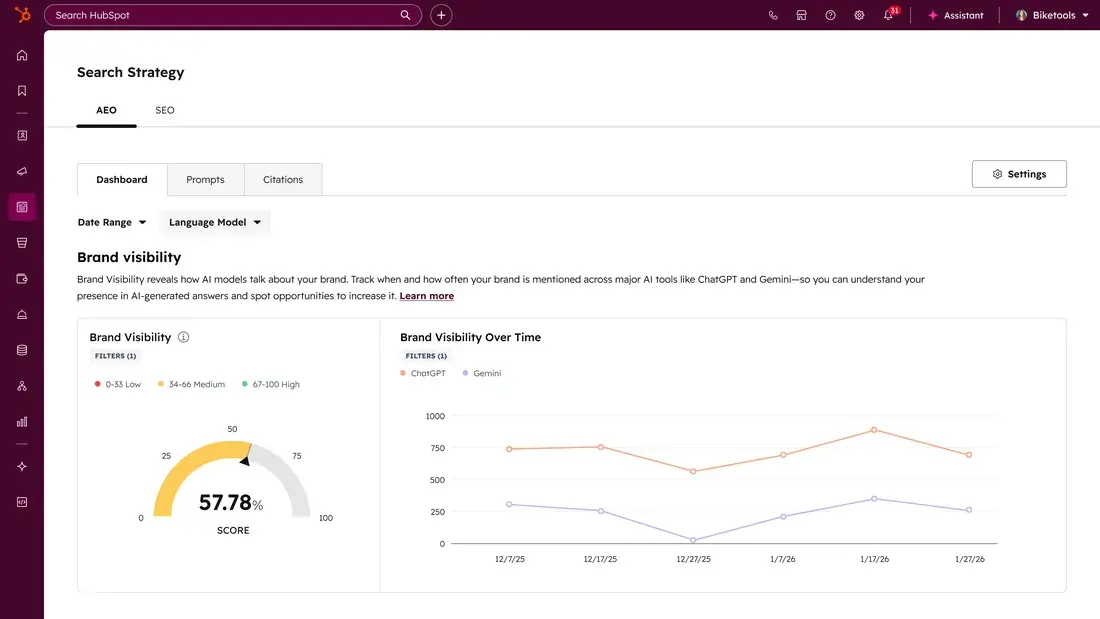
HubSpot AEO is purpose-built for AI visibility. It tracks how a brand appears in answers generated by major AI platforms like ChatGPT, Gemini, and Perplexity. Its strength lies in its ability to not just monitor but also to provide actionable insights, especially when integrated with HubSpot’s broader marketing and CRM ecosystem. It aims to connect AI visibility directly to content creation workflows. -
SE Visible (by SE Ranking): The Dedicated AI Visibility Monitor
Developed by the SE Ranking team, SE Visible is a completely separate, standalone product. Its singular focus is on monitoring how brands are represented, cited, and perceived across a wider array of AI search platforms, including Google AI Overviews and Google AI Mode, in addition to ChatGPT, Gemini, and Perplexity. It positions itself as a robust monitoring tool for brands, agencies, and PR teams focused on AI visibility across multiple markets and languages. -
SE Ranking: The Comprehensive SEO Suite with AI Tracking Capabilities
SE Ranking remains a generalist, offering a comprehensive SEO suite that covers traditional rank tracking, site audits, backlink analysis, and keyword research. While its core strength is traditional SEO, it has integrated a growing "AI Search Toolkit" into its platform. This toolkit allows for monitoring of AI-generated answers, but its primary value proposition remains its full-suite SEO capabilities. It’s designed for teams requiring an all-in-one solution for their broader SEO needs, with AI monitoring as an added feature.
It’s important to note that for a true "apples-to-apples" comparison in dedicated AI visibility tracking, HubSpot AEO and SE Visible are the most directly comparable solutions, given their specialized focus. SE Ranking, while offering AI features, is best evaluated as a comprehensive SEO platform with added AI monitoring functionalities.
Detailed Comparison: Features and Functionality
Let’s delve deeper into the features that distinguish these platforms, focusing on their value proposition for optimizing AI presence.
1. AI Visibility Tracking & Monitoring:
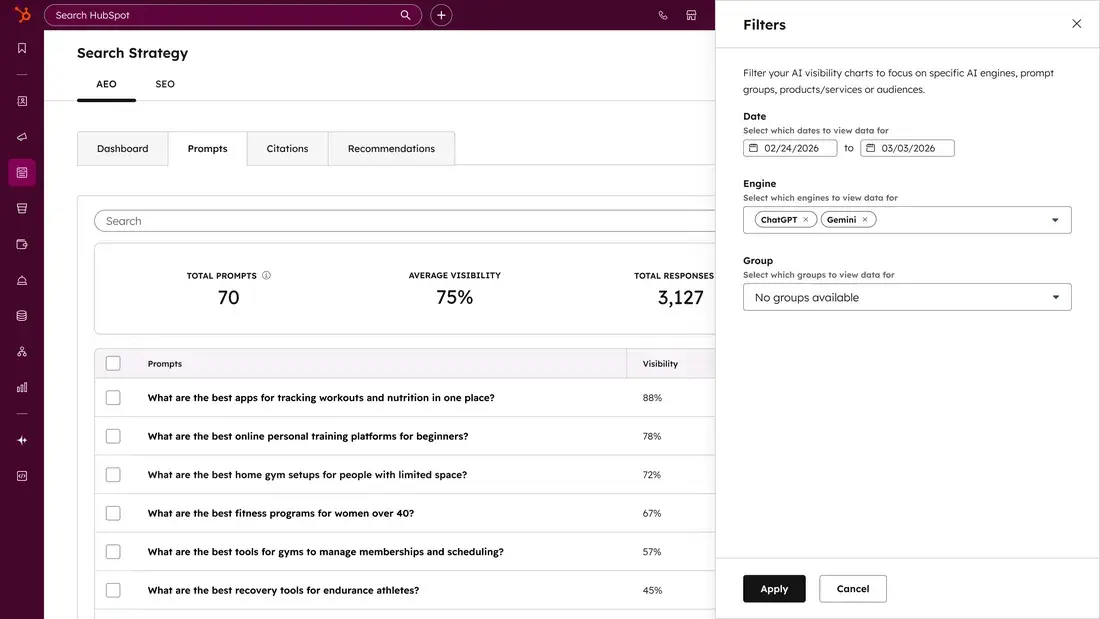
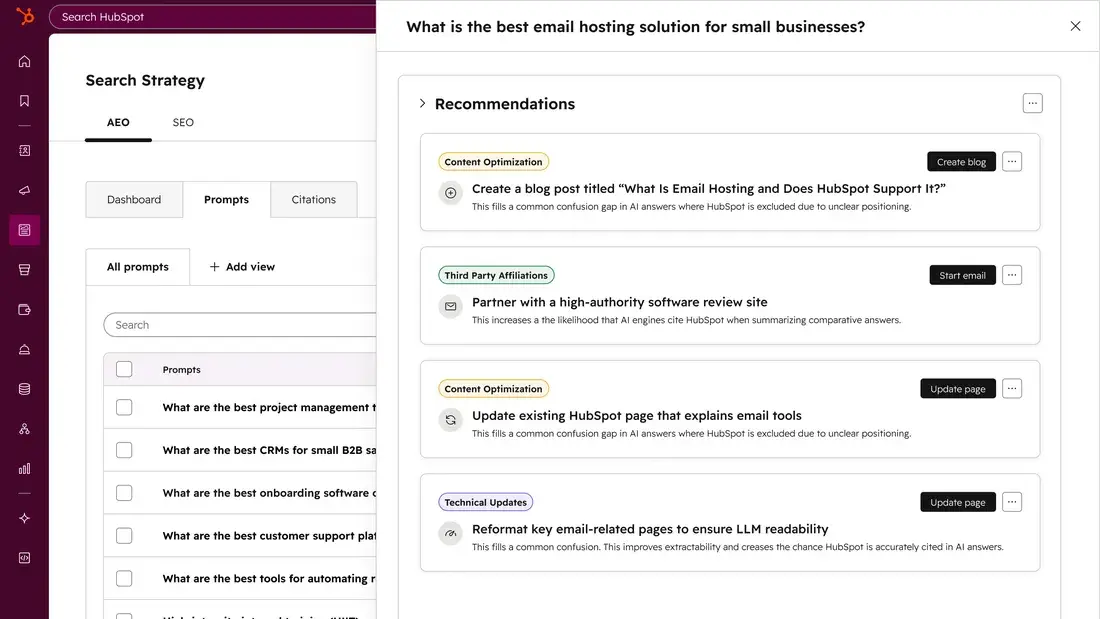
- HubSpot AEO: Excels in tracking brand visibility across ChatGPT, Gemini, and Perplexity. Its core features include a "Brand Visibility Score" (a proprietary metric quantifying overall brand presence), "AI Visibility Trends" (showing mentions over time across engines), "Citation Analysis" (identifying sources AI models cite), and "Prioritized Recommendations" (actionable content suggestions). The dashboard provides a clear overview of brand performance and allows for filtering by engine and date range.
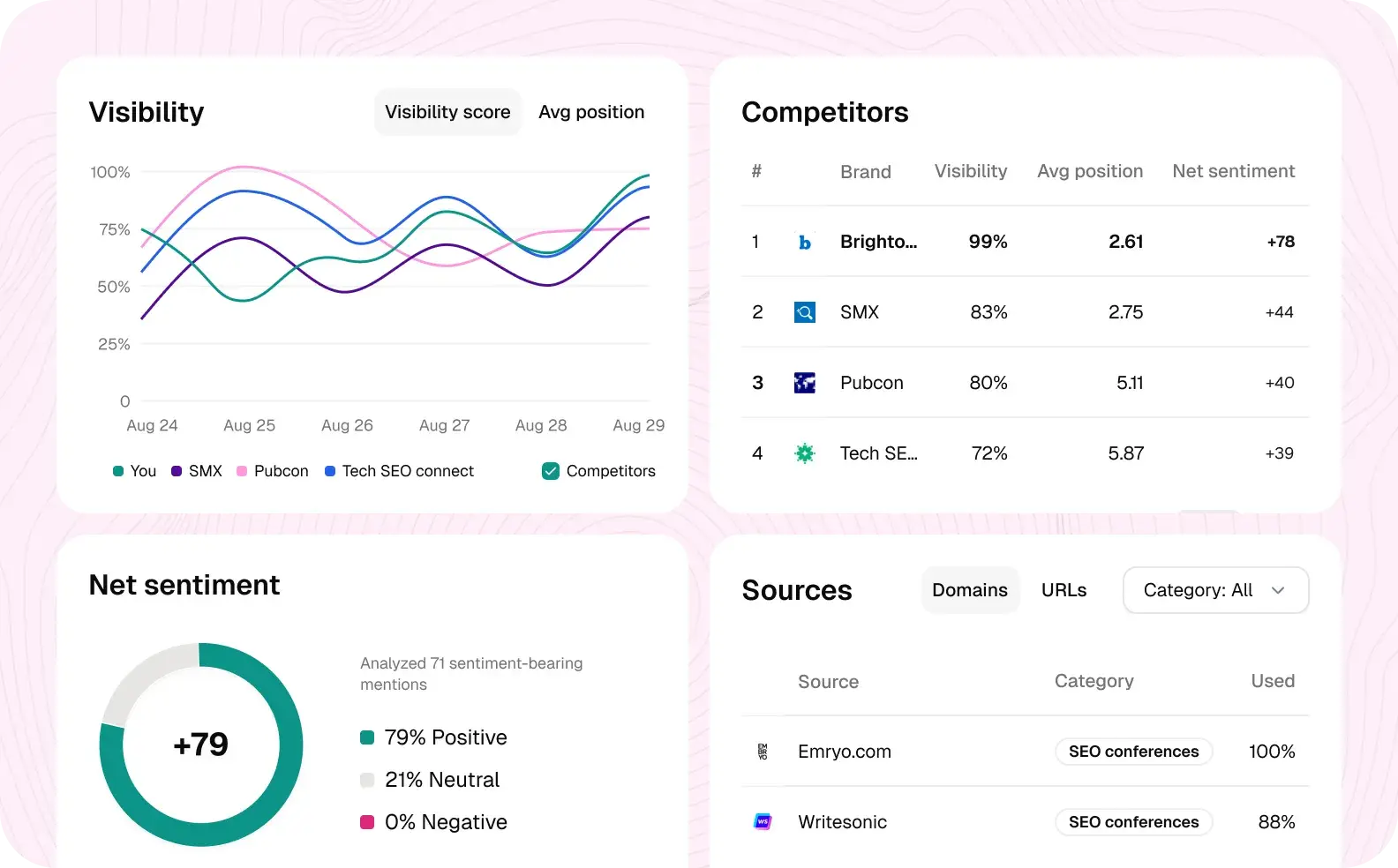
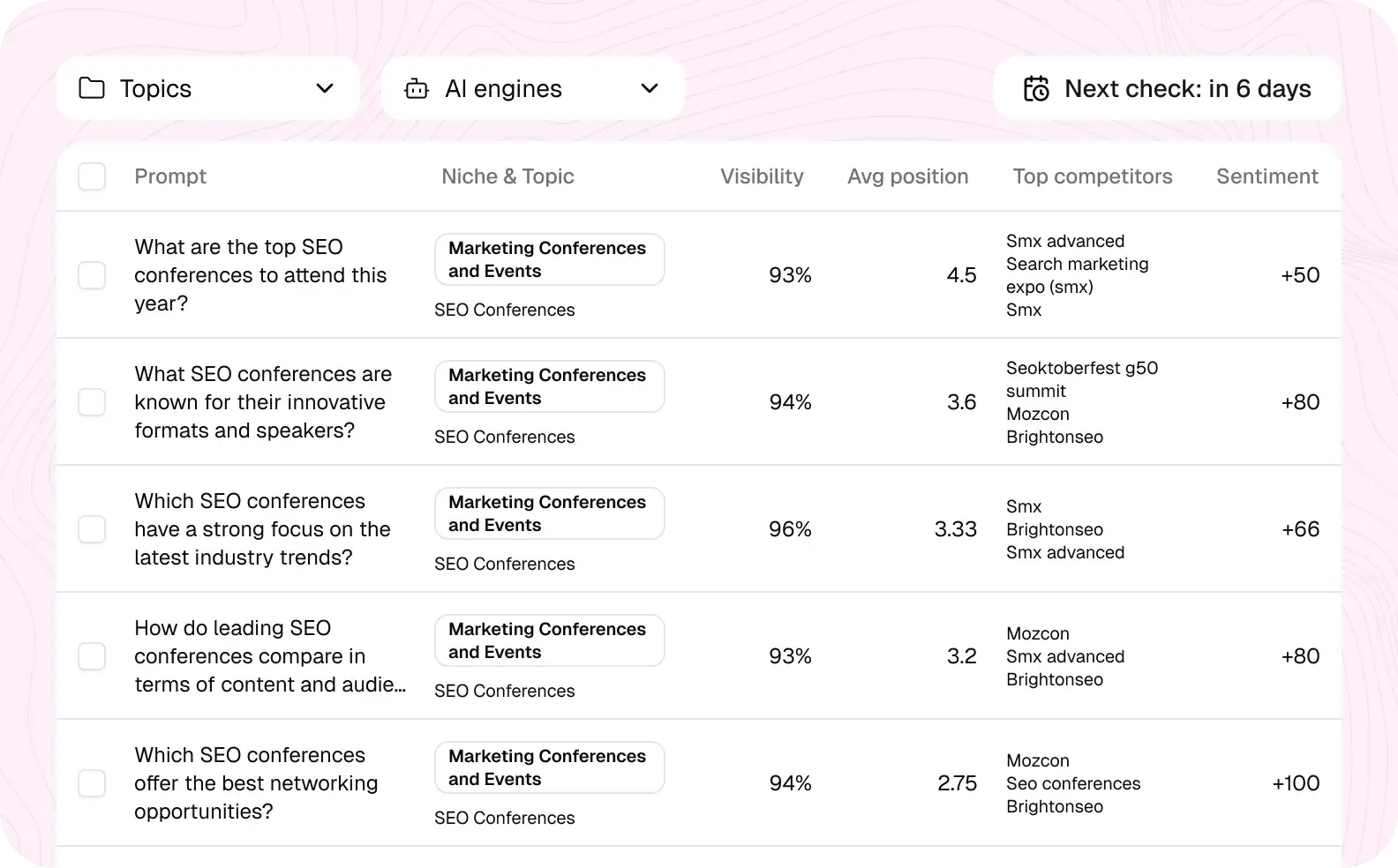
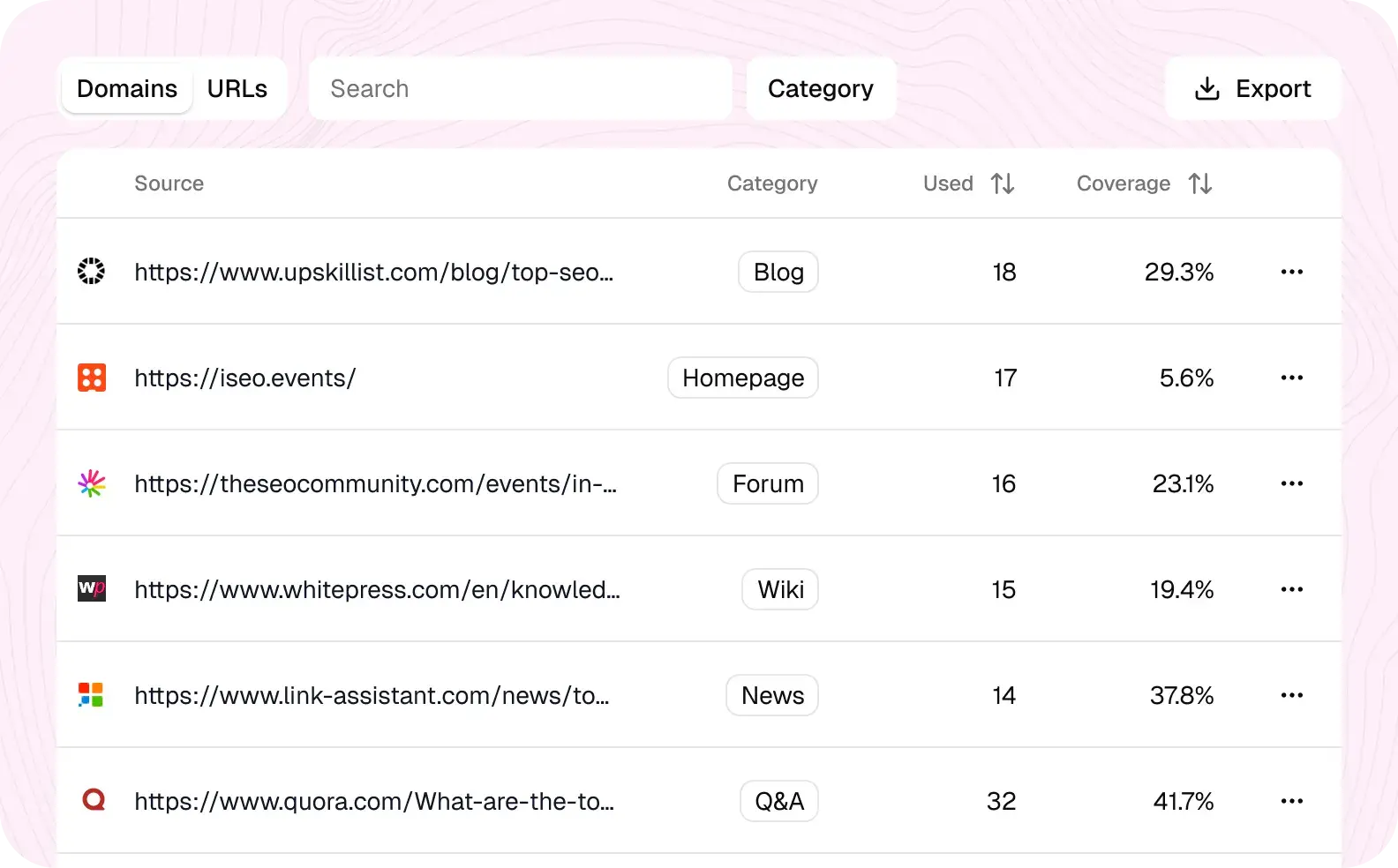
- SE Visible: Offers comprehensive AI visibility monitoring across ChatGPT, Gemini, Perplexity, Google AI Overviews, and Google AI Mode. It provides robust "Visibility Performance" dashboards, "Prompt Tracking" for specific queries, detailed "Citation Source Analysis" (categorizing sources like media, blogs, forums, and listing top cited URLs), and "Brand Management" for comparing multiple brands or competitors. A significant differentiator is its multi-country and multi-language support, covering seven countries (US, UK, Canada, France, Germany, Netherlands, Spain) and five languages, making it invaluable for international brands and agencies.
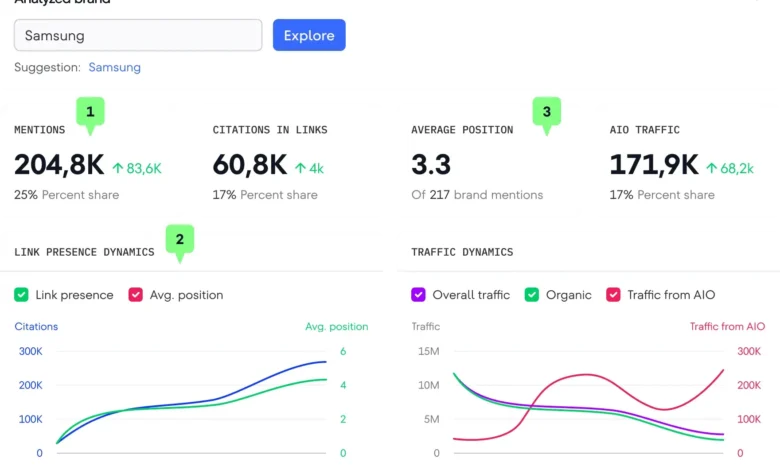
- SE Ranking: Its "AI Search Toolkit" enables tracking across Google AI Overviews, Google AI Mode, ChatGPT, Gemini, and Perplexity. It monitors mentions, citations in links, average position, and AIO (AI Overview) traffic metrics. While it tracks prompts, its depth in citation analysis and actionable recommendations specifically for AI optimization is less pronounced than the dedicated AEO tools.
2. Content Workflow & Actionability:
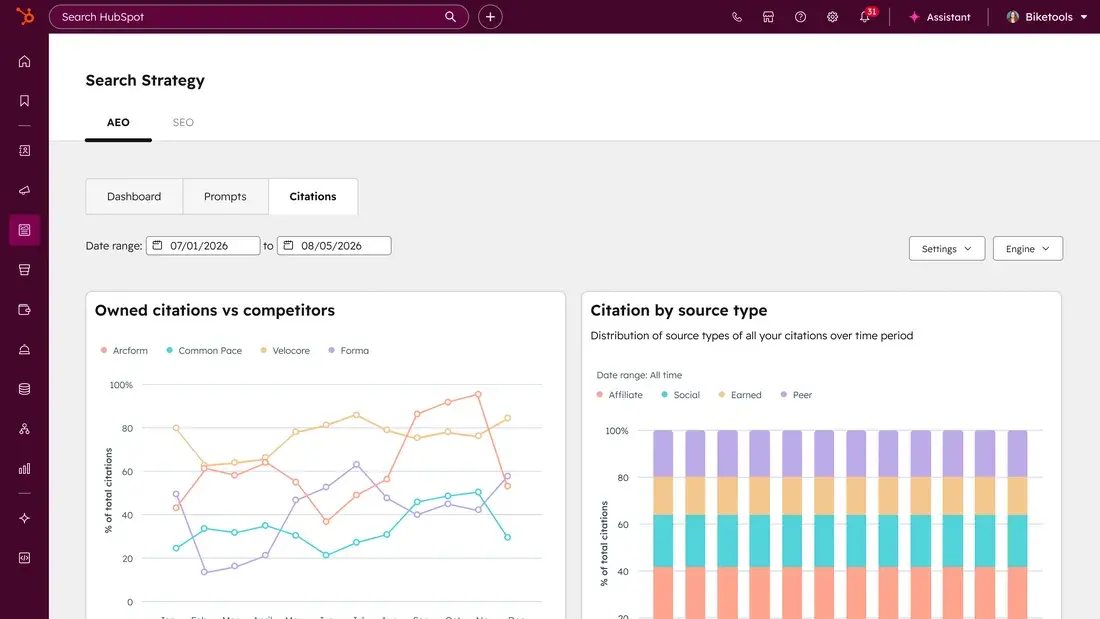
- HubSpot AEO: Its strongest feature is the integration of AI visibility insights with content workflows. When the tool identifies a gap or a competitor outperforming the brand, it generates prioritized recommendations. For users of Marketing Hub Pro or Enterprise, these recommendations directly link to content creation tools within the HubSpot platform, allowing marketers to draft or update content without leaving the ecosystem. This end-to-end automation of the AEO workflow, from insight to execution, is a key advantage.
- SE Visible: Primarily a monitoring and analysis platform. It surfaces rich data on brand representation, sentiment, and source behavior. While this data is highly actionable for informing content and PR strategies, SE Visible does not include a built-in content workflow or direct CRM connection. Users typically export CSV data and dashboards to integrate into their existing external content and PR processes.
- SE Ranking: An insights platform for SEO, it provides data that informs content strategy but does not offer built-in content creation workflows directly linked to AI insights. Its content marketing tool, available on some plans, is more geared towards traditional SEO content planning.
3. Traditional SEO Capabilities:
- HubSpot AEO: Does not include traditional SEO rank tracking, site audits, or keyword research. It is a specialist tool focused solely on AI visibility.
- SE Visible: Similar to HubSpot AEO, it does not include traditional SEO functionalities. Its focus is exclusively on AI visibility monitoring.
- SE Ranking: This is its core strength. It offers comprehensive SEO rank tracking (e.g., 2,000 keywords/day on the Core plan), extensive site audits (120+ technical SEO metrics), and advanced keyword research tools (gap analysis, competitor keywords). It automates daily keyword checks, scheduled technical audits, and client reporting, making it a robust platform for overall SEO management.
4. Multi-Market and Language Support:
- HubSpot AEO: Supports multi-country and language analysis within its competitor citation comparison, but the explicit number of countries/languages is not specified as a primary feature.
- SE Visible: Offers robust multi-country and multi-language support across seven countries and five languages for visibility, sentiment, and source gap analysis against competitors. This is a significant advantage for global brands and agencies.
- SE Ranking: Offers limited multi-country and language support within its AI toolkit compared to SE Visible’s dedicated global focus.
5. Integration Ecosystem:
- HubSpot AEO: Native integration with HubSpot’s CRM and Marketing Hub is its defining integration. This allows for prompt suggestions tied to CRM data and seamless content creation. It can also function as a standalone product.
- SE Visible: Does not offer direct CRM integrations. Its utility is in providing clean data for export, which can then be integrated into other workflows.
- SE Ranking: Integrates with Google Search Console, Google Analytics, Looker Studio, Zapier, Make, and n8n, enabling custom automated reporting pipelines and data transfer. However, it lacks native CRM integration.
Pricing Models and Value Proposition
The pricing structures reflect each platform’s focus and target audience.
-
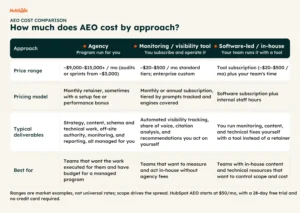
HubSpot AEO Pricing: Provides a highly accessible entry point. It offers a free AEO Grader for baseline brand visibility assessment. The standalone product is priced at $50/month ($45/month annually) and includes a 28-day free trial. This tier tracks 25 prompts across ChatGPT, Gemini, and Perplexity, offering deep citation analysis and prioritized recommendations without requiring other HubSpot subscriptions. For existing Marketing Hub Pro or Enterprise users, the CRM-connected AEO tools are natively included at no extra cost, amplifying its value significantly.
-
SE Visible Pricing: Starts at a higher entry point but offers greater prompt volume. The Basic plan is $99/month (or $79/month billed annually) and includes 200 prompts, approximately 12,000 AI answers analyzed per month, and 3 projects. The Plus plan scales to $355/month (monthly) for 1,000 prompts, 60,000 AI answers, and 10 projects. Annual billing offers a 20% discount. All plans include access to five AI engine integrations and unlimited users. This model is attractive for teams with high-volume monitoring needs, especially across multiple brands or international markets. A 10-day free trial is available.
-
SE Ranking Pricing: As a full SEO suite, SE Ranking has a higher entry cost. The Core plan starts at $103.20/month (billed annually) or $129/month (monthly) after a 14-day free trial. This plan covers up to 10 projects, 2,000 daily keyword checks, comprehensive site audits, backlink analysis, and tracking for 100 GEO prompts per day across various AI engines. The Growth plan, at $223.20/month (annually), increases project and keyword limits and adds API access. It’s important to note that SE Ranking calculates tracking limits by multiplying keywords by the number of search engines tracked, which can impact effective costs. It offers strong value for teams needing an all-encompassing SEO solution with added AI monitoring.
Strategic Implementation: A 14-Day AEO Sprint
Implementing AEO doesn’t have to be a protracted project. Given the dynamic nature of AI models, meaningful data can be gathered and strategic adjustments initiated within a short timeframe. A 14-day sprint provides an excellent framework for establishing a baseline and launching initial content optimizations.
For HubSpot AEO Users:
- Utilize the Free AEO Grader (Day 1): Begin by assessing your current brand standing. HubSpot’s free AEO Grader provides an immediate score across brand recognition, market position, presence quality, share of voice, and sentiment. This baseline is crucial before any changes are made.
- Activate Free Trial & Configure Prompts (Days 1-2): Launch the 28-day free trial and set up your initial 25 prompts. Focus on direct, evaluative questions real buyers might ask to maximize the trial’s value. This also helps in understanding potential AI credit budgeting.
- Analyze Visibility and Citations (Days 3-5): Allow the tool to collect data for a few days. Then, delve into your brand visibility score and, critically, the citation analysis. This reveals which domains and content types AI models are referencing.
- Execute Prioritized Recommendations (Days 6-10): Identify and assign the top 2-3 highest-impact content actions from HubSpot’s prioritized recommendations. For Marketing Hub users, leverage the direct connection to content creation tools.
- Compare Baseline to Two-Week Score (Day 14): Although significant shifts typically take 4-8 weeks, comparing your visibility score after two weeks provides crucial early signals about how AI is interpreting and describing your brand, guiding subsequent granular content adjustments.
For SE Visible Users:
- Start Free Trial & Set Up Project (Day 1): Begin the 10-day free trial. Create your brand profile and connect relevant domains. Agencies should configure separate projects for each client.
- Configure Prompts and Topics (Days 1-2): Load buyer questions and product topics relevant to your brand. Utilize SE Visible’s localized topic suggestions for multi-country monitoring.
- Review Visibility and Source Analysis (Days 3-5): After initial data collection, examine which domains AI engines are citing. Analyze the source breakdown by category (media, blogs, forums) to inform PR and content outreach strategies.
- Run Competitor Benchmarking (Days 6-10): Compare your brand’s AI visibility and sentiment against key competitors. Identify prompts and sources where competitors excel to prioritize your next content or PR sprint.
For SE Ranking Users:
- Start Free Trial & Connect Domain (Day 1): Initiate the 14-day free trial and connect your domain, setting up a rank tracking project to establish your traditional SEO baseline.
- Run a Full Site Audit (Days 2-3): Before optimizing for AI answers, ensure your technical SEO foundation is sound. Identify and address critical technical gaps (e.g., crawlability, indexability) that could hinder AI visibility.
- Configure AI Search Toolkit (Days 4-5): With the technical foundation assessed, set up the AI Search Toolkit to monitor brand mentions across ChatGPT, Perplexity, and Google AI Overviews.
- Execute a Keyword Gap Analysis (Days 6-10): Use SE Ranking’s keyword research tools to perform a gap analysis. Identify topics and queries where competitors rank but your brand is absent, informing future content strategy.
Implications for Businesses and Marketers
The rise of AEO carries profound implications for businesses across all sectors:
- Content Strategy Evolution: Content must now be optimized not just for keywords but for clarity, authority, and directness, making it easily digestible and citeable by AI. The emphasis shifts from driving clicks to providing definitive answers.
- Budget Reallocation: Marketing budgets will increasingly need to account for AEO tools and specialized content creation. This might involve shifting resources from traditional paid search or display advertising.
- Team Skillset Development: Marketing teams will require new skills in prompt engineering, AI content analysis, and understanding AI model biases. Collaboration between SEO specialists, content creators, and PR teams will become even more critical.
- Brand Reputation Management: AI-generated answers can significantly influence brand perception. Proactive AEO becomes crucial for shaping positive brand narratives and mitigating misinformation.
- Measurement and Attribution Challenges: Tracking the ROI of AEO requires new metrics beyond traditional clicks and impressions. Focus will shift to brand mentions, sentiment analysis, and the quality of AI referrals.
The transition from traditional SEO to a dual SEO/AEO strategy is not optional; it’s an imperative for maintaining digital relevance and competitive advantage. Brands that embrace and strategically implement AEO will be better positioned to capture the attention of an increasingly AI-reliant consumer base.
Frequently Asked Questions about HubSpot AEO vs SE Ranking
Does SE Ranking support answer engine optimization?
Yes, SE Ranking includes an AI Search Toolkit that monitors brand mentions across Google AI Overviews, Google AI Mode, ChatGPT, Gemini, and Perplexity. However, it functions primarily as an addition to its comprehensive SEO suite. It lacks the deep CRM-connected recommendations and purpose-built AEO workflow found in HubSpot AEO. For dedicated AI visibility monitoring from the SE Ranking ecosystem, SE Visible is the purpose-built alternative.
What is SE Visible, and how is it different from SE Ranking?
SE Visible is a standalone AI visibility monitoring platform developed by the SE Ranking team, accessible at visible.seranking.com. It has its own distinct pricing, login, and feature set, separate from SE Ranking’s core SEO platform. While SE Ranking is a broad SEO suite with added AI tracking features, SE Visible is exclusively designed from the ground up to monitor how brands are represented in AI-generated answers across various platforms, offering more granular control and multi-market capabilities for AI visibility specifically.
Do I need a CRM to benefit from AEO?
No. HubSpot AEO is available as a fully standalone product for $50/month without requiring a CRM or other HubSpot products. However, its power is significantly enhanced when integrated with HubSpot’s Marketing Hub Pro or Enterprise, as prompt suggestions and content recommendations can be dynamically generated based on your actual customer segments and CRM data, making the insights more tailored and impactful.
When should I choose AEO over SEO?
You should not choose AEO over SEO, or vice versa; they are complementary strategies that serve different, albeit related, purposes. SEO establishes your foundational online presence and drives organic traffic through traditional search. AEO extends that visibility into the AI answer layer. If your technical SEO and traditional rank tracking are already strong, but your brand’s presence in AI-generated answers is unmeasured or lacking, then AEO is the appropriate addition to your strategy. The ideal approach involves integrating both for comprehensive digital visibility.
How quickly can I see meaningful changes from AEO updates?
Most teams can obtain their first baseline visibility data from AEO within the first two weeks of implementation. While immediate data is available, actual significant changes in brand visibility scores, reflecting content improvements and AI models re-indexing information, typically materialize over a period of 4–8 weeks. Consistent monitoring and iterative optimization are key to sustained improvement.
Can I use HubSpot AEO without other HubSpot Hubs?
Yes, HubSpot AEO is available as a fully standalone product for $50/month. This standalone option provides complete access to brand visibility tracking, prompt tracking, citation analysis, and prioritized recommendations without requiring a HubSpot CRM or Marketing Hub subscription.
The imperative for brands to adapt to the AI-driven search landscape is undeniable. Whether through a specialist tool like HubSpot AEO, a dedicated monitoring platform like SE Visible, or an integrated SEO suite with AI capabilities like SE Ranking, understanding and optimizing for answer engines is no longer a niche concern but a strategic necessity for future-proofing digital presence and fostering customer engagement.