The New Imperative: Navigating Brand Visibility in the Age of AI-Powered Search with Profound AI, Peec AI, and HubSpot AEO

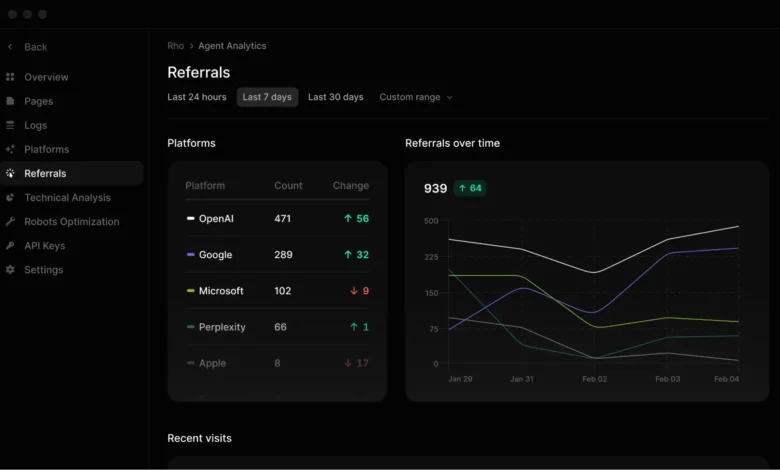
The landscape of digital information retrieval has undergone a profound transformation, ushering in an era where traditional search engine optimization (SEO) must evolve into Answer Engine Optimization (AEO). According to recent findings from McKinsey, a staggering 50% of consumers now regularly utilize AI-powered search functionalities, with over 70% relying on these sophisticated tools to pose questions and assimilate information. This seismic shift in user behavior necessitates a fundamental re-evaluation of digital marketing strategies, compelling SEO leaders to integrate robust AEO frameworks. The objective is no longer merely to secure a coveted spot on Google’s first page but to achieve prominent visibility within the AI-generated responses across diverse platforms, including Google AI Overviews, ChatGPT, and Perplexity.
The Paradigm Shift in Search: From Blue Links to Generative Answers
For decades, the internet’s front door was characterized by a list of ten blue links, guiding users to websites. The advent of large language models (LLMs) and generative AI has fundamentally altered this interaction. Users are increasingly bypassing traditional search results in favor of direct, synthesized answers provided by AI. This transition is not merely cosmetic; it represents a deep structural change in how information is consumed and, consequently, how brands are discovered and perceived. AI Overviews, for instance, often present a concise summary at the top of search results, frequently incorporating information from multiple sources without requiring the user to click through to individual websites. This means that if a brand is not cited or accurately represented within these generative answers, its digital footprint risks becoming significantly diminished.
The implications for marketing are substantial. Brands must now concern themselves with how AI tools reference them, the context in which they are cited, and the specific queries for which their brand appears in AI-generated content. This requires an entirely new set of monitoring and optimization capabilities, moving beyond keyword rankings to focus on factual accuracy, authority signals, and comprehensive representation within AI’s knowledge base. The challenge is compounded by the fact that AI models are constantly learning and evolving, making continuous monitoring and adaptation critical.
Introducing the New Frontier: Answer Engine Optimization (AEO)

Answer Engine Optimization (AEO) is the strategic discipline focused on ensuring a brand’s optimal visibility and accurate representation within AI-generated answers across various generative AI platforms. Unlike traditional SEO, which primarily targets organic search rankings through keywords, backlinks, and technical optimization, AEO aims to influence the direct responses provided by AI, whether these are summaries, featured snippets, or conversational outputs. This includes not only direct mentions and citations but also ensuring the brand’s expertise and authority are recognized by AI systems when formulating answers related to its industry or products.
The rise of AEO is a direct response to several critical factors:
- Changing Consumer Behavior: Users prioritize speed and direct answers.
- AI as an Information Gatekeeper: AI models are becoming the primary interface for information discovery.
- Brand Reputation in AI Contexts: Inaccurate or absent brand representation in AI answers can significantly impact trust and market share.
- New Metrics of Success: Marketers need to track AI mentions, sentiment, share of voice within AI responses, and citation frequency.
To address these emerging needs, a new generation of AI Visibility tools has entered the market. Among the prominent players are Profound AI and Peec AI, both designed to assist marketing teams in monitoring, measuring, and enhancing their content for search generative experiences (SGEs) and tracking brand representation within AI answer engines. As AEO gains strategic prominence, marketing professionals are increasingly seeking a clear comparative analysis of these platforms to determine which solution best aligns with their organizational goals and operational maturity.
Navigating the AEO Landscape: Profound AI, Peec AI, and HubSpot AEO
As AI-powered answer engines continue to redefine information discovery, marketers require specialized tools to measure and influence brand visibility beyond the confines of traditional search. Peec AI and Profound AI are positioned at the forefront of this evolution, offering solutions tailored for Answer Engine Optimization (AEO). Both platforms aim to help teams understand how their brand is presented within AI-generated responses across popular tools like ChatGPT, Claude, and Perplexity. While they address similar core problems – tracking AI mentions, citations, and overall visibility – they exhibit notable differences in their depth, complexity, and target use cases.
The overarching rationale for considering tools like Peec AI or Profound AI is the undeniable influence AI answer engines exert on customer perception and trust. These platforms provide crucial insights into whether and how a brand appears in AI responses, offering a critical lens into a rapidly evolving aspect of modern search visibility where AI answers increasingly supersede traditional blue links.
Peec AI: Simplicity and Speed to Insight
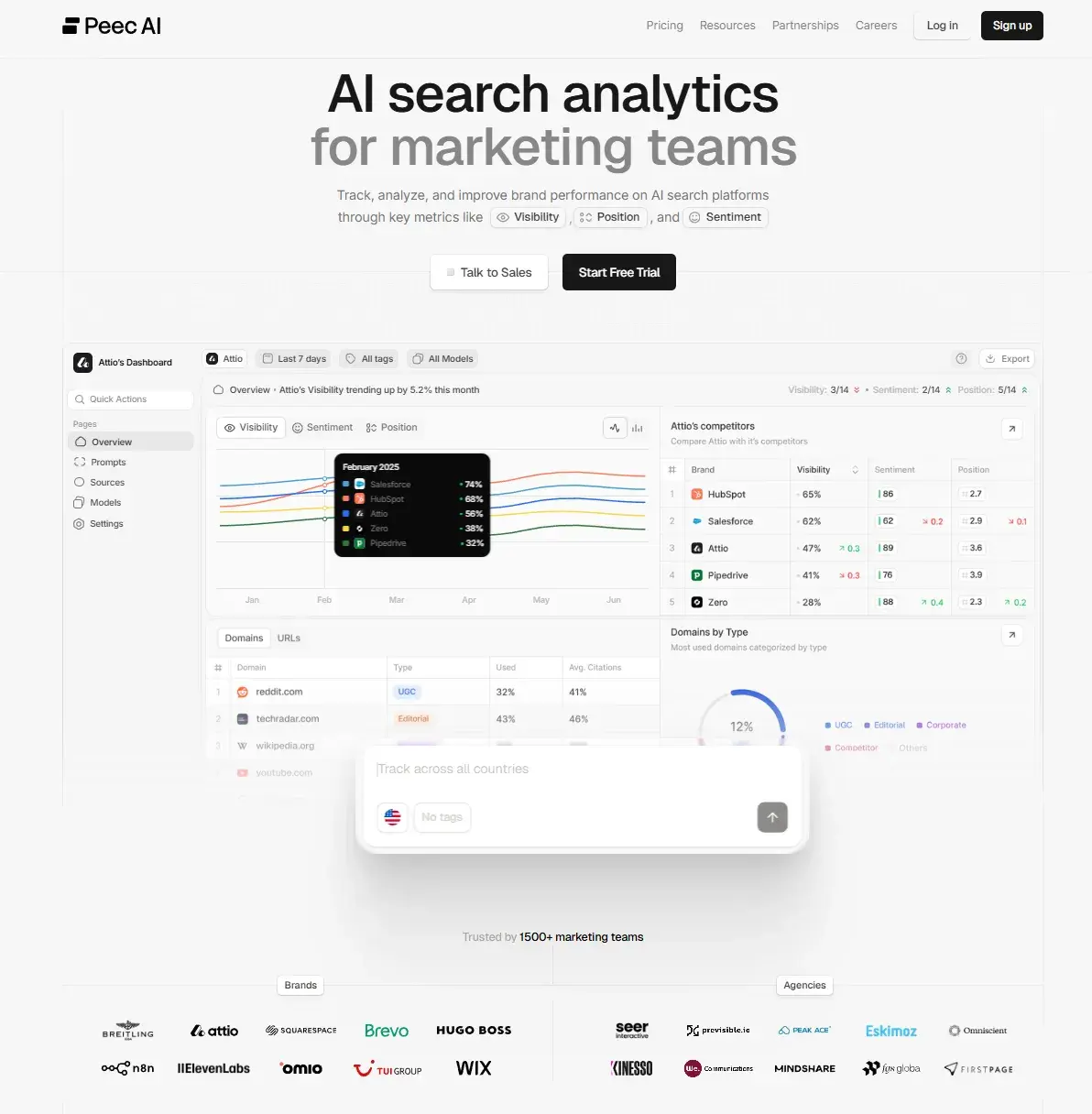
Peec AI positions itself as an AI visibility and search analytics platform primarily focused on enabling teams to rapidly comprehend their brand’s presence across AI answer engines. It tracks essential AEO metrics, emphasizing a user-friendly experience that delivers clear, digestible data. This approach facilitates easy performance benchmarking and identification of visibility gaps without necessitating extensive setup or complex technical integrations. Peec AI is particularly well-suited for:
- Startups and Small to Mid-Market Businesses: Seeking straightforward, cost-effective solutions for initial AEO efforts.
- Agencies: Requiring efficient deployment and management across multiple client accounts.
- Teams Prioritizing Rapid Insight: Those needing quick, actionable data without deep-dive analytical capabilities.
The platform’s strength lies in its measurement focus rather than extensive activation tools. While it adeptly informs marketers about brand representation, its built-in functionalities for translating these insights into direct content execution or workflow automation are less developed compared to more comprehensive solutions.
Profound AI: Enterprise-Grade Actionability at Scale
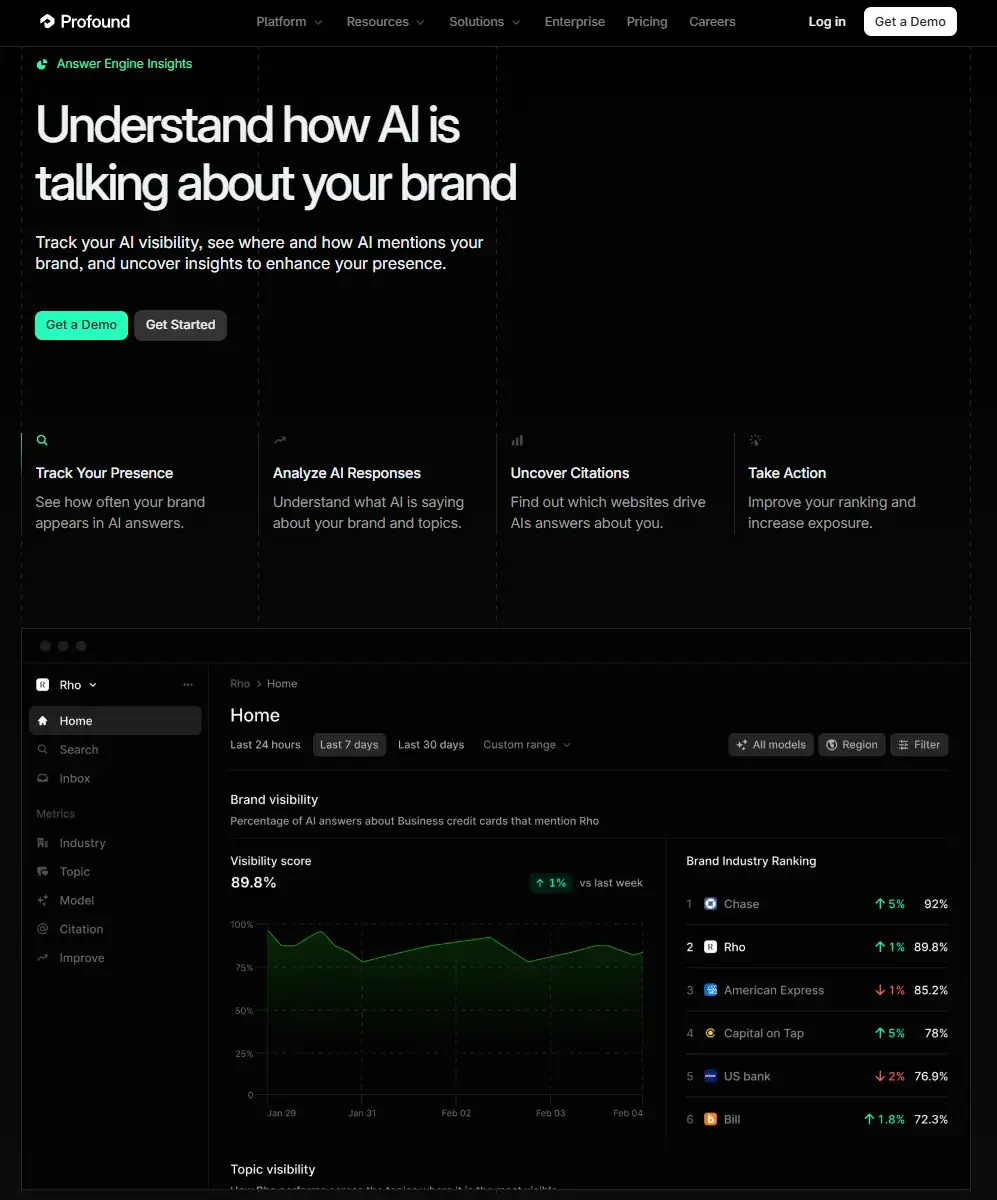
Profound AI presents itself as an enterprise-grade AEO platform designed not only to measure AI visibility but also to empower teams to actively improve it at scale. While it shares Peec AI’s core functionality of tracking mentions, citations, and presence across AI systems, Profound extends its capabilities with:
- Deeper Analytics and Contextual Tracking: Providing granular insights into competitive dynamics and prompt influence.
- Actionability and Workflow Integration: Tools to operationalize AEO directly into content strategy and SEO workflows.
- Enterprise-Grade Security and Compliance: Features crucial for large organizations in regulated industries.
Profound is engineered for organizations committed to operationalizing AEO and seamlessly linking AI visibility data with their broader content strategy, SEO workflows, and business outcomes. This makes it an ideal fit for:
- Large Enterprises: Requiring robust, scalable solutions with advanced security and compliance features.
- Complex Marketing Organizations: Teams needing deep integration with existing CRM, CMS, and analytics platforms.
- Organizations with Mature AEO Strategies: Those ready to move beyond basic tracking to proactive optimization and strategic content alignment.
The primary trade-off with Profound is its inherent complexity. Its comprehensive feature set may necessitate a more involved onboarding process and ongoing management compared to the more streamlined experience offered by Peec AI.
HubSpot AEO: A Strategic Alternative with Integrated Capabilities
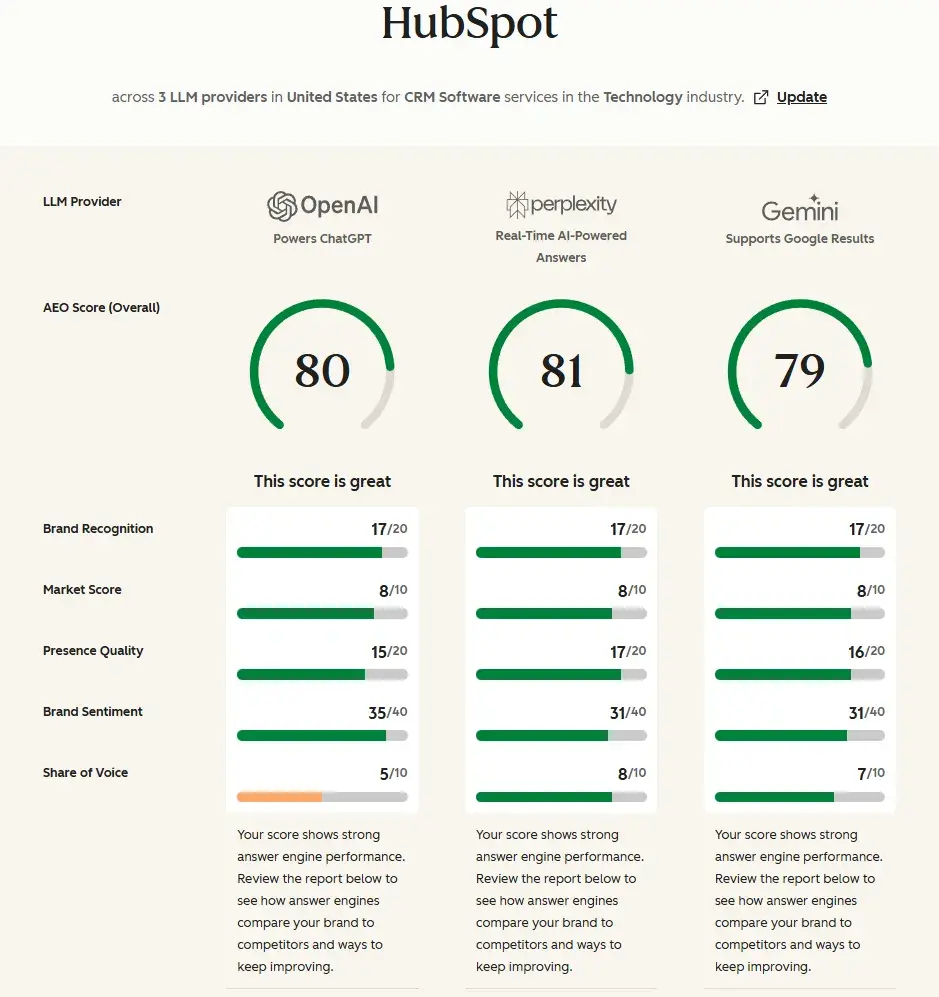
Beyond Profound and Peec AI, HubSpot has emerged as a significant player in the AEO space with the launch of HubSpot AEO. This tool is designed for in-depth AEO analysis and the development of an ongoing AI visibility strategy, particularly appealing to businesses already within the HubSpot ecosystem. HubSpot AEO offers:
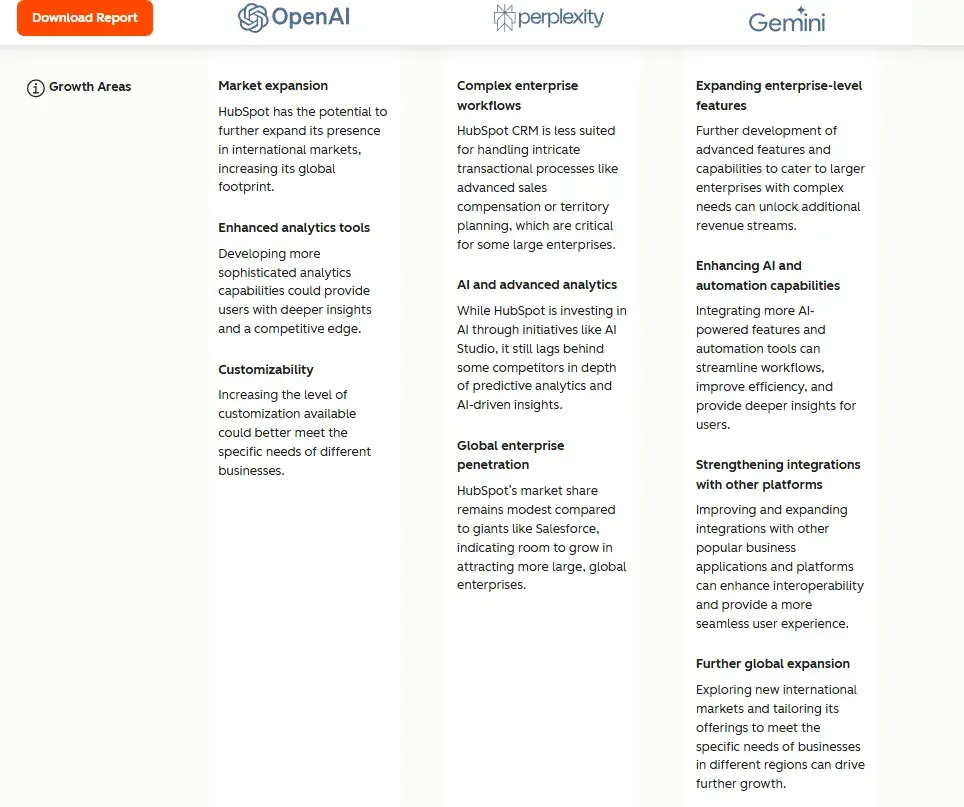
- Brand Visibility Tracking: Continuous monitoring of brand performance across answer engines.
- Sentiment Analysis: Understanding the emotional tone of AI-generated content referencing the brand.
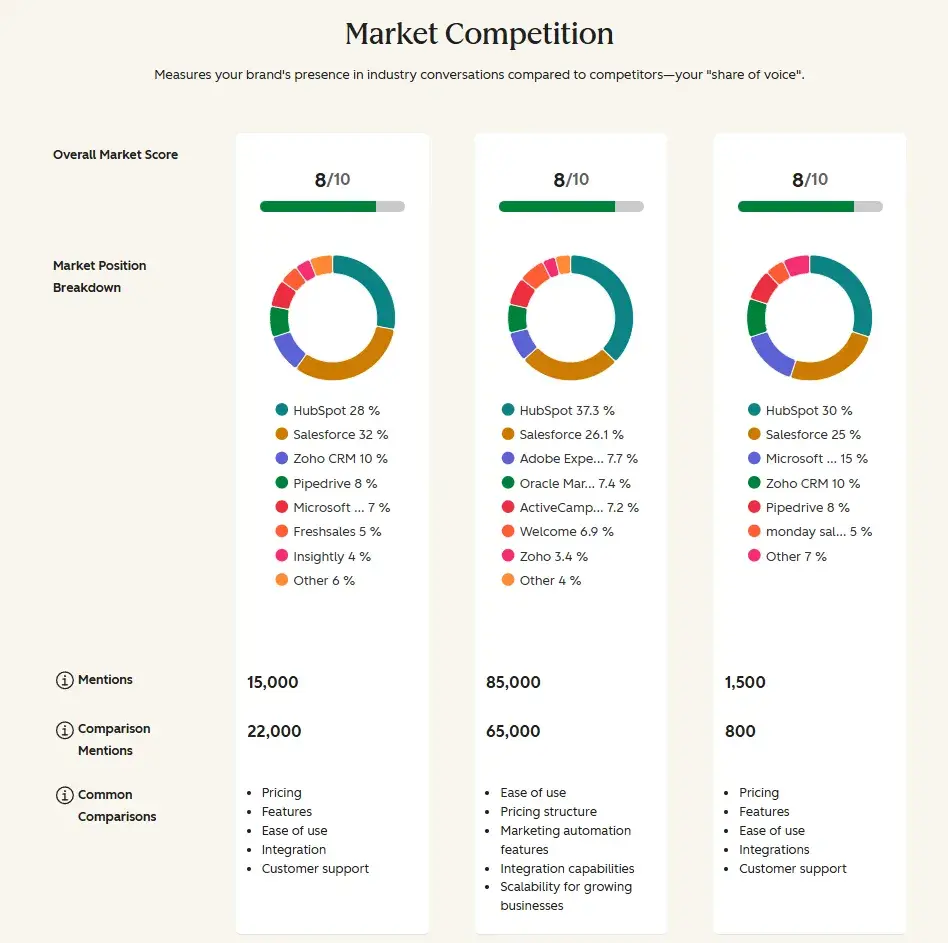
- Competitive Benchmarking: Insights into how a brand stacks up against competitors in AI answers.
- Actionable Recommendations: Strategic advice directly integrated with HubSpot’s content and social tools.
HubSpot AEO is available as a standalone tool or as part of Marketing Hub Pro and Enterprise subscriptions. Its key differentiator is its seamless integration, allowing marketing teams to act on AEO insights without leaving the familiar HubSpot platform. This makes it particularly powerful for existing HubSpot users who can leverage their unified CRM, content, and marketing tools for a cohesive AEO strategy. HubSpot also offers a free AEO Grader, providing a no-commitment snapshot of any brand’s AI visibility, including competitive insights and practical recommendations.
In-Depth Comparison: Profound AI vs. Peec AI
To provide a comprehensive understanding, a direct comparison across critical dimensions is essential.
1. Supported AI Engines and Platform Coverage
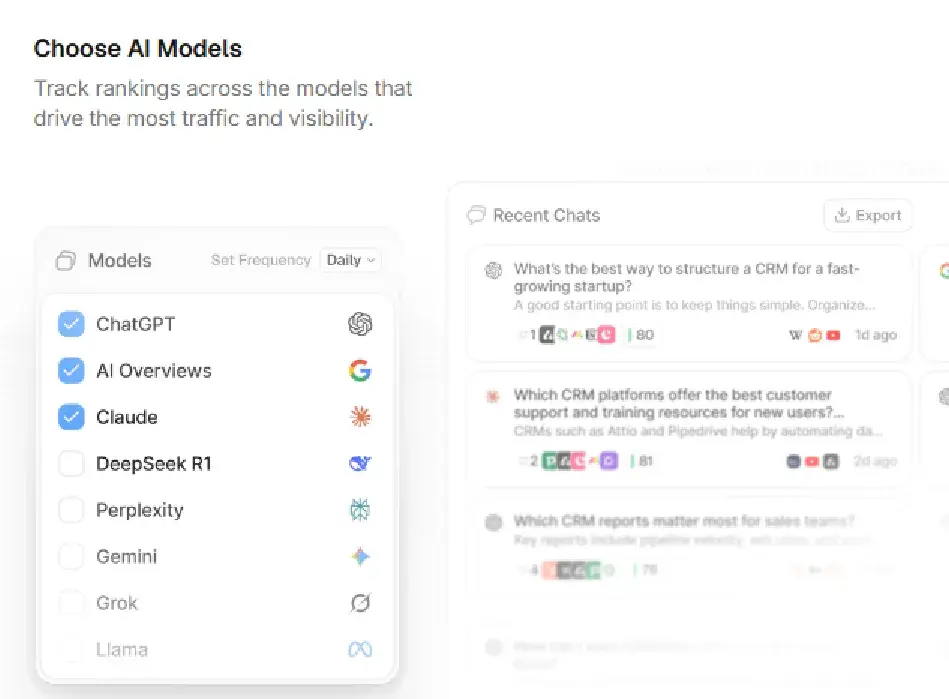
The breadth of platform coverage is paramount for marketers investing in AEO, especially given the continuous emergence of new AI search tools. Operating with partial visibility from a tool that tracks only a few AI engines can lead to significant strategic blind spots. Modern consumers navigate fluidly between Google AI Overviews, ChatGPT, Perplexity, Claude, Gemini, and other generative answer engines, underscoring the necessity for a monitoring platform that mirrors this multi-platform search experience.
- Peec AI’s Approach: Peec AI supports Google AI Overviews and other major answer engines. However, its Starter, Advanced, and Pro plans typically limit users to tracking three chosen engines, with additional engines incurring extra costs. The Enterprise tier offers unlimited model tracking, including emerging platforms like Grok, Claude, and GPT 5 Search. This tiered approach allows for cost-effective entry but may necessitate upgrades for broader coverage.
- Profound AI’s Approach: Profound utilizes front-end capture for AI answer tracking. Its Starter plan is more restrictive, including only ChatGPT. To access broader tracking capabilities, teams must upgrade to the Growth plan (which covers ChatGPT, Perplexity, and AI Overviews) or the Enterprise plan (encompassing these three plus Gemini, Copilot, Meta AI, Grok, DeepSeat, and Claude).
- Who Wins? Profound generally offers a broader array of supported engines at its higher tiers, which is crucial for enterprises seeking comprehensive coverage across the rapidly expanding AI landscape. However, Peec AI’s Enterprise plan also offers unlimited models, making the choice dependent on the specific models critical to a brand’s audience and budget flexibility.
2. Reporting Depth and Competitive Intelligence
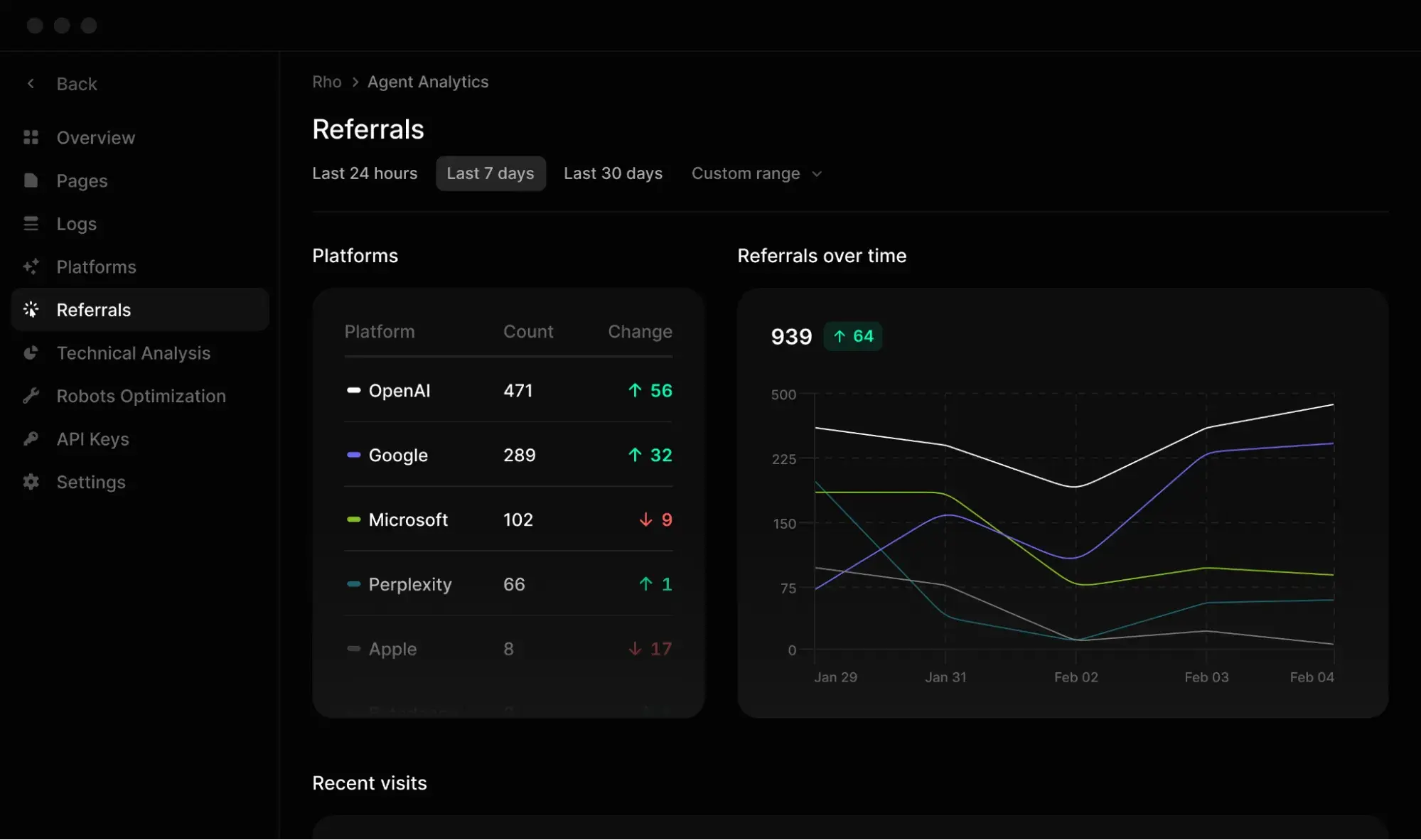
For marketing and SEO leaders, the utility of AI visibility tracking hinges on its ability to generate actionable insights. Reporting depth determines whether a team can merely identify mentions or genuinely comprehend brand positioning, uncover competitive vulnerabilities, and seize opportunities to influence AI-generated narratives.
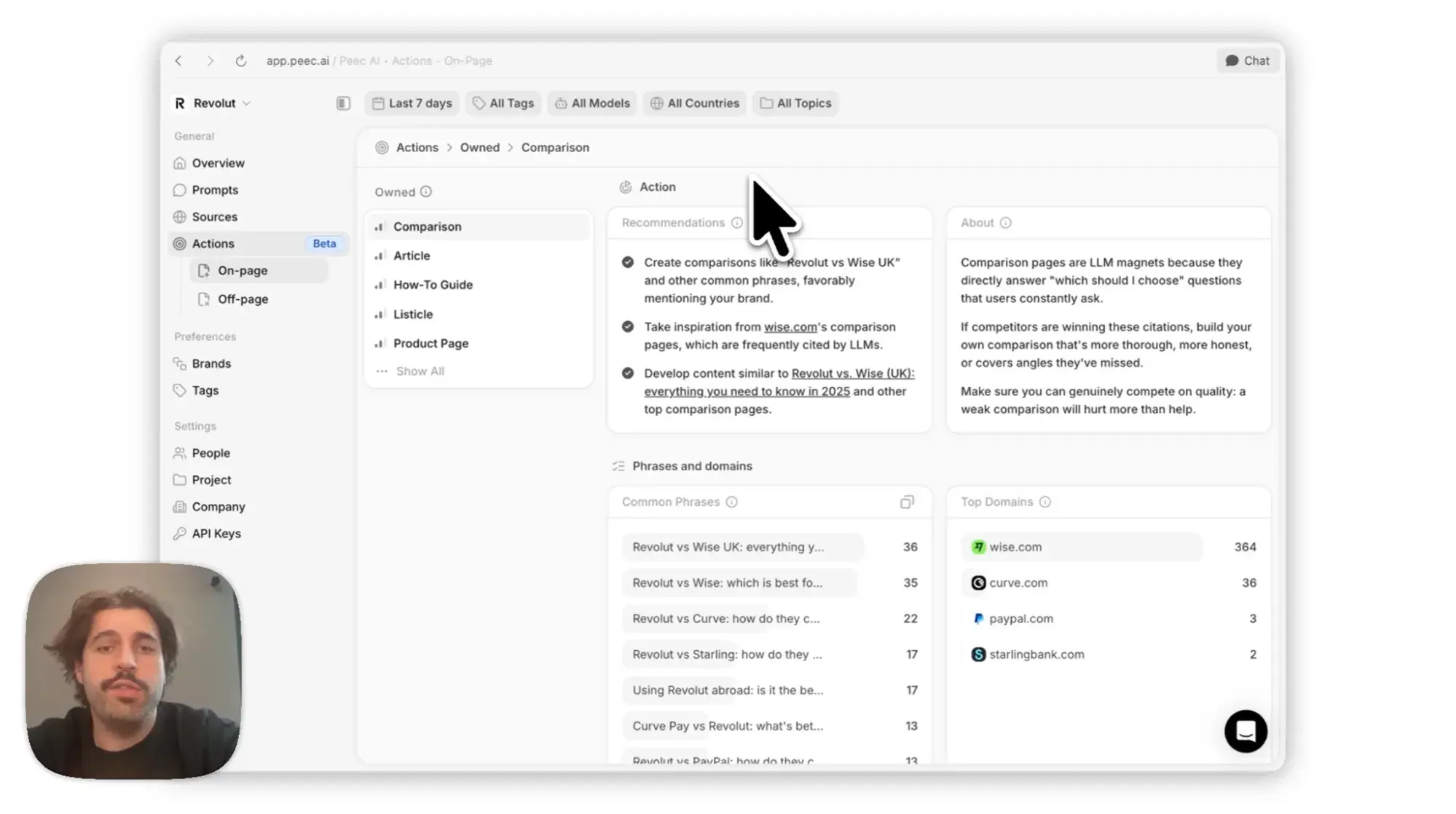
- Peec AI’s Approach: Peec AI distinguishes itself with an integrated "Act on Insights" feature that translates AEO data into concrete next steps. Beyond simply showing brand appearances in AI responses, Peec provides actionable recommendations, such as building presence on cited review platforms or engaging in relevant community discussions. This helps teams prioritize authority-building activities based on actual AI citation drivers. Its focus is on clear, digestible data for quick decision-making.
- Profound AI’s Approach: Profound leans towards deeper analysis and contextual tracking, leveraging front-end capture for AI answer monitoring. This allows teams to observe how responses manifest in live environments, evaluating answer structures, citation patterns, and brand positioning. This granular insight is particularly valuable for understanding competitive dynamics, such as the order of brand citations or the influence of specific prompts on outcomes. This level of detail supports more deliberate optimization and sophisticated content strategy decisions for advanced AEO programs.
- Who Wins? Peec AI excels in providing immediate, actionable recommendations, making it ideal for teams that need clear strategic guidance. Profound, conversely, offers superior depth of analysis and contextual understanding, catering to organizations requiring granular data for complex, data-driven optimization.
3. Integrations and Workflow Connectivity
For AEO to drive measurable growth, it cannot operate in isolation. Marketing leaders require AI visibility data that seamlessly integrates with their CRM, content workflows, and revenue analytics. Without robust integration, AEO risks becoming another disconnected metric, diminishing its impact and efficiency.
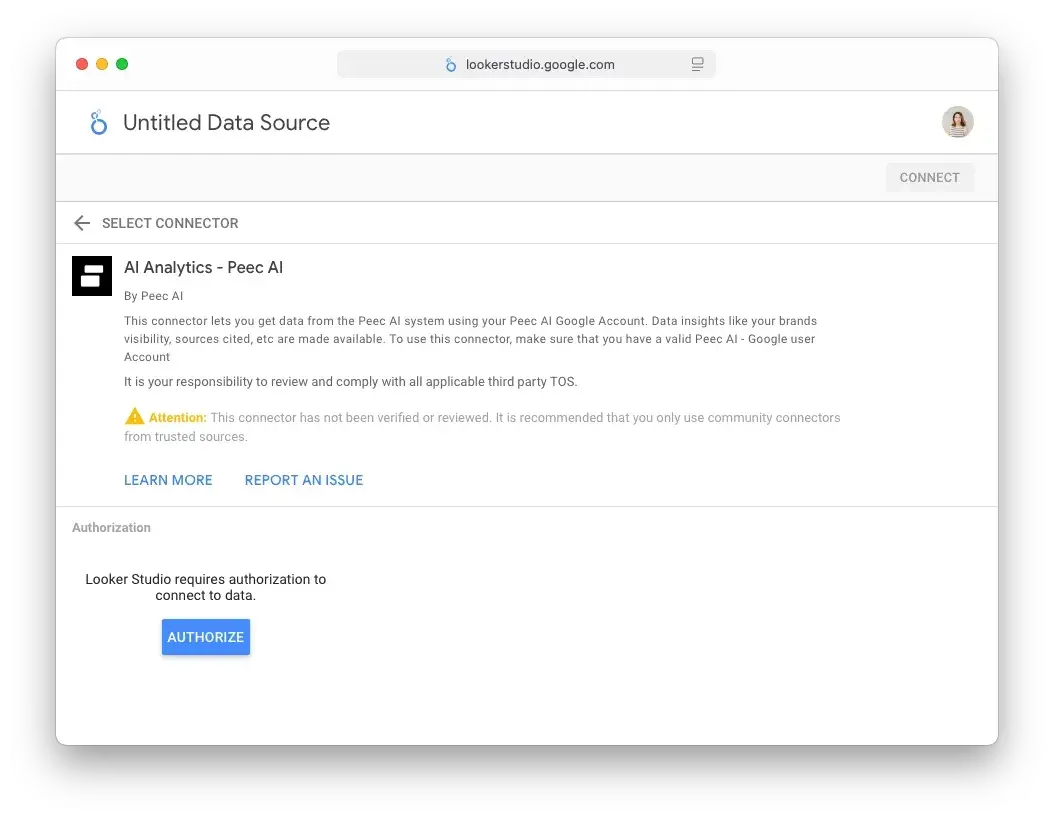
- Peec AI’s Approach: Peec AI offers flexible data export and integration options, primarily through a Looker Studio integration for visualizing visibility data in customizable dashboards. This allows teams to centralize AEO metrics alongside SEO and other performance data within a familiar reporting environment. A data API and CSV exports are also available for integrating visibility data into existing workflows. While useful for basic dashboards and reporting, Peec’s integration footprint is relatively limited, potentially falling short for teams requiring deeper connectivity with enterprise systems like CRM or comprehensive analytics platforms.
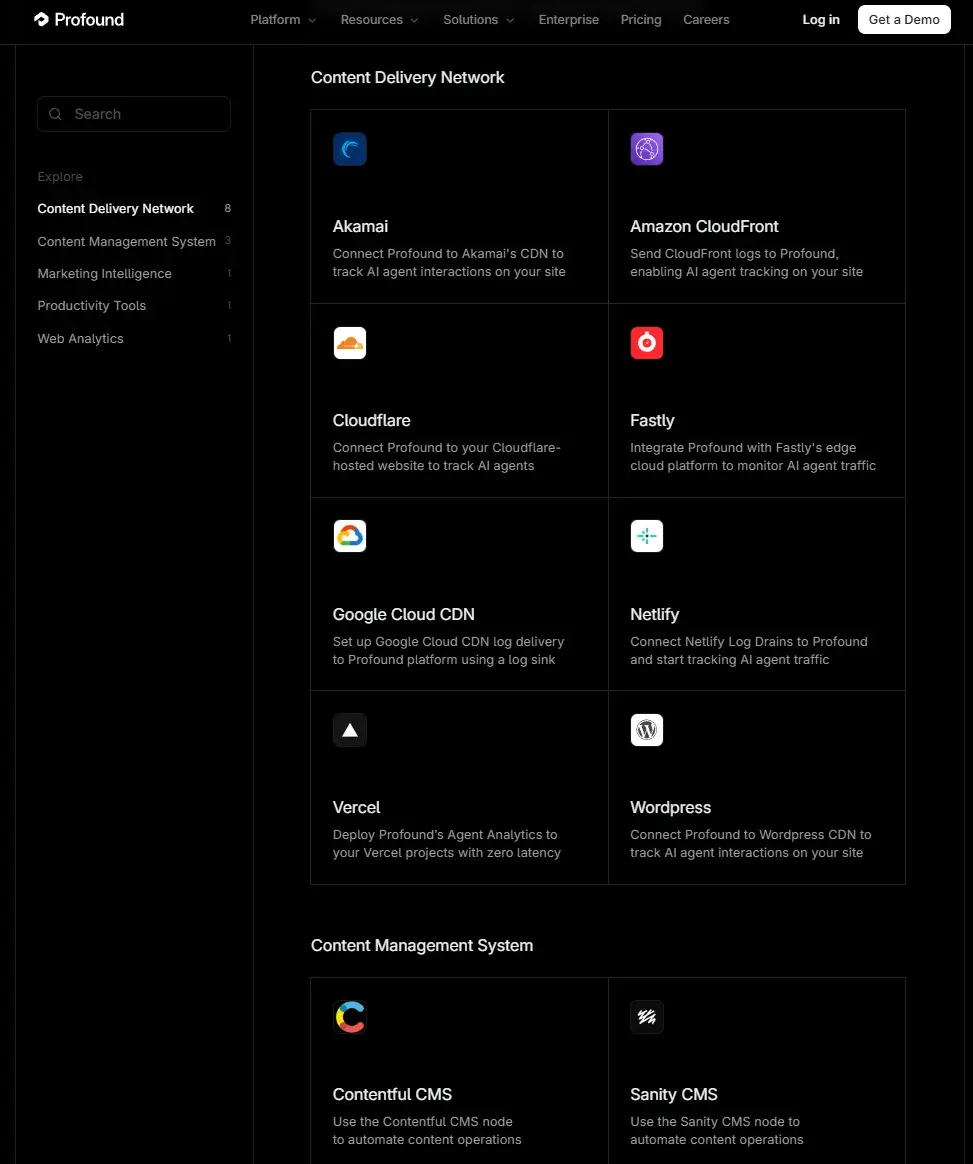
- Profound AI’s Approach: Profound provides a broad ecosystem of integrations designed to embed AEO insights directly into content and marketing workflows. Beyond dashboard exports, Profound Agents offer native connections to content management systems (e.g., WordPress, Sanity, Contentful, Webflow), productivity and collaboration tools (e.g., Slack, Gamma), and Google Search Console. This extensive connectivity enables teams to act on AEO data without needing to leave their preferred platforms, bringing AI visibility signals into content planning, SEO task management, CRM engagement, and performance reporting.
- Who Wins? Profound definitively leads in integrations and workflow connectivity. Its comprehensive suite of native integrations positions it as a more suitable choice for organizations seeking to fully operationalize AEO within a connected enterprise environment.
4. Pricing Structure, Onboarding, and Scalability
The financial investment in AI tools can be a significant determinant when choosing between Profound AI and Peec AI. Profound’s pricing model, particularly for its higher tiers, may immediately present a barrier for some businesses, especially those planning to scale to extensive packages.
- Peec AI’s Approach: Peec AI is recognized for its competitive pricing and streamlined onboarding process, making it attractive for startups, mid-market teams, and agencies seeking rapid deployment. Its low barriers to entry enable marketing teams to commence AI visibility tracking quickly. Peec offers a robust knowledge base, including video tutorials, to facilitate setup. Peec is particularly appealing for organizations that wish to experiment with AEO and scale their efforts gradually, as well as agencies managing multiple clients who benefit from a lightweight onboarding process. Peec offers a seven-day free trial, with paid packages starting from $299 per month.
- Profound AI’s Approach: Profound is primarily positioned towards enterprise organizations, reflecting its focus on enterprise-grade security and compliance features. These are often essential for large brands operating in regulated industries or global markets. Profound’s pricing and onboarding align with typical enterprise procurement processes, involving structured implementation, stakeholder alignment, and governance considerations. While this may entail a longer ramp-up period, it supports larger organizations requiring stringent data controls, auditability, and scalable deployment across global teams. Profound typically offers paid packages starting from $999 per month, with its basic starter package limited to ChatGPT coverage only, necessitating upgrades for broader AI model support.
- Who Wins? Peec AI is the clear winner for accessibility, offering a free trial and more competitive starting prices, making it suitable for smaller businesses and those new to AEO. Profound caters to the enterprise market, with pricing and features reflecting the needs of large, complex organizations that prioritize security, compliance, and comprehensive integration.
Strategic Considerations for Marketers
The optimal choice between Profound AI, Peec AI, and HubSpot AEO is less about isolated feature sets and more about aligning with a team’s structure, growth stage, and operational maturity. AEO tools are not standalone growth engines; they amplify the effectiveness of existing systems.
- Choose Peec AI if: You are a small to mid-sized business or an agency looking for an intuitive, cost-effective solution to quickly grasp AI visibility, benchmark competitors, and receive actionable recommendations without a heavy implementation burden. It’s ideal for teams beginning their AEO journey or prioritizing speed and simplicity.
- Choose Profound AI if: You represent a large enterprise or a complex marketing organization where AEO is a core strategic lever. You require deep analytics, extensive platform coverage, robust integrations with existing enterprise systems (CRM, CMS), and enterprise-grade security and compliance features. You are prepared for a more involved onboarding process to operationalize AEO at scale and link AI visibility directly to significant business outcomes.
- Consider HubSpot AEO if: You are an existing HubSpot user seeking an integrated solution that ties AEO insights directly into your content, social media, and broader marketing workflows. Its value proposition is particularly strong for teams that want continuous monitoring, competitive benchmarking, and actionable recommendations within a unified platform, leveraging existing HubSpot investments.
The Broader Impact of AEO on Digital Strategy
The emergence of AEO tools signifies a fundamental shift in digital strategy. Brands can no longer passively wait for search engines to surface their content; they must actively optimize for the generative AI layer that now mediates information discovery. This demands a proactive approach to content creation, ensuring accuracy, authority, and relevance in a format digestible by AI models. It also necessitates a continuous feedback loop, where insights from AEO platforms inform content strategy, public relations, and even product development.
As AI models become more sophisticated and deeply embedded in daily life, the importance of AEO will only grow. It will dictate not just online visibility but also brand perception, trust, and ultimately, market share. The ability to monitor, measure, and influence how AI answer engines represent a brand is no longer a luxury but a strategic imperative for sustainable growth in the digital age.
Before committing to any platform, teams are strongly advised to benchmark their current standing. Tools like HubSpot’s AEO Grader offer a free, objective analysis of a brand’s AI visibility, providing snapshots, competitive insights, sentiment analysis, and practical recommendations. This foundational data offers invaluable clarity, irrespective of whether the ultimate choice is Profound AI, Peec AI, HubSpot AEO, or another solution in this rapidly evolving market. The future of digital marketing demands a proactive embrace of AEO, ensuring brands remain discoverable, relevant, and authoritative in the age of AI.