Navigating the Pregnant Workers Fairness Act: A Comprehensive Guide to Compliance and Enforcement Trends in the Modern Workplace

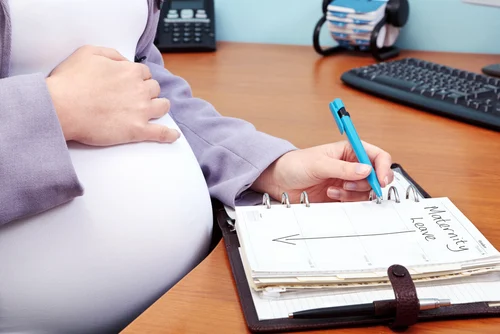
The landscape of American labor law underwent a transformative shift on June 27, 2023, with the implementation of the Pregnant Workers Fairness Act (PWFA). For decades, pregnant employees navigated a fractured legal framework that often forced them to choose between their health and their livelihoods. With the PWFA now firmly in its enforcement phase, the Equal Employment Opportunity Commission (EEOC) has transitioned from providing educational guidance to initiating rigorous litigation against non-compliant entities. This legislation requires covered employers—defined generally as those with 15 or more employees—to provide reasonable accommodations for known limitations related to pregnancy, childbirth, or related medical conditions, provided such accommodations do not impose an "undue hardship" on business operations.
The Evolution of Pregnancy Protections: Bridging the Regulatory Gap
To understand the magnitude of the PWFA, one must examine the limitations of the statutes that preceded it. For forty-five years, the primary federal protection for pregnant staff was the Pregnancy Discrimination Act of 1978 (PDA). While the PDA prohibited discrimination, it only required employers to treat pregnant workers the same as other employees who were "similar in their ability or inability to work." This created a significant hurdle: if an employer did not provide accommodations to non-pregnant employees with temporary injuries, they were often not legally required to provide them to pregnant employees.
The Americans with Disabilities Act (ADA) of 1990 offered a secondary layer of protection, but its application was narrow. Under the ADA, pregnancy itself is not considered a disability. An employee only qualified for accommodations if they developed a specific pregnancy-related complication that rose to the level of a legal disability, such as gestational diabetes or preeclampsia.
The PWFA effectively bridges these gaps. It eliminates the "comparator" requirement of the PDA and the "disability" threshold of the ADA. Under this new mandate, an employer must accommodate "known limitations" of a "qualified employee" regardless of whether those limitations meet the strict definition of a disability. This includes a wide spectrum of conditions, ranging from morning sickness and lactation needs to postpartum depression and recovery from pregnancy loss.
Defining the Scope: Who is Protected and What is Required?
The PWFA introduces a critical nuance to the definition of a "qualified employee." In a departure from ADA standards, an individual remains "qualified" under the PWFA even if they are temporarily unable to perform one or more essential functions of their job. This protection applies if the inability to perform the function is temporary, the employee could perform the function "in the near future," and the inability can be reasonably accommodated.
The term "related medical conditions" is also interpreted broadly. According to the EEOC’s final regulations, which were issued in April 2024 and became effective in June 2024, this covers:
- Termination of pregnancy via miscarriage, stillbirth, or abortion.
- Infertility treatments and IVF.
- Lactation and related issues like mastitis.
- Postpartum medical conditions.
- Contraception use.
For employers, the core obligation is the "interactive process." This is a collaborative dialogue between the employer and the employee to identify an effective reasonable accommodation. Crucially, the employee does not need to invoke the PWFA by name or use formal legal terminology. A simple statement such as, "I’m finding it difficult to stay on my feet all day because of my pregnancy," is sufficient to trigger the employer’s legal duty to investigate accommodations.
A Timeline of Enforcement: From Legislation to Litigation
The journey of the PWFA reflects a bipartisan recognition of the economic necessity of keeping pregnant women in the workforce.
- December 2022: The PWFA is signed into law as part of the Consolidated Appropriations Act, 2023.
- June 27, 2023: The PWFA officially takes effect, allowing the EEOC to begin accepting charges of discrimination based on events occurring on or after this date.
- August 2023: The EEOC issues proposed regulations to clarify the law’s nuances, receiving over 100,000 public comments.
- April 15, 2024: The EEOC releases the final rule and interpretive guidance, providing 400+ pages of detail on compliance.
- September 2024: The EEOC files its first wave of lawsuits against employers for PWFA violations, signaling a move toward aggressive enforcement.
Early litigation highlights common pitfalls. For instance, the EEOC recently sued a major manufacturing firm for allegedly refusing to allow a pregnant worker to take more frequent bathroom breaks and later forcing her onto unpaid leave. Another case involved an employer who refused to grant a modified schedule for an employee suffering from severe morning sickness, despite the feasibility of the request. These actions underscore that "rigid" corporate policies regarding attendance and breaks are no longer a defense against PWFA claims.
Supporting Data: The Economic and Social Imperative
The necessity of the PWFA is backed by compelling workforce data. According to the U.S. Census Bureau, approximately 72% of women will become pregnant at some point during their working lives. Before the PWFA, an estimated 250,000 pregnant workers were denied requests for simple accommodations annually, often leading to job loss or health complications.
Research from the National Partnership for Women & Families indicates that when pregnant workers are forced out of the workplace, the economic impact is devastating. Losing a job during pregnancy can result in a loss of health insurance at the exact moment medical costs are highest, and it significantly diminishes long-term career earnings. Conversely, data shows that providing accommodations increases employee retention, reduces turnover costs—which can range from 50% to 200% of an employee’s annual salary—and boosts overall workplace morale.
Official Responses and Expert Analysis
EEOC Chair Charlotte A. Burrows has been vocal about the commission’s stance, stating, "The PWFA is a common-sense law that ensures pregnant workers can stay on the job and support their families while prioritizing their health." She emphasized that the goal is not just to punish bad actors but to shift workplace culture toward flexibility and inclusion.
Legal experts, including Jodi R. Bohr of Milligan Lawless, P.C., advise that the PWFA requires a proactive rather than reactive approach. "Pregnancy-related limitations should be treated as accommodation issues, not automatic reasons for leave or discipline," Bohr notes. She cautions employers against "overcorrecting" by forcing accommodations on employees who have not requested them. Such "benevolent discrimination"—where a supervisor removes a pregnant employee from a high-pressure project without their consent—is prohibited under the act because it can deny the employee professional development opportunities and income.
Practical Implementation: Strategies for Employer Compliance
To mitigate legal risk and foster a supportive environment, organizations should implement a multi-tiered compliance strategy:
1. Update Internal Policies
Employee handbooks must be revised to explicitly mention the PWFA. Policies should clearly outline the process for requesting accommodations and affirm that the company will engage in the interactive process. This should be distinct from ADA and FMLA policies, though they may overlap.
2. Specialized Manager Training
Front-line managers are often the first to hear an accommodation request. They must be trained to recognize "informal" requests and understand that they cannot unilaterally deny a request based on "the way things have always been done." Training should focus on empathy, the legal definition of the interactive process, and the prohibition of retaliation.
3. Rethink "Essential Functions"
Employers should review job descriptions to ensure "essential functions" are accurately defined. However, under the PWFA, they must be prepared to temporarily reassign these functions if an employee is "qualified" but temporarily unable to perform them.
4. Coordination with the PUMP Act
Compliance does not end at childbirth. The Providing Urgent Maternal Protections for Nursing Mothers (PUMP) Act, which also took effect in late 2022/early 2023, requires employers to provide reasonable break time and a private, non-bathroom space for lactating employees. Employers must coordinate PWFA and PUMP Act obligations to support employees returning from maternity leave.
Broader Impact and Future Implications
The PWFA is more than just a regulatory hurdle; it represents a fundamental shift in how the American workforce values the contribution of parents. By providing a "federal floor" for protections, the PWFA ensures that workers in states with weak labor laws have the same rights as those in more progressive jurisdictions.
Looking forward, the legal community expects a surge in "failure to accommodate" and "retaliation" claims as awareness of the law grows among the workforce. The EEOC’s commitment to enforcement suggests that the PWFA will be a primary focus of federal labor audits for the foreseeable future.
For businesses, the transition may require initial administrative effort, but the long-term benefits of a stable, healthy, and loyal workforce likely outweigh the costs of compliance. The "undue hardship" defense remains available for accommodations that are truly burdensome, but the threshold is high. In the era of the PWFA, the message from Washington is clear: the modern workplace must make room for the physical realities of pregnancy and childbirth, ensuring that no worker is forced to sacrifice their health for their paycheck.