Prime Minister Andy Burnham Scraps National Digital ID Scheme to Fund VAT Cut on Household Electricity Bills

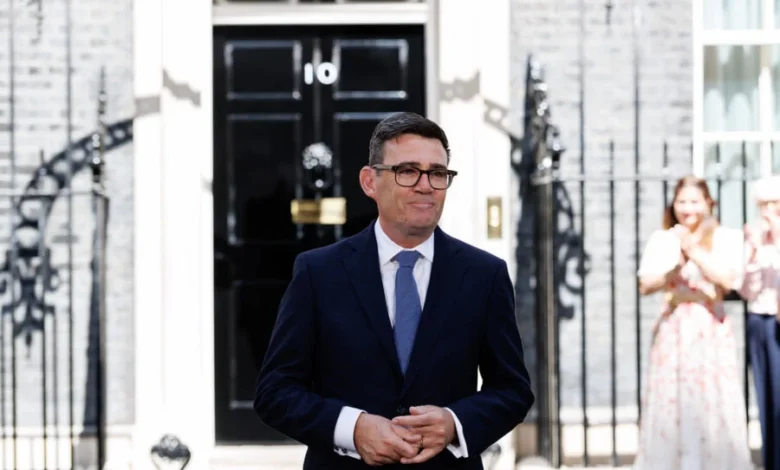
In his first major policy intervention since taking office, Prime Minister Andy Burnham has formally abandoned the United Kingdom’s proposed national digital identity scheme, marking a decisive shift in the government’s approach to public service modernization and immigration enforcement. The decision, announced less than 24 hours after Burnham entered 10 Downing Street, signals the end of the "Brit Card," a flagship proposal inherited from the previous administration under Sir Keir Starmer. By cancelling the multi-billion-pound programme, the new government intends to redirect funds to provide immediate financial relief to households through the abolition of Value Added Tax (VAT) on domestic electricity bills, effective from 1 October.
The move represents a significant pivot in domestic policy, prioritizing the immediate cost-of-living crisis over long-term technological infrastructure projects. The Prime Minister’s office confirmed that the decision was finalized during the first meeting of the newly formed Cabinet on Monday. According to Treasury estimates, the abolition of the 5% VAT rate on household electricity will save the average UK household approximately £45 per year. While a modest sum individually, the government argues that the cumulative effect will provide essential breathing room for millions of families struggling with persistent inflationary pressures.
Fiscal Realignment: The Cost of the Brit Card vs. Energy Relief
The financial logic underpinning the Prime Minister’s decision rests on a direct reallocation of capital. The digital ID programme, colloquially known as the Brit Card, was projected to cost the taxpayer approximately £1.8 billion over the next three fiscal years. The scheme was originally envisioned as a mandatory digital identity for all workers, intended to streamline the process of proving employment eligibility and accessing government services while simultaneously cracking down on illegal working and social security fraud.
By contrast, the government estimates that the removal of VAT on household electricity will cost the Exchequer approximately £850 million during the current financial year. By halting the Brit Card’s rollout, the Burnham administration claims it can fully fund the tax cut without increasing borrowing or cutting frontline services. This "fiscal swap" is being framed by Downing Street as a pragmatic choice that favors "people over bureaucracy."
The Brit Card had been a cornerstone of Sir Keir Starmer’s domestic agenda, designed to bring the UK’s labor market documentation into the 21st century. However, the programme faced mounting criticism from civil liberties groups concerned about data privacy and from business leaders who feared the administrative burden of implementing mandatory digital checks. By scrapping the plan, Burnham has not only secured a funding stream for his energy policy but has also neutralized a brewing political controversy regarding state surveillance and data centralization.
A Rapid Transition: The First 24 Hours of the Burnham Ministry
The speed with which the Prime Minister has moved to dismantle the digital ID scheme reflects the urgency of his "Manchesterism" platform—a brand of politics rooted in regional empowerment and direct economic intervention. Following a swift transition of power that saw Sir Keir Starmer step down, Burnham was invited by the King to form a government on Monday morning. Eschewing the traditional lengthy leadership contest, the party moved quickly to install Burnham, who previously served as the Mayor of Greater Manchester, to provide stability and a fresh economic perspective.
In his inaugural address on the steps of Downing Street, Prime Minister Burnham outlined a vision centered on four pillars: easing cost-of-living pressures, reintegrating young people not in education, employment, or training (NEET) into the workforce, ending rough sleeping, and executing a 10-year plan for regional economic parity. The cancellation of the Brit Card is the first tangible manifestation of this agenda.
"The priorities of this government are clear," the Prime Minister stated during his address. "We will not spend billions on identity cards while families are choosing between heating and eating. We are choosing to put money back into the pockets of hard-working people immediately."

The New Cabinet: Continuity and Change
To oversee this transition, Burnham has assembled a Cabinet that blends ideological continuity with strategic new appointments. John Healey has been named Chancellor of the Exchequer, tasked with the immediate implementation of the VAT cut and the broader restructuring of the national budget. Ed Miliband takes over as Foreign Secretary, while Wes Streeting moves to the Ministry of Defence.
In a move designed to reassure the business community and maintaining stability in the labor market, Pat McFadden remains Secretary of State for Work and Pensions. McFadden will continue to oversee the department responsible for employment support and welfare policy, a role that is crucial as the government navigates the ongoing implementation of the Employment Rights Act 2025.
Other key appointments include Angela Rayner as Housing Secretary, where she is expected to lead the charge on the Prime Minister’s pledge to end rough sleeping. Shabana Mahmood retains her role as Home Secretary, though her remit will now shift away from the implementation of the Brit Card toward alternative methods of tackling illegal working. Louise Haigh has been appointed Chancellor of the Duchy of Lancaster, a role that will be central to the government’s efforts to modernize public services without the use of a centralized digital ID.
Business and HR Reactions: A Demand for Clarity
While the VAT cut has been broadly welcomed by consumer advocacy groups, the business community has reacted with a mixture of relief and caution. Human resources professionals and employment law experts have spent the last year preparing for the introduction of the Brit Card, and its sudden cancellation has left many seeking a clearer roadmap for the future of employment verification.
Kate Palmer, Chief Operating Officer at the employment law consultancy Peninsula, noted that the rapid change in leadership has created a period of uncertainty for employers. "Andy Burnham is the fourth Prime Minister to walk through the famous black doors in the last four years," Palmer said. "Unlike previous appointments, there was no leadership contest, so we have limited information on what specific policies he will be bringing in beyond his initial pledges."
Palmer emphasized that while businesses would welcome relief on energy bills and statutory costs, they remain focused on the significant legislative changes already in motion. "Employers will be watching keenly for some direction from the government as they continue to navigate changes coming under the Employment Rights Act 2025," she added.
Alan Price, Chief Executive of HR software provider BrightHR, echoed these sentiments, urging business owners to stay focused on existing statutory requirements. "Since Sir Keir Starmer announced his intention to step down, small business owners have been anticipating the new leader’s stance on taxation and employment law. My advice is to prepare for what you know. Keep an eye out for announcements but stay focused on running your business and preparing for the reforms you already know about."
Regional Growth and the Impact on SMEs
A core component of Burnham’s platform is the belief that national growth is driven by regional success. This "bottom-up" economic philosophy suggests that supporting small and medium-sized enterprises (SMEs) in the North, the Midlands, and the South West is more effective than centralized, London-centric initiatives.
Kevin Fitzgerald, UK Managing Director at Employment Hero, pointed out that regional businesses are currently facing unique pressures. "Our data shows employment growth in the North is outpacing even that of London, but employers are being hit harder by rising employment costs and complexity," Fitzgerald explained. He argued that the cancellation of the Brit Card might remove one layer of administrative complexity, but the government must do more to facilitate hiring.

"If the vision for ‘Manchesterism’ is growth driven by the regions, then we must look at national policies which make hiring and growth complex for SMEs," Fitzgerald said. "Increasing businesses’ ability to be ambitious and make hiring decisions will ultimately support communities up and down the country."
Historical Context: The Long Shadow of Identity Cards in the UK
The cancellation of the Brit Card is the latest chapter in the UK’s long and fraught history with national identity schemes. The last major attempt to introduce ID cards was under the Labour government of Tony Blair and Gordon Brown via the Identity Cards Act 2006. That scheme faced fierce opposition on the grounds of cost, infringement on civil liberties, and technical unreliability. It was eventually scrapped by the Conservative-Liberal Democrat coalition in 2010, with the then-Home Secretary Theresa May describing it as "intrusive and bullying."
Sir Keir Starmer’s Brit Card was intended to be different—a "digital-first" solution designed for a modern economy rather than a physical card. However, the fundamental concerns remained the same. Critics argued that a centralized database of every worker in the UK would be a prime target for cyberattacks and could lead to "function creep," where the ID would eventually be required for everyday activities like purchasing age-restricted goods or accessing healthcare.
By abandoning the project so early in his premiership, Burnham has avoided a protracted legislative battle. However, the problem the Brit Card was meant to solve—the difficulty of verifying the right to work in an increasingly gig-based and remote economy—remains. The Home Office will now need to find alternative, likely decentralized, methods to support employers in their compliance duties.
Looking Ahead: The Employment Rights Act 2025
While the digital ID scheme is off the table, the Burnham government remains committed to the Employment Rights Act 2025. This landmark legislation is expected to introduce significant changes to zero-hours contracts, fire-and-rehire practices, and day-one rights for workers.
For HR departments, the focus now shifts from preparing for a new digital identity system to ensuring compliance with these upcoming labor reforms. The government’s 10-year plan for economic opportunity is expected to be published later this year, providing more detail on how the administration intends to balance worker protections with the need for business flexibility.
As the 1 October deadline for the VAT cut approaches, the Treasury will be under pressure to demonstrate that the savings from the Brit Card cancellation are being utilized effectively. For Prime Minister Andy Burnham, the success of this first policy decision will be measured not just by the balance sheets in Whitehall, but by the tangible impact on household budgets across the country. In the high-stakes world of British politics, Burnham has made his first move: a gamble that immediate financial relief will buy the political capital necessary to reshape the nation’s economic geography.