Inside VistaPrint: How Chief People Officer Louise Welch is Redefining HR for the Remote-First Era

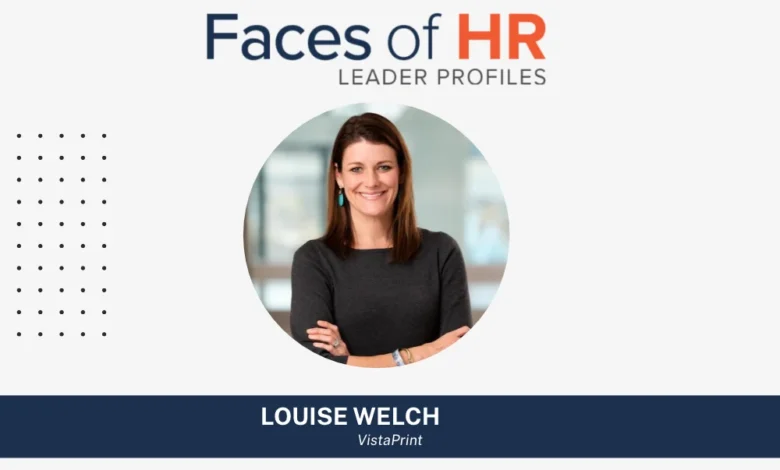
The global landscape of work has undergone an unprecedented transformation over the past decade, shifting from traditional, centralized corporate offices to sprawling, remote-first ecosystems. At the heart of this evolution for global print and design giant VistaPrint is Louise Welch, a seasoned human resources executive who stepped into the role of Chief People Officer in September 2024. Bringing more than two decades of elite experience across the technology and finance sectors, Welch has been tasked with steering the talent strategies that keep VistaPrint’s international workforce connected, engaged, and resilient in an increasingly complex digital economy.
While millions of small business owners worldwide know VistaPrint for its customized marketing materials and ubiquitous brand presence, fewer understand the intricate machinery required to sustain a global enterprise operating across disparate time zones and cultures. Welch’s appointment marked a strategic pivot for the company, aligning its internal people operations with the demands of a modern, decentralized workforce. Her mandate extends beyond traditional administrative functions, focusing instead on cultivating psychological safety, scaling organizational culture, and integrating emerging technologies into the daily employee experience.
A Heavy-Hitting Tech Pedigree and Foundational Roots
Welch’s path to the C-suite at VistaPrint is built upon a robust foundation spanning some of the most influential technology companies of the twenty-first century. Her professional journey began with an academic background in psychology, a discipline that instilled in her a profound fascination with human behavior, motivation, and group dynamics. This early curiosity naturally funneled her into the human resources sector, landing her first industry role at a pioneering San Francisco startup that utilized early artificial intelligence algorithms to match candidates with employment opportunities.
That initial exposure to HR technology proved prophetic. Shortly thereafter, Welch joined Google during a period of explosive, hyper-growth. Over a 14-year tenure at the search giant, she operated across diverse operational domains, including university relations, human resources technology, business partnering, and talent management. Her ascent culminated in prominent leadership positions, serving as both Global Head of Talent Management and Global Head of Talent and HR Products.
Following her formative years at Google, Welch expanded her corporate footprint by taking on leadership roles at other major financial and technological powerhouses. At Capital One, she spent five years spearheading strategic initiatives, holding titles such as Vice President of Product Management for Employee Experience and Head of Tech HR. Subsequently, she transitioned to Amazon as the Director of Human Resources for Devices and Services, where she directed talent development and employee engagement initiatives for a rapidly expanding division tasked with building consumer hardware and ambient intelligence ecosystems.
The Evolution of Human Resources in the Digital Age
Reflecting on her expansive career, Welch points to several key mentors and transformative developmental experiences that shaped her leadership philosophy. Among her earliest and most enduring influences is Laszlo Bock, the former Chief Human Resources Officer at Google, who popularized the integration of data analytics with deep empathy in workplace management. At Amazon, executive leaders such as Beth Galetti and Ian Wilson demonstrated to Welch the mechanics of driving large-scale transformation and innovating with enterprise HR technology. Furthermore, external frameworks like the Learning as Leadership program provided her with intensive training in self-awareness, emotional regulation, and authentic leadership.
These collective experiences have directly informed Welch’s operational strategy at VistaPrint. In a modern corporate environment where artificial intelligence and automation are rapidly altering operational workflows, Welch argues that the primary function of human resources must evolve in tandem. Rather than acting as a reactive cost center or a purely administrative compliance department, modern HR operations must function as a strategic engine for enterprise growth, innovation, and community resilience.
According to Welch, the future of work is not merely about adopting novel software tools or managing hybrid schedules. Instead, it requires a fundamental redesign of how organizations support their personnel through periods of macroeconomic volatility and technological disruption. By combining empirical data insights with human-centered empathy, People and Culture teams can help executive leadership navigate internal and external structural shifts without sacrificing organizational culture.
Navigating Professional Challenges and Lessons in Leadership
Even seasoned executives encounter critical learning curves over the course of their careers. Welch is candid about the professional hurdles she faced early on, most notably during a high-stakes executive presentation. Over-reliant on raw data and quantitative metrics, she immersed herself so deeply in factual details that she lost sight of the broader narrative arc, ultimately missing the opportunity to deliver a compelling, persuasive message to company leadership.
That experience served as a permanent lesson in executive presence, narrative framing, and the realization that organizational influence requires more than factual accuracy alone. It also taught her the importance of slowing down, clarifying operational priorities, and delegating authority to allow team members room to lead—a critical competence in managing complex, global departments.
Another defining pillar of Welch’s philosophy is the establishment of psychological safety within the workplace. She maintains that true psychological safety transcends basic comfort; it requires the deliberate construction of an environment where employees feel intellectually secure enough to take calculated risks, innovate, make mistakes, and pursue continuous professional growth. In a remote-first enterprise like VistaPrint, where digital communication channels often replace spontaneous face-to-face interactions, fostering this level of trust is doubly critical. Welch believes that when employees feel genuinely valued and supported by their leadership, their collective energy directly enhances the quality of service delivered to external customers and global small business owners.
The Horizon: AI Agents and the Agentic Organization
Looking toward the next five years, Welch anticipates a profound structural transition across the corporate landscape driven by artificial intelligence. She identifies the emergence of the "agentic organization" as a watershed moment for white-collar labor. As autonomous AI agents and sophisticated machine learning models assume responsibility for tactical execution and operational "how-to" workflows, human workers will be increasingly freed to focus on strategic conceptualization, complex problem-solving, and normative reasoning—the "what" and the "why."
This impending shift places a premium on distinctly human capabilities, including critical thinking, systemic analysis, sound ethical judgment, and empathetic leadership. Consequently, human resources departments will likely shift their primary focus away from routine task coordination and administrative logistics. Instead, HR professionals will act as architects of high-trust environments where human creativity and technological capability intersect productively.
Beyond her corporate responsibilities, Welch balances her high-profile executive career with raising three daughters, an endeavor she cites as her most rewarding personal challenge. Her internal journey has involved dismantling perfectionism, silencing negative self-talk, and embracing vulnerability as a strength rather than a liability. Professionally, her greatest source of pride remains the development of high-performing, capable teams destined to produce the next generation of industry leaders.
For individuals entering the human resources profession today, Welch offers pragmatic counsel grounded in adaptability and intellectual curiosity. She encourages newcomers to proactively volunteer for unfamiliar projects, embrace ambiguity, and challenge long-standing corporate assumptions. By cultivating deep business acumen and maintaining an experimental mindset toward traditional ways of working, the next generation of HR leaders can secure an indispensable seat at the executive table, proving that human-centric strategy remains the ultimate competitive advantage in the global economy.