ICE Reclassifies Form I-9 Errors to Substantive Violations Signaling a Major Shift in Workplace Enforcement and Increased Employer Penalties

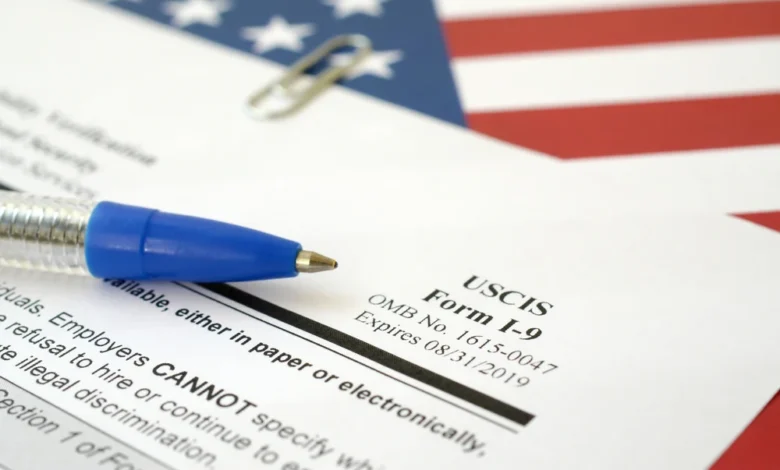
In a move that has sent shockwaves through the human resources and legal compliance sectors, U.S. Immigration and Customs Enforcement (ICE) updated its Form I-9 inspection fact sheet on March 16, 2026, fundamentally altering the landscape of workplace immigration enforcement. The federal agency has recategorized a wide array of Form I-9 errors, shifting them from "technical or procedural" violations to "substantive" violations. This reclassification is significant because substantive violations are subject to immediate fines, whereas technical errors historically allowed for a "cure period" during which employers could rectify mistakes without facing monetary penalties. By bypassing the traditional notice-and-comment rulemaking process, ICE has implemented a policy shift that significantly lowers the threshold for issuing hefty civil penalties, even for administrative oversights that were previously considered minor.
The Evolution of I-9 Enforcement: A Departure from the 1997 Virtue Memorandum
To understand the magnitude of this change, one must look back at the historical framework of I-9 enforcement. Since 1997, ICE and its predecessor, the Immigration and Naturalization Service (INS), have operated under the guidance of the "Virtue Memorandum." Named after Paul Virtue, then-Acting Executive Associate Commissioner of the INS, this memorandum established a critical distinction between two types of errors on the Form I-9, the document used to verify the identity and employment authorization of individuals hired for employment in the United States.
Under the Virtue Memorandum, "substantive" violations were defined as serious failures to comply with the Immigration Reform and Control Act of 1986 (IRCA), such as failing to prepare a Form I-9 at all or failing to sign the document. These were fineable upon discovery. Conversely, "technical or procedural" violations—such as failing to provide a date or omitting a middle initial—were treated with more leniency. Employers were typically issued a "Notice of Technical or Procedural Failures" and granted at least ten business days to correct the errors. If the errors were corrected within that window, no fine would be assessed.
The March 2026 update effectively dismantles this grace period for a variety of common errors. By reclassifying these mistakes as substantive, ICE has eliminated the requirement to provide a cure period, meaning that an employer’s first notice of a mistake could arrive in the form of a fine.
Detailed Reclassification: Which Errors Are Now Substantive?
The updated fact sheet targets specific areas of the Form I-9 that have historically been the site of frequent, albeit often unintentional, errors. The reclassification means that the following omissions or mistakes are now likely to result in immediate financial liability:
- Missing Document Information in Section 2: Previously, if an employer failed to record the document title, issuing authority, or expiration date in Section 2 (the Employer Review and Attestation section), but had maintained a clear copy of the document itself alongside the form, the error was often treated as technical. The new guidance removes this protection. Even if a photocopy of a Social Security card or passport is attached, the failure to transcribe the specific data points onto the form is now a substantive violation.
- Missing Employer Business Address: Failure to include the full business address in Section 2 is no longer a minor oversight. ICE now views this as a failure to properly complete the attestation, making it a fineable offense.
- Omission of "Other Last Names Used": In Section 1, employees are required to list any other legal names they have used (such as maiden names). Under the new policy, leaving this field blank or failing to ensure the employee completed it is being elevated to a substantive error.
- Missing Employee Name on Page 2: While it may seem redundant, the Form I-9 requires the employee’s name to be entered at the top of the second page. Failure to do so is now categorized as a substantive failure.
- Social Security Number Omissions (Non-E-Verify): For employers not enrolled in E-Verify, providing a Social Security number in Section 1 is technically optional under certain circumstances, but ICE’s new posture suggests that missing data in these fields will be scrutinized more heavily and potentially penalized if any other procedural flaws exist.
The Escalating Financial Burden: Calculating Potential Fines
The financial implications of this policy shift are profound, particularly for large-scale employers or those with high turnover rates. Under 8 C.F.R. § 274a.10(b)(2), civil penalties for I-9 paperwork violations are adjusted annually for inflation. As of 2026, these fines range from approximately $288 to $2,861 per individual Form I-9.
The "per form" nature of these penalties means that costs aggregate rapidly. Consider a medium-sized enterprise with 500 employees. If an internal audit reveals that 20% of their I-9 forms contain one of the newly reclassified substantive errors—such as a missing document expiration date that was previously considered "curable"—the company could face a minimum fine of $28,800. If the violation rate is higher or if ICE determines that the errors were pervasive, that penalty could soar toward $286,100 for the same 100 forms.
ICE utilizes a complex scoring metric to determine where a fine falls within the $288 to $2,861 range. Factors that can increase the fine (multipliers) include:
- The size of the business.
- The good faith of the employer.
- The seriousness of the violation.
- Whether or not the individual involved was an unauthorized alien.
- The history of previous violations by the employer.
Conversely, mitigation factors can be argued to lower the fine, but with more errors labeled as "substantive," the baseline for negotiations has shifted significantly in the government’s favor.
A Chronology of Increasing Oversight
This 2026 policy change does not exist in a vacuum but is the latest step in a decade-long trend toward stricter workplace compliance.
- 2013-2017: The introduction of "smart" PDF versions of the Form I-9 was intended to reduce errors, but it also made it easier for ICE to perform automated audits of electronic records.
- 2020-2023: During the COVID-19 pandemic, DHS allowed for "virtual" verification of documents. However, when these flexibilities ended in July 2023, employers were required to perform physical inspections for all employees hired during the period, leading to a massive backlog and a spike in procedural errors.
- August 2023: DHS authorized an alternative procedure for E-Verify employers to verify documents remotely on a permanent basis, provided they followed strict protocols.
- 2024-2025: ICE increased the frequency of "Notices of Inspection" (NOIs), shifting focus from high-profile raids to "paperwork audits" which are less resource-intensive for the agency but highly lucrative in terms of fines.
- March 16, 2026: The current reclassification of errors marks the most aggressive administrative move to date to maximize penalty revenue without changing the underlying statutes.
Industry Reactions and Legal Concerns
Legal experts and business advocacy groups have expressed concern regarding the lack of transparency in this update. Because the changes were made to a "fact sheet" rather than through the formal rulemaking process required by the Administrative Procedure Act (APA), critics argue that employers were not given adequate notice to update their training and internal systems.
"This is essentially a ‘gotcha’ policy," says one prominent employment attorney. "By changing the definitions of what constitutes a fineable error overnight, the government is penalizing employers for administrative habits that were perfectly acceptable, or at least curable, for nearly thirty years. It places a massive burden on HR departments to be 100% perfect on every line of a notoriously confusing form."
HR professional organizations have also noted that the removal of the protection provided by keeping document copies is particularly harsh. For years, the practice of "attaching copies" was seen as a best-practice safety net. Now, that safety net has been removed, making the physical act of data entry on the form the sole metric for compliance in many instances.
Broader Implications and Strategic Analysis
The move by ICE signals a shift in enforcement strategy toward "strict liability" for paperwork. This suggests that the agency is prioritizing fiscal deterrence and administrative accuracy over the original intent of IRCA, which was primarily to prevent the hiring of unauthorized workers. For the federal government, these fines represent a significant revenue stream that is easier to collect than pursuing criminal charges for "knowing hire" violations.
For employers, the implications are clear: the margin for error has disappeared. This policy change will likely drive a surge in the adoption of electronic I-9 management systems. However, even these systems are not foolproof, as many substantive errors occur at the point of employee input in Section 1.
Furthermore, the focus on Section 2 document details suggests that ICE is looking to close loopholes where employers might have been lax in verifying the actual expiration dates of work authorization documents. This has a direct impact on "continuing to employ" violations, as an expired document noted on a form—or missing entirely—is now an immediate red flag for auditors.
Recommendations for Compliance in the New Era
In light of these changes, businesses are encouraged to take immediate action to mitigate their risk profile. Waiting for a Notice of Inspection (NOI) is no longer a viable strategy, as the opportunity to "cure" many errors will have already passed.
- Conduct Immediate Internal Audits: Employers should perform a self-audit of their current I-9 forms, specifically looking for the errors now classified as substantive. While errors on existing forms cannot always be "fixed" without following specific amendment protocols (initialing and dating changes), identifying patterns of error can help stop future violations.
- Enhance HR Training: Staff responsible for onboarding must be retrained to understand that every field on the Form I-9 is now a potential multi-thousand-dollar liability. The "it’s just a typo" mindset must be replaced with a culture of forensic accuracy.
- Review Remote Verification Protocols: For E-Verify users utilizing the alternative remote verification procedure, ensuring that every step of the process—including the video call and the specific checkbox on the form—is completed perfectly is now more critical than ever.
- Evaluate Electronic Storage Systems: Not all electronic I-9 systems are compliant with the strict indexing and retrieval requirements of 8 C.F.R. § 274a.2(e). Employers should ensure their software vendors have updated their systems to reflect the March 2026 guidance.
- Engage Legal Counsel: Given the nuances of how various ICE field offices may interpret this new fact sheet, consulting with immigration counsel to develop a robust compliance program is a necessary investment to avoid potentially ruinous fines.
The March 16, 2026, update represents a new chapter in workplace regulation. By redefining the stakes of administrative compliance, ICE has signaled that the Form I-9 is no longer just a verification tool, but a high-stakes legal document where even minor clerical omissions carry significant financial consequences. As the agency begins to apply these new standards in field inspections, the true cost of this policy shift for the American business community will become increasingly apparent.