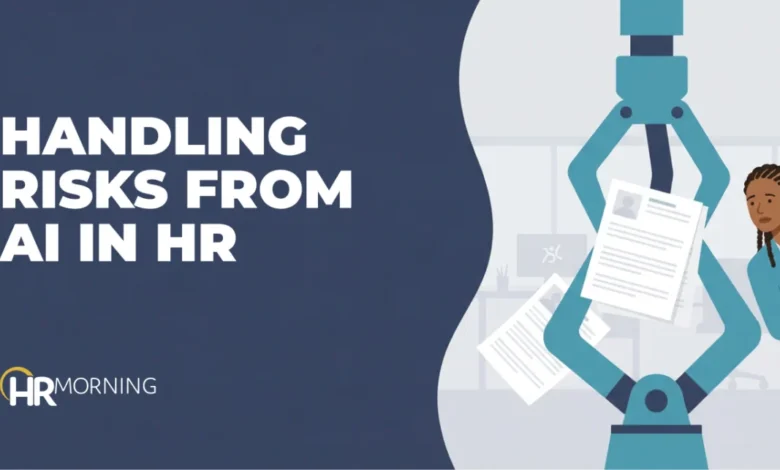
The integration of artificial intelligence into the human resources function has transitioned from a futuristic experiment to a fundamental operational reality. As organizations scramble to capture efficiency gains in recruitment, performance management, and compensation, a critical oversight is emerging: the legal and ethical accountability for automated decisions remains firmly with the employer, regardless of the technology’s complexity. While software vendors promise streamlined workflows and objective data-driven insights, the burden of proof in the event of discrimination or wrongful termination rests solely on the human resources department and the organization it serves.
This shift in the workplace landscape necessitates a rigorous reevaluation of corporate governance. When an algorithm determines the shortlist for an executive position or identifies candidates for redundancy, the "black box" nature of machine learning models creates a significant liability. If a candidate questions why they were rejected or an employee challenges a promotion decision, HR must be prepared to articulate the logic behind the output. The inability to explain these decisions is no longer a technical limitation; it is a profound business risk.
The Evolution of Algorithmic Decision-Making in HR
The adoption of AI in HR has accelerated rapidly over the last three years. Driven by the need to manage high volumes of applications and the desire to remove human bias from the hiring process, companies have deployed sophisticated tools for resume screening, video interview analysis, and predictive performance modeling. By late 2024, industry surveys indicated that over 60% of Fortune 500 companies had integrated at least one form of AI-driven tool into their talent acquisition pipelines.
However, the technology’s trajectory has been met with increasing scrutiny from regulatory bodies, including the Equal Employment Opportunity Commission (EEOC) in the United States. In 2023, the EEOC issued guidance clarifying that the use of AI and algorithmic decision-making tools in employment practices must comply with existing federal anti-discrimination laws, such as Title VII of the Civil Rights Act of 1964. Despite this, many organizations have failed to implement the necessary audits to ensure their tools do not inadvertently replicate historical biases.
The Mechanics of Scalable Bias
The primary danger of AI in HR is not that it introduces new forms of bias, but that it digitizes and accelerates existing ones with unprecedented speed and consistency. Human recruiters might exhibit individual biases, but these are often idiosyncratic and isolated. Conversely, an AI model trained on historical data—which likely contains the cumulative prejudices of past hiring decisions—will apply those biases across the entire applicant pool with mathematical precision.
For example, if an organization’s historical data shows that successful sales managers were predominantly male and from specific universities, the model may "learn" to prioritize these traits. Over time, the system might penalize candidates with career gaps, those who attended non-traditional institutions, or individuals living in specific zip codes that correlate with protected demographic characteristics. Because the system expresses these preferences as high-level "match scores," the discriminatory intent is masked by a veneer of objective, quantitative data. This creates a dangerous feedback loop where the model constantly reinforces past exclusionary patterns, making them appear as statistically valid predictors of success.
Why Human-in-the-Loop Safeguards Fail
Many corporations cite the "human-in-the-loop" model as their primary defense against algorithmic error. The concept is straightforward: an AI makes a recommendation, and a human employee reviews it before final approval. In practice, this safeguard is frequently ineffective.
Studies in behavioral psychology and workplace management have highlighted the phenomenon of "automation bias," where human reviewers tend to accept the output of an automated system as accurate without critical evaluation. If a recruiter is tasked with reviewing 500 resumes a day, they are likely to rely on the AI’s ranking to save time, effectively treating the tool’s output as a directive rather than a suggestion. When the human reviewer lacks the time, training, or authority to challenge the system’s logic, the "human-in-the-loop" becomes nothing more than a rubber stamp, providing a false sense of security that offers no protection against litigation.
The Legal and Financial Consequences
The legal exposure for companies using flawed AI tools is substantial. Under the theory of "disparate impact," an employer can be held liable for discrimination even if they did not intend to discriminate, provided their practices lead to a disproportionately adverse outcome for a protected group. In the context of AI, the plaintiff does not need to prove that the programmer wrote a discriminatory algorithm; they only need to prove that the system’s output resulted in unfair treatment.
Furthermore, outsourcing these functions to a third-party vendor provides no legal shield. Courts have consistently held that the employer is responsible for the tools it chooses to employ. Relying on a vendor’s claim that their product is "bias-free" is insufficient due diligence. Legal counsel suggests that companies must perform their own algorithmic impact assessments (AIAs) before deployment. These assessments should evaluate the training data, the specific variables used for decision-making, and the ongoing outcomes of the system.
Implementing Robust Governance Frameworks
To mitigate these risks, organizations must integrate AI oversight into their existing risk management frameworks. This requires a cross-functional approach involving HR, IT, legal, and compliance departments. The following steps constitute the current best practices for responsible AI implementation in the workplace:
- Pre-Deployment Auditing: Before any AI tool is integrated into the workflow, the organization must conduct an independent bias audit. This involves testing the tool against representative data sets to identify potential disparate impacts on protected classes.
- Transparency and Explainability: HR departments should demand "explainability" from their vendors. If a system cannot provide the specific factors that led to a candidate’s score or a performance ranking, it should not be used for high-stakes decisions.
- Continuous Monitoring: AI systems are not "set and forget" tools. Organizations must establish a cadence for reviewing the tool’s performance to ensure that its recommendations remain aligned with company policy and legal standards as the model encounters new data.
- Documentation and Record Keeping: Maintaining a thorough audit trail of how decisions were made—and the role AI played in those decisions—is critical for defending the company in the event of an inquiry or lawsuit.
The Broader Implications for Human Resources
The role of the HR professional is evolving from an administrative function to one that requires a deep understanding of data ethics and algorithmic literacy. As AI continues to influence more aspects of the employment lifecycle, the ability to interpret and critique automated outputs will become a core competency.
The transition to AI-augmented decision-making should not be viewed as a means to automate away human judgment, but as a tool to support it. The goal for HR leaders is to ensure that every decision—whether influenced by a complex algorithm or a manual process—can be explained, tested, and defended. By treating AI risk as a core component of the company’s overall risk profile, HR departments can foster innovation while protecting the organization from the significant legal and reputational threats posed by poorly governed technology.
As the regulatory environment matures, it is expected that governments will impose stricter requirements for transparency and accountability. Organizations that proactively build governance structures today will be better positioned to adapt to these inevitable changes. The future of work is undeniably digital, but the responsibility for the outcomes remains fundamentally human.