The Perils of Mismatched Headcount Data and the Quest for a Unified Operating Model in HR and Finance

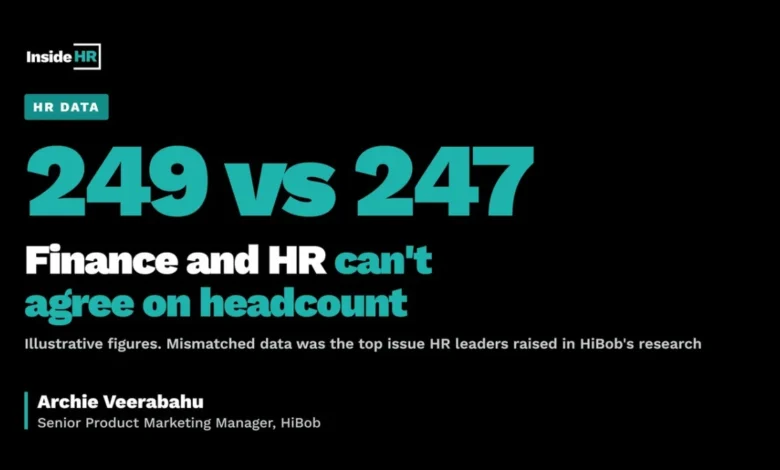
In the complex landscape of modern corporate management, few operational failures are as pervasive or as damaging as the discrepancy between HR and finance data. When Finance reports a headcount of 249 and HR insists on 247, the resulting friction is more than just a minor administrative annoyance; it represents a fundamental fracture in organizational integrity. This "headcount mismatch" has emerged as the single most significant pain point for HR leaders, particularly during high-stakes events such as mergers, acquisitions, and large-scale restructures. Archie Veerabahu, Senior Product Marketing Manager at HiBob, recently highlighted this issue, noting that in the absence of a "single source of truth," the official headcount becomes whoever happens to be the last person standing after burning the midnight oil to reconcile the numbers.
The Anatomy of a Data Crisis
The disconnect between Human Resources and Finance departments often stems from the siloed nature of corporate software architectures. HR departments typically utilize Human Resources Information Systems (HRIS) to manage talent lifecycles, payroll, and benefits, while Finance departments rely on Enterprise Resource Planning (ERP) or specialized accounting software to track labor costs, budgetary allocations, and tax liabilities.
The problem arises from fundamental differences in how these systems define an "employee." For an HR team, an employee is a human being within the organization who requires onboarding, performance management, and career development. For Finance, an employee is a cost center, a line item on a ledger, or a tax entity. When these definitions fail to sync—such as when a contractor is categorized as an employee in one system but an external service provider in another, or when the timing of a termination entry is delayed across platforms—discrepancies become inevitable.
Historical Context and the Evolution of the Problem
Historically, headcount reconciliation was a manual, once-a-month task performed by junior analysts. However, the modern business environment has fundamentally shifted. The rise of the gig economy, the prevalence of remote work, and the increased frequency of mergers and acquisitions (M&A) have turned monthly reconciliation into a constant, real-time necessity.
In the early 2000s, organizations operated with more static workforces. Today, the velocity of change is unprecedented. A mid-market firm might undergo two major restructures in a single fiscal year. During these periods, the pressure on HR and Finance to align is immense. If the "people data" is unreliable, the valuation of an acquisition target or the efficacy of a workforce reduction plan is compromised. Investors, boards, and regulatory bodies demand precision, yet internal teams are often left struggling to reconcile spreadsheets that simply do not talk to each other.
The Cost of Discrepancies: Quantitative Evidence
Research conducted by HiBob, as discussed in the recent InsideHR webinar Designing for Change: A Modern Operating Model for HR, underscores the magnitude of this problem. According to the findings, the inability to align people data is the number one issue cited by HR leaders. The financial and operational implications are quantifiable:
- Increased Audit Risk: Regulatory bodies and external auditors rely on accurate headcount reporting for tax compliance. Discrepancies can trigger internal investigations, fines, and reputational damage.
- Delayed M&A Integration: In the context of a merger, the first 100 days are critical. If HR and Finance cannot agree on the headcount of the acquired entity, the integration of payroll, benefits, and reporting lines is delayed, leading to employee anxiety and turnover.
- Budgetary Inefficiency: Organizations that cannot track their workforce in real-time often over-budget for open roles or fail to account for "hidden" costs associated with temporary labor, leading to significant variances in the quarterly P&L statement.
The Role of Technology in Modern Operating Models
To address these challenges, leading organizations are moving toward "Modern Operating Models." This involves integrating HRIS and Finance systems through APIs, ensuring that any change in an employee’s status—a promotion, a resignation, or a change in cost center—is reflected simultaneously in all relevant systems.
Veerabahu emphasizes that technology alone is not the solution; it is the catalyst for a broader cultural shift. "Designing for change" requires HR, Finance, and IT to sit at the same table to establish standardized naming conventions and data definitions. Before a restructure, leadership should consider six foundational questions:
- How is an "active employee" defined across all departments?
- What is our process for handling cross-departmental cost allocations?
- How do we ensure that real-time changes are synchronized?
- Are we prepared to automate the reconciliation process before the next reporting cycle?
- Is our data architecture ready to feed into AI-driven workforce planning tools?
- Who is the primary owner of the "source of truth" regarding people data?
AI and the Future of Workforce Planning
The urgency to solve the headcount mismatch has been amplified by the rise of Artificial Intelligence (AI) in the workplace. AI-driven predictive analytics rely heavily on the quality of historical data. If HR and Finance data sets are fragmented, any AI-generated insight regarding future hiring needs, attrition risks, or cost-cutting measures will be inherently flawed—a phenomenon commonly referred to as "garbage in, garbage out."
As organizations move toward AI-enabled HR, the requirement for data hygiene has transitioned from an administrative preference to a strategic imperative. Companies that successfully unify their people data will gain a significant competitive advantage, allowing them to pivot, hire, and restructure with a level of agility that their competitors, still grappling with conflicting spreadsheets, cannot match.
Official Perspectives and Industry Reaction
Industry experts and HR practitioners have long noted that the "headcount gap" is often a reflection of deeper organizational silos. In many corporations, Finance and HR have historically operated in "fiefdoms" with little cross-functional collaboration.
"The issue isn’t necessarily that the people are lying; it’s that the systems are speaking different languages," says one industry analyst. "When you look at the frustration expressed by HR leaders, it’s a symptom of a legacy structure that wasn’t built for the current speed of business."
The general consensus among those participating in the InsideHR webinar series is that the reconciliation process should be automated, transparent, and audited. By shifting from reactive reconciliation to proactive data management, HR leaders can reclaim their time from administrative troubleshooting and focus on the strategic components of their roles, such as culture building and talent development.
Implications for Organizational Resilience
Ultimately, the goal of resolving the headcount mismatch is to build organizational resilience. In an era of constant change, the ability to adapt is the primary marker of a successful firm. If a leadership team cannot determine exactly who works for them, how much they cost, and where they fit into the global organization, they cannot effectively lead.
The journey toward a unified operating model is not a quick fix. It requires investment in technology, a commitment to cross-departmental communication, and a rigorous approach to data governance. However, the alternative—remaining in a state of perpetual data confusion—is a risk that few modern companies can afford to take.
As HiBob’s research and the subsequent discourse from the InsideHR webinar series demonstrate, the path forward is clear: the integration of people data is no longer a "back-office" issue; it is a fundamental pillar of modern corporate strategy. Organizations that prioritize the alignment of HR and Finance will be better positioned to navigate the complexities of the future, while those that do not will continue to spend their most valuable resource—time—reconciling numbers that should have been in sync from the start.