Unlocking the Workforce Future: How LinkedIn’s Talent Velocity Framework is Reshaping Modern HR Strategy

In today’s fast-moving business world, skills are shifting faster than most organizations can keep up. Artificial intelligence is rewriting how work gets done, and traditional human resources playbooks are struggling to maintain pace. As technological integration accelerates across global markets, companies find themselves grappling with an unprecedented widening of the skills gap. Traditional hiring models, annual performance reviews, and static job descriptions are rapidly becoming obsolete in an environment where core competencies evolve in a matter of months rather than years.
Enter a game-changing concept for talent development leaders: Talent Velocity.
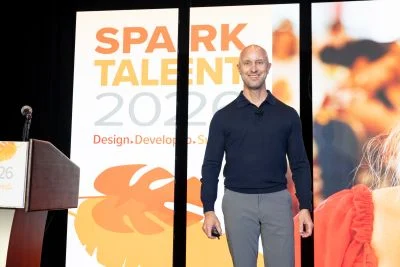
Introduced prominently by SPARK TALENT speaker Kevin Bishop, Director of Talent Development at LinkedIn, talent velocity is fundamentally shaking up how modern corporations think about workforce agility. Drawing directly from strategic insights published in LinkedIn’s comprehensive Talent Velocity Advantage report, Bishop explored during a keynote session what this vital concept means for modern organizations and provided actionable pathways for HR leaders to translate theoretical frameworks into practical, day-to-day strategies.
Defining Talent Velocity and the Confidence Advantage
At its core, talent velocity is defined as an organization’s operational ability to quickly identify its existing internal skills, build or acquire missing competencies through targeted development or recruitment, and mobilize talent in real-time to meet shifting market demands.
As Bishop pointed out to industry professionals during his address, there is no single cookie-cutter recipe for universal corporate success. "Every organization is unique," Bishop noted. "Every organization is going to embody talent velocity a little bit differently, but there are some things we’re gonna talk about today that are common, that can help you really bring that to life."
Organizations that master this operational velocity experience a massive, measurable confidence advantage over their traditional peers. According to the foundational data featured in LinkedIn’s report, companies classified as Talent Velocity Leaders report significantly higher confidence metrics across multiple critical business pillars:
- Aligning talent to rapidly changing organizational priorities (+36 points higher than lagging peers)
- Attracting critical talent in highly competitive job markets (+27 points higher)
- Retaining critical talent and mitigating costly turnover (+26 points higher)
- Overall corporate profitability and financial performance (+23 points higher)
These metrics underscore a profound shift: agility is no longer merely an HR metric, but a primary driver of macroeconomic enterprise value.
The Five Accelerators of Talent Velocity
How do top-tier talent leaders pull ahead of the competition? According to the strategic framework outlined in LinkedIn’s research report, driving sustained velocity relies on placing employee growth at the very center of organizational transformation. This is achieved through five foundational pillars, known as the accelerators of talent velocity:
- Dynamic Skills Mapping: Moving away from static job architectures to continuously track and update the shifting skills profile of the entire workforce.
- Accelerated Learning Ecosystems: Delivering targeted, bite-sized, and AI-driven learning opportunities that align with real-time business needs rather than delayed, yearly training cycles.
- Internal Mobility Infrastructure: Breaking down bureaucratic silos to make it frictionless for employees to discover and transition into new internal roles, projects, or developmental assignments.
- Inclusive Talent Acquisition: Expanding sourcing funnels to prioritize verified skills and potential over traditional pedigree markers, thereby broadening the accessible talent pool.
- Agile Leadership Enablement: Equipping frontline managers with the coaching skills and mindset required to support continuous employee development and real-time talent deployment.
Assessing Organizational Maturity: The Talent Velocity Curve
To help practitioners diagnose where their respective companies sit on this evolutionary journey, LinkedIn maps corporate progress across a developmental spectrum known as The Talent Velocity Curve. This curve categorizes organizations from initial baseline compliance up to advanced, fully integrated adaptive states.
When assessing where an organization falls along this curve, Bishop highlighted that progress is rarely uniform across the board. "You can look at one accelerator and think that you’re at level four, and you could look at another one and think, ‘Ah, we’re probably at level two,’ with regard to that one, right?" Bishop explained to the audience. "So really, this is meant to be a directional guide for you as you think about where you wanna focus your efforts to help accelerate talent velocity within your organization."
This diagnostic approach allows talent leaders to pinpoint specific operational bottlenecks—such as sluggish internal mobility or outdated skills data—without feeling overwhelmed by the prospect of total operational overhaul.
How LinkedIn Practices What It Preaches
If business leaders want to successfully build talent velocity within their own walls, observing how market leaders implement these practices internally offers invaluable lessons. LinkedIn itself serves as a living laboratory for the talent velocity framework, grounding its corporate culture in a philosophy famously summarized by internal leadership: "We dream big, we get shit done, and we know how to have fun."
Internally, LinkedIn operationalizes this ethos through several deliberate mechanisms:
- Prioritizing internal career marketplaces that match employees with short-term gigs, mentorships, and permanent internal openings before looking to external markets.
- Integrating AI-driven personalized learning recommendations directly into employees’ daily workflows, ensuring continuous upskilling without disrupting productivity.
- Fostering a transparent feedback culture where managers are evaluated on how effectively they develop and sponsor talent for opportunities outside their immediate departments.
By eating its own cooking, LinkedIn demonstrates that these strategies are not abstract theoretical concepts, but pragmatic operating procedures capable of scaling within large, complex enterprises.
Starting Small: Turning Theory into Action
The single greatest trap for talent development professionals is attempting to solve every systemic issue at once. When tackling massive, enterprise-wide initiatives—such as constructing comprehensive skills architectures for tens of thousands of global employees—the secret to avoiding paralysis by analysis is to start small.
As Bishop advised conference attendees during his concluding remarks, HR practitioners must focus intensely on what can realistically be achieved in the immediate term rather than getting bogged down by multi-year strategic roadmaps.
"Let’s focus on what you can do in the first thirty days from when you leave here today," Bishop urged, wrapping up his actionable presentation. By securing quick, measurable wins within the first month—such as auditing skills data within a single department or launching a pilot internal mobility program—organizations can build the momentum required to climb the Talent Velocity Curve and secure a lasting competitive advantage in an increasingly automated economy.