Media industry shifts define a week of major departures and strategic realignments across the television landscape

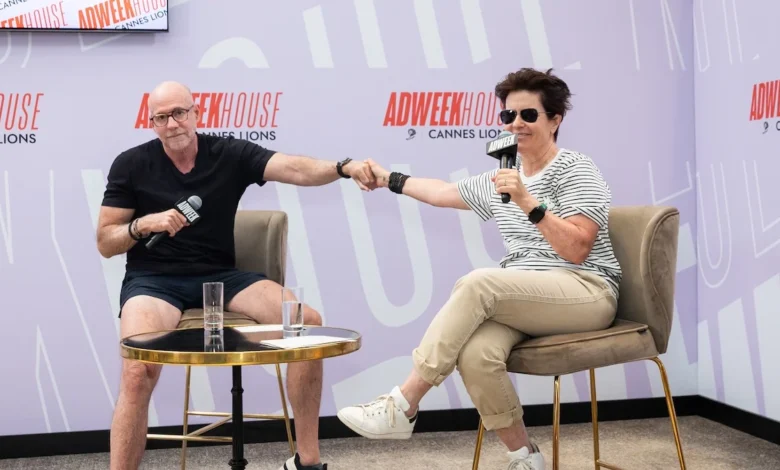
The media landscape is undergoing a significant period of transition, underscored by high-profile exits, corporate restructuring, and the strategic reshuffling of on-air talent across major cable news networks. At the forefront of these developments is the confirmation that technology journalist Kara Swisher will depart CNN following the finalization of the Paramount-Skydance acquisition of Warner Bros. Discovery. Simultaneously, networks including Fox News and CNBC are reinforcing their rosters, signaling a broader industry push to stabilize programming and capture specific audience demographics amidst a volatile fiscal environment.
The Swisher Departure and the Future of CNN
Kara Swisher, a prominent figure in technology journalism who joined CNN as an on-air contributor in November 2023, has formally signaled her intention to exit the network. Her decision follows the recent legal settlement between Paramount-Skydance and various state attorneys general, which paves the way for the conglomerate to assume full operational control of Warner Bros. Discovery.
Swisher, known for her candid commentary, confirmed her exit strategy during a recent episode of the Pivot podcast, which she co-hosts with Scott Galloway. She revealed that she had formally requested an early release from her contract, which is currently slated to expire on December 31. Reflecting on the change in corporate ownership, Swisher expressed a clear professional detachment, noting that while she had initially considered the possibility of working under the new management structure, she ultimately decided that the transition did not align with her professional objectives.
This departure is not a sudden pivot; Swisher had publicly contemplated her future with the network as early as June. Her exit highlights a growing trend among high-profile contributors who maintain strict autonomy regarding their professional affiliations. For CNN, the loss of Swisher represents a gap in tech-focused commentary, a niche that has become increasingly critical as the lines between corporate media and digital infrastructure continue to blur.
Corporate Consolidation and Network Strategy
The acquisition of Warner Bros. Discovery by Paramount-Skydance marks one of the most consequential media mergers in recent memory. By settling the antitrust concerns raised by state attorneys general, the deal has cleared its final major regulatory hurdle, effectively consolidating vast swaths of content production, distribution, and news gathering under one umbrella.
For CNN, this shift comes at a time when the network is attempting to balance its legacy as a global news powerhouse with the demands of a fragmented, multiplatform digital market. Beyond executive changes, the network is investing in physical and digital infrastructure to modernize its footprint. This includes the recent unveiling of a state-of-the-art facility in Media City, Doha. The facility is designed specifically for "CNN Creators," a multiplatform initiative that seeks to merge the traditional newsroom, studio, and production center into a single, cohesive, open-concept space. This design shift reflects an industry-wide move toward "content-agnostic" production, where a single piece of news is repurposed simultaneously for cable television, digital streaming, and social media platforms.
Additionally, CNN continues to lean into large-scale event programming. The network has confirmed its partnership with Farm Aid to broadcast the Farm Aid 2026: Musical Festival Live on September 26. The event, held at the Veterans United Home Loans Amphitheater in Virginia Beach, will feature live anchoring by John Berman and Laura Coates, with climate correspondent Bill Weir providing on-the-ground reporting. This effort underscores CNN’s strategy to utilize marquee cultural events to drive viewership in an era where traditional linear news ratings are increasingly reliant on live, unscripted specials.
Fox News Reshuffles and Talent Appointments
While CNN navigates corporate turnover, Fox News is aggressively adjusting its talent roster to maintain its dominant position in cable news ratings. The network has officially tapped Billy Bush, a veteran broadcaster, to join as a contributor appearing across all platforms. His debut on the September 17 edition of Jesse Watters Primetime signals the network’s intent to integrate more personality-driven content into its evening blocks.
The network is also addressing leadership gaps within its weekend programming. Larry Kudlow has been named the temporary anchor of Sunday Morning Futures through November 8. Kudlow fills the void left by Maria Bartiromo, whose departure from the network was announced on September 3. These moves suggest a desire to maintain continuity during a high-stakes news cycle, particularly as the network prepares for upcoming political seasons and the inevitable shifts in audience interest that accompany them.
Market Adjustments at CNBC
CNBC has announced a series of strategic appointments, reflecting an effort to bolster its business and technology reporting. The network’s expansion in the San Francisco bureau is particularly notable, with the hiring of Megan Morrone as a technology editor. Morrone arrives from Axios, bringing extensive experience in digital-first reporting.
Other key appointments at the network include Daren Fonda, who transitions from Barron’s to serve as a senior editor for investing, reporting to John Melloy. Additionally, the network has brought on Sebastien Chasse as a senior equity analyst and reporter, alongside Paulina Likos, who joins as a markets reporter. These investments in specialized financial journalism indicate that CNBC is doubling down on its core value proposition—providing real-time market analysis—at a time when retail and institutional investors are demanding more granular, data-driven reporting.
Cultural Milestones: Dateline’s 35th Anniversary
In the midst of organizational restructuring, some media entities are leaning into heritage. NBC News’ Dateline is celebrating its 35th season, a significant milestone for a program that has become an icon of investigative and true-crime television. To commemorate the premiere, NBC representatives, including Lester Holt, Josh Mankiewicz, Blayne Alexander, and Andrea Canning, participated in an illumination ceremony at the Empire State Building.
The building was lit in the signature blue associated with the program, a symbolic gesture reflecting the show’s endurance. Lester Holt’s remarks during the event emphasized the role of legacy programs in the modern television ecosystem, noting that Dateline serves as a cornerstone of broadcast journalism. The longevity of the series, which debuts its 35th season on Friday at 9 p.m. ET, provides a stark contrast to the rapid turnover seen in current cable news environments, proving that long-form investigative content remains a reliable driver of audience engagement.
Industry Implications and Future Outlook
The current "revolving door" of talent and ownership in the media sector points to three major trends:
- The Rise of the Independent Contributor: As seen with Kara Swisher, high-profile journalists are increasingly prioritizing their own brand equity and editorial independence over long-term network contracts. This limits the ability of large networks to "own" the talent they feature, making the industry more fluid but also less stable.
- Infrastructure as a Competitive Advantage: The investment in facilities like the Doha hub and the pivot to multiplatform, studio-newsroom hybrid environments suggests that networks are competing not just on content, but on the efficiency of their production workflows. The ability to churn out content for multiple screens simultaneously is now a primary KPI (Key Performance Indicator) for media executives.
- Strategic Niche Reinforcement: Networks like CNBC are narrowing their focus on specialized expertise, such as equity analysis and tech-sector reporting, to defend their market share against the proliferation of independent financial influencers and alternative digital media.
As the Paramount-Skydance acquisition reaches its final stages, the coming months will likely see further adjustments to personnel and programming strategies. For viewers, these changes represent a shifting media map where the traditional broadcast boundaries are becoming increasingly porous, and where the talent behind the desk is as mobile and influential as the stories they cover. The resilience of established brands like Dateline serves as a reminder that while the delivery mechanisms and ownership structures of media continue to evolve, the demand for consistent, high-quality, and recognizable programming remains the primary driver of the television industry.
Related posts: