The Evolution of Digital PR and the Rise of Answer Engine Optimization as the New Standard for Brand Visibility

Digital public relations has long been defined by the art of securing earned media coverage in outlets that provide access to audiences beyond the reach of traditional paid advertising. For decades, success in this field was quantified by circulation numbers, Domain Authority (DA) scores, and the sheer volume of placements. However, the rapid integration of artificial intelligence into search behavior has fundamentally altered the landscape. Today, the definition of “showing up” has shifted from securing a headline to appearing in the curated, AI-generated responses that increasingly serve as the primary research tool for modern buyers.
As consumers and B2B decision-makers transition toward using answer engines—AI-powered tools that synthesize information into direct, conversational responses—the brands that secure citations within those outputs gain a distinct competitive advantage. This evolution marks a departure from traditional press release distribution and media list management. Earned media that is cited by an AI model now carries a level of influence that far surpasses traditional media coverage, effectively positioning those brands as authoritative sources in their respective categories.
The Shift in Search Behavior and the New PR Paradigm
The transition toward AI-driven search began in earnest as search engines started experimenting with Generative AI (GenAI) features. This shift was accelerated by the widespread adoption of Large Language Models (LLMs), which prioritize factual accuracy and relevance when answering complex user queries. Unlike traditional search, which presents a list of blue links, answer engines evaluate the credibility and contextual alignment of content across the web to formulate a definitive answer.

For PR professionals, this creates a new, measurable outcome: the citation. A citation occurs when an AI model acknowledges a brand or its content as a credible source of information for a specific topic. Forward-thinking PR teams are now beginning to treat this AI visibility not as a secondary or "downstream" benefit of a campaign, but as a primary metric of success that warrants its own strategy and resource allocation.
Tracking the Relationship Between Earned Media and AI Citations
The correlation between traditional PR and AI visibility is significant, but it is far from uniform. Extensive analysis has revealed that a placement in a high-authority publication does not guarantee a corresponding citation in an AI answer engine. Algorithms are increasingly nuanced, prioritizing specific types of content—such as expert guides, comparison articles, and original research—over generic press mentions.
PR teams that continue to measure success solely by legacy metrics risk missing the full picture of their influence. When a team focuses exclusively on placement volume or general Domain Authority, they often fail to capture the data that dictates how AI perceives their brand. This creates an accountability gap, where the perceived value of a PR campaign does not align with its actual impact on brand visibility within the new AI-dominated search ecosystem.
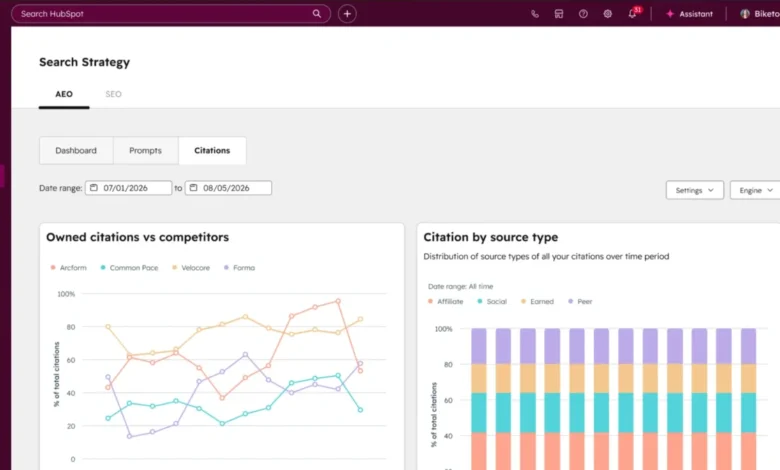
To bridge this gap, modern PR teams are turning to tools like HubSpot’s Answer Engine Optimization (AEO) suite. By utilizing citation analysis, teams can gain granular insights into which specific publications and content formats are successfully feeding the AI models. Data from recent internal deployments of these tools has been telling; for instance, organizations utilizing AEO-focused strategies have reported a 642% increase in citations for comparison-style articles and a 58% increase in overall brand mentions within AI results. This suggests that the quality and nature of the content are just as important as the destination of the placement.

Chronology of the AEO Movement in PR
The integration of AEO into standard PR workflows is a relatively recent development, following a distinct timeline of events that mirror the evolution of search technology:
- 2022-2023: The rapid rise of Generative AI tools creates a new consumer expectation for instant, synthesized answers, beginning to fragment traditional search traffic.
- Early 2024: Industry analysts begin identifying a "citation gap," noting that brands with high SEO rankings are not always the brands being cited by AI tools.
- Late 2024: Forward-thinking marketing and PR departments start reallocating budgets toward content types that align with LLM training data, such as deep-dive comparative analyses and proprietary research reports.
- 2025-2026: The formalization of AEO as a distinct discipline within PR. Data-driven platforms, such as HubSpot’s AEO tool, emerge to provide real-time tracking of brand visibility scores and citation sources.
Strategic Implications for Media Outreach
The shift toward AI-centric PR requires a fundamental change in how media outreach is conducted. Historically, the priority was to land coverage in as many high-traffic outlets as possible. Now, the priority is to identify which outlets act as "primary sources" for the specific LLMs that dominate a brand’s category.
Not all media outlets possess the same weight in the eyes of an AI. Some publications act as foundational nodes for information, meaning they are cited consistently across multiple search queries. Others, despite having large audiences, may be ignored by AI crawlers due to content structure or domain alignment. PR teams must now conduct "citation audits" to understand the landscape. If a brand wants to improve its AI visibility, it must adjust its pitching strategy to focus on the outlets that hold the most weight in the AI’s "citation profile."
By using data-backed recommendations, teams can identify gaps in their current coverage. For example, if an AI is consistently citing a competitor’s "Best of 2026" article but ignoring the brand’s own similar content, the PR team knows exactly which outlet to target for a partnership or guest contribution to reclaim that visibility.

Measuring Success: The New Metric of Brand Visibility
The move toward AI visibility also provides PR professionals with a more tangible way to demonstrate ROI to stakeholders. While traditional PR value was often estimated through "Advertising Value Equivalency" (AVE) or sentiment analysis—both of which can be subjective—AI visibility offers concrete, objective data.
A Brand Visibility Dashboard, which tracks shifts in citation counts, AI-generated share of voice, and the specific topics where a brand is mentioned, provides a clear narrative of success. When PR teams can demonstrate to the C-suite that a specific campaign led to a 15% increase in citations for a key product category, they shift the conversation from "publicity" to "market intelligence and authority building."
The Broader Impact on the Industry
The rise of AEO does not signal the death of traditional PR, but rather its evolution into a more precise, data-oriented discipline. The fundamental premise remains the same: earning the trust of third-party outlets to influence an audience. The difference lies in the intermediary. Instead of just reaching the reader, the PR professional is now reaching the AI that informs the reader.
This shift has profound implications for how PR agencies and internal teams are structured. The traditional division between "SEO" and "PR" is rapidly dissolving. To be effective in the coming years, PR professionals must develop a baseline understanding of how LLMs consume information. This includes mastering the art of "semantic pitching," where the goal is to provide information that is structured in a way that AI models find easy to synthesize and cite.

Ultimately, the goal is to become an indispensable source of truth. As AI continues to become the primary interface through which the public interacts with the internet, the brands that can consistently appear as trusted citations will be the ones that capture the largest share of voice. The winners will be the organizations that stop treating earned media as a vanity metric and start treating it as the foundational data layer for the future of search. The era of "visibility at any cost" is over; the era of "authoritative, AI-aligned visibility" has begun. By prioritizing data, targeting high-impact outlets, and measuring tangible citation growth, modern PR teams can secure a dominant position in the digital economy.