OutBound 2026: Sales Leadership and Tactical Prospecting Conference Set for November at Red Rock Resort

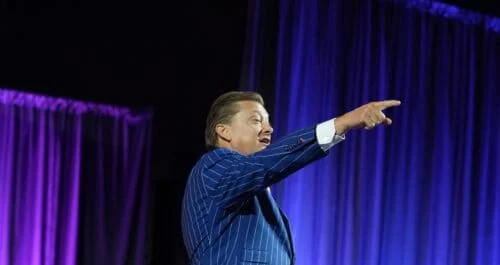
The professional landscape of sales is currently undergoing its most significant shift in decades, driven by the dual pressures of pervasive buyer skepticism and the integration of artificial intelligence into the customer acquisition funnel. As organizations grapple with these headwinds, the OutBound 2026 conference is scheduled to convene from November 9 through November 12 at the Red Rock Resort & Spa in Las Vegas, Nevada. Designed as an intensive training environment, the event is strictly limited to 400 attendees to ensure a high ratio of interaction between industry experts and participants.
The Evolution of the OutBound Mission
The genesis of the OutBound conference dates back to 2016, when industry experts Anthony Iannarino, Mark Hunter, Mike Weinberg, and Jeb Blount identified a critical gap in the professional development market. While numerous conferences focused on general business growth or motivational speaking, there was a lack of dedicated forums for the mechanics of outbound prospecting. The inaugural event was held in Atlanta in April 2017.
Nearly a decade later, the foundational mission remains focused on the discipline of outbound sales, yet the environmental context has shifted dramatically. Current market data suggests that buyers are increasingly shielded by complex gatekeeping mechanisms, including AI-driven filtering systems and a heightened tendency toward digital avoidance, such as "ghosting." For sales professionals, this reality has rendered traditional, high-volume outreach methods less effective, necessitating a transition toward more precise, value-driven communication strategies.
Conference Structure and Educational Framework
The 2026 curriculum is divided into three distinct phases: the VIP Mastermind on November 9, the Main Event on November 10–11, and the Leadership Summit on November 12. Unlike many industry conferences that utilize a trade-show model, OutBound maintains a policy prohibiting vendors from purchasing speaking slots. The instructional roster is curated to include individuals with extensive experience in field sales or sales management.
The 2026 faculty features a diverse group of industry figures, including Jeb Blount, Anthony Iannarino, Mark Hunter, Victor Antonio, Colleen Stanley, Amy Franko, Daniel Disney, Helen Fanucci, Tony Morris, Keith Lubner, Jessica Stokes, and Harriet Mellor. The conference emphasizes a "workshop-style" approach, requiring attendees to apply theoretical frameworks to real-world scenarios, such as stalled deals, pricing resistance, and the navigation of executive decision-making hierarchies.
Data-Driven Professional Development
Recent studies on sales performance indicate that the "stalled deal" remains the primary cause of revenue shortfall in B2B environments. By focusing on tactical responses to buyer resistance, OutBound 2026 aims to provide participants with specific methodologies to address the three most frequent points of friction: initial outreach, late-stage negotiation, and objection handling.
The limitation of 400 attendees is a strategic decision intended to facilitate granular access to instructors. In larger conference formats, participants often experience a disconnect between the speaker and the audience. At OutBound, the smaller capacity allows for direct inquiry, facilitating a more personalized learning experience. Furthermore, the conference provides twelve months of session replays, acknowledging that professional development is a continuous process rather than a static, two-day engagement.
The Leadership Summit: Strategic Management in the AI Era
The final day of the conference, November 12, is reserved for the Leadership Summit, an intensive program dedicated to sales managers, directors, and VPs. The core of this summit centers on the adaptation of management styles to an era defined by AI. The curriculum addresses three primary pillars: performance-based coaching, the recruitment of top-tier talent, and the maintenance of emotional intelligence within a high-pressure sales culture.
The implications for sales leadership are significant. As automation tools handle the administrative burden of prospecting, the role of the sales manager has transitioned toward high-level behavioral coaching and strategic oversight. The summit intends to provide a framework for these leaders to maximize the output of their teams without sacrificing the human elements of empathy and rapport, which remain the strongest differentiators in complex sales environments.
Industry Implications and Networking
The professional demographics of OutBound attendees—approximately 50% leadership and 50% individual contributors—create a unique ecosystem for cross-organizational knowledge sharing. For individual contributors, the event offers a transparent view of the expectations held by leadership, while managers gain insight into the front-line challenges facing their teams.
This alignment is designed to foster a "shared language" within companies. When team members from the same organization attend together, the consistency of the training methodologies facilitates better accountability upon their return to the workplace. This approach is further supported by the availability of a Virtual Ticket, which allows organizations to stream the Main Event and Leadership Summit to remote teams, ensuring that the training is not siloed within the in-person attendees.
Operational Logistics and Venue Context
The Red Rock Resort & Spa was selected for its proximity to Red Rock Canyon, providing a professional environment removed from the high-traffic, high-distraction atmosphere of the Las Vegas Strip. This choice of venue reflects the event’s emphasis on concentrated learning and executive networking.
For participants traveling to the event, the organizers have established a discounted room block for the dates of November 6–12. Given the high demand and limited capacity of the resort’s facilities, attendees are encouraged to coordinate travel arrangements well in advance of the November 9 start date.
Analysis: The Cost of Stagnation
The central premise of the OutBound 2026 conference is that the cost of failing to adapt to modern buyer behavior exceeds the cost of professional development. By analyzing the trajectory of the market since 2016, it is evident that the barrier to entry for effective sales has risen. The transition from legacy outreach tactics to modern, intelligence-backed engagement is no longer optional for organizations aiming to hit annual quotas.
By providing a venue for direct instruction and peer-to-peer networking, the conference aims to minimize the "learning curve" for sales teams. The integration of the VIP Mastermind session with Jeb Blount further enhances this, providing a high-level forum where attendees can dissect specific, ongoing challenges with seasoned practitioners.
Frequently Asked Questions
For those considering participation, the conference organizers provide several pathways:
- General Admission: Grants access to the Main Event.
- Executive Elite: Combines the Main Event with the Leadership Summit.
- VIP Black: Includes the Mastermind session, exclusive networking receptions, and premium lodging benefits.
- Virtual Ticket: Provides access to live streams and team-based viewing codes.
As of the current planning phase, the majority of the 400 available seats are expected to be fully subscribed. The event’s emphasis on "stopping the stop"—that is, overcoming the professional inertia that leads to stagnant pipelines—serves as the core value proposition for sales professionals and leaders looking toward their 2027 fiscal goals. Interested parties are directed to the official OutBound website for ticket procurement and comprehensive agenda details.
The convergence of twelve globally recognized sales experts, combined with a highly controlled attendee count and a focus on actionable, non-pitched training, positions OutBound 2026 as a pivotal event for the sales profession. As organizations continue to navigate a post-pandemic, AI-accelerated market, the ability to break through buyer resistance will likely remain the defining factor between high-performing teams and those that fail to meet their objectives.