Strategic Benefits Management: How to Justify a Spending Account Provider Transition to Finance

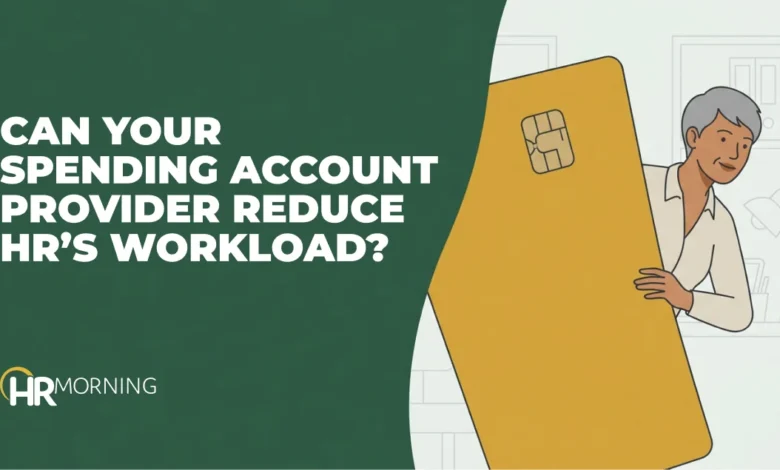
Open enrollment season is rapidly approaching, and for HR departments across the country, this period serves as the primary window for evaluating the efficacy of next year’s benefits lineup. While medical plan design often dominates the conversation due to its sheer scale, the selection of a spending account provider—covering Health Savings Accounts (HSAs), Flexible Spending Accounts (FSAs), and Lifestyle Spending Accounts (LSAs)—exerts a profound influence on both operational overhead and long-term financial health. As organizations face mounting pressure to optimize benefits budgets, HR professionals have a critical window of opportunity to present the value of these programs to their finance counterparts, shifting the narrative from a simple "cost center" to a strategic asset for employee engagement and retention.
The Argument for Fiscal Transparency
Finance teams are naturally inclined to view employee benefits through the lens of cost-containment and risk mitigation. To move the needle, HR must move beyond qualitative arguments about "employee satisfaction" and present a comprehensive data-backed business case. The most effective strategy involves performing a rigorous audit of the current provider’s performance, measuring administrative burden, transaction fees, and the overall return on investment (ROI).
For the finance department to approve a vendor shift or a service expansion, they require a side-by-side comparative analysis. This includes the total cost of ownership (TCO), which accounts for implementation fees, recurring monthly platform charges, and hidden costs such as per-transaction fees that may be eroding the company’s bottom line. Furthermore, HR should project the long-term savings potential of moving to a more efficient, automated, or integrated platform, factoring in the reduction of manual intervention required by payroll and benefits administrators.
Generational Shifts and the Modern HSA Landscape
The demographic profile of the American workforce is evolving, and with it, the necessity for sophisticated health-spending tools. Current data from HealthEquity underscores a stark generational divide: 56% of Gen Z and 50% of Millennials now hold an HSA, compared to only 35% of Gen X and 24% of Boomers. Given that these two younger cohorts now represent approximately 54% of the U.S. labor force, the accessibility and user experience of these accounts have become central to the modern employee value proposition.
Scott Cutler, CEO of HealthEquity, has noted that while younger workers are increasingly proactive about healthcare savings, they are navigating an economic climate characterized by persistent inflation and heightened financial uncertainty. This environment makes the ease of use a non-negotiable feature. If an employee cannot easily access their funds or faces friction at the point of sale, the intended benefit of the HSA is negated.
The "Usability Gap" in Benefits Technology
Despite the high adoption rates, a significant "usability gap" persists. Recent research by InComm Benefits highlights a concerning trend: 54% of participants report having their HSA debit card declined at the point of sale for an eligible purchase. This failure to access funds when needed not only frustrates the employee but also leads to higher support-ticket volumes for HR. Furthermore, 64% of employees report that they actively avoid using their accounts when they are uncertain about whether a specific expense qualifies.
This hesitation effectively traps capital in accounts that were meant to be utilized, diminishing the utility of the benefit. By selecting a provider that offers real-time verification, integrated mobile applications, and clearer educational resources, HR can directly improve the employee experience, thereby increasing the perceived value of the total compensation package.
The Hidden Cost of Inaction
Sticking with a legacy provider purely to avoid the administrative headache of a transition is a strategy that carries significant, if often hidden, costs. According to the 2025 Origin report, 46% of senior HR and benefits professionals acknowledge that their current provider processes expose their organizations to unnecessary risks. These risks include data privacy concerns, compliance failures with IRS reporting, and inaccuracies in benefits spending projections.
Additionally, 40% of those surveyed expressed a lack of confidence in the accuracy of their current benefits reporting. When HR cannot provide a clear, error-free accounting of how dollars are being allocated, it creates friction with finance and potential legal exposure for the firm. In this context, the "cost of inaction" is not just the status quo, but the compounding risk of manual errors and the loss of institutional trust.
The Competitive Landscape and Recruitment
Benefits are no longer just a retention tool; they are a primary competitive lever in the war for talent. In a tight labor market, prospective employees are conducting their own "benefits due diligence." If a competitor offers a seamless, tech-forward spending account experience while the company relies on outdated, paper-heavy, or non-integrated systems, the company will inevitably lose out. Benchmarking the company’s current offering against industry peers is a vital step in the business case for change. HR should gather data on how competitors leverage LSAs—which allow for a broader range of wellness and lifestyle expenses—to differentiate their brand.
The Mechanics of a Provider Transition
For finance, the transition cost is the most immediate hurdle. Switching providers is rarely a "plug-and-play" scenario; it requires significant coordination between HR, payroll, IT, and the new vendor. Finance will be concerned with the following areas:
- Implementation and Integration: The upfront costs of data migration and the potential for service disruption during the cutover.
- Payroll Sync: The complexity of ensuring that payroll deductions are seamlessly mapped to the new provider’s API to prevent compliance gaps.
- HR/Payroll Bandwidth: The opportunity cost of having the internal team dedicate hundreds of hours to a vendor transition rather than other strategic initiatives.
To mitigate these concerns, HR should negotiate for "turnkey" implementation support, where the new vendor handles the bulk of the data migration and employee communication. Framing this as a one-time project cost with a clear ROI—typically achieved through reduced fees and lower administrative man-hours within 18 to 24 months—is essential for securing buy-in.
Action Steps for the HR Leader
To successfully pitch a change or an update to the benefits-spending architecture, HR leaders should follow a structured, evidence-based approach:
- Conduct a Cost-Benefit Analysis: Map out every fee, both direct and indirect, associated with the current provider over the last three years.
- Gather Employee Feedback: Utilize survey data to identify specific pain points, such as declined transactions or poor mobile app performance.
- Perform a Competitive Audit: Identify what peer organizations are offering and how their benefit tech stacks compare to your own.
- Draft a Risk Assessment: Clearly articulate the compliance and administrative risks associated with the current system.
- Present the Strategic Vision: Frame the new provider as a means to achieve broader company goals, such as improved retention, higher employee engagement, and better alignment between finance and human capital management.
The Future of Spending Accounts
As the workforce continues to shift toward more flexible, individualized benefits, the role of the spending account provider will only become more critical. The days of treating these accounts as an afterthought are coming to an end. Organizations that proactively manage their vendor partnerships, prioritize the employee experience, and maintain a close, data-driven dialogue with their finance teams will be the ones that succeed in attracting and retaining top-tier talent in the coming years.
The decision to change providers is, at its core, a decision about the company’s culture and its commitment to the financial well-being of its workforce. By approaching the problem with the rigor that finance demands and the empathy that employees require, HR can transform the benefits-spending program into a cornerstone of the company’s operational excellence. As we look toward the 2026/2027 benefit cycles, the organizations that act now to modernize their systems will have a clear advantage over those that choose to wait.