Sales Content Management Platforms Evolve as Strategic Imperative for Revenue Teams in 2026 Amidst Rapid Market Consolidation


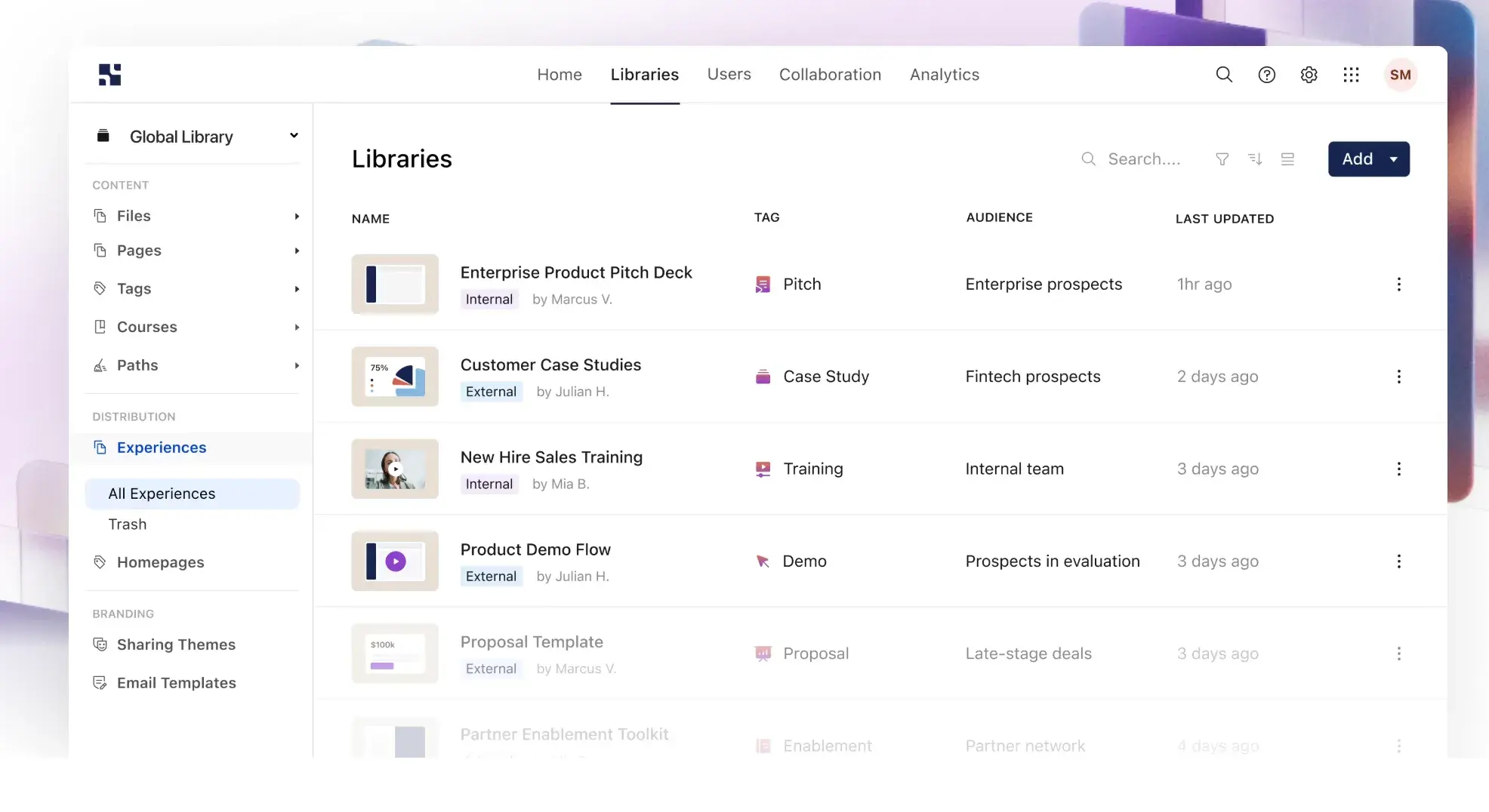
A sales content management platform (SCMP) serves as the central nervous system for an organization’s revenue-generating content, consolidating sales-approved materials into a single, accessible source of truth. This critical infrastructure empowers revenue teams to efficiently discover, share, and meticulously track the assets that propel deals forward. In an increasingly competitive and complex sales landscape, where over half of sales leaders report actively utilizing sales enablement content and a compelling 79% consider these materials indispensable for closing transactions, the selection of an SCMP has transcended mere operational necessity to become a pivotal strategic decision. The market for these platforms is currently undergoing significant transformation, marked by major mergers and a heightened focus on artificial intelligence (AI) capabilities, reshaping the competitive landscape and redefining expectations for revenue enablement.
The Evolving Landscape of Sales Enablement
The journey of sales content from scattered local drives and email attachments to sophisticated, AI-driven platforms reflects the broader evolution of sales itself. Historically, sales teams grappled with a chaotic repository of outdated presentations, unapproved documents, and redundant collateral, leading to wasted seller time and inconsistent buyer experiences. This ad-hoc approach severely hampered productivity and undermined brand credibility. Recognizing these inefficiencies, organizations began to seek structured solutions. Early attempts often involved general-purpose content management systems (CMS) or digital asset management (DAM) tools, but these proved inadequate due to their lack of sales-specific functionalities like deal-stage contextualization, CRM integration, and revenue attribution.
-2.png)
The imperative for dedicated sales content management has intensified in recent years, driven by several interconnected trends. The shift towards remote and hybrid selling models has underscored the need for centralized, easily accessible digital assets. Buyers, now more informed and digitally savvy, expect highly personalized and relevant interactions at every stage of their journey. Furthermore, the increasing complexity of products and services, coupled with longer sales cycles involving multiple stakeholders, demands that sellers have immediate access to the most accurate and impactful content. These pressures have propelled SCMPs from a niche tool to a foundational element of a modern revenue strategy. According to a 2024 report by the Sales Enablement Society, organizations with mature sales enablement strategies, heavily reliant on structured content management, consistently report 20% higher revenue growth compared to those with nascent or no formal enablement programs.
Addressing Core Challenges: Findability, Governance, and Attribution
Modern sales content management platforms are purpose-built to address three fundamental challenges that traditional storage methods—such as spreadsheets, shared drives, and generic cloud folders—simply cannot resolve: content findability, stringent governance, and direct revenue attribution.
Findability: Eliminating the Content Hunt
The most immediate problem an SCMP solves is the "content hunt." Without a centralized, intelligently organized system, salespeople waste an inordinate amount of time searching for appropriate materials. Studies by CSO Insights indicate that sales reps spend up to 30% of their day on non-selling activities, a significant portion of which is dedicated to finding or creating content. When content is scattered across disparate locations, sellers often default to the easiest-to-find, rather than the most current or effective, asset. This leads to inconsistent messaging, suboptimal presentations, and ultimately, missed opportunities. A well-implemented SCMP with intelligent search capabilities drastically reduces this friction, allowing sellers to surface relevant content within seconds, directly impacting their selling time and effectiveness.

Governance: Ensuring Accuracy and Compliance
Beyond mere access, the quality and accuracy of sales content are paramount. Without robust governance, content libraries quickly devolve into a "graveyard of outdated decks and orphaned one-pagers," as aptly described in industry observations. This erosion of trust, both internally among sellers and externally with buyers, can be devastating. SCMPs enforce strict content governance through essential features such as approval workflows, version control, and automated expiration dates. This ensures that every piece of content available to the sales team is current, compliant with regulatory standards (especially crucial in regulated sectors like healthcare, financial services, and legal), and aligned with brand messaging. Role-based permissions and region-specific access controls further segment content, preventing the dissemination of inappropriate or non-compliant materials and safeguarding against legal liabilities and reputational damage. The ability to track content ownership and review cycles prevents content rot and ensures accountability across marketing and sales teams.
Attribution: Connecting Content to Revenue
Perhaps the most significant differentiator of a dedicated SCMP is its ability to link content usage directly to pipeline outcomes and revenue generation. This is achieved through deep, native integration with Customer Relationship Management (CRM) systems. When a sales representative shares a case study, proposal, or product sheet via the SCMP, every engagement — an open, a view, time spent on the document, or a forward — is automatically logged against the corresponding contact and deal record in the CRM. This creates a transparent attribution chain, allowing enablement leaders and sales management to see precisely which assets influence deal velocity, stage progression, and ultimately, closed-won revenue. Without this crucial integration, enablement teams struggle to demonstrate the return on investment (ROI) of their content efforts, making it challenging to justify content investments and refine future content strategies. The rise of Revenue Operations (RevOps) further amplifies this need, as RevOps teams are increasingly responsible for optimizing the entire revenue engine, requiring integrated data across marketing, sales, and service to drive predictable growth.
Key Pillars of Modern Sales Content Management Platforms
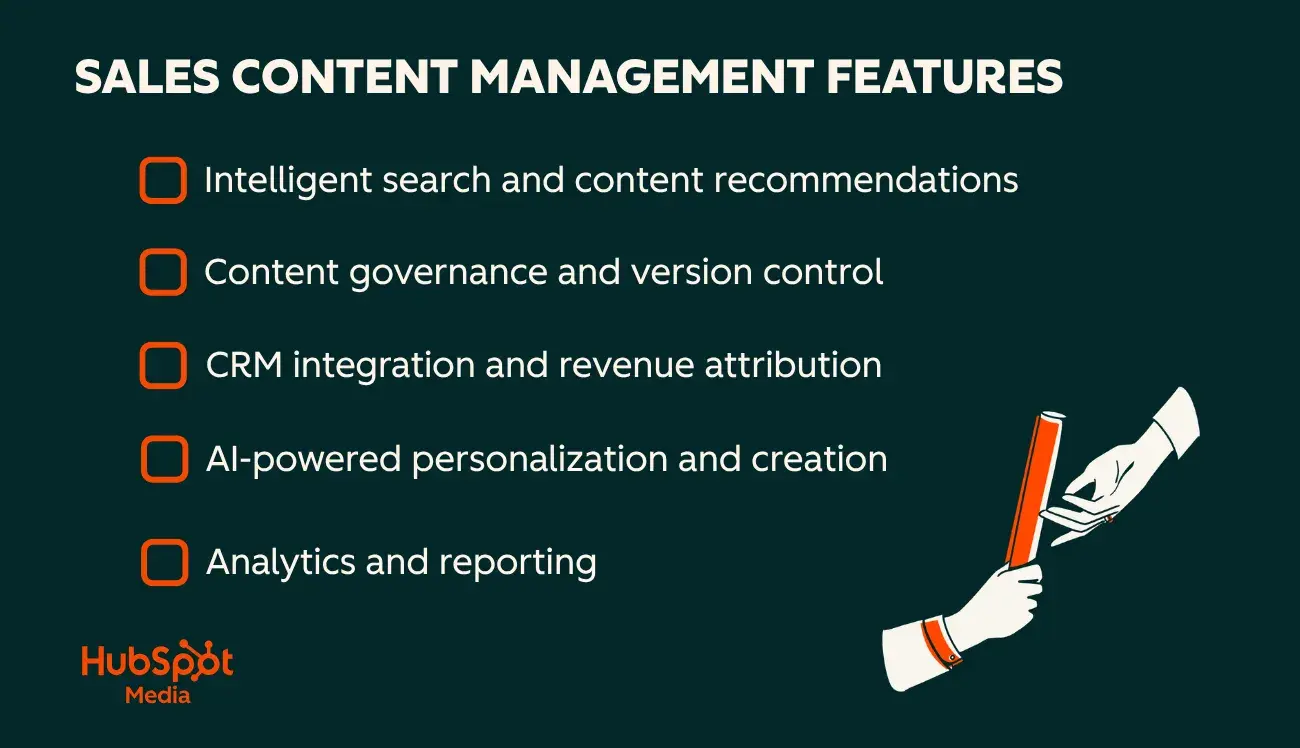
The leading sales content management platforms in 2026 are characterized by a suite of advanced capabilities designed to maximize seller productivity, content impact, and revenue attribution.
1. Intelligent Search and Contextual Recommendations:
Modern SCMPs leverage sophisticated AI, including natural language processing (NLP) and machine learning, to power intelligent search and proactive content recommendations. This moves beyond keyword matching to understand the semantic context of a sales conversation, deal stage, buyer persona, and industry. Sellers can describe their needs in natural language, and the system instantly surfaces the most relevant, high-performing content. Critically, the best systems learn from usage patterns and engagement data, continuously refining their recommendations and promoting assets that have historically led to positive outcomes. Crucially, these recommendations are often embedded directly within the CRM or email workflow, minimizing friction and ensuring content is available precisely when and where sellers need it.
2. Robust Content Governance and Version Control:
Effective governance is the bedrock of a reliable content library. Platforms enforce multi-stage approval workflows, ensuring that content undergoes necessary reviews by content owners, legal, compliance, and marketing teams before publication. Automated expiration dates prevent outdated materials from circulating, while comprehensive version tracking provides a clear audit trail of all content changes. Role-based permissions precisely control who can publish, edit, archive, or retire content, while region-based access allows global organizations to manage localized content and compliance requirements. This meticulous control safeguards brand consistency and mitigates legal risks.
3. Seamless CRM Integration and Revenue Attribution:
This feature is arguably the most vital. A true SCMP is not merely a content repository but a revenue intelligence tool. Its deep integration with CRM systems (e.g., Salesforce, HubSpot, Microsoft Dynamics) ensures that every content interaction is recorded on the deal timeline. This visibility allows enablement leaders to analyze which specific content assets influence conversion rates at different pipeline stages, shorten sales cycles, or increase average deal size. The data moves beyond "vanity metrics" like downloads or views to directly demonstrate content’s impact on revenue, providing the empirical evidence needed to justify content investments and optimize future content creation strategies.
4. The Power of AI in Personalization and Content Creation:
AI’s role in SCMPs has expanded dramatically beyond search and recommendations. In 2026, 45% of B2B marketers plan to increase their investment in AI-powered marketing tools, a trend mirrored in sales enablement. Advanced platforms now utilize generative AI to:

- Draft Sales Emails: AI can generate personalized email drafts based on prospect data, deal stage, and existing content, saving reps significant time.
- Customize Pitch Decks: Dynamically assemble and tailor presentations with prospect-specific data, company logos, and relevant case studies.
- Assemble Content Packages: Automatically curate and suggest content bundles (e.g., a proposal, a relevant case study, and a pricing sheet) tailored to the buyer’s persona and stage in the buying journey.
This capability not only enhances the relevance of every buyer touchpoint but also significantly reduces the manual effort required from sales teams to adapt generic materials.
5. Advanced Analytics and Actionable Reporting:
Comprehensive analytics move beyond basic usage statistics to provide deep insights into content performance and seller adoption. Key metrics include:
- Rep Adoption Rates: Which teams and individuals are using approved content?
- Asset Performance: Which content types (e.g., case studies, whitepapers, demos) are most engaged with, and at which deal stages?
- Influence on Pipeline: How does content engagement correlate with deal velocity, stage progression, and win rates?
- Content Gaps: Identifying areas where high-performing content is lacking.
The most effective reporting is presented through intuitive, built-in dashboards that offer actionable insights to sales managers and executives, allowing for continuous optimization of the content library and enablement programs.
Market Dynamics and Leading Platforms in 2026
The sales enablement market is currently in a period of rapid consolidation, signaling a maturation of the industry and a move towards more integrated, comprehensive solutions. Buyers evaluating platforms in 2026 must consider not only current capabilities but also the implications of these mergers for product roadmaps and long-term stability.
-
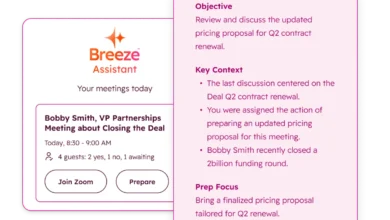
HubSpot Content Hub + Sales Hub + Smart CRM: HubSpot offers a uniquely integrated approach where content creation, distribution, tracking, and CRM reporting operate on a single, unified platform with a shared data model. This native connection eliminates the sync latency and data discrepancies often encountered when integrating separate content and CRM systems. Content Hub provides a drag-and-drop environment for marketing and enablement teams, complete with AI-powered writing assistance (Breeze). Sales Hub then handles distribution, real-time engagement tracking (emails, content views), and performance analytics, logging every action directly into the Smart CRM. HubSpot’s Breeze AI system spans all Hubs, offering AI agents for content drafting, prospect research, and CRM data enrichment, thereby tying AI-generated outreach directly to CRM-tracked content performance. This ecosystem is particularly strong for mid-market and growth-stage companies seeking an all-in-one solution.
- Key Features: Unified platform, Breeze AI (content drafting, prospecting), real-time email tracking, free CRM edition with scalable plans, extensive sales automation.
- Best for: Overall CRM-native content management for mid-market and growth-stage teams.
-
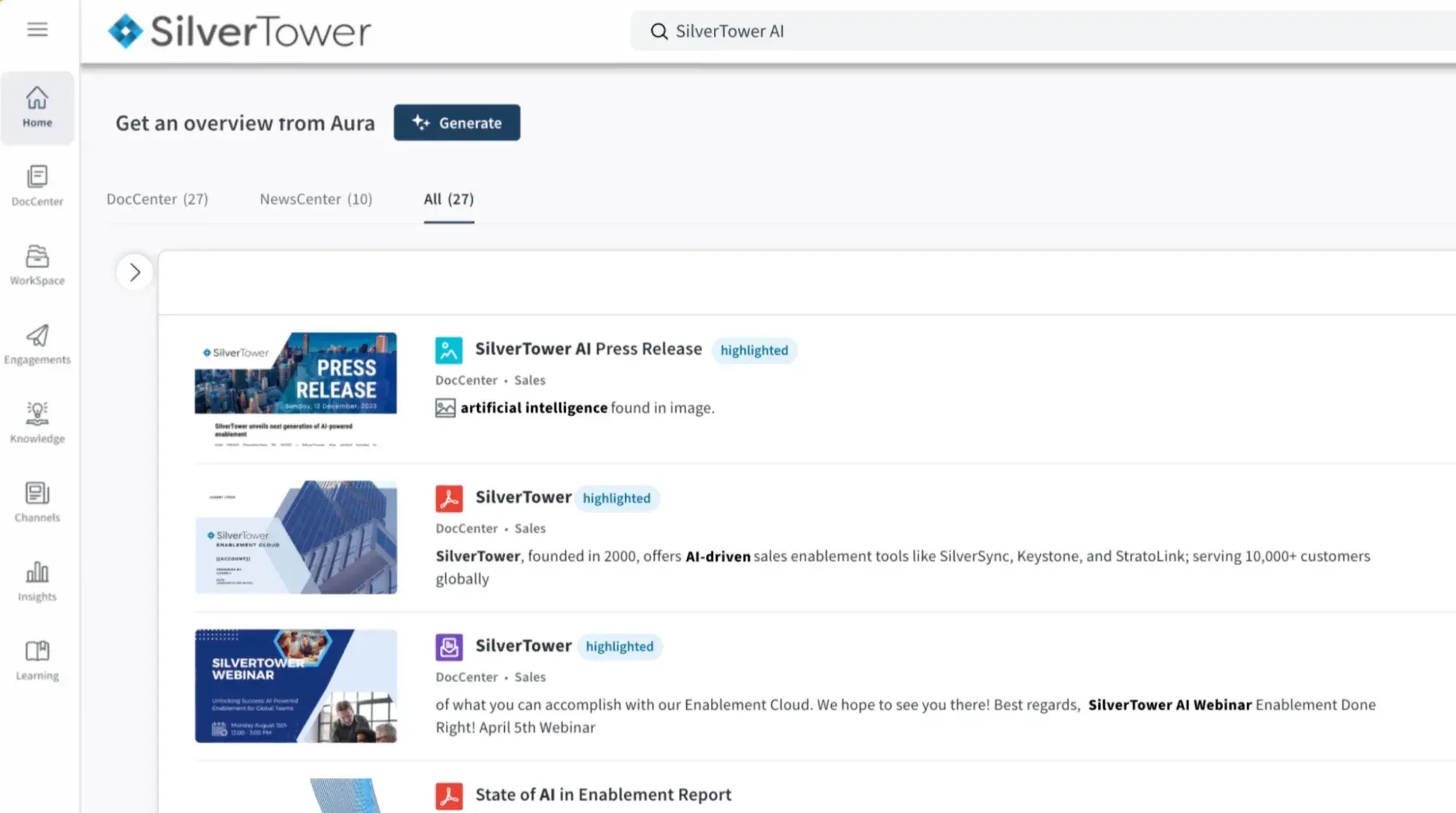
Seismic: As a long-standing category leader in enterprise sales enablement, Seismic announced a significant merger with Highspot in February 2026, poised to create the largest dedicated enablement platform in the market. Seismic’s core strength lies in content automation and robust governance for vast, complex organizations managing thousands of assets across multiple business units, regions, and compliance frameworks. Its LiveDocs feature dynamically assembles personalized content using CRM data, reducing manual customization, while the Aura AI engine powers content recommendations, search, and analytics.
- Key Features: Enterprise-grade content automation (LiveDocs), advanced governance, Aura AI for recommendations and analytics, extensive CRM integrations.
- Best for: Large enterprises with complex content and compliance needs.
- Consideration: Buyers should closely monitor the integration roadmap post-merger.
-
Highspot: Prior to its merger announcement with Seismic, Highspot was widely recognized for its intuitive, seller-first interface and high adoption rates, earning it a Customers’ Choice distinction in Gartner’s 2025 Peer Insights. Its AI-powered search, utilizing natural language processing, allows reps to find content by describing their needs, rather than navigating rigid folder structures. Content is organized into "Spots," curated collections that streamline browsing.
- Key Features: Intuitive UI, AI-powered natural language search, "Spots" for curated content, robust analytics, sales playbooks.
- Best for: High seller adoption and intuitive content discovery.
- Consideration: Now merging with Seismic, future platform direction will be under the Seismic brand.
-
Showpad: Showpad, which merged with Bigtincan (including Brainshark) under Vector Capital in late 2025, differentiates itself by bridging content management with sales coaching and training functionalities. This combination allows managers to connect content usage directly to coaching outcomes, identifying where skill gaps correlate with content adoption rates. Showpad was recognized as a Leader in Gartner’s inaugural Magic Quadrant for Revenue Enablement Platforms in November 2025.
- Key Features: Integrated content and coaching, interactive content experiences, robust analytics on content effectiveness, AI-driven content recommendations.
- Best for: Mid-market teams seeking to combine content management with sales training and coaching.
- Consideration: Integration of Bigtincan and Brainshark features is ongoing.
-
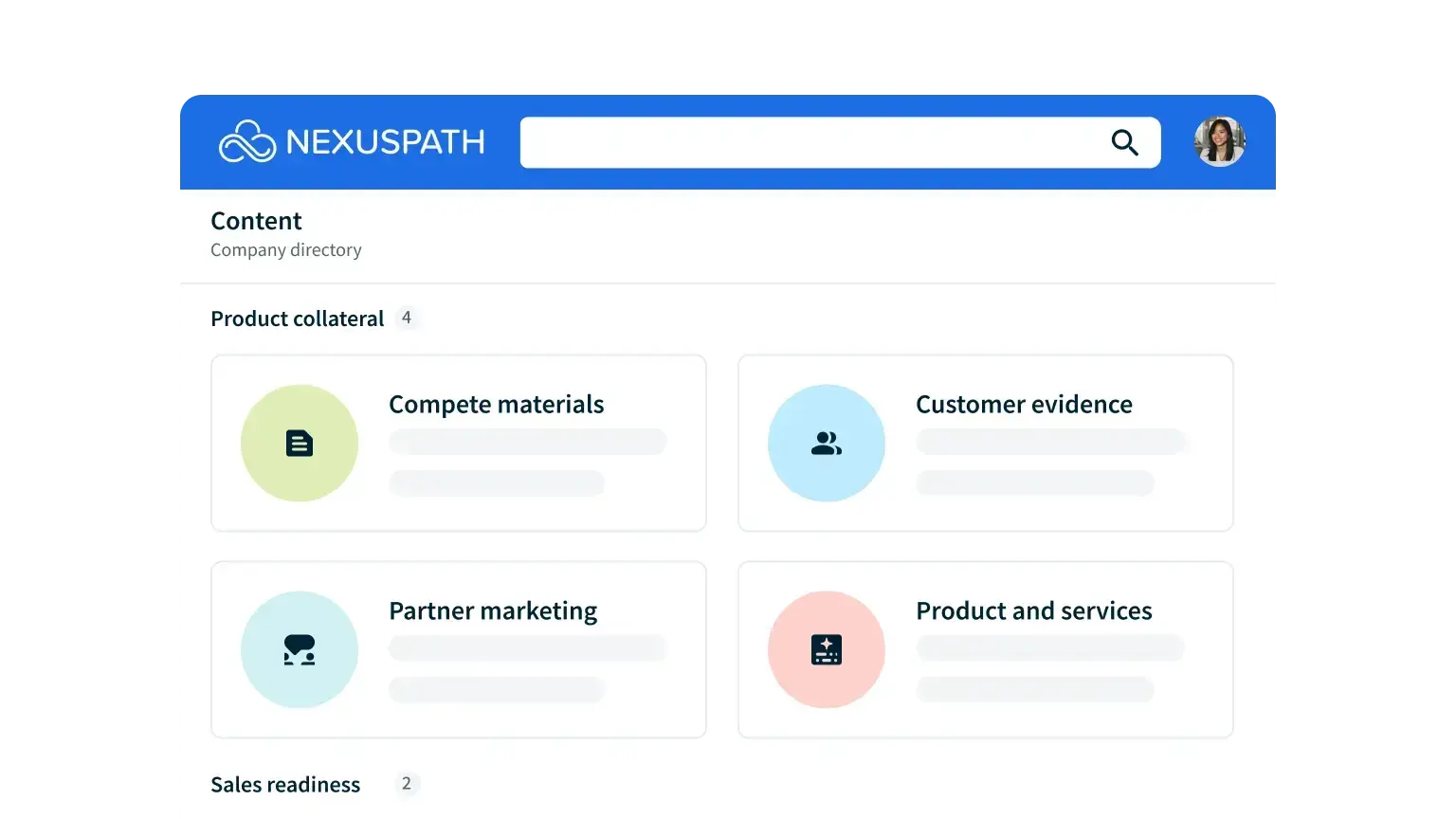
SalesHood: SalesHood takes an AI-first approach to revenue enablement, offering a unified system for content management, training, digital sales rooms, and mutual action plans. Built as a consolidated platform from inception, it avoids the integration challenges of legacy systems. Its AI content audit feature automatically identifies stale or underused content and recommends updates, a significant time-saver for teams with limited enablement staff.
- Key Features: AI-first unified platform, content audit AI, digital sales rooms, mutual action plans, integrated training.
- Best for: Mid-market and growth-stage B2B sales teams prioritizing an AI-native, unified enablement platform without enterprise complexity.
Strategic Considerations for Adoption and Implementation
Implementing a sales content management platform is a strategic initiative that requires careful planning beyond just software selection.
Migration Challenges and Best Practices: Migration timelines can vary significantly, from a few weeks for simpler platforms like HubSpot or SalesHood to several months for complex enterprise deployments like Seismic. The biggest variable is the existing content library. A thorough content audit to clean, consolidate, and organize assets before migration is crucial. This proactive approach not only accelerates deployment but also ensures higher seller adoption from day one, as reps encounter a streamlined, relevant library.
Establishing Effective Governance Roles: Sustaining a healthy content library requires dedicated roles and clear responsibilities. These typically include:
- Content Owners: Responsible for the accuracy and relevance of specific content pieces.
- Content Approvers: Review and authorize content before publication.
- Compliance Reviewers: Ensure adherence to legal and regulatory standards.
- Enablement Admins: Manage the platform, user permissions, and overall content strategy.
In smaller organizations, individuals may wear multiple hats, but the distinct functions must be maintained to prevent bottlenecks and accountability gaps.
Measuring Success: Beyond Simple Downloads: The true measure of an SCMP’s success lies not in vanity metrics like views or downloads, but in its demonstrable impact on revenue. Enablement leaders must insist on reporting that connects content engagement directly to downstream pipeline outcomes. This involves tracking how specific content influences deal velocity, conversion rates at different stages, average contract values, and ultimately, closed-won revenue. Platforms that natively integrate with the CRM and provide these insights through configurable dashboards enable managers and executives to make data-driven decisions about content investment and sales strategy.
Conclusion: The Platform as a Strategic Enabler
In 2026, the selection and implementation of a sales content management platform is no longer merely an operational task; it is a fundamental strategic decision that directly influences a company’s ability to drive pipeline impact and achieve revenue goals. The most effective platforms centralize robust content governance, seamlessly connect engagement analytics to CRM-tracked revenue, and leverage advanced AI to enhance both content findability and personalization. With the enterprise enablement market undergoing significant consolidation, the choice of platform also carries long-term implications for product stability, innovation, and roadmap continuity.
HubSpot’s integrated Content Hub, Sales Hub, and Smart CRM, powered by Breeze AI, exemplify a unified approach where content creation, seller distribution, engagement tracking, and revenue attribution converge on a single data layer. This native architecture offers a streamlined path to measurable results for organizations seeking to eliminate system silos and friction. Ultimately, the most successful SCMP is one that integrates organically into the daily workflow of sales professionals, strengthening their capabilities without adding unnecessary complexity. As sales leaders navigate the dynamic market, prioritizing platforms that align with existing workflows and provide clear, attributable revenue insights will be key to unlocking competitive advantage and sustainable growth.