Navigating the AI Answer Engine Landscape: A Deep Dive into Scrunch, Ahrefs Brand Radar, and HubSpot AEO


The rapid ascent of artificial intelligence in daily information retrieval has fundamentally reshaped the digital marketing landscape, ushering in a new era where brand visibility extends beyond traditional search engine optimization (SEO) to encompass Answer Engine Optimization (AEO). As users increasingly turn to AI-powered platforms like ChatGPT, Perplexity, and Gemini for direct answers, businesses are confronting the urgent need to understand, track, and optimize their presence within these conversational interfaces. This shift has given rise to specialized tools designed to navigate this complex domain. Among the leading contenders are Scrunch, a purpose-built AEO platform; Ahrefs Brand Radar, an integrated module within a broader SEO suite; and HubSpot AEO, offering accessible benchmarking and entry-level optimization. Each presents a distinct approach to solving the critical problem of ensuring brand prominence in AI-generated responses, addressing varied needs across the marketing spectrum.
The Evolution of Search: From Keywords to Conversations
For decades, search engine optimization revolved around keywords, backlinks, and technical site health, all aimed at ranking high on Google’s (and other search engines’) results pages. However, the introduction of sophisticated Large Language Models (LLMs) and their integration into search experiences has dramatically altered user behavior. Instead of sifting through ten blue links, users now often receive concise, synthesized answers directly from AI, frequently accompanied by citations to source material. This paradigm shift, which has intensified particularly since late 2022 with the mainstreaming of generative AI, has necessitated a parallel evolution in optimization strategies.
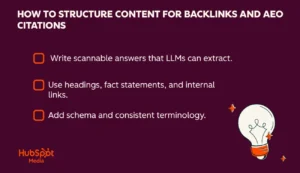
This new environment demands not just visibility, but trustworthiness and authority in the eyes of AI models. A brand’s content must be easily digestible, factual, and demonstrably authoritative for AI to cite it as a credible source. Industry data underscores this transformation: a recent report by HubSpot revealed a 433% improvement in brand citations for those actively engaging in AEO, based on insights from over 4,000 global marketers. Another study by Gartner projected that by 2026, over 80% of enterprise content would be generated or assisted by AI, further emphasizing the imperative for brands to optimize their content for these systems. This chronology highlights the swift transition from a keyword-centric world to one dominated by conversational AI, making tools like Scrunch, Ahrefs Brand Radar, and HubSpot AEO indispensable for modern marketing teams.
Scrunch: The Dedicated AEO Specialist
Scrunch positions itself as a purpose-built AI visibility platform, engineered from the ground up to address the nuances of Answer Engine Optimization. Its core functionality extends beyond mere brand monitoring, delving into the mechanics of how AI bots interact with and interpret a brand’s online presence. Scrunch tracks critical metrics such as brand share of voice across AI answers, analyzing the sentiment embedded in AI-generated responses, and identifying which specific domains and pages are most frequently cited by LLMs. Beyond brand-centric metrics, it monitors AI search trends, gauging prompt volumes and tracking product-level shopping visibility to reveal how brands perform in AI-driven purchase recommendations.
A key differentiator for Scrunch is its emphasis on AI crawlability and site optimization. Its Agent Traffic tool allows users to track visits from various AI bots, including ChatGPT, Claude, Gemini, and Perplexity, helping distinguish valuable AI engagement from digital noise. The Site Maps feature provides an AI-centric view of a website’s structure, highlighting potential blockers that prevent AI systems from effectively parsing content. This deep-level insight is crucial for proactive optimization. Furthermore, Scrunch’s enterprise-level AXP (AI eXperience Platform) operates at the edge, delivering AI-optimized versions of websites to bots without altering the human-facing CMS. This dual-delivery architecture aims to reduce token loads by up to 26%, overcoming challenges posed by complex website markup that can hinder AI agents.
Scrunch’s data methodology combines browser automation with official platform APIs, employing machine learning and natural language processing (NLP) to surface brand mentions, sentiment, and citation patterns. Prompts are run daily for the initial 14 days post-setup, then transition to a 72-hour refresh cycle by default, with manual refresh options available. A notable nuance is Scrunch’s prompt architecture, which converts keyword data into prompts rather than directly sampling live user queries. While this offers precise control for tracking specific brand-relevant questions, it represents a methodological difference compared to tools that draw from actual user prompt pools.
Ahrefs Brand Radar: Integrated Visibility within an SEO Powerhouse
Ahrefs Brand Radar emerges as an add-on module within the widely recognized Ahrefs SEO platform, catering to teams that seek to integrate AI visibility alongside their existing SEO data streams. It tracks brand presence across AI answers, layering this data with traditional search demand, web mentions, video content, and Reddit activity. For existing Ahrefs users, Brand Radar offers the advantage of a unified dashboard, allowing for comprehensive brand performance analysis without the need to switch between disparate tools. This integration is particularly appealing to SEO-led teams aiming for a holistic view of their brand’s discoverability across multiple digital channels.
The strength of Ahrefs Brand Radar lies in its extensive data pool. It draws from over 406 million total monthly prompts, derived from real user keywords rather than synthetic ones. This vast dataset allows businesses to benchmark their AI visibility against a broad signal of actual user intent. Users can build custom queries to filter data by prompt type, brand, and AI platform. The platform also offers an MCP Server, enabling users to pull live Ahrefs data directly into LLMs like Claude or ChatGPT for in-workflow analysis, and includes Bot Analytics for tracking AI bot behavior on a site, along with IndexNow integration.
However, Ahrefs Brand Radar does come with documented limitations. Third-party reviews have reported accuracy gaps in its ChatGPT and Perplexity tracking specifically. Furthermore, Claude is not currently covered, which could be a significant gap for businesses whose target audience utilizes Claude for professional research. Conversely, Grok is included in its coverage. Its data retention policy is typically aligned with Ahrefs’ broader platform, which often provides historical data, but specific AI answer data retention may vary based on subscription tiers. The implementation benefits from being a module within an existing Ahrefs account, requiring no separate installation, which streamlines the onboarding process for current subscribers.
HubSpot AEO: Accessible Benchmarking and Entry-Level Solutions
HubSpot, a long-standing player in marketing and sales software, offers its own suite of AEO tools designed to provide accessible entry points for businesses exploring AI visibility. Its free AEO Grader offers a valuable, no-account-required snapshot of a brand’s representation across ChatGPT, Perplexity, and Gemini, providing a scored benchmark of current performance. Complementing this, the AEO Sensor tool provides ongoing, industry-level AI visibility and citation trends, also free of charge, allowing teams to monitor broader market shifts without immediate investment.
For teams ready for a more structured approach, HubSpot AEO starts at $50/month, offering actionable recommendations, citation analysis, and competitive visibility scores. This pricing positions it as a low-risk option for businesses to begin their AEO journey, especially those not yet prepared for the financial commitment of full-fledged platforms. HubSpot emphasizes converting visibility data into actionable content strategies, guiding users on how to improve their brand’s standing in AI answers. Its approach often integrates with existing HubSpot marketing tools, making it a natural extension for companies already within the HubSpot ecosystem.
Data Methodology and Trustworthiness: A Critical Examination

The veracity and utility of AI visibility data are directly proportional to the robustness of the methodology underpinning its collection. This aspect demands rigorous scrutiny from any team considering a platform investment. Scrunch’s approach of converting keyword data into prompts, while offering control, means it doesn’t directly mirror real user queries, a gap that teams modeling actual buyer behavior might need to acknowledge. Ahrefs Brand Radar, by contrast, leverages a massive pool of 406 million-plus prompts derived from actual user keywords, providing a broader, more realistic signal. However, its reported accuracy gaps in specific LLMs and lack of Claude coverage necessitate careful consideration.
For teams embarking on AEO, it’s crucial to validate the AI models actively visiting their site and the content they consume. Scrunch’s Agent Traffic tool directly addresses this by tracking bot visits, while its Site Maps feature reveals how AI agents interpret site structure and identifies parsing blockers. This ground-level understanding of AI crawlability is a prerequisite for effective optimization. Irrespective of the chosen tool, a vital "pro tip" for any platform purchase is to prioritize vendors who can demonstrate directional trends rather than isolated snapshots. The inherent variability of AI responses makes a single citation count almost meaningless; consistent trend lines offer far more actionable intelligence.
Strategic Use Cases and Best-Fit Scenarios
The choice between Scrunch, Ahrefs Brand Radar, and HubSpot AEO hinges on a business’s primary objectives and existing technological ecosystem.
Scrunch is the stronger fit for:
- AEO-focused marketing teams: Those with dedicated programs for optimizing for AI answers.
- Enterprise brands: Companies with complex websites and a need for deep AI crawlability audits and site optimization (especially with AXP).
- Teams prioritizing AI sentiment and product-level shopping visibility: Brands focused on influencing AI-driven purchase recommendations.
- Organizations needing precise control over prompt tracking: Where specific, brand-relevant questions are paramount.
Ahrefs Brand Radar is the stronger fit for:
- SEO-led teams already using Ahrefs: Those who want to seamlessly integrate AI visibility into their existing SEO workflow.
- Teams seeking a unified view of all discovery channels: Including AI, traditional search, web mentions, video, and Reddit.
- Businesses valuing a broad signal from real user queries: Leveraging Ahrefs’ extensive prompt database.
- Organizations with limited resources for new tool onboarding: Where leveraging an existing platform is advantageous.
HubSpot AEO is the stronger fit for:
- Teams just starting their AEO journey: Seeking low-risk benchmarking and foundational insights.
- Businesses with limited budgets: Requiring an affordable entry point into AI visibility tracking.
- Companies already within the HubSpot ecosystem: Benefiting from integrated workflows and familiar interfaces.
- Those prioritizing actionable recommendations: To quickly move from visibility data to content adjustments.
For larger teams with diverse needs, a legitimate strategy involves leveraging both Ahrefs Brand Radar and a dedicated AEO tool like Scrunch or HubSpot AEO. This approach allows SEO teams to monitor AI share of voice alongside traditional search performance using Ahrefs, while content teams can run targeted AEO sprints against specific prompt sets with Scrunch or HubSpot. While there might be some coverage overlap for LLMs like ChatGPT, Perplexity, and Gemini, the methodological differences between the tools can actually enhance confidence in the data, offering a more triangulated view of AI visibility.
Implementation, Integration, and the Dual-Site Dilemma
Implementing these tools varies based on their architecture. Scrunch requires building a prompt library and running Site Maps audits to understand AI’s perception of the website. Its enterprise-level AXP is a significant implementation consideration, as it integrates at the edge of a site’s content delivery layer to serve AI-optimized pages to bots, running in parallel with the human-facing site. This "dual-delivery architecture" requires careful evaluation of technical strategy and risk tolerance, though Scrunch emphasizes that AEO complements SEO, with the traditional site remaining intact.
Ahrefs Brand Radar activates as a module within an existing Ahrefs account or as a standalone product, offering a lower friction path for current Ahrefs users. Its main limitation in implementation is that its roadmap is tied to the broader Ahrefs platform. If AI visibility use cases evolve faster than Ahrefs prioritizes them, teams might find their options limited.
HubSpot AEO, being more of an integrated service, typically involves less complex implementation, leveraging existing HubSpot infrastructure for those already subscribed. For new users, it provides straightforward onboarding to its benchmarking and tracking features.
The Future of Brand Discovery: Content, Attribution, and Evolution
Ultimately, visibility data is only as valuable as the action it inspires. The most effective workflow involves identifying prompts where a brand is underperforming, analyzing the sources AI cites for those prompts, and then strategically creating or optimizing content to become a trusted source for those AI-trusted sources. HubSpot’s "State of AEO report" highlights the best practices for this, demonstrating how targeted content can significantly improve citations. Scrunch’s Insights feature directly facilitates this by pairing visibility diagnoses with specific content recommendations, generating prioritized content briefs rather than just dashboard numbers. For ROI measurement, Scrunch’s Agent Traffic and Shopping features directly link AI visibility to site behavior and commerce outcomes.
The landscape of AI answer engines is in constant flux. New LLMs emerge, existing ones evolve, and their integration into user interfaces continues to deepen. This necessitates continuous monitoring and agile content strategies. Neither Scrunch nor Ahrefs prescribes a universal refresh timeline, instead emphasizing data-triggered content updates. Scrunch’s AI Search Trends tool helps identify topics gaining or losing momentum in AI prompts, guiding content refreshes based on actual demand shifts. Similarly, Ahrefs provides daily data updates for tracked AI prompts, and its broader SEO Content Toolkit is designed for continuous content optimization. The consensus is clear: AEO does not replace SEO but runs in parallel, a complementary discipline essential for dominating both Google and AI search simultaneously.
In conclusion, the choice between Scrunch, Ahrefs Brand Radar, and HubSpot AEO reflects a strategic decision based on a company’s specific AEO maturity, budget, and integration preferences. Scrunch offers a deep, purpose-built AEO solution for dedicated teams and enterprises. Ahrefs Brand Radar provides an integrated approach for SEO-led teams seeking a holistic view within their existing platform. HubSpot AEO offers an accessible, low-risk entry point for benchmarking and foundational AEO efforts. As AI continues to redefine search, investing in robust AI visibility tools is no longer optional but a strategic imperative for brand discoverability and competitive advantage.