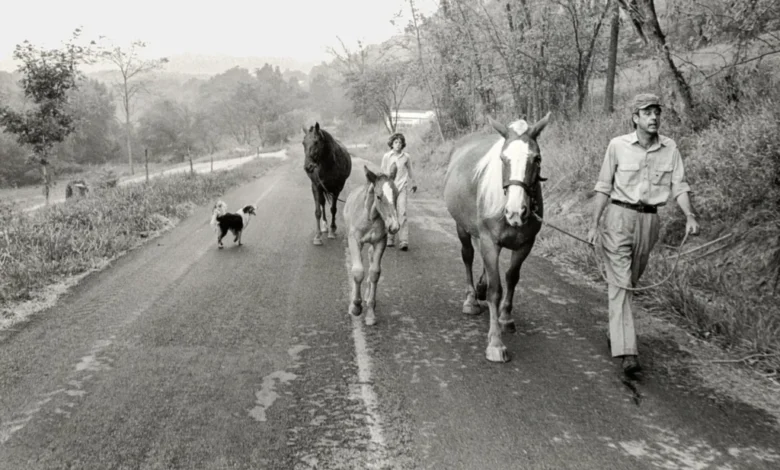
The passing of Wendell Berry at his home in Port Royal, Kentucky, at the age of 92 marks the conclusion of a remarkable life dedicated to agrarian stewardship, literary excellence, and a profound critique of modern industrial civilization. Berry, whose death was widely mourned across literary and environmental circles, spent decades cultivating his land using traditional farming techniques, writing his manuscripts by hand in a secluded cabin devoid of electricity. While he became globally renowned for his fierce polemics against industrial agriculture and his elegiac portrayals of family farms, his legacy extends far beyond rural preservation. For contemporary individuals navigating an increasingly digital, hyper-connected, and urbanized society, Berry’s life offers a compelling blueprint for intentional living, purposeful work, and deliberate resistance to modern triviality.
Chronology and the Path to Henry County
Born in 1931 in Henry County, Kentucky, Berry’s early life initially mirrored the trajectory of an ambitious academic and literary elite. He pursued higher education at the University of Kentucky, where he earned both his Bachelor of Arts degree in 1955 and a Master of Arts degree in 1957. Eager to refine his craft, he traveled west to Stanford University to participate in its prestigious creative writing program, studying under prominent literary figures of the mid-20th century.
Following his time at Stanford, Berry received a Guggenheim Fellowship, which enabled him to live and write in Europe, primarily in Italy and France, during the late 1950s. Upon returning to the United States, he accepted a faculty position as an assistant professor of English at New York University’s Bronx campus. By all conventional metrics of the era, Berry was on the fast track to institutional success within the American academic establishment. He was married and raising two young children against the backdrop of bustling metropolitan New York.
However, the friction between his metropolitan lifestyle and his deep-seated attachment to his native Kentucky soil came to a head in 1964. At the age of 29, Berry made the radical decision to resign from New York University, abandon his promising academic career, and return permanently to Henry County, where his family had farmed for generations.
The resignation scene has since become part of American literary lore. As recounted by writer David Demaree, Berry’s departmental supervisor summoned him upon receiving the formal resignation letter, operating under the assumption that the young academic simply failed to comprehend the magnitude of what he was discarding. The supervisor warned Berry against trading institutional prestige and career advancement for the perceived obscurity of rural Kentucky, invoking Thomas Wolfe’s famous dictum that "you can’t go home again." Furthermore, literary peers cautioned that such a move would amount to intellectual suicide, cutting him off from the vital cultural centers of the metropolis. Yet, Berry remained entirely unmoved, driven by a singular conviction that his vocation as a writer required an authentic, physical connection to a specific place and community.
Literary Philosophy and the Demand for Place
Berry’s return to Kentucky was not merely a lifestyle preference; it was an epistemological necessity for his writing. He maintained that an author could not write truthfully about human relationships, community, and land stewardship from a detached, metropolitan vantage point. In a 2018 interview with The New York Times, Berry reflected on this foundational philosophy: "The landscape was there to check me if I was wrong. I could never go away and make up stuff at cocktail parties about the backwoods of Kentucky. I worked with people here in all walks of life and learned from them. It’s been a very rich experience."
By embedding himself in the daily rhythms, labor, and social fabric of Henry County, Berry established an unshakeable standard of authenticity. His extensive bibliography—spanning dozens of volumes of poetry, novels, and essays, including landmark works like The Unsettling of America (1977)—was grounded in firsthand observation of the ecological and social toll exacted by modern agricultural practices. He argued persistently that the displacement of agrarian communities by corporate agribusiness severed humanity’s fundamental ethical responsibilities to the earth.
The Contemporary Crisis of Modern Convenience
The relevance of Berry’s life choices has arguably amplified in the decades following his return to Kentucky, particularly in the context of 21st-century technological saturation. Modern life is increasingly characterized by sensory numbing, frictionless conveniences, and digital mediation. Artificial intelligence and algorithmic platforms frequently intercede to shield individuals from even minor instances of cognitive strain, while attention spans are continually fragmented by endless digital stimulation designed to alleviate baseline anxiety.
Professional environments have likewise undergone a profound transformation. For a vast segment of the white-collar workforce, daily labor has devolved into what critics describe as bureaucratic theater—an endless cycle of synchronous messaging, email chains, virtual meetings, and redundant documentation that yields little tangible output or human fulfillment. Simultaneously, civic and political engagement has frequently been reduced to performative polarization on social media networks, enabling individuals to assume the posture of radicals from the safe remove of a smartphone screen.
Berry understood the psychological allure of such technological and professional distractions, yet he recognized that the evasion of difficulty carries a steep human cost. His philosophy posits that physical hardship, manual labor, and cognitive strain are not anomalies to be engineered out of existence; rather, they are essential components of a resilient human life. When confronted and integrated with deliberate purpose, these challenges forge an inner fortitude capable of withstanding the inevitable crises of existence.
Implications and the Legacy of the Deep Life
The passing of Wendell Berry invites a broader cultural reevaluation of what constitutes a successful life. In a society that routinely measures achievement through professional status, digital influence, financial accumulation, and continuous acceleration, Berry’s 92 years stand as a deliberate counter-narrative.
His legacy demonstrates that meaningful existence is not found in the passive consumption of cultural products or the endless optimization of digital workflows, but in rootedness, stewardship, and fidelity to local communities. While very few contemporary individuals can replicate Berry’s exact path—abandoning urban centers to farm ancestral land without electricity—the underlying principle remains universally accessible.
Berry’s life challenges modern citizens to examine the architecture of their own routines, to scale back their reliance on digital escapism, and to cultivate a deeper, more intentional relationship with their work, their communities, and the physical world. In doing so, his enduring body of work and his uncompromising personal example continue to illuminate a viable pathway toward a richer, more deliberate human experience.