Navigating the Modern Sales Tech Stack: Why Sales Readiness Platforms Are Defining the 2026 Go-To-Market Strategy


Modern sales leadership faces an ongoing paradox of technology accumulation. Across enterprises and mid-market organizations alike, sales operations teams continuously supplement their technology stacks with conversation intelligence software, content libraries, coaching modules, and traditional learning management system (LMS) modules. Yet, despite these heavy investments, sales directors and vice presidents frequently struggle to answer a foundational operational question: Are sales representatives genuinely prepared to execute in live customer interactions?
Recent industry analysis highlights the severity of this disconnect. According to HubSpot’s 2025 State of Sales Report, only 34% of sales teams expect to meet or exceed their annual quotas. Analysts note that layering disconnected tools onto an already bloated technology stack will not close this widening performance gap. Instead, modern revenue operations (RevOps) and enablement leaders are pivoting toward solutions that systematically connect training inputs directly to pipeline outputs.
This comprehensive analysis examines the operational mechanics of sales readiness platforms, evaluates when a business requires specialized software, and breaks down the leading market options for 2026 based on tech stack integration, organizational maturity, and team size.
The Evolution of Sales Enablement: Understanding Readiness Platforms
To comprehend the rise of dedicated sales readiness software, industry observers must first distinguish between adjacent categories within the revenue technology ecosystem. Historically, sales enablement platforms have focused primarily on organization—curating content, delivering training materials, and providing repositories so reps can access documents when needed. Products such as HubSpot’s Sales Hub exemplify this approach by bundling asset management, call recording, automated transcription, and playbooks within a unified customer relationship management (CRM) framework.
In contrast, a sales readiness platform approaches enablement through the lens of behavioral proficiency, skill assessment, and formal certification. While a traditional LMS handles broad, compliance-oriented training courses and completion tracking, sales readiness solutions introduce rigorous coaching workflows, role-based certifications tailored to specific selling scenarios, and deep analytics. By syncing activity data directly with the CRM, these platforms enable managers to determine whether theoretical training has fundamentally altered how a representative sells.
Operational Challenges Driving the Shift Toward Readiness Software
As organizations scale beyond a handful of foundational account executives, manual coaching and ad-hoc knowledge transfer become unsustainable. Rapid corporate growth exposes critical vulnerabilities in sales operations, four of which consistently demand technological intervention.
Prolonged Ramp Times and Delayed Pipeline Contribution

New sales representatives are typically expected to carry quota from their first day on the job, yet onboarding periods frequently stretch across months before generating meaningful pipeline. Without structured ramp programs backed by objective skill benchmarks, new hires often rely on shadowing colleagues, reviewing static documentation, and informally asking peers for assistance. This decentralized process introduces severe quality variances. Sales readiness platforms standardize the onboarding journey by defining explicit competency requirements at every stage and automatically evaluating whether a representative has mastered the material.
Inconsistent Messaging Across Distributed Teams
While a 10-person sales team can maintain message alignment through weekly team meetings and ad-hoc call shadowing, a 50- or 500-person organization distributed across multiple geographies faces insurmountable communication silos. As headcount scales, the divergence between corporate messaging strategy and the actual words spoken on customer calls widens significantly. Because managers cannot manually review every recorded interaction, conversation intelligence features embedded within readiness platforms surface messaging patterns across hundreds of calls, flagging individual deviations and ensuring macro-level strategic alignment.
Low Adoption of Enablement Content
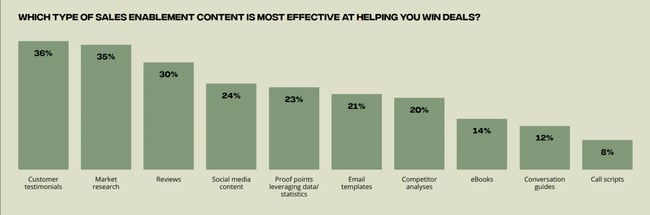
Organizations invest substantial capital into producing battle cards, competitive briefs, case studies, and specialized playbooks. However, without adoption analytics, enablement teams operate in a vacuum, lacking visibility into whether these resources actually influence closed-won deals. Furthermore, relevance remains a persistent challenge; recent market data indicates that roughly 33% of sales teams desire higher-quality enablement materials from marketing, specifically demanding proof-oriented assets that can be deployed effectively during live customer conversations.
Geographic Dispersion and Remote Workforces
The normalization of hybrid and fully remote work models has eliminated spontaneous, desk-side coaching opportunities. When representatives operate from remote home offices, sales managers cannot passively overhear pitch techniques or gauge readiness during casual office interactions. Centralized performance dashboards—aggregating call scores, certification milestones, content engagement metrics, and pipeline data—provide leadership with unified visibility, ensuring that a representative in Austin and another in London are held to identical execution standards.
Comparative Evaluation of Leading Sales Readiness Platforms for 2026
Organizations exploring dedicated readiness infrastructure must weigh several prominent market options, each catering to distinct organizational structures and use cases.
Mindtickle
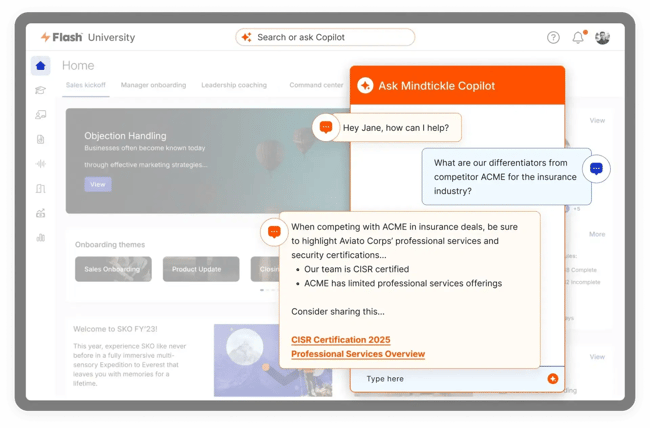
Mindtickle operates as an enterprise-grade sales readiness platform designed to establish an Ideal Rep Profile (IRP) across skills, knowledge, and observed behaviors. The platform’s defining differentiator is its Readiness Index, a proprietary scoring framework that benchmarks entire teams against defined performance standards in real time. Moving beyond traditional completion tracking, Mindtickle employs AI-driven roleplay simulations, structured certifications, and comprehensive conversation intelligence to systematically close skill gaps. The platform is best suited for mid-market and enterprise organizations seeking rigorous, profile-based measurement.
Highspot
Highspot integrates content usage, training activity, coaching data, and deal outcomes into a unified analytics ecosystem. By organizing sales collateral into curated libraries known as "Spots"—scoped to specific deal stages, buyer personas, or competitive landscapes—Highspot utilizes semantic search algorithms to surface relevant assets directly within the context of an active deal. Additionally, Highspot features Initiative Scorecards, which consolidate signals from training completion, content engagement, and closed-won revenue into a single management view.
Note on Market Consolidation: In February 2026, Highspot signed a definitive agreement to merge with Seismic, with the transaction pending regulatory approval. While the combined entity will ultimately operate under the Seismic brand, both legacy platforms are expected to maintain full operational support throughout the transition period.
Showpad
Showpad eOS delivers a dual-purpose architecture that prepares representatives prior to customer engagements via structured onboarding and continuous learning paths, while simultaneously tracking post-engagement buyer interactions through advanced analytics. Showpad supports guided selling by mapping dynamic content recommendations directly to specific stages of the buyer journey. This approach appeals particularly to mid-market enablement teams prioritizing rapid implementation cycles alongside unified content management and buyer engagement tracking.
Allego
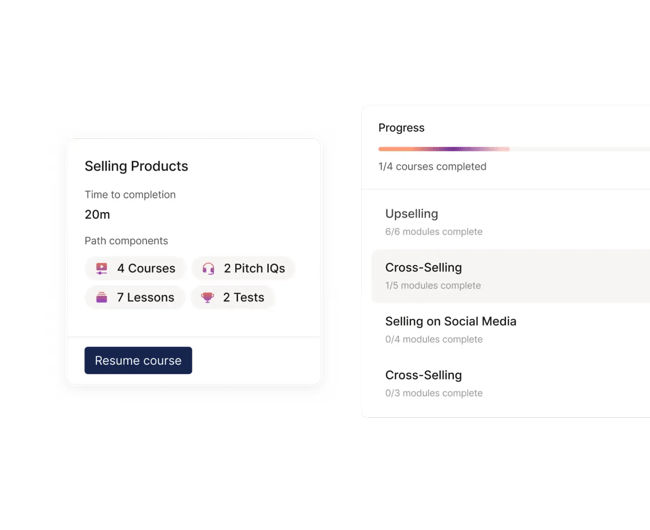
Allego differentiates itself through a video-first architecture designed around peer learning and asynchronous coaching. Recognizing that valuable organizational knowledge frequently resides with veteran representatives, Allego enables reps to record practice pitches, objection-handling responses, and product demonstrations. Managers and peers then review these submissions asynchronously, leveraging AI-scored feedback to evaluate performance without necessitating live meeting coordination. This capability makes Allego an ideal solution for globally distributed, hybrid sales teams operating across multiple time zones.
The Integrated Alternative: HubSpot’s Sales Hub
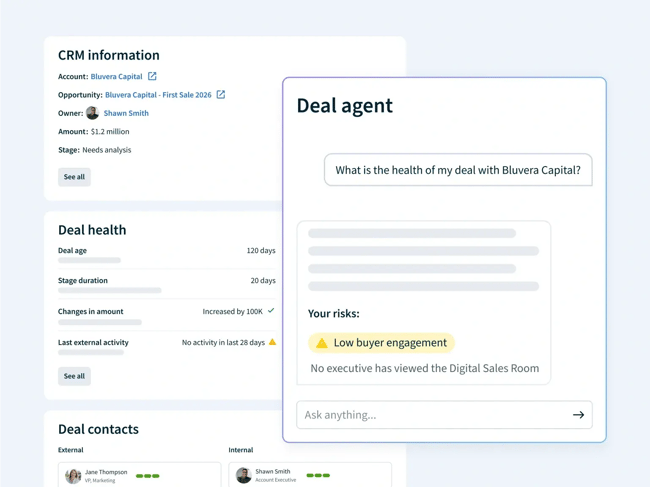
For organizations that require robust sales execution infrastructure without deploying an entirely separate enterprise readiness application, HubSpot’s Sales Hub offers a compelling alternative. Built directly on top of HubSpot’s Smart CRM, Sales Hub unifies pipeline management, conversation intelligence, AI-powered prospecting agents, and sales analytics into a single environment.
By keeping onboarding sequences, playbooks, call recording, and performance reporting within the CRM where deals are actively managed, Sales Hub bridges the gap between training and pipeline execution. Furthermore, for teams utilizing specialized external readiness apps such as Mindtickle, Gong, or Allego, HubSpot’s extensive app marketplace provides native integrations, centralizing readiness data directly within the core CRM environment.
Strategic Framework for Evaluating Sales Readiness Tools
When procurement committees and RevOps leaders evaluate sales readiness software, analysts recommend applying a structured assessment framework:
- CRM Integration Depth: Solutions operating as isolated data islands introduce administrative friction. Native CRM integrations—particularly with ecosystems like HubSpot—ensure seamless data flow and reduce maintenance overhead.
- Time to Value and Implementation Scope: Enterprise-grade deployments can require anywhere from three to six months to achieve full operational status. Organizations must audit internal administrative bandwidth and content migration requirements before committing to a vendor.
- Alignment with Coaching Workflows: Technology must support existing management habits. Teams running weekly pipeline reviews require dashboards embedded within that workflow, whereas asynchronous teams benefit heavily from video-based practice engines.
- Content Governance and Discoverability: Robust version control, automated expiration tagging, and advanced semantic search capabilities are essential to prevent outdated collateral from circulating among sales teams.
- Proficiency Measurement Beyond Compliance: Effective tools evaluate qualitative skill application through roleplay simulations, AI-scored assessments, and live call behavior, rather than merely tracking video completion checkboxes.
Conclusion: Aligning Process Before Technology
Ultimately, sales readiness platforms do not create operational excellence on their own; they amplify the underlying processes established by leadership. Organizations must first define clear performance benchmarks, structure their coaching frameworks, and establish what "ready" truly means for their specific market segment. Once those foundational processes are locked into place, deploying the appropriate sales readiness technology can successfully accelerate ramp times, align team messaging, and reliably close the gap between training investment and revenue generation.