The Definitive Guide to Optimizing Your Website for AI Search and Answer Engine Visibility

Learning how to optimize your website for AI search is currently one of the most critical competencies for digital marketers and SEO professionals. As the digital landscape shifts from traditional blue-link results toward generative, conversational interfaces, the audience for these tools is expanding at an unprecedented rate. According to recent research from Wix Studio, monthly unique visitors to major answer engines surged from 634 million in the first quarter of 2025 to 904 million by the first quarter of 2026, representing a growth of more than 40% in just one year. This rapid adoption signifies a fundamental change in how users interact with the internet, necessitating a strategic pivot for brands aiming to remain visible in an era of automated synthesis.
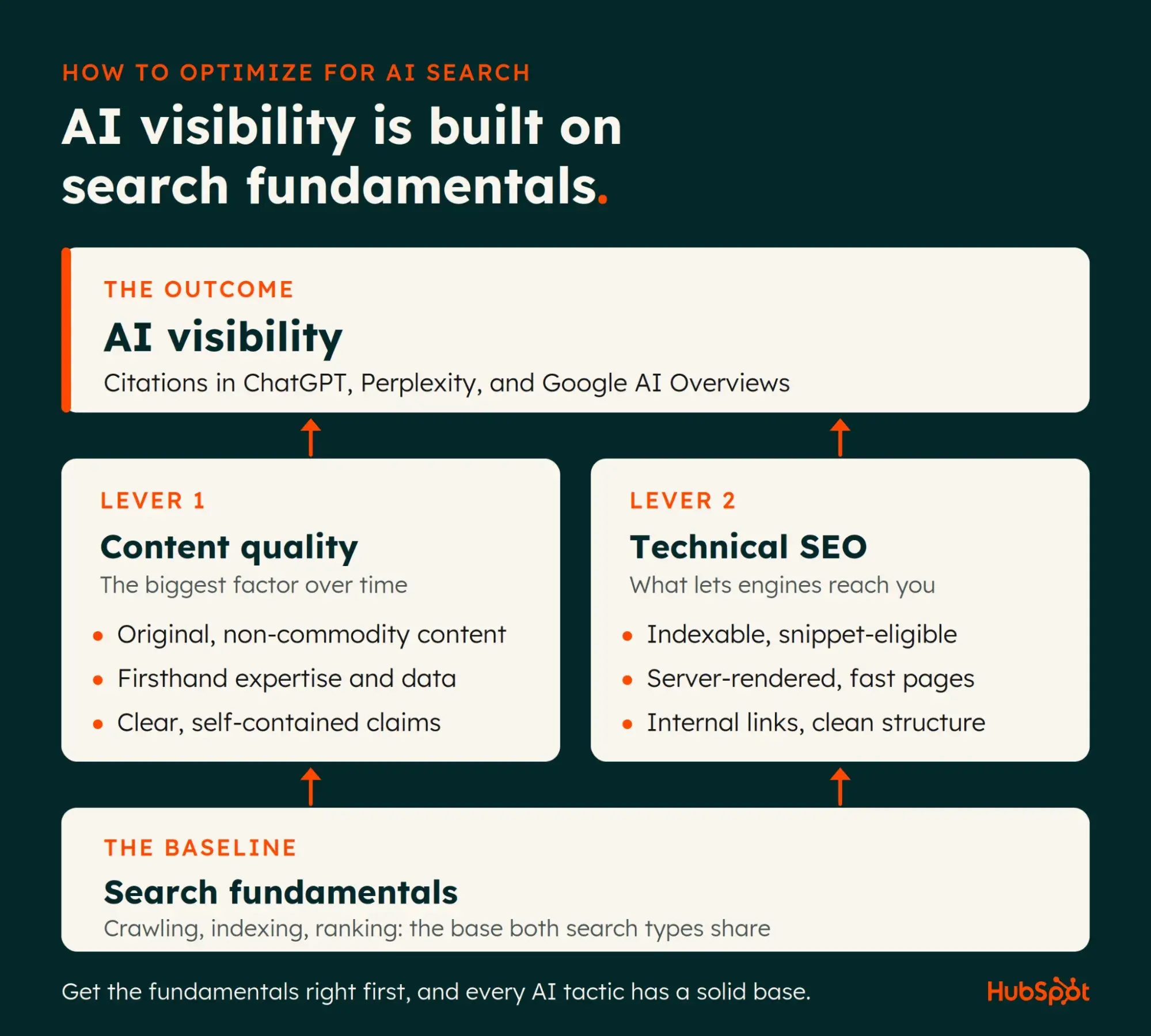
Despite the rise of generative AI, industry experts confirm that Answer Engine Optimization (AEO) has not replaced traditional Search Engine Optimization (SEO). Instead, the two disciplines are increasingly intertwined. Modern answer engines—such as Google’s AI Overviews, Perplexity, and ChatGPT Search—rely on the same fundamental infrastructure as classic search engines. To be cited by an AI, a page must first be crawled, indexed, and deemed authoritative by the underlying search system. Consequently, the standards that drive traditional rankings are now the essential prerequisites for earning AI citations.
The Evolution of Search: A Chronology of AI Integration
The integration of AI into search is not a sudden occurrence but the culmination of several years of development. In early 2023, the industry saw the emergence of Large Language Models (LLMs) that could process vast amounts of web data, which initially caused concern regarding the future of web traffic. By late 2024, search giants began formalizing the integration of AI-generated summaries directly into the search results page.
In early 2025, search engines officially moved beyond experimental beta phases, normalizing the use of AI Overviews as a standard user experience. This timeline reflects a shift from keyword-based retrieval to intent-based synthesis. By 2026, the reliance on AI for research became a primary behavioral trait for consumers, forcing brands to optimize not just for rank, but for "citability"—the ability of a web page to provide a concise, factual, and high-quality response that an LLM can safely ingest and present to the user.
The Foundation: Why Traditional SEO Remains the Bedrock
The technological architecture of AI search is built on the foundation of traditional search systems. Google has clarified that its AI Overviews are powered by a specialized version of the Gemini model, which operates in tandem with existing search ranking systems. Similarly, ChatGPT’s search capabilities often leverage Bing’s index to provide web-based citations.
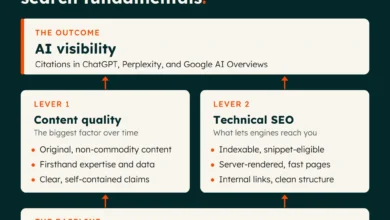
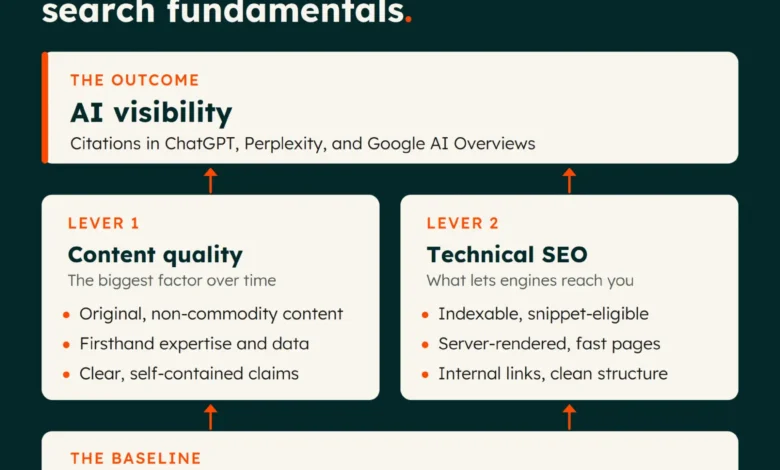
If a website fails to meet the basic technical requirements—such as being crawlable, renderable, and indexable—it effectively removes itself from the pool of sources an AI can reference. Data from SE Ranking supports this, revealing that websites with a First Contentful Paint (FCP) of under 0.4 seconds earn significantly more citations than those with slower load times. This indicates that technical performance is not merely a vanity metric for user experience but a functional requirement for AI discovery.
People-First Content: The Quality Imperative
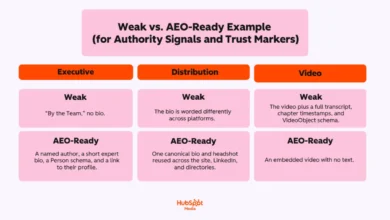
Perhaps the most significant factor in AI search visibility is the quality of the content itself. Google’s guidance emphasizes "people-first" content—material that demonstrates original expertise, firsthand experience, and a unique perspective. Commodity content, which merely repackages common knowledge already present in an LLM’s training data, is less likely to earn citations.

The data confirms this correlation. Analysis of over 216,000 pages shows that content featuring expert commentary earns 4.1 citations on average, compared to just 2.4 for content lacking such insight. Furthermore, pages that present original data points are consistently favored. An engine has little incentive to cite a source that offers nothing more than what it already "knows." By providing proprietary data and clear, self-contained claims, a brand increases its likelihood of being selected as a primary source.
Technical Requirements for AI Citation
To maximize visibility, webmasters must ensure their technical foundations are robust. This includes:
- Server-Side Rendering (SSR): While Googlebot is capable of rendering JavaScript, many AI crawlers are not. Client-side rendered content may appear as a blank page to these bots, rendering the site invisible to AI.
- Structured Data: While not a "magic button" for AI visibility, schema markup provides a machine-readable map of the page. It allows the AI to parse the content with greater confidence, reducing the likelihood of hallucinations or inaccurate summaries.
- Snippet Controls: Directives such as
nosnippetormax-snippetact as gatekeepers. If a site restricts snippets, it inadvertently excludes itself from AI Overviews. It is essential to ensure that robots meta tags are correctly configured to allow for rich, informative previews.
Comparative Analysis: Perplexity vs. ChatGPT
Not all answer engines behave identically. A critical insight for strategists is that an optimization approach that works for one engine may not yield results on another. Perplexity is currently the most aggressive "citer," drawing on a larger pool of sources and prioritizing discussion-based platforms like LinkedIn and Reddit. In contrast, ChatGPT tends to be more selective, favoring long-form, authoritative articles.
Data from Fan Out suggests that only 7.7% of cited URLs appear across multiple engines. This fragmentation indicates that brands should treat each AI platform as a distinct channel rather than a monolithic entity. For instance, if a business targets B2B buyers, investing in high-quality, professional discourse on platforms like LinkedIn may be more effective for Perplexity visibility, whereas deep-dive whitepapers remain superior for ChatGPT.
Actionable Workflows for AEO
The most effective strategy for AEO is a repeatable, process-driven workflow. This involves:
- Entity Mapping: Identifying the questions your audience asks and connecting your core brand topics into a cohesive entity map.
- Answer-First Formatting: Adopting a journalistic structure where the main answer is provided within the first 40 to 60 words. This ensures that when an AI parses the page, the "answer" is immediately accessible.
- Question-Led Subheads: Using H2 and H3 tags to frame content as specific user queries. Research indicates that cited text is significantly more likely to be associated with a question-based heading.
- Continuous Audit Cycles: AI search is dynamic. A page that performs well today may drop out of the rotation tomorrow if the data becomes stale. Implementing a refresh cadence for key pages ensures that the content remains the most accurate and authoritative source available.
Broader Implications and Future Outlook
The rise of AI search represents a fundamental shift in the economics of information. As users increasingly find answers directly within the search interface, the traditional "click-through" model is being challenged. However, this creates a new value proposition for brands: becoming the authoritative source that the AI cites.
Being cited by an AI acts as a digital seal of approval, potentially driving more high-intent traffic than a traditional link. The implications for marketing budgets are clear: investment must shift toward high-value, original content and technical infrastructure that supports machine readability. Brands that adapt to these requirements will likely find themselves at the center of the next generation of search, while those that rely on legacy SEO practices may see their traffic diminish as AI interfaces capture an ever-growing share of the user journey.
Ultimately, the goal is to create a symbiotic relationship with AI. By providing the high-quality, structured, and factual data that LLMs crave, businesses can turn the challenge of AI search into a powerful engine for brand visibility and authority. The tools and tactics outlined here provide a roadmap for navigating this transition, ensuring that as search continues to evolve, your brand remains an indispensable part of the conversation.