How an E-Commerce Startup Plans to Reinvent the Kitchen Water Filter with a $249 Premium Pitcher

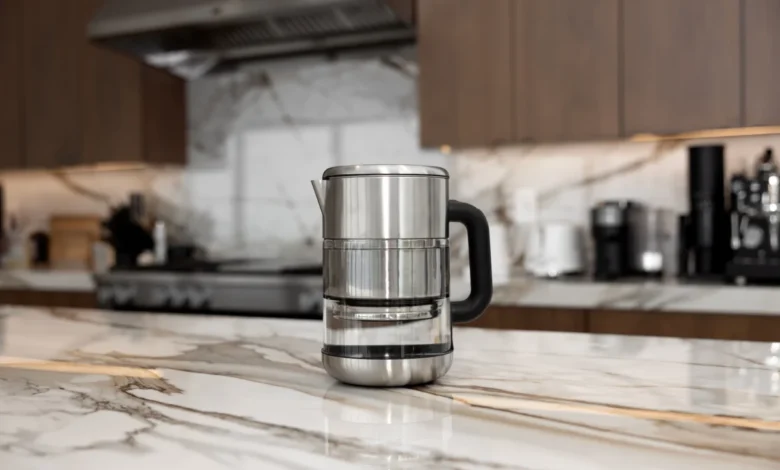
In the contemporary consumer marketplace, basic household commodities are frequently defined by low-cost manufacturing, plastic ubiquity, and a disposable product lifecycle. Standard water filter pitchers, ubiquitous in refrigerators across the developed world, typically retail between $20 and $40, functioning as low-investment, short-term solutions for tap water purification. However, a growing segment of the premium home goods market is challenging this paradigm. Rorra, an emerging player in the domestic water filtration sector, has introduced a high-end filtration pitcher priced at $249—nearly ten times the cost of conventional alternatives.
The product launch represents a strategic evolution for the startup, which previously disrupted the market with an eight-figure debut of its stainless-steel countertop filtration system. Spearheaded by co-founders Brian Keller and Charlie Carlisle—both alumni of the prominent apparel and social enterprise brand Love Your Melon—Rorra is banking on a consumer shift toward durability, aesthetic integration, and advanced contamination removal. The founders recently detailed their entrepreneurial trajectory, product development hurdles, and unconventional go-to-market strategies during an appearance on the One Day with Jon Bier podcast, offering a window into the financial and operational mechanics of scaling an eight-figure direct-to-consumer enterprise.
The Genesis of Rorra: Building Without a Safety Net
The foundational phase of Rorra was characterized by calculated risks and prolonged periods of pre-revenue development. Benefiting from their prior experience scaling Love Your Melon—a company renowned for its mission of donating hats to pediatric cancer patients and navigating a successful corporate exit—Keller and Carlisle brought seasoned operational acumen to their new venture. Despite this background, launching a hardware-intensive filtration company required unprecedented personal and financial sacrifice.
Unlike software ventures that can deploy minimum viable products rapidly, physical product development demands heavy capital expenditure upfront. Keller and Carlisle operated Rorra for nearly two years full-time without generating a single dollar in sales. Their sole asset during this incubation period was early-stage market research that indicated a distinct consumer appetite for high-performance, aesthetically refined water filtration devices that eschewed traditional plastic construction.
The path from concept to commercialization was fraught with engineering and logistical setbacks. Early prototypes of the company’s flagship countertop system deviated significantly from the streamlined aesthetic the founders envisioned. Carlisle recalled an early iteration that was roughly one-and-a-half times the scale of the eventual retail model, colloquially comparing its imposing silhouette to an oversized insulated tumbler.
Compounding these design challenges, the startup faced a critical timeline disruption just as commercial production appeared imminent. Contract engineering partners informed the founders that the filtration system required an additional three to four months of refinement to meet performance and regulatory standards. For an early-stage startup operating on a lean budget, the delay necessitated a comprehensive operational restructuring. Keller noted that the team had to effectively remodel the entire business model to ensure sufficient cash reserves remained to sustain the company through the extended pre-launch runway.
Overcoming these hurdles ultimately yielded commercial success. Following the debut of its countertop system and a subsequent filtered showerhead product, Rorra reported an eight-figure revenue stream in its inaugural fiscal year. Industry observers note that the company’s ability to capture significant market share in a crowded sector dominated by legacy brands like Brita and PUR stems from its positioning at the intersection of home decor and wellness technology.
Re-Engineering the Filtration Pitcher for Longevity
The introduction of the $249 water pitcher marks Rorra’s strategic effort to distill the proprietary filtration technology of its larger countertop appliances into a more accessible, portable domestic format. However, the pricing strategy immediately invites scrutiny from market analysts accustomed to commoditized kitchenware.
The justification for the premium price point lies primarily in materials science and sustainability mandates. In an era dominated by planned obsolescence and lightweight plastics, Keller and Carlisle sought to resurrect a bygone era of manufacturing durability.
"Go back to the 1950s refrigerators," Carlisle remarked during the podcast discussion. "They used to last for 40, 50 years. How do we get back to that really wonderful, durable, and oftentimes self-serviceable culture?"
To achieve this standard of longevity, the 13-cup Rorra pitcher is constructed entirely from borosilicate glass and stainless steel, ensuring that filtered water never makes contact with synthetic plastics. From a technical standpoint, the internal filtration media is engineered to target a comprehensive suite of contemporary water contaminants, including per- and polyfluoroalkyl substances (PFAS), lead, and microplastics. Furthermore, the proprietary filter boasts a capacity of up to 200 gallons before requiring replacement, significantly outlasting many standard pitcher filters on the market.
Leveraging Artificial Intelligence for Launch Strategy Validation

Developing a durable, high-performance product is only half the battle in modern direct-to-consumer retail; positioning and marketing a $249 pitcher to a cost-conscious consumer base requires a sophisticated go-to-market strategy. In mapping out the product’s rollout, Keller utilized an unconventional analytical tool: artificial intelligence.
Rather than employing AI to validate preexisting assumptions or generate optimistic marketing copy, Keller subjected his launch strategy to reverse-engineered stress testing. He inputted the comprehensive business and marketing plan he had personally drafted, but framed the prompt around absolute failure.
"This was the plan. It completely failed. Tell me where we went wrong," Keller instructed the AI model.
The algorithmic critique identified several strategic vulnerabilities. Specifically, the AI warned that Rorra lacked the brand ubiquity required to sustain the lengthy, multi-month pre-launch awareness campaign the founders had initially envisioned. Additionally, the analysis indicated that the marketing messaging was overly convoluted, attempting to communicate too many disparate selling points—ranging from design aesthetics to advanced contaminant removal—simultaneously.
Acting on these insights, the founders pivoted their strategy. They compressed the pre-launch timeline and streamlined their core messaging to focus on the intersection of aesthetic design, plastic-free material safety, and heavy-metal filtration. The adjustment proved effective; initial production runs of the $249 pitcher sold out rapidly, prompting the scheduling of subsequent inventory shipments to meet consumer demand.
Expanding the Ecosystem Beyond the Kitchen Counter
With the successful introduction of the filtration pitcher, Keller and Carlisle are turning their strategic focus toward long-term brand expansion. The founders envision scaling Rorra from a collection of isolated kitchen appliances into an integrated, omnipresent water filtration ecosystem.
A core limitation of the current consumer filtration market, according to Carlisle, is the lack of brand continuity between domestic installations and on-the-go consumption. Consumers who invest in high-end purification systems for their homes frequently rely on entirely separate, unbranded, or unregulated sources when utilizing public hydration stations at airports, fitness centers, or office buildings.
"Right now, when you go to fill your water bottle up at an airport or the gym, that brand is not the same brand that you can buy for your house and vice versa," Carlisle noted. Rorra’s long-term corporate vision involves developing a fully integrated product architecture that transcends traditional domestic boundaries, providing unified water quality solutions across residential, commercial, and travel environments.
Organizational Growth and the Scale-Up Danger Zone
As Rorra enters its next phase of corporate maturity, internal operations are undergoing a significant geographic and structural transition. The company has officially relocated its headquarters to Austin, Texas, bringing together a team that operated on a fully remote basis for the first three years of the startup’s lifecycle. The transition to a physical office environment is intended to foster closer collaboration and accelerate product innovation as the brand scales.
However, scaling past initial success introduces new operational risks. Having navigated the hazardous early-stage survival phase, Keller is acutely aware of the existential threats facing rapidly expanding enterprises.
"Businesses go to die between 20 to 50 million," Keller observed, referencing the critical revenue threshold where many high-growth startups plateau due to infrastructural strain, cultural dilution, or sluggish innovation cycles.
To successfully traverse this corporate growth threshold, Keller emphasizes the necessity of maintaining operational agility, continuing aggressive product research and development, and strategically recruiting executive talent capable of managing increased corporate complexity.
For the immediate future, Rorra’s market viability will serve as a vital case study in premium consumer goods pricing. As inflation-wary consumers balance fiscal caution against growing health consciousness regarding tap water contaminants, the market will ultimately determine whether a segment of the population is ready to embrace a $249 household water pitcher as a long-term investment in domestic wellness.