Brooke Shreeve Redefines the Strategic Role of Chief People Officers in Modern Enterprise Leadership

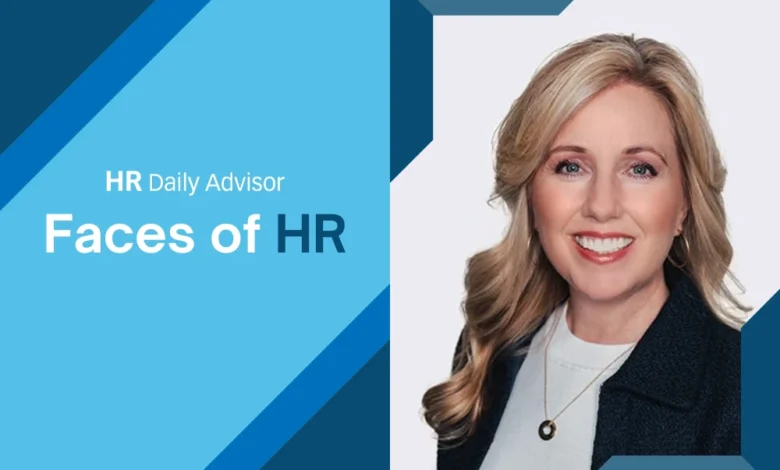
The modern corporate landscape is undergoing a fundamental transformation, shifting away from rigid, traditional hierarchies toward agile, human-centric operating models. At the forefront of this evolution is Brooke Shreeve, Chief People Officer at Weave, whose two-decade career exemplifies the transition of Human Resources from a back-office administrative function into an indispensable driver of enterprise value. Shreeve’s professional trajectory highlights a broader industry trend: the integration of advanced workforce analytics, financial discipline, and operational acumen into people management. As businesses navigate post-pandemic economic realities, rapid technological disruptions, and the integration of artificial intelligence, leaders like Shreeve are redefining how organizations attract, retain, and develop talent while maintaining a sharp focus on the bottom line.
Main Facts and Executive Background
Brooke Shreeve currently oversees global people strategy, total rewards, and international talent expansion at Weave, a prominent SaaS platform provider. Her executive portfolio includes leadership roles at major enterprises such as WEX Inc., MarketStar, and Flying J. Over a career spanning more than twenty years, she has successfully built People functions from the ground up, scaled operations across international continents, and guided organizations ranging from 250 to 16,000 employees through high-stakes corporate transitions.
Her technical expertise encompasses complex domains including employment law, labor relations, global compensation, benefits architecture, HR operations, and strategic business partnership. A Gallup-Certified Strengths Coach with a Bachelor of Science in Business Management from the University of Utah, Shreeve champions a philosophy that balances employee well-being with measurable shareholder value. Her approach relies heavily on workforce analytics, organizational design, capacity modeling, and comprehensive total rewards strategies to align human capital initiatives directly with corporate financial objectives.
Chronology and Evolution: From the Retail Floor to the C-Suite
Shreeve’s journey into the upper echelons of corporate leadership began far from the executive boardroom, rooted firmly in frontline retail operations. While working full-time as a sales associate in the lawn and garden department at Sears, she developed a keen interest in the mechanics of store-level HR operations, observing how effective training, onboarding, and payroll administration directly influenced store performance.
Seizing an internal career opportunity, she transitioned into a store trainer role. In this capacity, she managed compliance, onboarding, recruiting, and employee support, laying the groundwork for her operational philosophy. She subsequently advanced to Store HR Manager, eventually combining those responsibilities with broader store operations management.
Transitioning from retail to corporate environments, Shreeve advanced through roles focused on employee relations, operational HR, and Human Business Partnership. This frontline foundation proved instrumental during major macroeconomic disruptions, including the 2008 Great Recession, the COVID-19 pandemic, complex Mergers and Acquisitions (M&A) integrations, and enterprise-wide transformations. By experiencing business operations from the floor up, Shreeve developed an enduring respect for frontline workers—a perspective that continues to inform her scalable, people-first executive strategies.
Supporting Data and Industry Context
The evolution of the Chief People Officer role reflects broader structural shifts in the global labor market. According to recent workforce studies by human capital research firms, organizations that integrate HR leaders into executive strategic planning early in the business cycle experience higher retention rates and more successful change management outcomes. Modern HR departments are increasingly expected to operate as data-driven business units rather than compliance-enforcement agencies.
Industry data indicates that talent acquisition, upskilling, and organizational design account for over 60 percent of operational expenditures in high-growth technology and service sectors. Consequently, executives who apply analytical rigor to human capital management—utilizing workforce metrics, capacity modeling, and predictive analytics—are significantly better positioned to steer organizations through market volatility. Shreeve’s operational methodology directly mirrors this industry shift, utilizing data infrastructure to validate the return on investment of human capital programs.
Official Responses, Philosophy, and Leadership Insights
Reflecting on her professional journey, Shreeve emphasizes that mentorship and transparency have been critical to her development. Throughout her career, she has benefited from senior leaders who modeled financial discipline and strategic foresight. "My various mentors have taught me that people strategy only works when it’s connected to business strategy," Shreeve notes.
Addressing the challenges inherent in corporate leadership, Shreeve highlights a defining early-career lesson regarding integrity and radical ownership. While managing a complex data analysis project, a human error led to an incorrect calculation. Rather than concealing the mistake, she immediately reported the discrepancy to her management team. This transparency allowed leadership to rectify the error before downstream consequences materialized, reinforcing her belief that radical transparency and accountability form the bedrock of trust within high-performing teams.
Shreeve is candid about the persistent, outdated perception of HR as a purely administrative or compliance-driven function. To counter this, she mandates that her teams lead with data and business outcomes. By framing HR initiatives through the lens of market competitiveness and revenue enablement, she shifts organizational dialogue from policy enforcement to strategic execution.
Central to her executive philosophy is the concept of the "three-legged stool"—balancing the needs of employees, customers, and shareholders. Shreeve argues that cultivating a high-trust environment characterized by psychological safety empowers employees to challenge assumptions, voice innovative ideas, and admit mistakes constructively, thereby generating superior value across all three pillars.
Broader Impact and Implications for the Future of Work
The long-term implications of Shreeve’s leadership model point toward a fundamental redesign of corporate infrastructure, particularly regarding the integration of emerging technologies. As artificial intelligence and automation assume responsibility for high-volume administrative tasks, strategic HR leaders are positioned to reclaim significant bandwidth for high-level initiatives, including organizational design, long-term workforce planning, and leadership pipeline development.
At Weave, Shreeve’s most notable achievement has been building the entire People function from scratch during a critical transition period from a startup to a publicly traded growth-stage company. Describing the process metaphorically as building a house, she emphasizes the necessity of establishing foundational stability—implementing compliant policies, robust Human Resources Information Systems (HRIS), and structured recruiting frameworks—before scaling advanced cultural and developmental programs.
This methodical approach has yielded tangible results, overcoming initial skepticism from executive peers to prove that rigorous human capital management directly accelerates corporate growth. For professionals entering the human capital profession, Shreeve offers a clear directive: career advancement is achieved not by waiting for assignments, but by proactively identifying unowned organizational problems, formulating solutions, and executing them with operational precision. As the modern enterprise continues to evolve, the methodologies championed by leaders like Shreeve will serve as a blueprint for aligning human potential with sustained economic performance.