Tractor Supply Company fortifies national supply chain with high-tech distribution center opening in Nampa Idaho

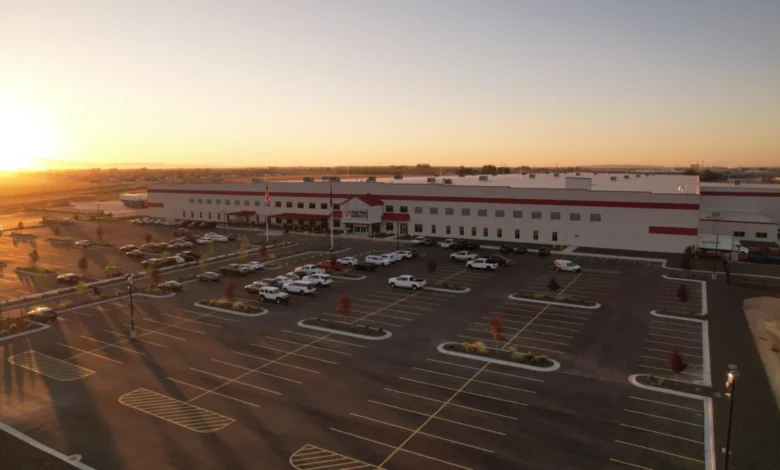
Tractor Supply Company, the largest rural lifestyle retail chain in the United States, has officially expanded its logistics footprint with the opening of a massive 865,000-square-foot distribution center in Nampa, Idaho. This facility, which stands as the 11th such hub in the retailer’s growing network, represents a strategic move to optimize regional product flow and meet the escalating demand for rapid delivery services. The Nampa site is designed to support 123 stores across nine states in its inaugural year, with the architectural capacity to scale up to 200 stores as the company continues its aggressive growth trajectory.
The project is more than just a storage facility; it is a centerpiece of Tractor Supply’s long-term supply chain modernization strategy. By situating this hub in the Pacific Northwest, the retailer aims to reduce transit times and operational friction for its vast network of storefronts, which numbered 2,463 locations across 49 states as of June 27, 2026.
Chronology of Development and Strategic Rollout
The path to the Nampa facility’s opening has been a carefully orchestrated two-year endeavor. The company broke ground on the site in 2024, aiming to fill a critical geographic gap in its distribution network. Following the completion of construction in July 2026, the company entered a transitional phase in August 2026, beginning the complex process of inventory intake. With the shelves stocked and the logistics software calibrated, the facility is scheduled to initiate full-scale outbound shipping in October 2026.
This timeline aligns with a broader corporate shift toward enhanced fulfillment capabilities. For over half a decade, Tractor Supply has been refining its store-based delivery model, offering various shipping windows including same-day and multi-day options. The Nampa facility serves as the logistical backbone for this "Final Mile" initiative, which leverages existing stores to create a hub-and-spoke distribution network. According to CEO Hal Lawton, the company has been systematically grouping stores—serving four locations out of a single hub—to accelerate last-mile delivery, a strategy that has seen rapid scaling throughout 2026.
Technological Integration and Sustainability Benchmarks
The Nampa distribution center distinguishes itself as the first in Tractor Supply’s history to fully integrate Order Storage and Retrieval (OSR) and Automated Storage and Retrieval System (ASRS) technology. This automation allows for the precise sequencing and movement of inventory, significantly reducing the manual labor typically associated with large-scale fulfillment operations. By automating the flow of goods, the facility aims to set a new internal benchmark for safety and efficiency.
Beyond automation, the facility serves as a testing ground for digital transformation at the staff level. All team leaders at the Nampa site are trained in artificial intelligence fundamentals. This training is supported by a dedicated AI Innovation Team, which is tasked with applying machine learning and data analytics to optimize daily operations, such as predictive inventory management and load-balancing for outbound shipments.
Sustainability was also a core requirement of the build. The Nampa facility has achieved LEED Silver certification, a recognized standard for environmental design. The site scored between 50 and 69 points on the LEED scale, reflecting the company’s investment in water conservation, energy-efficient building materials, waste management protocols, and high-quality indoor environmental standards. This move is consistent with the retailer’s broader corporate responsibility goals, which seek to balance industrial expansion with environmental stewardship.
Economic Impact and Workforce Expansion
The economic implications for the Nampa region are significant. The retailer has committed to creating 500 full-time jobs, a move that local officials, including Nampa Mayor Darl Bruner, have characterized as a "major economic milestone." The facility is not only a source of employment but also a catalyst for local commerce.
To ensure the facility can handle the heavy demands of rural retail, it features 80 truck docks that have been ergonomically optimized for high-volume inbound and outbound traffic. The sheer scale of the building—often described by company officials as large enough to house seven Idaho Ford Centers—provides the necessary footprint to accommodate bulky, rural-focused inventory that requires specialized handling equipment.
Broader Industry Context and Retail Strategy
Tractor Supply’s expansion comes at a time when traditional "brick-and-mortar" retailers are under immense pressure to master the complexities of omnichannel commerce. Currently ranked No. 83 in the Top 1000 Database—a comprehensive tracker of North American online retailers—Tractor Supply has successfully transitioned from a traditional farm-store model to a sophisticated digital player.
The company’s focus on the "Final Mile" is not merely a convenience feature; it is an existential necessity in the modern retail landscape. As noted during the company’s Q2 earnings call, the volume of last-mile deliveries completed in the first half of 2026 equaled the total volume for the entire 2025 calendar year. This exponential growth in delivery demand necessitates a supply chain that can pivot instantly between serving individual customer doorsteps and maintaining the inventory levels of thousands of physical stores.
Furthermore, the company’s commitment to AI is highlighted by its No. 225 ranking in Digital Commerce 360’s new AI Rankings. By embedding AI-literate leadership into its logistics centers, Tractor Supply is positioning itself to handle the volatile nature of consumer demand with greater precision than legacy competitors.
Official Perspectives on Operational Excellence
During his address at the Barclays 19th Annual Global Consumer Staples Conference in early September, CEO Hal Lawton emphasized that the success of the company’s digital growth is intrinsically tied to the efficiency of its distribution network. "Our distribution centers play a critical role in supporting our team members, stores, and customers," noted Craig Ledbetter, the company’s chief supply chain officer. According to Ledbetter, the Nampa facility is designed to "deliver the legendary service our customers have come to expect," while simultaneously providing a safer and more ergonomic working environment for employees.
The inclusion of additional acreage at the Nampa site serves as a hedge against future demand. As consumer purchasing habits shift and the "Petsense by Tractor Supply" brand continues to expand—with 209 stores currently operating across 23 states—the ability to scale the Nampa facility will be vital to maintaining the retailer’s competitive edge.
Analysis of Future Implications
The establishment of the Nampa distribution center suggests that Tractor Supply is moving away from a centralized, coast-to-coast fulfillment model in favor of a decentralized, regionalized network. This transition offers several strategic advantages:
- Risk Mitigation: By increasing the number of distribution centers to 11, the company reduces the impact of localized weather events or labor disruptions, ensuring that inventory remains accessible to stores even if one region faces logistical hurdles.
- Operational Agility: The use of AI-driven, automated systems allows the company to adapt to seasonal spikes—such as the heavy demand for agricultural supplies in the spring—without requiring linear increases in staffing.
- Customer Experience: As shipping expectations continue to tighten, proximity to the end consumer becomes the most significant differentiator. By placing a massive, high-tech hub in Idaho, Tractor Supply effectively shrinks the distance between the warehouse and the customer’s doorstep, thereby enabling the faster shipping times that are now standard in the retail industry.
As Tractor Supply continues to refine its "hub-and-spoke" system, the Nampa facility will likely serve as the blueprint for future distribution investments. The combination of LEED-certified construction, AI-integrated management, and automated fulfillment technology signals a maturation of the brand’s logistical capabilities. For a company that has spent years evolving its, "Legendary Service" motto, the Nampa distribution center is the physical manifestation of that promise, bridging the gap between the rural lifestyle and the digital convenience that modern shoppers demand.
In the coming years, industry analysts will be watching the Nampa site to determine how effectively these automation investments translate into improved operating margins. If the facility achieves the expected gains in throughput and efficiency, it is highly probable that Tractor Supply will continue to roll out similar high-tech, environmentally conscious hubs across its remaining geographic gaps, further cementing its position as a dominant force in both physical and digital retail.