Navigating the Complex Landscape of CRM Security: Protecting Customer Data in an Era of AI and Cloud Integrations

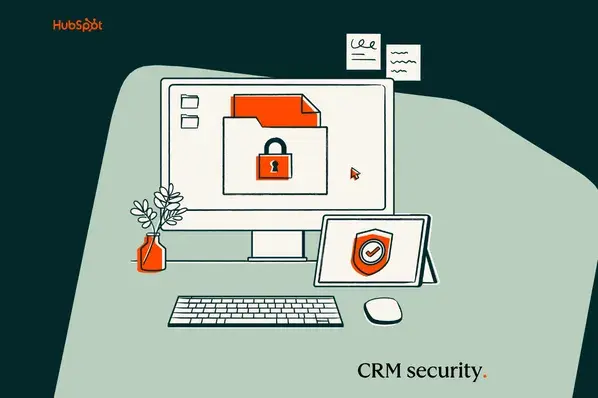
Customer Relationship Management (CRM) security has evolved into a critical operational priority for modern enterprises as the volume of stored consumer data reaches unprecedented levels. In an era defined by distributed workforces, sophisticated artificial intelligence workflows, and complex software-as-a-service (SaaS) ecosystems, safeguarding sensitive customer information is no longer just an IT concern—it is a fundamental business imperative. Organizations across all sectors increasingly rely on centralized CRMs to drive revenue operations, but every new digital touchpoint, third-party integration, and remote login simultaneously expands the potential attack surface. Consequently, industry experts and compliance officers are calling for a more rigorous, proactive approach to data governance that balances seamless operational workflows with uncompromised digital safety.
The imperative for robust CRM security stems from a combination of rising cyber threats, stringent international privacy regulations, and the fragile nature of consumer trust. Modern clients share personally identifiable information (PII), financial records, and communication histories with businesses under the explicit expectation that their data will remain confidential. A single security breach can catastrophically damage brand credibility, resulting in immediate customer churn and severe financial repercussions. Compounding these commercial risks are complex regulatory frameworks such as the European Union’s General Data Protection Regulation (GDPR) and the California Consumer Privacy Act (CCPA). These legislative mandates enforce rigorous oversight regarding how personal data is collected, stored, and processed, imposing heavy financial penalties for non-compliance. Furthermore, internal revenue operations rely heavily on pristine, uncorrupted data to close deals and forecast future market trends. Unsecured database systems face constant threats ranging from malicious deal tampering and intellectual property theft to costly downtime, making comprehensive security controls essential for maintaining business continuity.
At the heart of modern cloud CRM architecture lies the shared responsibility model, a framework that distinctly delineates cybersecurity duties between the software vendor and the client organization. Under this operational paradigm, the cloud CRM provider assumes full responsibility for securing the underlying cloud infrastructure. This includes maintaining physical data centers, managing server hardware, fortifying network perimeters, and deploying foundational system updates. Conversely, the subscribing enterprise retains absolute accountability for everything operating within its specific tenant environment, including user permission configurations, data handling practices, and third-party application connections. Industry analysts note that the vast majority of cloud-based security incidents stem not from underlying platform vulnerabilities or vendor flaws, but rather from minor user misconfigurations and overprivileged accounts. To mitigate these risks, cybersecurity professionals advise organizations to establish strict administrative boundaries early in the deployment lifecycle, recommending that super-administrator rights be strictly limited to a core group of trusted personnel to minimize potential data leak paths.
Implementing a resilient CRM security posture requires a foundational layer of core controls designed to prevent unauthorized access and mitigate compliance liabilities. Every enterprise implementing a new CRM platform must establish a structured approach to access management, beginning with the enforcement of the Principle of Least Privilege (PoLP). This security concept dictates that employees should be granted only the minimum level of access necessary to perform their specific job functions. By operationalizing role-based access control (RBAC), organizations can attach permissions directly to standard job titles rather than managing permissions on an ad-hoc, user-by-user basis. High-risk actions—such as bulk data exports, global contact deletions, and the modification of core financial fields—must be heavily restricted and shielded behind mandatory managerial approvals. Moreover, data visibility should be systematically organized using team hierarchies and business unit segmentation, ensuring that sales representatives, marketers, and customer service personnel only view the records pertinent to their specific operational mandates. Field-level security further enhances this protection by concealing sensitive executive or financial details even when a user has general viewing rights over a specific customer profile.
Beyond internal access management, the integration of third-party applications and Application Programming Interfaces (APIs) represents one of the most critical vulnerabilities in modern enterprise technology stacks. Contemporary CRM platforms are rarely isolated islands; they must seamlessly exchange data with marketing automation tools, customer support helpdesks, analytics software, and payment processing gateways via APIs. While these integrations drive business efficiency and cross-departmental alignment, recent industry data highlights widespread apprehension regarding API security, with recent surveys indicating that over half of surveyed organizations harbor significant concerns regarding overprivileged API access. Because every connected application expands the enterprise attack surface, security teams must treat every prospective integration as a potential vector for data exfiltration. Best practices for securing CRM APIs include enforcing strict token-based authentication, limiting API token lifespans, restricting data scopes to absolute operational necessities, and conducting rigorous security reviews of third-party vendors before granting them access to production databases.
Even with comprehensive preventative controls in place, organizations must maintain continuous monitoring and robust incident readiness to detect and neutralize threats before they escalate into full-scale data breaches. Effective CRM security monitoring relies on detailed audit logs that track administrative modifications, mass data downloads, and anomalous sign-in attempts from unusual geographic locations or unfamiliar devices. While these tracked events do not automatically signify malicious intent, they serve as vital indicators of compromised credentials, insider threats, or accidental data exposure. Organizations are advised to establish standardized, documented incident response workflows that enable security personnel to systematically investigate alerts, revoke compromised user credentials, isolate affected system segments, and notify relevant stakeholders in alignment with regulatory reporting timelines. Increasingly, enterprises are leveraging automated CRM workflows to streamline this oversight, utilizing automated triggers to alert administrators of high-risk activities, schedule recurring permission audits, or temporarily freeze accounts exhibiting suspicious behavior.
Balancing strict regulatory compliance with the operational agility required by sales and marketing teams remains a delicate challenge for corporate governance officers. Data privacy regulations necessitate rigorous oversight, yet overly cumbersome security measures can stifle productivity and frustrate revenue-generating personnel. A sustainable compliance strategy integrates privacy controls directly into everyday workflows, utilizing automated database hygiene practices to systematically prune stale, unneeded contact records that inflate legal risk. Quarterly compliance audits serve as an effective mechanism for maintaining data integrity, enabling organizations to verify consent opt-ins, review third-party app connections, enforce data masking in developer testing sandboxes, and execute test runs of "right to be forgotten" requests to ensure that deleted records are permanently eradicated from the system. Many leading CRM platforms now incorporate unified privacy toggles within their primary settings menus, allowing administrators to automate compliance enforcement—such as managing cookie tracking, honoring regional privacy mandates, and processing data deletion requests—across all connected marketing and sales channels without requiring manual intervention for every individual record.

When selecting a CRM provider, organizations must conduct exhaustive evaluations of the vendor’s security posture, transparency, and compliance accreditations. A prospective CRM partner will ultimately be entrusted with some of the enterprise’s most sensitive and valuable operational data, making upfront risk assessments a critical component of vendor selection. Mature CRM vendors typically maintain publicly accessible Trust Centers that provide comprehensive documentation regarding their security architectures, data encryption standards at rest and in transit, regional data residency options, and third-party penetration testing results. The availability of detailed, easily navigable compliance documentation—including certifications such as SOC 2 Type II, ISO 27001, and HIPAA compliance readiness—serves as a strong indicator of a mature, reliable security program. Organizations are encouraged to involve legal, compliance, and cybersecurity stakeholders in the earliest planning phases of any CRM migration or software evaluation to ensure that prospective platforms align completely with both corporate risk appetites and external regulatory obligations.
Ultimately, maintaining robust CRM security is not a one-time project that can be checked off a corporate to-do list, but rather an ongoing, dynamic process that must evolve alongside the enterprise technology stack. As businesses expand, incorporate artificial intelligence capabilities, and integrate new operational tools, access controls, audit procedures, and data protection policies must adapt to meet emerging threats. By centralizing customer records, granular access permissions, and automated compliance features within a single, unified platform, organizations can significantly reduce their reliance on fragmented security tools, minimize administrative friction, and foster an organizational culture where data protection and business growth reinforce one another.