The Unseen Costs of Neglect: How Advanced Answering Services Are Reshaping Property Management and Mitigating Risk


It’s 11 p.m., and a tenant’s water heater has just failed, initiating a cascade of potential liabilities and lost opportunities that extend far beyond a single disgruntled resident. The emergency call goes unanswered after four rings, prompting the tenant to hang up, feeling abandoned. Twenty minutes later, a prospective renter calls about a promising listing, encounters the same silence, and promptly moves on to the next property on their list. By morning, a critical vendor has left three unreturned voicemails concerning a job slated to commence at 8 a.m., now indefinitely delayed. This scenario, all too common in property management, illustrates a fundamental vulnerability: the reliance on a singular, often overstretched, communication channel. For most property management firms, particularly those scaling beyond a handful of units, every incoming call—be it an urgent repair, a leasing inquiry, or a vendor coordination—routes through the same phone line, frequently managed by the same limited staff. This system, while functional for small operations, buckles under the weight of hundreds of units, where calls persist around the clock, oblivious to staff sleep schedules, property walkthroughs, or concurrent conversations. The solution is not merely adding more phone lines, which only multiplies the points of failure, but rather implementing a robust, always-on answering service capable of triaging and addressing diverse call volumes effectively. These services ensure that tenants receive live assistance at any hour, prospective renters never encounter dead air, and critical vendor communications are handled promptly. The market now offers three primary models for achieving this comprehensive coverage: traditional live answering services, sophisticated AI receptionists, and hybrid setups that strategically combine both, each presenting distinct advantages and tradeoffs in cost, consistency, and scalability.
The Escalating Stakes: Beyond Tenant Annoyance
The ramifications of a missed call in property management extend far beyond mere inconvenience or a negative online review. A property manager’s phone line serves as the nerve center for a complex ecosystem, simultaneously carrying calls of varying urgency: a tenant reporting a potential gas leak, a prospective renter comparing multiple listings, and a contractor confirming logistical details for a crucial repair. When these calls go unanswered, the consequences can be severe, encompassing significant financial losses, heightened legal exposure, and irreparable damage to professional relationships.
On the leasing front, the impact of delayed communication is particularly well-documented and immediate. Data from Rently’s 2026 Renter Touring Expectations Report indicates a precipitous drop in renter engagement—from 40% to a mere 10%—when responses to rental inquiries are delayed by just 30 minutes. In a highly competitive rental market, prospective tenants typically contact multiple properties concurrently. The firm that responds first, provides accurate information, and offers clear next steps (such as scheduling a showing or sharing an application link) is overwhelmingly more likely to secure the lease. Every unanswered ring effectively removes a property from a prospective tenant’s consideration set.
The stakes are even higher on the maintenance side, where missed emergency calls can lead to catastrophic outcomes. An unaddressed burst pipe, for instance, could run unchecked for hours, causing extensive structural damage and exponentially increasing repair costs. Similarly, a tenant unable to reach management during a genuine emergency may document the lack of response, creating a critical piece of evidence in potential disputes or legal actions regarding habitability or duty of care. Industry analysts consistently caution that treating "someone will call back in the morning" as an acceptable after-hours policy is to accept a level of risk that most businesses, regardless of size, simply cannot afford. The financial implications can be staggering, including emergency repair surcharges, insurance premium increases, and potential legal fees or settlements.
Compounding these issues, vendor and leasing calls often compete for the same limited attention. A property manager occupied with a tenant emergency cannot simultaneously return a contractor’s call or address a leasing inquiry. This creates a bottleneck where one critical task is inevitably delayed, leading to strained vendor relationships, project postponements, and further financial losses from extended vacancies or uncompleted work. This operational inefficiency underscores the necessity of a system that can effectively manage multiple streams of urgent communication without sacrificing responsiveness in any single category.
A Deep Dive into Call Categories and Their Demands
An effective property management answering service, irrespective of whether it employs live agents, AI, or a hybrid model, must possess the intelligence to accurately sort and route distinct categories of calls. A misdiagnosis in triage can be more detrimental than a slow response, leading to inappropriate actions or critical delays.
Tenant Maintenance and Emergency Requests: These calls demand the most rigorous and reliable triage. The system must differentiate between a minor inconvenience and a genuine emergency that poses a risk to safety or property. For example, a tenant reporting a complete loss of heat in winter requires immediate attention, whereas a dripping faucet can often be queued for standard business hours. The answering system needs sophisticated logic, not a simple "press 1 for emergencies," to make these distinctions. The best solutions typically employ a series of qualifying questions: "What is happening?", "Is anyone in danger?", "Is water or gas involved?" Based on the responses, the system should be able to make an informed decision: dispatching an emergency vendor immediately, queuing the request for the next business day, or escalating to a live human for further assessment. A system that cannot discern "the dishwasher is making a strange noise" from "there’s water pouring through the ceiling" will either unnecessarily activate emergency teams, incurring excessive costs, or, worse, leave a genuine crisis unattended, leading to far greater financial and legal consequences. This granular approach to emergency classification is paramount for both cost control and risk mitigation.

Prospective Tenant and Leasing Inquiries: For these calls, the primary objective is conversion. A prospective renter is almost certainly contacting several properties simultaneously. The property that responds first, captures essential details accurately, and offers a tangible next step (e.g., a scheduled showing, an immediate callback window, or a direct link to an online application) is most likely to secure the lead. Each unanswered ring allows a caller to narrow their options, often excluding the unresponsive property. Effective handling of these calls requires the immediate capture of vital information: the specific unit of interest, desired move-in timeline, budget, and comprehensive contact details. This ensures that when a leasing agent follows up, they do so with full context, avoiding redundant questions and projecting an image of efficiency and professionalism. Speed and precision in this category are direct drivers of occupancy rates and revenue.
Vendor and Contractor Coordination Calls: While generally carrying lower urgency than emergencies, mishandling vendor calls can generate significant operational costs. A missed callback regarding a job site address, a gate code, or specific access instructions can delay a repair by an entire day or more, impacting tenant satisfaction and potentially incurring additional charges from contractors. These calls are typically transactional: confirming schedules, relaying access information, or verifying the scope of work for a specific unit. The critical requirement here is accurate routing to the appropriate person or team. Misdirecting a vendor call to a general leasing inbox can leave it unaddressed for hours, causing a critical job window to close. Treating vendor communications as an afterthought not only creates operational friction but also damages relationships with the very contractors property managers rely upon for timely and efficient service, potentially leading to higher costs or reduced availability in the future.
Evolution of Solutions: Live Agents, AI, and Hybrid Models
Property managers seeking to optimize their call handling capabilities generally choose from three distinct models, each presenting a different balance of cost, consistency, and scalability. The optimal choice is highly dependent on the size of the portfolio, the variability of call volume, and specific operational requirements.
Traditional Live Answering Services: This model routes calls to a human operator, who may be an in-house employee or part of a third-party service. The operator answers the call, gathers information, and either resolves the inquiry directly or routes it appropriately. The primary benefit of live agents is their inherent human judgment and empathy. A trained person can navigate ambiguous situations, de-escalate emotional calls, and provide nuanced responses that a script cannot replicate, which is invaluable when dealing with an upset tenant or a genuinely unclear emergency. However, this model comes with significant tradeoffs. Cost scales linearly with volume, typically priced per call or per minute, meaning a doubling of units roughly doubles the answering service bill. Furthermore, coverage quality can vary by shift and individual agent, and high turnover rates within call centers can make consistent service delivery a challenge. While ideal for small, boutique operations or for handling highly sensitive or complex interactions, it often struggles with the scalability and cost-efficiency required by growing portfolios.
AI Receptionists: The Rise of Intelligent Automation: AI voice agents represent a transformative shift, answering every call with unwavering logic, consistent tone, and predefined protocols, regardless of the time of day or call volume. The standout benefit of AI receptionists is their unparalleled consistency and 24/7 availability. Unlike human operators, AI systems do not experience fatigue, require breaks, or vary in performance across shifts. This ensures uniform response quality across all operational hours, which is particularly critical for after-hours and weekend coverage when staffing live agents is most challenging and costly. The cost structure of AI systems also differs significantly; providers typically offer flat platform costs, which absorb volume growth more efficiently than per-minute charges. This means adding units does not necessitate a linear increase in headcount or answering service fees, making AI an attractive option for scaling operations. Recent advancements in natural language processing (NLP) and voice recognition have significantly enhanced AI’s ability to understand context and intent, moving beyond rigid menu trees to more natural, conversational interactions. However, AI systems are best suited for structured triage and routing. Calls involving significant ambiguity, complex problem-solving, or deep emotional engagement may still benefit from a rapid handoff to a live human.
Hybrid Models: The Best of Both Worlds: Hybrid models strategically combine the strengths of AI automation with the irreplaceable judgment of live agents. An AI-native system serves as the first point of contact, answering every call immediately, gathering pertinent details, and efficiently resolving routine requests (e.g., confirming appointments, answering FAQs). When a situation demands human intervention—due to complexity, ambiguity, or emotional context—the AI seamlessly hands off the call to a live agent, providing them with full context from the initial interaction. This model is often the optimal fit for growing portfolios. It offers the scalability and cost-efficiency of AI for high-volume, routine interactions while retaining a human safety net for edge cases, thereby mitigating the risk of complex calls being mishandled by a rigid automated system. The tradeoffs include a cost structure that sits between the all-live and AI-only models—more expensive than pure AI but generally more cost-effective at scale than an entirely live service. Additionally, successful implementation requires careful coordination and ongoing management of the handoff protocols between the AI receptionist and live agents, necessitating regular upkeep of call routing rules as operational needs evolve.
The Imperative of Consistency and Scalability
The true measure of an effective answering system lies in its ability to maintain consistent call quality as a property portfolio expands—whether through adding units, entering new geographical markets, or serving diverse linguistic demographics. Inconsistency, more than outright missed calls, is the primary challenge property managers face as they scale, leading to a fragmented brand experience and eroded trust.
Consistency across locations is paramount because tenants and prospects often form their impression of a management company based on their worst interaction, not their average one. If a caller to one property receives a prompt, professional response, while a caller to another building within the same portfolio encounters voicemail or a confusing automated menu, this inconsistency directly undermines the overall brand identity and trust. This disparity creates a tangible revenue gap. According to Doorloop, property managers who return calls within five minutes can significantly improve their lead-to-lease conversion rates, highlighting the direct link between responsiveness and financial performance.
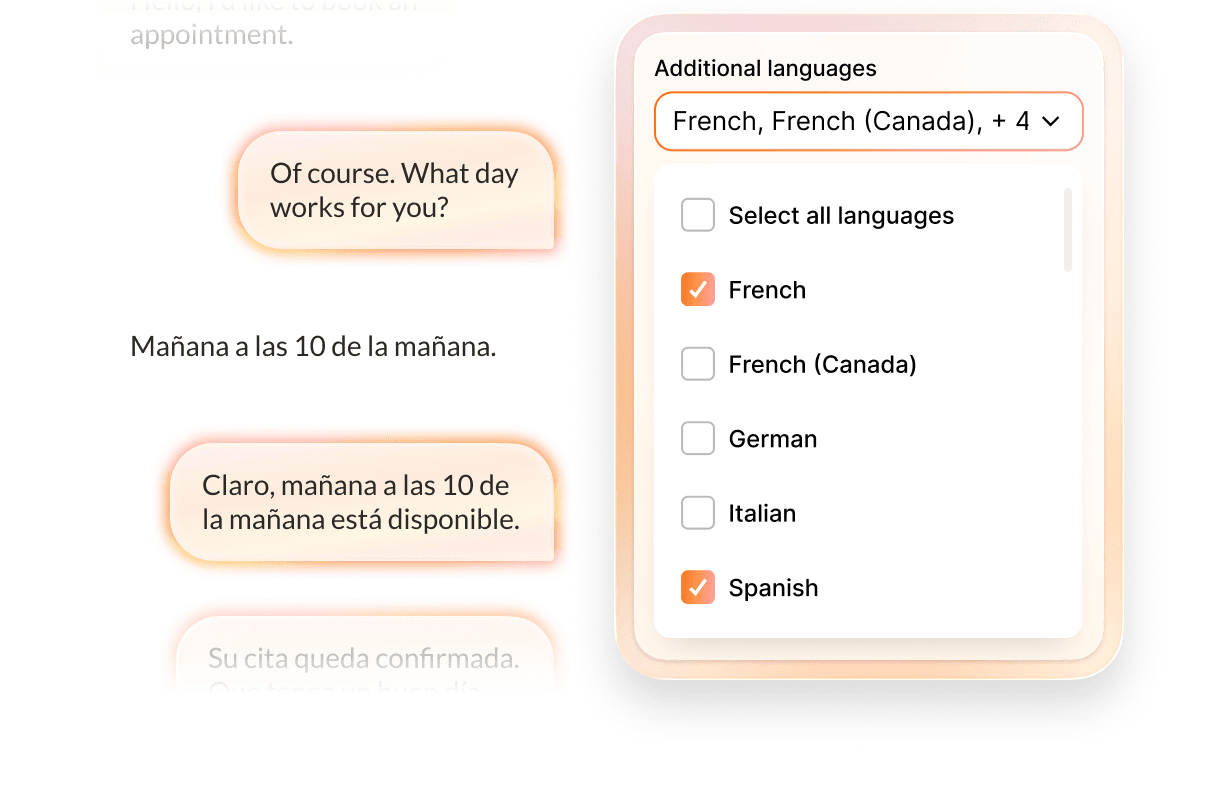
Moreover, multilingual coverage is increasingly becoming a non-negotiable requirement, particularly for portfolios operating in diverse metropolitan markets. A system limited to English-language calls inherently alienates a significant portion of potential tenants and existing residents, capping leasing opportunities and hindering effective tenant communication before it even begins. Providing support in languages like Spanish, French, and others is no longer a luxury but a strategic necessity for inclusive and expansive market reach.
Consistency also extends beyond the immediate call. Even if a caller doesn’t immediately reach a live person, the system must provide a clear next step rather than silence. This could include an automated follow-up text message, an estimated callback window, or a well-managed call queue that prevents callers from being simply dropped. Property managers who approach call handling as critical infrastructure, rather than an afterthought, are better positioned for smooth, sustainable growth. This strategic perspective ensures that communication capabilities evolve in lockstep with the portfolio’s expansion, supporting operational efficiency and enhancing the overall customer experience.
Case Study: RingCentral AI Receptionist in Action
For property management firms whose after-hours coverage relies on an informal rotation of staff, this "system" inevitably breaks down as a portfolio grows beyond the capacity of one or two individuals to cover every shift reliably. This often leads to inconsistent service, missed opportunities, and increased operational risk.
RingCentral AI Receptionist (AIR) directly addresses this critical gap by providing a scalable, consistent solution without requiring additional staff. AIR automatically answers every inbound call before a human agent needs to intervene, ensuring that no call rings out to voicemail, regardless of the hour. This 24/7 availability guarantees that tenants, prospects, and vendors always receive an immediate response.
Instead of relying on rigid, frustrating menu trees, AIR leverages context-aware routing powered by advanced artificial intelligence. It intelligently processes what the caller needs—whether it’s a leasing inquiry, a maintenance question, or a vendor coordination call—and directs the call to the appropriate destination. RingCentral’s Agentic AI Trends 2026 report emphasizes this ability to understand caller intent and route intelligently as a key benefit of agentic voice AI, moving beyond basic keyword recognition to genuinely understanding conversational nuances.
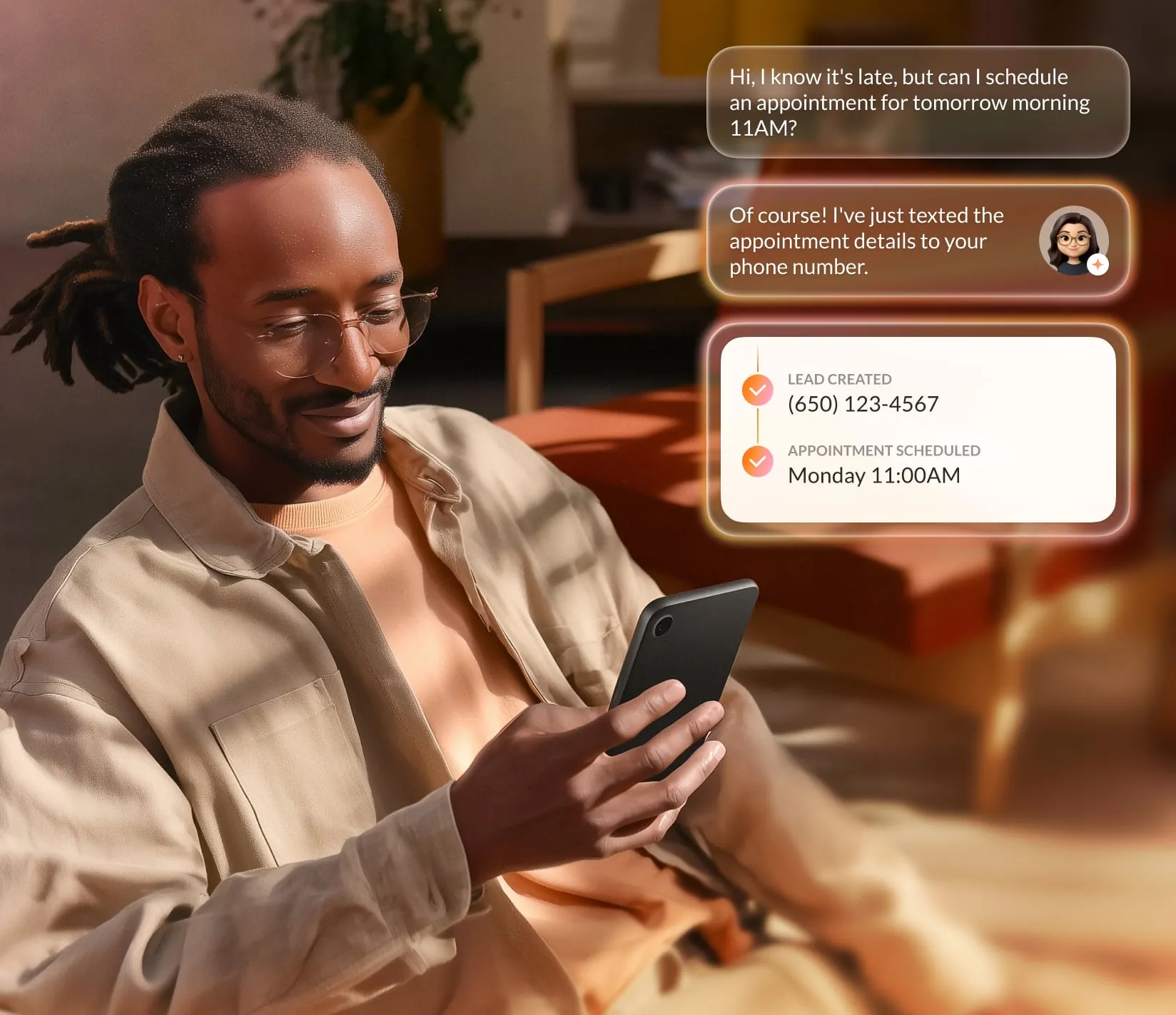
Beyond simple routing, AIR also integrates critical functionalities like lead information capture and appointment scheduling directly within the call flow. This means a prospective tenant calling about a vacancy can schedule a showing immediately, eliminating the delay of waiting for a callback the next business day and significantly improving conversion rates. Because the AIR system applies the same sophisticated logic to every interaction, coverage remains consistently high across every property in a portfolio and every shift, solidifying brand trust and operational reliability. For property managers weighing the escalating costs of hiring more after-hours staff against the need for scalable solutions, AIR offers a compelling alternative: a way to efficiently manage growing call volumes without the linear expense of expanding human headcount.
Strategic Alignment: Choosing the Right Model for Growth
The most significant cost in property management call handling is the inconsistency of experience—where a caller receives vastly different service depending on the time of day, the specific shift, or even which property within a portfolio they are contacting. Live agents, AI receptionists, and hybrid models each offer distinct approaches to address this inconsistency, and the optimal choice is a strategic decision that must align with the property manager’s unit count, specific after-hours coverage gaps, and budget for scaling operations without proportionally scaling headcount.
Moving from reactive, ad-hoc "rotations" to proactive, systematic solutions is not merely an operational upgrade; it’s a strategic imperative for long-term growth and competitiveness. The future of property management communication is undeniably moving towards more intelligent, automated, and integrated systems. The continued evolution of AI promises not only enhanced call handling but also predictive maintenance capabilities, sophisticated tenant self-service portals, and deeper insights into tenant needs and preferences. Property management firms that embrace these advanced communication infrastructures gain a significant competitive advantage, characterized by higher tenant satisfaction, lower operational costs, and accelerated portfolio growth.
Conclusion: A Paradigm Shift in Property Management
The era of property managers relying on a single, overwhelmed phone line and reactive after-hours policies is rapidly drawing to a close. The escalating demands of modern tenants, the competitive pressure of the leasing market, and the critical importance of timely maintenance all converge to underscore the necessity of robust, intelligent answering services. These systems are no longer a luxury but a fundamental component of effective property management infrastructure, enabling firms to mitigate significant financial and legal risks while simultaneously enhancing tenant satisfaction and optimizing operational efficiency. Whether through the empathetic touch of live agents, the unwavering consistency of AI receptionists, or the balanced strengths of a hybrid model, investing in advanced call handling capabilities is a strategic decision that directly impacts a portfolio’s profitability, reputation, and capacity for sustainable growth. For property managers whose current phone setup can no longer reliably meet the demands of an expanding portfolio, exploring consistent, automated call handling is not just advisable; it is essential for future success.
FAQs about Property Management Answering Service
Is a property management answering service worth it for a small portfolio?
Yes, even a small portfolio benefits significantly from a dedicated answering service. The cost of a single missed emergency call leading to property damage or a lost leasing inquiry can easily outweigh the monthly investment in professional coverage. A property manager handling 20 to 30 units independently cannot realistically be available at every hour a tenant or prospect might call. One poorly handled after-hours emergency can incur substantial costs in terms of lost business, increased repair expenses, or damaged tenant relationships.
What is the difference between a live and an AI answering service for property managers?
A live answering service routes calls to a trained human operator who can apply judgment to ambiguous or emotional calls, offering a personal touch. However, its cost typically scales per call or per minute, and the quality of service can vary by shift and individual agent. In contrast, an AI-native service applies the same precise routing logic and consistent tone to every call, regardless of time or volume. This ensures consistent coverage and is often more cost-effective as call volume grows. Many property managers opt for a hybrid approach, leveraging AI for initial responses and routine inquiries, and escalating to live agents for calls that require a human touch.
Can an AI receptionist handle maintenance emergencies?
Yes. An AI receptionist can be programmed to answer maintenance calls immediately, efficiently gather critical details about the situation (e.g., "Is water involved?", "Is anyone in danger?"), and then intelligently route the call based on this information rather than a rigid, pre-set menu. This capability is crucial for preventing emergencies from languishing in voicemail overnight. For instance, RingCentral AI Receptionist utilizes context-aware routing to direct calls appropriately and can be configured to escalate urgent situations to a live person or an on-call maintenance team when necessary.
How much does a property management answering service typically cost?
Costs for property management answering services vary widely based on the model and volume. Traditional live services generally charge per call or per minute, meaning costs directly increase with call volume. AI-native services, on the other hand, are typically priced on a flat platform basis, which allows them to handle higher call volumes more efficiently without a linear increase in cost. Hybrid models usually fall between the other two in terms of cost: more expensive than an AI-only solution but often more cost-effective at scale than an entirely live setup. The most accurate cost comparison involves evaluating the cost per call at the actual volume your portfolio generates, critically including comprehensive after-hours coverage.
Related posts: