How Much Research Should You Do Before Making a Cold Call: Striking the Balance Between Preparation and Productivity

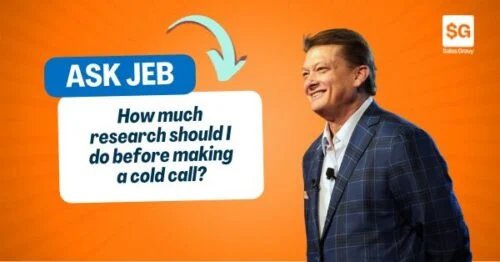
In the high-stakes environment of modern sales, the divide between efficient revenue generation and stagnant pipelines often hinges on a single, frequently misunderstood metric: pre-call research time. Sales professionals, particularly those early in their careers, are often inundated with advice suggesting that deep, granular research is the prerequisite for a successful cold call. However, industry data and behavioral analysis from top-performing sales organizations suggest that excessive preparation is not merely a waste of resources—it is a significant contributor to the "3Ps" of sales failure: perfectionism, paralysis, and procrastination.
The core challenge facing many sales departments today is the misclassification of research as prospecting. While both activities are essential to the sales cycle, they serve entirely different functions. Prospecting is an active, revenue-generating behavior, whereas research is an auxiliary information-gathering task. When the latter consumes the time allotted for the former, the structural integrity of the sales pipeline begins to collapse.
The Anatomy of the Research Trap
The narrative that a salesperson must "know everything" about a prospect before initiating contact has become a pervasive productivity killer. This trend has been amplified by the rise of digital sales intelligence tools, which provide near-infinite data points on individuals and organizations. For a typical sales representative, the temptation to spend 15 to 30 minutes per lead—scouring LinkedIn profiles, dissecting annual reports, and analyzing organizational charts—is often driven by a fear of rejection.
By lingering in the research phase, a salesperson creates a psychological safety net. It provides the illusion of productivity; a manager reviewing a dashboard might see a team member actively engaged with company websites and social profiles, which is easily mistaken for high-effort work. Yet, as industry experts and veteran sales coaches have observed, "planning to do the thing is not doing the thing."
The chronological evolution of this issue often begins when a representative is tasked with increasing their call volume. If a standard, high-performing call block requires 25 to 30 dials in an hour, the math behind 15-minute research sessions becomes immediately untenable. At that rate, a single hour of active calling would require over six hours of preparation. When this reality hits, the salesperson does not suddenly find six hours of free time; rather, they make fewer calls, set fewer appointments, and ultimately blame external market conditions for a thinning pipeline.
Statistical Reality and the Efficiency Gap
To understand the implications of this imbalance, one must look at the conversion ratios documented by industry analysts. Recent data from organizations such as Cognism and Gong have highlighted the reality of modern cold outreach: the average success rate—defined as securing a meeting—often hovers around 2.7 percent. This indicates that cold calling is fundamentally a volume-based endeavor supported by a skill multiplier.
When a representative spends excessive time researching, they are essentially betting their limited time on a "perfect" outreach that rarely yields a higher conversion rate than a well-executed, relevant, and concise message. The logic is straightforward: if you have 37 conversations to secure one meeting, your preparation per contact must be efficient enough to allow for that volume.
The "research gurus" who advocate for deep-dive personalization are often ignoring the law of diminishing returns. While deep research is vital for high-value enterprise accounts or "whale" prospects where a salesperson may only have one opportunity to engage a C-suite executive, it is a strategic error for routine prospecting. In those instances, the cost of the research outweighs the potential gain of the appointment.
Establishing the Two-Minute Framework
The optimal approach, adopted by top-tier sales organizations, is a structured, time-blocked methodology that caps research at two minutes per prospect. This process requires a shift in mindset: the goal of the initial cold call is not to close a sale, but to secure an appointment or extract enough information to qualify the lead.
This two-minute window should be utilized with surgical precision, ideally performed in a batching session prior to the call block itself:
- Internal CRM Review (30 seconds): Check for existing account history, previous interactions, or open opportunities. Redundancy is a primary cause of prospect irritation; knowing that a colleague has already contacted the prospect prevents missteps.
- LinkedIn Insight (45 seconds): Identify the prospect’s current title, tenure, and one recent professional trigger—such as a job change, a posted article, or a shared connection.
- Company Context (45 seconds): Review the company website or news feed for a single, high-level trigger event, such as a recent funding round, product launch, or executive leadership change.
By synthesizing these three elements, a salesperson can craft a "because statement"—a concise, relevant opening that explains why the call is worth the prospect’s time. For example, referencing a recent company expansion or a specific industry challenge that is currently dominating the news cycle provides enough credibility to facilitate the conversation without requiring an exhaustive background check.
The Role of Pattern Recognition
The most efficient path to relevant communication is not found in individual research, but in pattern recognition. Sales teams that focus on specific industry verticals or role types—such as IT directors in the healthcare sector or CFOs in mid-market manufacturing—can identify universal pain points.
Once a salesperson speaks to ten people in the same role, they begin to notice recurring themes: the same objections, the same goals, and the same operational hurdles. When this data is aggregated, the need for deep, per-prospect research diminishes significantly. A representative can build a template that addresses these common patterns, then use their two minutes of research only to customize the "hook." This method allows for a high degree of relevance without sacrificing the necessary volume required to maintain a healthy pipeline.
Strategic Implications of AI Integration
The emergence of Generative AI has further complicated the research debate. While AI can draft personalized outreach in seconds, it should be treated as a tool for efficiency rather than an excuse for further procrastination. Sales professionals can now use AI to generate the five-point research summary—company snapshot, role tenure, trigger event, problem identification, and a "because statement"—before their call blocks begin.
However, the risk of "AI-generated garbage" remains high. If a representative uses an AI-drafted script without verifying the details, they risk losing credibility. The primary rule remains: AI is a tool for the list-building block, not the calling block.
Broader Impact on Sales Culture
The persistent focus on research often reflects a deeper cultural issue within sales teams. When managers measure performance based on "quality" without defining what that quality looks like, representatives default to research because it feels safer than the rejection inherent in cold calling.
To shift this culture, leadership must emphasize that the "golden hours"—the periods of the day when prospects are most likely to answer the phone—are strictly for communication. During these hours, administrative tasks, including research, should be strictly prohibited. This separation of duties forces a change in behavior: if a rep knows they have only one hour to make calls, they will prioritize the most efficient path to a conversation.
Ultimately, the most successful sales professionals are those who recognize the difference between being prepared and being stagnant. By stripping away the layers of unnecessary research and focusing on the core objective of the conversation, they maintain the volume necessary to scale. The cold truth of the matter is that in the world of outbound sales, activity is the engine, and relevance is the fuel. Neither can exist without the other, but neither can function if the salesperson is stuck behind a screen, researching their way out of a career.
Related posts: