Salesforce and Microsoft Unveil Copilotforce to Bridge CRM Intelligence with Enterprise Productivity Ecosystems


In a landmark announcement at Microsoft Ignite 2026 in San Francisco and Redmond, Salesforce and Microsoft have unveiled Copilotforce, a strategic integration initiative designed to unify the world’s leading CRM platform with Microsoft’s pervasive enterprise productivity suite. This collaboration marks a significant shift in the enterprise software landscape, moving beyond simple API-based connections to deep, context-aware AI integration. By embedding Salesforce customer intelligence directly into Microsoft Copilot, Teams, and Fabric, the two tech giants are aiming to solve a pervasive problem in modern enterprise workflows: the friction caused by switching between disparate applications to find, verify, and act upon business data.
The initiative leverages AIforce, Salesforce’s live interface layer, to ensure that customer data, sales workflows, and CRM insights are available within the natural flow of work. For the modern seller, this means the ability to query a customer’s history, analyze sales opportunities, and prepare for high-stakes meetings without ever leaving the Microsoft 365 environment.
A Chronology of Integration and Strategic Alignment
The genesis of Copilotforce can be traced back to a series of incremental product releases and industry signals over the past three years. Since the launch of Microsoft 365 Copilot, enterprise organizations have been clamoring for deeper integration with their primary systems of record, most notably Salesforce’s Sales Cloud.
The timeline of this partnership’s evolution highlights a steady progression toward this current milestone:
- Late 2024: The early stages of collaboration began with expanded data connectivity, focusing on basic data syncing between Salesforce and Azure.
- Dreamforce 2025: Salesforce introduced the initial pilot of Sales Cloud in Teams, a foundational step that brought CRM workflows into the communication hub of the enterprise.
- Early 2026: Market demand for "zero-copy" data architectures spiked as enterprises sought to reduce the latency and security risks associated with traditional ETL (Extract, Transform, Load) processes.
- November 17, 2026 (Microsoft Ignite): The formal debut of Copilotforce, signaling a move toward full-scale, bidirectional AI integration.
This strategic roadmap underscores a shift in how Salesforce views its position in the tech stack. Rather than forcing users into the Salesforce console for every task, the company is effectively "distributing" the CRM experience to the surfaces where employees spend the majority of their time.
Technical Architecture: The Zero-Copy Breakthrough
At the heart of the Copilotforce announcement is the implementation of bidirectional zero-copy data access between Salesforce Data 360 and Microsoft Fabric. Historically, enterprises have struggled with "data silos" and the "fragility" of pipelines that move data from a CRM to a data lake or analytics platform. These pipelines are often slow, prone to failure, and create multiple versions of the truth.
By utilizing zero-copy architecture, organizations can now query Fabric data natively within Data 360 and securely share Data 360 intelligence into Fabric without moving or duplicating the underlying datasets. This approach ensures that the data used by AI agents is always up-to-date and reflects the most recent customer interactions. For developers and data engineers, this reduces the administrative burden of maintenance while significantly enhancing the speed at which AI models can be trained or prompted.
Furthermore, the integration respects granular permissions and audit trails. When a user interacts with Salesforce data via Microsoft Copilot, the system enforces the same security and governance protocols that exist within Salesforce. If a user is not authorized to view specific lead or opportunity details in the CRM, that information remains inaccessible within the Copilot interface. This "source-level" permissioning is critical for large-scale enterprises that must adhere to stringent data privacy regulations like GDPR, CCPA, and industry-specific compliance frameworks.
Accenture as the Vanguard of Implementation
A critical component of this rollout is the role of Accenture as both the design and implementation partner and "Customer Zero." As one of the world’s largest users of both Salesforce and Microsoft technologies, Accenture’s involvement provides a litmus test for the scalability of these integrations.
With more than 740,000 employees utilizing Microsoft Copilot and 55,000 active Salesforce users, Accenture’s internal deployment provides a massive, real-world data set for refining the integration. By serving as the first large-scale enterprise to deploy these tools, Accenture is effectively validating the business case for other multinational corporations. This partnership aims to convert existing investments in CRM and productivity software into a streamlined "sales machine," theoretically reducing the time-to-value for companies struggling to modernize their sales cycles.
The Broader Implications for Enterprise AI
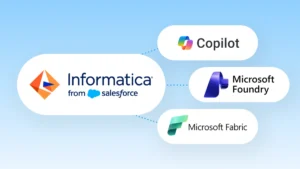
The integration of Informatica’s Plugin for Copilot further enriches this ecosystem. By allowing business users to discover data and verify its quality through natural-language queries, the partnership lowers the barrier to entry for non-technical staff to interact with complex analytics. The enhanced Fabric scanning capabilities allow data teams to trace the lineage of information, providing an "audit trail" that is essential for enterprise-grade AI deployment.
From a market perspective, Copilotforce is a direct response to the "AI fatigue" that some enterprises have begun to report. Companies are increasingly wary of "standalone" AI tools that add another layer of software to the tech stack. By integrating these capabilities into existing, trusted environments, Salesforce and Microsoft are moving the conversation from "AI experimentation" to "AI-driven operational efficiency."
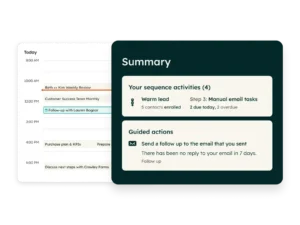
The implications for the sales profession are particularly profound. The ability to pull in real-time context from Outlook emails, Teams meetings, and shared documents to update a CRM opportunity in real-time—and to do so with the confidence that the data is governed—could fundamentally alter sales productivity metrics. It reduces the "administrative tax" that prevents sellers from focusing on relationship-building and strategic account planning.
Looking Toward the Future
As the industry moves into 2027, the success of Copilotforce will likely be measured by the adoption rate among Fortune 500 companies and the reduction in manual data-entry tasks reported by sales teams. The roadmap suggests an aggressive expansion of these features, with more granular controls and additional AI agents expected to be announced in the coming quarters.
However, the partnership also highlights a larger trend in the software industry: the consolidation of power among the top-tier cloud and platform providers. By creating deep, "sticky" integrations, Salesforce and Microsoft are building an ecosystem that is difficult for smaller, specialized competitors to disrupt. For the enterprise customer, this offers the promise of a more unified, efficient workspace, but it also creates a deeper dependency on the Microsoft-Salesforce nexus.
In summary, Copilotforce is not merely an integration of two software products; it is a fundamental reconfiguration of the enterprise workspace. By aligning the world’s most powerful CRM with the world’s most widely used productivity platform, Salesforce and Microsoft are betting that the future of work is not found in a single "super-app," but in a seamless, intelligent fabric that connects all enterprise systems. As Accenture begins its global rollout, the rest of the industry will be watching closely to see if the promise of "trusted, actionable, and governed" AI can finally bridge the gap between data and revenue.