The landscape of web security has undergone a seismic shift over the past eighteen months, fundamentally altering how platforms like WooCommerce manage, identify, and remediate vulnerabilities. As artificial intelligence-driven scanning tools have become more accessible, the volume of reported security flaws has surged, compelling a major architectural and procedural overhaul within the WooCommerce ecosystem. This transition marks a move from reactive, human-centric security auditing toward a proactive, AI-augmented defense strategy designed to safeguard hundreds of thousands of online storefronts.
A New Security Paradigm Driven by Automation
For years, security research was a largely manual endeavor. Developers relied on a combination of periodic internal audits, external reports via programs like HackerOne, and standardized static analysis tools such as PHPCS and PHPStan. However, the rise of large language models (LLMs) and advanced automated scanning agents has changed the math of cybersecurity. These tools allow researchers and malicious actors alike to analyze massive codebases in seconds, identifying complex vulnerabilities that previously required weeks of human scrutiny.
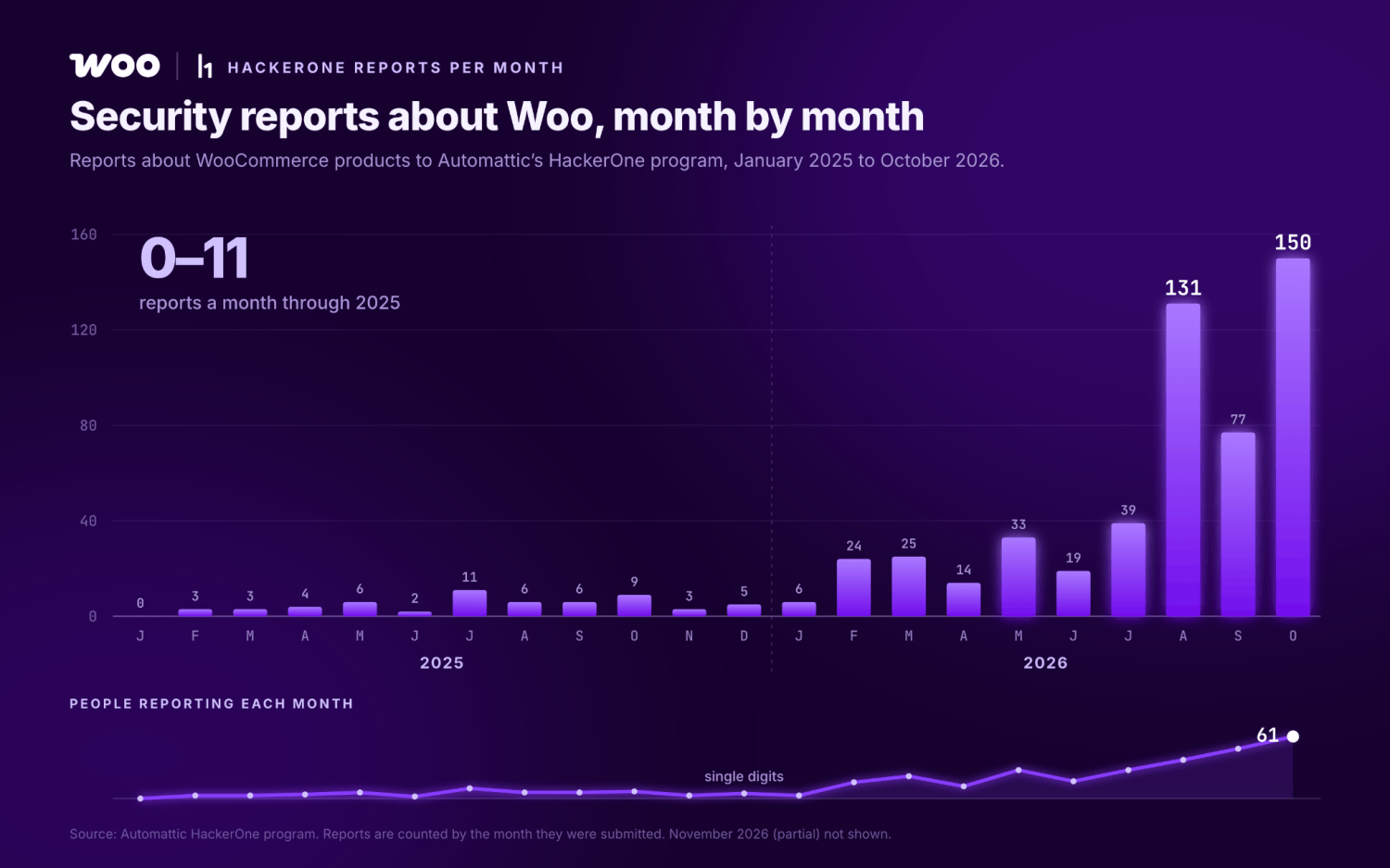
Automattic, the parent company of WooCommerce, has reported that incoming security reports for its products have increased roughly nine-fold over the last year. This surge is not unique to WooCommerce; it reflects a broader trend across the open-source software community. The transparency of open-source code, once considered a primary strength due to the "many eyes" theory, has become a double-edged sword when those "eyes" are now highly efficient, AI-powered bots.
Chronology of the Shift: From June 2026 to Present
The internal pivot at WooCommerce began in earnest in late May 2026. Recognizing that the sheer volume of incoming reports was outpacing traditional workflows, the engineering team began integrating AI-driven assessment tools into their triage process.
- June 2026: Initial integration of internal automated scanning tools to mirror the capabilities of external researchers.
- August 2026: WordPress launched its "Core Security Initiative" to standardize how security patches are handled across the ecosystem, aligning with the new volume of threats.
- October 2026: A critical PHP security release underscored the reality that WooCommerce security is inextricably linked to the underlying server environment.
- November 2026: WooCommerce implemented a new policy for mandatory security updates for extensions, enabling the platform to push critical patches directly to connected stores.
This timeline highlights an accelerated transition. The team moved from a model where security fixes were bundled into feature releases to a more agile, dedicated release cycle. This shift is critical because it prevents security patches from being delayed by feature development, and it mitigates the risk of rolling back a faulty feature release that might inadvertently strip away a vital security fix.
The Role of SentrySift and AI Triage
To handle the exponential increase in vulnerability reports, Automattic developed an internal tool called SentrySift. This AI-first assessment system parses incoming reports within minutes of arrival. Instead of human engineers spending hours sorting through duplicates or low-priority noise, SentrySift categorizes reports based on severity and validity.
While AI performs the heavy lifting of sorting and initial analysis, the final human oversight remains absolute. Every fix is vetted by developers to ensure that the remediation does not introduce regressions or side effects. This hybrid approach—AI for scale, humans for verification—is currently the industry standard for managing high-traffic, open-source platforms.
Statistical Context and Impact Analysis
Data from the past six months reveals a significant trend: WooCommerce’s internal proactive scans are now identifying more than twice as many valid core issues as external reports. This is a vital metric for security health. When an organization finds its own bugs, it controls the disclosure timeline, prevents the exploitation of vulnerabilities, and demonstrates a maturing security posture.
According to internal reports, approximately 75% of the valid issues tracked since July 2026 are classified as "Medium" or "Low" severity. While these do not always represent an immediate risk of catastrophic data loss, they are foundational elements that could potentially be chained together by attackers to create more sophisticated exploits. By methodically closing these smaller gaps, the platform is significantly raising the "cost of entry" for potential attackers, making the entire ecosystem a harder target.
Structural Changes to Extension Management
One of the most consequential updates is the new capability for WooCommerce.com to mark an extension update as "required." In previous years, even if a critical patch existed, the responsibility to apply it fell squarely on the merchant or the site administrator. This led to a "patch gap," where stores running known-vulnerable versions remained open to exploitation for months.
By allowing the platform to push mandatory updates to connected stores with active subscriptions, WooCommerce is aligning itself with the security protocols used by professional hosting providers and major plugin repositories. This does not override the user’s autonomy—those who programmatically block updates can still do so—but it shifts the default to a "secure-by-design" stance.
The Infrastructure Layer: PHP and Beyond
Security is not isolated to the plugin layer. The October 2026 PHP security advisory served as a stark reminder that the entire technology stack must be hardened. With support for older versions of PHP (such as 7.4 and 8.0) ending, WooCommerce has moved to enforce stricter version requirements.
Starting with version 11.6, scheduled for February 2027, the platform will mandate PHP 8.1 or newer. This is a necessary evolution; older versions of PHP lack the modern security features required to fend off current threat vectors. By forcing this upgrade path, WooCommerce is effectively forcing a baseline security standard across its entire user base, regardless of the individual merchant’s technical expertise.
Strategic Implications and Future Roadmap
The prioritization of security over new feature development represents a significant strategic trade-off. While it may slow the pace of innovation in terms of new user-facing functionality, it ensures the long-term viability of the platform. In the current cybersecurity climate, trust is the primary currency of e-commerce. A single high-profile breach could do more damage to the WooCommerce brand than a delay in a new feature rollout.
Looking ahead, the goal for the engineering team is to move from "all hands on deck" emergency responses to a routine, sustainable security lifecycle. The automation pieces are largely in place, and the focus is now shifting to refinement—improving the accuracy of scans, reducing the rate of false positives, and tightening the integration between core updates and extension patches.
Best Practices for Merchants and Developers
For store owners and agency leads, the message from the developers is clear: security is now a shared responsibility. The following measures are recommended to maintain a resilient storefront:
- Prioritize Auto-Updates: Enabling automatic updates for WooCommerce core and official extensions is the single most effective way to ensure security patches are applied immediately.
- Maintain Active Connections: Keeping stores connected to WooCommerce.com ensures that critical, mandatory security patches can be pushed automatically when necessary.
- Upgrade PHP: Ensure that the hosting environment is running at least PHP 8.1 or, ideally, 8.3. This is essential for both performance and security.
- Audit Extensions: Regularly review installed plugins. If an extension is no longer used, remove it to reduce the attack surface.
- Use Reputable Sources: Rely on the official WooCommerce Marketplace for extensions. These plugins are subject to the platform’s security scanning and mandatory update protocols.
As the industry continues to grapple with the dual-edged sword of AI, the collaborative, transparent nature of the open-source community remains its greatest asset. By leveraging the same tools as those who seek to find flaws, platforms like WooCommerce are effectively transforming the speed of vulnerability discovery into the speed of remediation, ensuring a more secure future for digital commerce.