Tractor Supply Co. expands delivery reach through strategic nationwide partnership with Uber

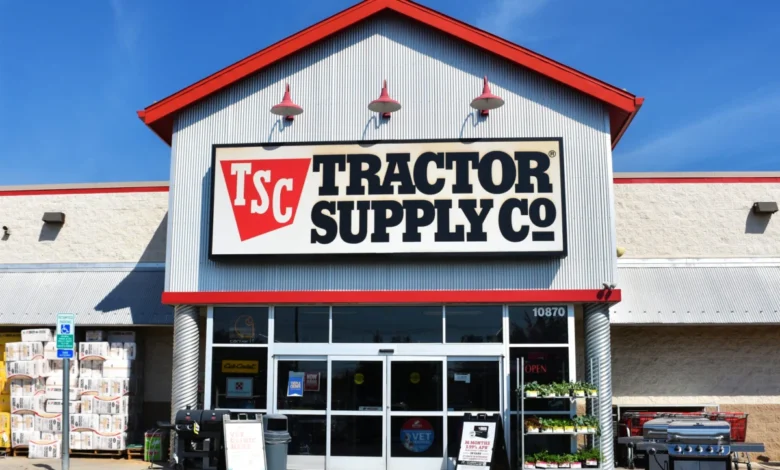
Tractor Supply Co., the prominent rural lifestyle retailer, has officially entered a nationwide delivery partnership with Uber, significantly broadening its e-commerce fulfillment capabilities. Announced on November 12, this collaboration integrates the retailer’s extensive product catalog—ranging from pet food and animal care essentials to lawn and garden supplies and outdoor power tools—directly into the Uber, Uber Eats, and Postmates applications. This move underscores a broader retail trend of leveraging third-party gig economy platforms to bridge the gap between traditional brick-and-mortar storefronts and the rising consumer demand for on-demand convenience.
The Strategic Shift Toward Rural On-Demand Delivery
For Uber, the partnership represents a calculated pivot to expand its footprint beyond densely populated metropolitan centers. Historically, the on-demand delivery sector has focused heavily on urban environments where population density makes short-range logistics highly efficient. By aligning with Tractor Supply, which operates 2,486 stores across 49 states, Uber is testing the viability of its delivery network in rural, exurban, and suburban territories.
Nathan Bernheim, Uber’s head of retail partnerships, highlighted the geographic significance of the move, noting that the demand for rapid, convenient shopping experiences does not diminish simply because a consumer lives outside of a major metropolitan area. For residents in these regions, the ability to order heavy or bulky items—such as large bags of feed or gardening equipment—for same-day delivery via an app marks a departure from traditional "click-and-collect" or standard shipping models.
Chronology of Tractor Supply’s Digital Transformation
Tractor Supply’s journey into third-party delivery is part of a multi-year effort to modernize its digital infrastructure. The company’s recent strategic timeline reveals a methodical approach to omnichannel growth:
- 2022: Tractor Supply establishes its initial on-demand delivery relationship with DoorDash, testing the waters of gig-economy fulfillment.
- July 2026: The retailer announces a major partnership with Instacart, further diversifying its delivery options and signaling a commitment to same-day service.
- September 2026: Tractor Supply expands its physical supply chain infrastructure by opening an 865,000-square-foot distribution center in Nampa, Idaho, designed to serve 123 stores initially and over 200 at full capacity.
- November 2026: The partnership with Uber is finalized, creating a tri-fold delivery ecosystem involving Uber, Instacart, and DoorDash.
This evolution is reflected in the company’s internal logistics. Tractor Supply has spent the last 18 months refining its "Final Mile" delivery system. Under this model, the company utilizes a hub-and-spoke arrangement where a single primary store acts as a distribution node for three to four neighboring locations. According to CEO Hal Lawton, this system has allowed the company to significantly scale its delivery output, with the first half of 2026 seeing as many last-mile deliveries as the entirety of the 2025 calendar year.
Financial Context and Market Positioning
Tractor Supply is currently ranked No. 83 in the Top 1000 Database, which tracks the largest online retailers in North America by annual e-commerce sales. Furthermore, the company holds the No. 225 position in the AI Commerce Rankings, reflecting its investment in algorithmic supply chain management and consumer-facing digital tools.
Despite a challenging fiscal environment in 2026, where the retailer reported a 1.5% decline in comparable store sales during the second quarter, its digital segment has remained a bright spot. Double-digit growth in digital sales has been largely attributed to the successful integration of store-based delivery services. By providing customers with more flexible fulfillment options, the company is attempting to offset broader macroeconomic pressures that have dampened retail foot traffic.
Matthew Rubin, senior vice president and president of digital and ecommerce at Tractor Supply, emphasized that the Uber deal serves two purposes: enhancing the service experience for existing customers and acting as a customer acquisition tool. By placing Tractor Supply products within the Uber app ecosystem, the retailer gains visibility among millions of active users who may have previously considered the brand outside of their shopping orbit.
The Changing Landscape of Delivery Aggregators
The competitive landscape of the delivery sector is currently undergoing a period of rapid consolidation, which adds complexity to Tractor Supply’s multi-partner strategy. On October 29, 2026, DoorDash announced a definitive agreement to acquire Instacart in a transaction valued at approximately $17 billion.
While this acquisition awaits regulatory approval and the consent of Instacart shareholders, the market is bracing for a significant shift. If finalized—a process expected to conclude between late 2027 and the first half of 2028—the consolidation would leave Tractor Supply with two primary delivery partners (Uber and the combined DoorDash-Instacart entity) that control the vast majority of the North American on-demand delivery market. Industry analysts suggest that keeping multiple partners active remains a critical risk-mitigation strategy for retailers, ensuring that they are not beholden to the pricing or operational changes of a single delivery monopoly.
Implications for the Rural Retail Market
The integration of Tractor Supply into the Uber ecosystem suggests that the "Amazon Effect"—the consumer expectation of rapid, low-friction delivery—has effectively permeated the rural retail sector. Traditionally, rural consumers were resigned to longer wait times or dedicated trips to physical stores for specialized agricultural or hardware supplies.
However, the success of this model hinges on operational efficiency. Unlike grocery or restaurant delivery, which involve small, lightweight items, Tractor Supply orders often include heavy, non-standardized products. The "hub-and-spoke" store distribution model mentioned by CEO Hal Lawton is the linchpin that makes this possible. By utilizing stores as micro-fulfillment centers, the company minimizes the distance between the product and the customer, thereby reducing the complexity of the "last mile."
For the consumer, the immediate incentive is clear: Uber is currently promoting the partnership with a $20 discount on orders totaling $60 or more. While neither Uber nor Tractor Supply has provided specific data on future delivery fees or guaranteed speeds, the move is widely viewed as a long-term play to normalize the delivery of essential home and farm maintenance items.
Broader Industry Outlook
As Tractor Supply continues to invest in its 11th distribution center and its proprietary logistics network, the company appears to be building a dual-track strategy. It is simultaneously strengthening its own internal, store-based fulfillment capabilities while outsourcing the "last mile" to third-party platforms that have already mastered the user experience.
This hybrid approach allows the retailer to maintain a strong brand identity and customer relationship while offloading the high cost of building a dedicated delivery fleet. For the wider retail industry, the Tractor Supply-Uber partnership serves as a case study in how legacy retailers can successfully integrate digital-first convenience into traditional business models. As the market continues to consolidate, the ability for retailers to pivot toward such partnerships will likely be a defining factor in their long-term digital performance.
For the time being, the partnership remains in its infancy, and its success will likely be measured by the ability of the store-based hub-and-spoke system to handle the increased volume of on-demand orders without disrupting regular in-store operations. As digital sales continue to outpace traditional growth, Tractor Supply’s bet on the gig economy suggests that for the modern rural consumer, the storefront is no longer just a destination—it is a node in a vast, on-demand logistics network.