The landscape of professional sales is currently undergoing a structural shift as significant as the advent of the smartphone. Historically, the sales profession relied heavily on human-to-human interaction and manual intervention to bridge the gap between a product and a potential buyer. Today, that model is effectively obsolete. As B2B buyers increasingly mirror the behavior of digital-native consumers—conducting independent research, forming private peer networks, and delaying vendor engagement until the final stages of the decision-making process—the traditional "guessing game" of sales prospecting has become a liability.
The rise of the self-directed B2B buyer has forced a reckoning for sales organizations worldwide. According to recent data from the Harvard Business Review, the modern B2B purchasing cycle is now dominated by digital research, with buying committees often reaching a consensus before a sales representative is ever invited to the table. This change has created a "visibility gap" where sales teams, lacking the data to track these anonymous digital journeys, fall back on high-volume, low-impact activity—often mislabeled as "productivity."
The Chronology of Sales Technology Evolution
To understand the current state of the industry, one must look at the timeline of sales enablement. In the early 2000s, the focus was on basic CRM adoption and simple email automation. By 2010, the industry shifted toward "Cadence" and basic sales engagement platforms, which allowed reps to automate repetitive outreach. However, these tools often functioned in isolation, creating data silos that separated marketing efforts from sales execution.
By 2018, the industry reached a saturation point with "commodity" sales engagement tools. It became clear that simply having the ability to send automated emails was no longer a competitive advantage; it was table stakes. The current era, spanning 2021 to the present, is defined by "Guided Selling." This philosophy posits that rather than asking reps to decide which lead to call or which message to send, the technology should provide data-backed recommendations based on real-time buyer signals.
The Cost of Disconnected Data
The primary challenge facing modern sales operations is the "revenue tug-of-war" between marketing and sales departments. This conflict typically stems from poor CRM integration. When sales teams utilize engagement platforms that act as "shadow CRMs"—storing data outside the primary system of record—the quality of information decays. Marketing teams are left with inaccurate lead scoring, while sales teams complain about the quality of the leads they receive.
A critical analysis of this issue reveals that the problem is not a lack of effort, but a lack of architectural integrity. When an integration requires constant manual mapping, it becomes a maintenance burden. Over time, as CRM configurations change, these mappings break, leading to duplicate records and inaccurate reporting. Industry benchmarks suggest that companies relying on disparate systems often see a 20% to 30% reduction in reporting accuracy, directly impacting the ability of leadership to forecast revenue reliably.
The Role of Automation and AI in Modern Workflows
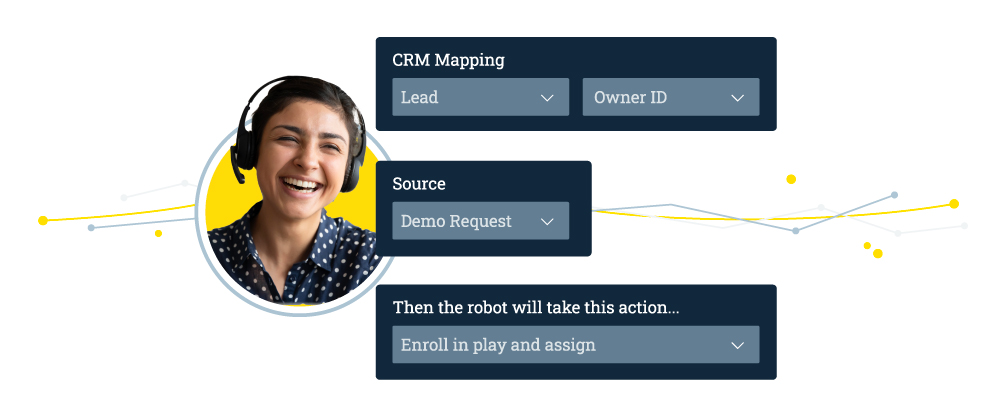
The current standard for top-performing sales organizations is the implementation of "Automation Robots." Unlike traditional automation, which simply executes a sequence of events, these modern systems are designed to mirror the intelligence of a sales manager. They can automatically assign leads via round-robin distribution, re-assign records when a team member is absent, and prioritize tasks based on the likelihood of a deal closing.

The implications for "speed-to-lead" are profound. Research on millions of marketing leads demonstrates that the window of opportunity is incredibly narrow. Contact rates for inbound leads are 2.5 times higher when a response is initiated within two hours, and win rates see a 7.5 times increase when engagement occurs within the first few hours of a lead’s expression of interest. When organizations fail to automate these responses, they essentially leave revenue on the table.
Navigating the Complexities of Compliance
In the modern digital landscape, compliance is no longer a peripheral concern; it is a fundamental requirement of any sales architecture. Legal frameworks such as the GDPR in Europe and the CCPA in California, combined with regional variations in "do-not-call" regulations and local holidays, create a minefield for decentralized sales teams.
The requirement for a robust, compliant sales system has shifted from "nice-to-have" to "essential." Modern platforms must now incorporate automated safeguards that prevent sales representatives from prospecting into restricted regions or during inappropriate times. Failure to maintain these standards poses a significant risk to brand reputation and can lead to severe legal and financial repercussions.
The Future: Buyer Intelligence as a Strategic Asset
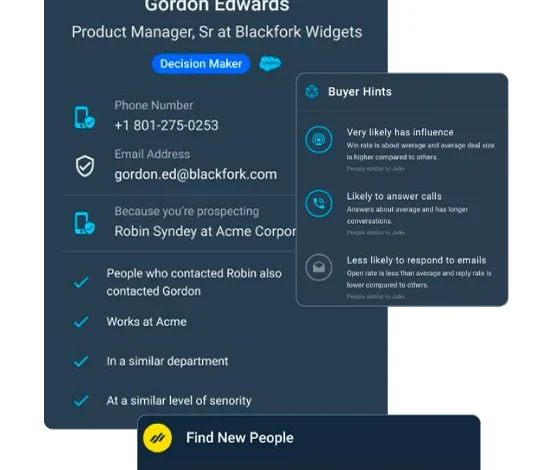
The next frontier in sales is the integration of "Buyer Intelligence" into the daily user experience. This involves synthesizing massive data sets—including interaction outcomes, channel preferences, and influence levels—into actionable insights for the individual representative.
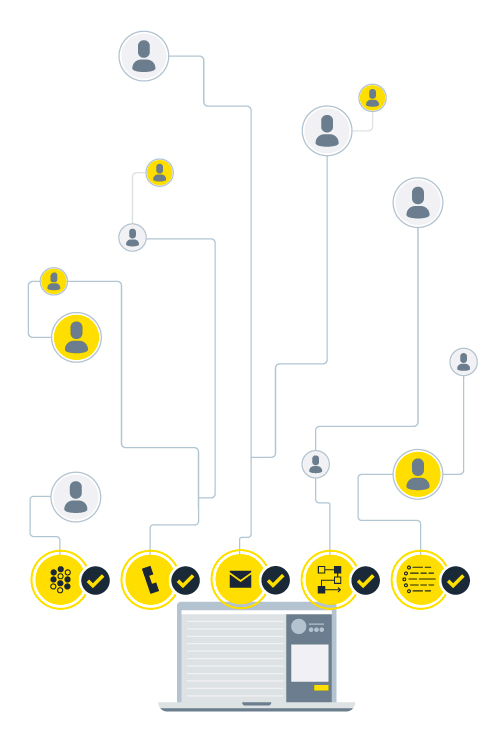
Industry analysts observe that companies moving toward this "buyer-centric" model report higher levels of rep retention and performance. By providing reps with "Verified Contact Data" and "Smart Email Send" capabilities, organizations move away from the "spray and pray" methodology. Instead, they empower their teams to act with precision.
Broader Implications and Strategic Analysis
The shift toward guided, data-driven sales experiences is not merely a technological trend; it is a fundamental change in the economics of business-to-business commerce. Organizations that continue to operate with disconnected systems and manual, guessing-based processes are seeing their customer acquisition costs (CAC) rise, while their conversion rates remain stagnant.
Conversely, firms that have invested in natively integrated, highly automated, and intelligence-rich architectures are finding that they can achieve "scale without chaos." The ability to automatically enroll records into specific "Plays" based on real-time CRM updates ensures that no opportunity is lost to administrative oversight.
Furthermore, the integration of telephony directly into the sales engagement platform, rather than relying on disparate third-party services, offers a significant advantage in call quality and reliability. By owning the telephony backbone, companies can ensure that their communication channels are always available, which is critical in an age where a single dropped call can result in a missed renewal or a lost opportunity.

Conclusion: The Path Toward Predictability
As sales teams continue to adapt to the digital-first buyer, the emphasis must remain on the quality of the engagement over the quantity of the activity. The goal for the modern organization is to create a seamless, compliant, and highly intelligent workflow that removes the friction between the seller and the buyer.
The evidence is clear: the era of the "lone wolf" seller making independent, unguided decisions is ending. In its place, we are seeing the rise of the data-enabled professional, supported by a sophisticated ecosystem of automated, intelligent tools. By embracing this transformation, sales organizations can finally achieve the "holy grail" of their profession: a predictable, scalable, and highly efficient revenue engine that respects the time and intelligence of both the seller and the buyer. The question for leadership is no longer whether to transform, but how quickly they can integrate these foundational pieces to maintain a competitive edge in an increasingly digital marketplace.
Related posts: