OutBound 2026: Sales Leadership and Prospecting Strategy Conference to Convene in Las Vegas


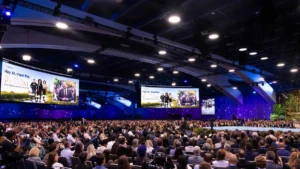
The landscape of modern sales has undergone a seismic shift, characterized by increased buyer skepticism, the proliferation of gatekeeping technologies, and the integration of artificial intelligence into the procurement process. To address these evolving challenges, the OutBound 2026 conference is scheduled to take place from November 9 to 12 at the Red Rock Resort & Spa in Las Vegas, Nevada. Designed as an intensive, high-level training summit, the event limits attendance to 400 participants to ensure an environment focused on tactical execution rather than passive observation.
Historical Context and Evolution of the OutBound Mission
The inaugural OutBound conference was held in April 2017 in Atlanta, Georgia. Conceived in 2016 by industry veterans Anthony Iannarino, Mark Hunter, Mike Weinberg, and Jeb Blount, the event was established to fill a perceived gap in the professional development market. While numerous sales conferences existed at the time, the founders identified a specific need for a curriculum centered on outbound prospecting—a methodology they defined as the most reliable catalyst for generating new business opportunities.
Nearly a decade after its inception, the core mission of the organization remains centered on equipping sales professionals with the tools to navigate a difficult economic environment. However, the external pressures facing sales teams have changed significantly. Industry reports suggest that modern buyers are increasingly utilizing automated screening tools and digital gatekeepers to filter unsolicited outreach, leading to higher rates of "ghosting" and decreased response times. OutBound 2026 serves as a strategic response to these obstacles, aiming to provide a playbook for navigating a marketplace that has become significantly more resistant to traditional sales outreach.
Structure and Curriculum of the 2026 Main Event
The core of the conference, held November 10–11, focuses on the theme of "Breaking Through Buyer Resistance." Organizers have structured the curriculum to address specific friction points in the sales cycle, including stalled deals, price sensitivity, and the inability to reach key decision-makers. Unlike many industry conferences that utilize speaking slots as platforms for vendor promotion, OutBound enforces a strict policy prohibiting speakers from pitching their own software or services from the stage.
The sessions are designed as workshops, requiring participants to apply methodologies in real-time. Attendees are encouraged to arrive with a documented list of challenges encountered during the previous fiscal year, with the objective of developing specific, actionable solutions by the conclusion of the event. The faculty consists of twelve industry experts, including Jeb Blount, Anthony Iannarino, Mark Hunter, Victor Antonio, Colleen Stanley, Amy Franko, Daniel Disney, Helen Fanucci, Tony Morris, Keith Lubner, Jessica Stokes, and Harriet Mellor.
The Leadership Summit: Managing in the Age of AI
Recognizing that the challenges of the modern sales environment extend beyond individual contributors to organizational management, November 12 is dedicated to the Leadership Summit. This portion of the conference is tailored for sales managers, directors, and VPs. The curriculum centers on three primary pillars: coaching, talent retention, and performance optimization within the context of artificial intelligence.
Analysts in the sales technology sector note that while AI has provided teams with advanced data sets and predictive modeling, it has not replaced the requirement for emotional intelligence in leadership. The Leadership Summit aims to bridge this gap, offering training on conducting high-impact one-on-one coaching sessions and leveraging AI as an augmentation tool rather than a replacement for human interaction. This segment of the conference acknowledges that while the tools of the trade have evolved, the fundamental requirements of leadership—recruiting top talent, fostering accountability, and maintaining team morale under pressure—remain constant.
Strategic Networking and Access
A distinguishing feature of OutBound is its intentional cap on attendance. By limiting the event to 400 participants, the organizers facilitate a level of interaction between attendees and trainers that is rarely achieved at larger-scale industry events. This model allows for a diverse cohort, typically split evenly between individual contributors (such as account executives and SDRs) and leadership personnel.
This cross-pollination of roles is a calculated feature of the conference. It allows sales leaders to gain firsthand insight into the daily operational hurdles facing their teams, while individual contributors are exposed to the high-level strategic thinking required for career advancement into management roles. Furthermore, the event includes dedicated networking sessions—such as the "Coffee’s for Closers" breakfast series—which are designed to foster long-term professional relationships that extend beyond the duration of the conference.
Data Accessibility and Post-Conference Retention
A common critique of professional development conferences is the "fade effect," where the impact of the material diminishes shortly after the attendee returns to their standard work environment. To mitigate this, OutBound provides all in-person attendees with twelve months of access to session replays. This ensures that the technical frameworks and "word tracks" discussed during the conference remain available as a reference throughout the following year.
Furthermore, for organizations unable to send their entire staff to Las Vegas, the conference offers a virtual ticket option. This includes ten unique viewing codes, allowing teams to stream the sessions from a central location, facilitating a synchronized learning experience that can be applied to weekly team meetings and pipeline reviews.
Logistics and Venue Information
The Red Rock Resort & Spa, located approximately 20 minutes from the Las Vegas Strip, was selected to provide a focused, retreat-style environment. The organizers have negotiated a discounted room block for the duration of the event, running from November 6 to November 12.
The event offers several tiers of participation to accommodate different professional needs:
- General Admission: Access to the Main Event.
- Executive Elite: Access to the Main Event and the Leadership Summit.
- VIP Black: An premium tier that includes an exclusive four-hour mastermind session with Jeb Blount on November 9, VIP reception access, and enhanced amenities.
- Leadership Summit Only: A targeted ticket for managers who only wish to attend the final day of training.
- Virtual Ticket: Remote access for teams, including ten viewing licenses.
Broader Economic Implications
The emphasis of OutBound 2026 on "stopping the stall" reflects a broader trend in the sales industry: the transition from volume-based prospecting to value-based engagement. In a high-interest rate environment where corporate budgets are scrutinized, the ability to clearly articulate value and navigate buyer resistance is a critical skill for sustaining revenue growth.
Financial analysts observing the B2B sales sector point out that companies capable of maintaining high-quality outbound activity often outperform their peers during economic volatility. The conference’s focus on the entire sales lifecycle—from initial contact to late-stage objection handling—suggests a recognition that sustainable revenue is increasingly dependent on the efficiency of the sales pipeline.
By providing a concentrated environment for professional development, OutBound 2026 positions itself as a practical resource for organizations aiming to hit revenue targets in an increasingly complex and crowded marketplace. For sales professionals, the implication is clear: the ability to adapt to the new, more skeptical buyer landscape is no longer optional, but a prerequisite for professional survival. As the industry moves into 2027, the methodologies refined at this conference may serve as a critical differentiator for those who prioritize tactical, human-centric sales techniques in an era of digital noise.
Related posts: