Navigating the Intersection of Law, HR, and AI: Inside Courtney Dutter’s 15-Year Journey Building iCIMS’ Legal Framework

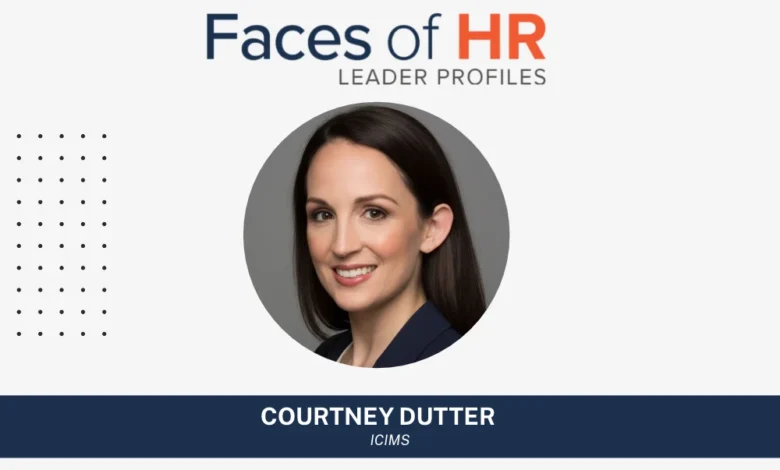
When Courtney Dutter joined cloud-based talent acquisition software leader iCIMS over a decade and a half ago, the startup environment looked remarkably different than it does today. Operating without a dedicated in-house employment lawyer at the time, the organization presented a clear blank canvas for professional impact. Seizing the opportunity, Dutter stepped into the nascent organization to construct its foundational legal, privacy, and compliance functions entirely from scratch.
Over the subsequent fifteen years, Dutter’s professional trajectory has mirrored the explosive growth of the tech sector itself. Now serving as General Counsel and Chief Compliance Officer, she has successfully steered iCIMS through multiple phases of major corporate expansion, complex global market entries, strategic mergers, acquisitions, and high-stakes partnerships. Amid rapid technological and regulatory shifts, her overarching leadership philosophy has remained consistent: safeguarding the absolute trust, security, and privacy of enterprise customers and their sensitive candidate talent data.
Roots in Human Resources: A Lifelong Appreciation for Workplace Dynamics
Dutter’s foundational interest in employment law and regulatory compliance is rooted deep in her upbringing. Growing up in a household heavily influenced by human resources—her mother spent a decorated career in HR before eventually serving as a Deputy City Manager in California—Dutter was continuously exposed to workplace leadership discourse. Those formative years included spending multiple summer breaks interning in her mother’s office, granting her a front-row seat to the intricate mechanics of organizational behavior and employment disputes.
This early, hands-on exposure instilled in Dutter a profound respect for the strategic value that HR professionals bring to enterprise success. It demystified workplace operations and laid the intellectual groundwork for her eventual pursuit of employment law. Furthermore, her mother’s leadership style—defined by deep empathy, unwavering integrity, and a steadfast focus on the human element behind every corporate decision—remains the guiding compass for Dutter’s management philosophy today.
Cutting Through the Artificial Intelligence Noise in Modern Recruitment
As modern human resources departments grapple with the rapid integration of artificial intelligence and automated decision-making tools into recruitment pipelines, Dutter advocates for a pragmatic, measured approach. She cautions corporate leadership against falling prey to industry alarmism and regulatory paralysis regarding emerging technologies.
A central thesis of Dutter’s modern compliance strategy addresses the pervasive societal anxiety surrounding AI-driven hiring bias. She notes that the public discourse frequently operates on the false premise that algorithmic hiring inherently introduces prejudice into the recruitment ecosystem, ignoring the historical reality that human decision-making is inherently susceptible to subjective bias. When engineered, audited, and deployed responsibly, AI systems can actually serve as powerful mechanisms to mitigate human prejudice and streamline fair talent identification.
To achieve responsible AI deployment within HR tech stacks, Dutter emphasizes a triad of fundamental safeguards: rigorous algorithmic auditing, transparent vendor evaluation, and the preservation of human oversight in all final hiring decisions. Rather than remaining paralyzed by a shifting and often ambiguous regulatory landscape, she urges organizational leaders to proactively establish responsible governance frameworks immediately, rather than waiting for formal legislative mandates to catch up to market capabilities.
Chronology of Growth: Evolution of an In-House Legal Function
The expansion of iCIMS as a global software-as-a-service (SaaS) provider provides a compelling case study in the evolution of corporate legal departments within the tech industry.
- Phase One: The Foundation (Early Years): Upon her arrival 15 years ago, Dutter operated as a solo legal practitioner tasked with establishing fundamental compliance baselines, commercial contract templates, and basic risk management policies for a growing tech firm.
- Phase Two: International Scaling (Mid-Tenure): As iCIMS expanded its footprint beyond North America into Europe and the Asia-Pacific region, Dutter spearheaded the creation of a globally distributed legal and privacy team capable of navigating complex cross-border data transfer regulations, including the European Union’s General Data Protection Regulation (GDPR).
- Phase Three: Enterprise Maturity and AI Integration (Present Day): Today, Dutter oversees a robust, multi-continental legal ecosystem that proactively evaluates enterprise risk, governs intellectual property, and manages the regulatory complexities introduced by generative artificial intelligence and global data privacy mandates.
Reflecting on her journey as a team leader, Dutter openly identifies her early professional evolution as a continuous learning curve. Early in her tenure, she experienced the classic entrepreneurial trap of believing the organization could not function effectively without her direct intervention, which inadvertently stifled team autonomy. Recognizing that effective leaders must deliberately cultivate independent problem-solvers, she shifted her management focus toward empowerment and mentorship. This philosophy ultimately enabled her to build a cohesive, multi-continental legal department capable of seamless cross-border collaboration.
Redefining the Legal Role: Moving Beyond the "Department of No"
One of the persistent cultural challenges Dutter identifies within corporate environments is the traditional perception of legal teams as organizational roadblocks—colloquially known as the "department of no." This stereotype has historically intensified during periods of technological transition, particularly as executive leadership rushes to adopt emerging tools like generative AI without fully understanding the associated liability.
Dutter argues that this friction typically stems from a structural failure: legal teams are frequently brought into strategic discussions too late in the development lifecycle or are asked to evaluate high-stakes business decisions in a vacuum of context. To foster true organizational agility, she advocates for cross-functional collaboration from day one, bringing business units, product developers, HR leaders, and legal counsel together to engineer proactive solutions rather than reacting to obstacles after a strategy has already been finalized.
The Strategic Imperative of Human Resources
Beyond her legal responsibilities, Dutter remains a vocal champion of elevating human resources from a back-office administrative function to an executive-level strategic partner. She contends that because organizational success is fundamentally tethered to human capital, failing to integrate HR into high-level business strategy deprives executive leadership of its most vital resource.
Modern HR departments do far more than manage payroll and resolve compliance disputes; they actively shape corporate culture, forecast workforce needs, manage organizational change, and coach executive leadership through periods of market turbulence. Companies that treat human resources as a core business driver are demonstrably better positioned to attract top-tier talent, adapt to macroeconomic shifts, and achieve long-term sustainability.
Industry Implications and the Next Five Years
Looking toward the horizon, Dutter anticipates that the current anxieties surrounding artificial intelligence in the workplace will eventually normalize. Much like the tech industry’s historical transition from on-premise infrastructure to cloud computing, the regulatory and ethical frameworks governing workplace AI will mature from uncharted territory into standard operational procedure.
However, this technological evolution will force organizations to fundamentally re-evaluate their recruitment methodologies, compelling employers to be significantly more deliberate and analytical in how they evaluate candidate potential.
For aspiring professionals entering the legal or in-house corporate sectors, Dutter offers a straightforward directive: embrace discomfort, say yes to challenging assignments that stretch professional boundaries, and strive to understand the broader business mechanics rather than remaining siloed within a single specialty. Ultimately, the capacity to deliver pragmatic, business-aligned legal guidance remains the definitive hallmark of modern corporate leadership.