Lowe’s Partners with Bilt Rewards to Transform Home Improvement Commerce and Loyalty Integration

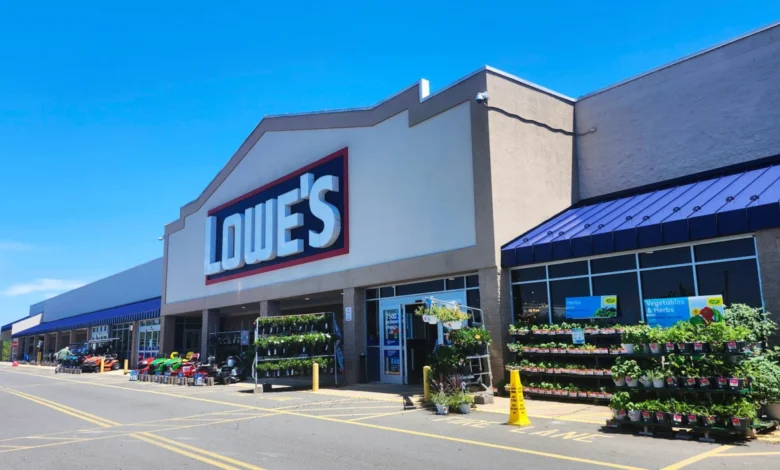
Lowe’s Companies Inc. has officially entered into a strategic partnership with the housing rewards platform Bilt, marking a significant evolution in how home improvement retailers engage with the modern consumer. Announced on November 10, the collaboration designates Lowe’s as the exclusive home improvement partner for Bilt, providing the retailer direct access to a digital ecosystem of more than 8 million active members. This alliance is built upon Bilt’s proprietary “Neighborhood OS,” an artificial intelligence-driven platform designed to bridge the gap between digital rewards and local, in-person retail experiences.
The integration is set to unfold in stages, beginning with immediate cross-platform rewards earning, followed by the planned launch of a curated Lowe’s marketplace within the Bilt application in early 2027. By embedding itself into the Bilt ecosystem, Lowe’s is positioning its brand at the center of the homeownership journey, moving beyond traditional transaction-based retail into the realm of integrated lifestyle management.
Chronology and Strategic Implementation
The partnership is the result of a multi-year effort by Bilt to pivot from its roots as a rent-payment rewards program toward a comprehensive neighborhood-centric commerce hub. Following the company’s 2021 founding, Bilt successfully expanded into mortgage rewards and travel, but the Neighborhood OS represents its most ambitious technological leap to date.
For Lowe’s, the timeline for this integration is structured to maximize customer retention. As of November 2024, Bilt members can link their MyLowe’s Rewards accounts to begin earning one Bilt Point per dollar on qualifying purchases. This is in addition to the standard MyLowe’s Money benefits, creating a “double-dip” incentive structure that is highly attractive to high-frequency DIYers and home improvement enthusiasts.
Looking toward the immediate future, December 2024 will see the rollout of automated account matching, which will streamline the synchronization between the two loyalty databases. The long-term roadmap culminates in 2027, when a fully integrated Lowe’s marketplace will appear within the Bilt app. This will allow users to browse products, schedule maintenance, and manage home projects without leaving the Bilt environment, effectively transforming the platform into a digital concierge for the American homeowner.
Data-Driven Dynamics of the Loyalty Landscape
The rationale behind this partnership is firmly rooted in empirical data regarding consumer spending patterns. According to the 2025 annual report released by Lowe’s, the company’s internal loyalty program, MyLowe’s Rewards, has reached a critical mass of over 30 million members. Perhaps more importantly, these members exhibit significantly higher engagement levels than non-members, shopping twice as often and spending approximately 50% more on average. By adding 8 million Bilt members to this funnel, Lowe’s is targeting a demographic that is statistically inclined toward high-value home expenditure.
Bilt’s own research, compiled in the 2026 “State of the Neighborhood” study, underscores the efficacy of this strategy. The survey, conducted by 451 Research by S&P Global, interviewed over 6,500 U.S. adults and revealed that 95% of consumers are willing to try a local business if they can earn rewards there. Furthermore, 87% indicated that the presence of loyalty incentives would increase their shopping frequency at local merchants. Given that the median American consumer performs the vast majority of their daily commerce within a 15-mile radius of their home, the Neighborhood OS serves as a powerful localized marketing engine for a national chain like Lowe’s.
Official Perspectives and Corporate Strategy
The leadership at both organizations has framed this partnership as a necessary evolution in retail, where the boundary between “online” and “offline” commerce continues to blur. Jen Wilson, Executive Vice President and Chief Marketing Officer at Lowe’s, emphasized that the goal is to integrate the brand into the daily lives of their customers. “By partnering with Bilt, we can meet customers in a community they already know and love and connect them to Lowe’s products, services and rewards in a way that feels simple and seamless,” Wilson stated in the official press release.
From the Bilt perspective, the partnership is a validation of the Neighborhood OS infrastructure. By integrating with existing payment processors and customer relationship management (CRM) systems—such as Adyen, Verifone, and Clover—Bilt is removing the technical friction that often prevents local businesses from deploying sophisticated loyalty programs. The platform’s use of AI agents to handle tasks like reservation management and customer communication has proven highly scalable; in the month leading up to the announcement, Bilt reported that its AI agents performed over 2 million actions across 29,000 businesses with a 91% autonomy rate.
Implications for Home Maintenance Services
A critical component of this partnership is the promotion of the Lowe’s HomeCare+ subscription service. Priced at $99 annually, the service offers two in-home visits from professional associates and coverage for up to seven distinct maintenance tasks. Through the Bilt platform, users can now utilize their accumulated Bilt Points or Bilt Cash to offset the cost of this subscription.
This move is a strategic play to lock in long-term customer value. Home maintenance is traditionally an irregular, reactive expense for homeowners. By incentivizing a subscription model, Lowe’s shifts the relationship to a recurring, proactive one. For Bilt, the ability to facilitate these payments via the Neighborhood OS serves as a proof-of-concept for its broader ambition: to become the primary payment and rewards layer for all residential upkeep.
The Broader Impact on the Retail Ecosystem
The collaboration between Lowe’s and Bilt is indicative of a wider trend in digital commerce: the rise of the “networked loyalty” model. Retailers are increasingly wary of the cost of customer acquisition through traditional digital advertising channels like social media or search engines. Instead, they are turning to partnership-based ecosystems where they can reach high-intent users within a trusted environment.
For Lowe’s, which currently holds the No. 9 spot in Digital Commerce 360’s Top 1000 database, the partnership provides a defensive moat against competitors. By integrating with Bilt, Lowe’s gains access to proprietary data on consumer homeownership status, enabling more personalized, localized offers that a general-purpose search engine could not replicate.
Furthermore, the involvement of other major entities—such as Meta, which plans to collaborate with Bilt in 2027 to assist small business owners, and Thumbtack, which will provide the service-labor backbone—suggests that Bilt is attempting to build a comprehensive "Home Utility Stack." If successful, this ecosystem could fundamentally change the competitive landscape for home services and retail, creating a closed-loop system where points, payments, and home maintenance intersect.
Market Context and Future Outlook
The retail sector is currently navigating a period of high inflation and cautious consumer spending. In this environment, loyalty programs that offer tangible monetary value—such as the ability to pay for essential home repairs with rewards points—are becoming essential tools for maintaining market share.
As Lowe’s and Bilt continue their phased integration, industry analysts will be watching to see how successfully the AI-driven Neighborhood OS can actually convert passive members into active, repeat shoppers at physical Lowe’s locations. The success of the venture will likely hinge on the seamlessness of the user experience; if the transition from digital reward earning to physical store checkout is friction-free, the partnership could set a new standard for omni-channel retail loyalty.
Ultimately, this partnership serves as a case study for the future of retail: the transition from transactional engagement to lifestyle-integrated services. By aligning its brand with the daily financial habits of its customers, Lowe’s is not just selling hardware and home supplies—it is investing in a platform that makes the act of home ownership more financially rewarding, thereby securing a loyal customer base for the long term. As the 2027 launch of the integrated marketplace approaches, the market will gain a clearer picture of whether this AI-powered, ecosystem-based approach can deliver the sustained growth that both Lowe’s and Bilt are targeting.