
In the rapidly evolving digital retail landscape, the distinction between business growth and true scalability remains the most critical factor in determining long-term profitability. While many ecommerce merchants equate increased revenue with success, industry analysts define effective scaling as the ability to grow revenue at a rate that significantly outpaces the growth of operational costs and labor requirements. As online storefronts transition from boutique operations to high-volume enterprises, the absence of optimized internal processes frequently leads to diminishing margins, a phenomenon often referred to as "growth pain."
The fundamental challenge for modern retailers is the shift from manual, bespoke management to automated, repeatable systems. When a business moves from processing 100 orders daily to 500, a non-scaled operation might require a fivefold increase in staffing and infrastructure. Conversely, a successfully scaled business utilizes technology and standardized workflows to absorb that volume with minimal friction, ensuring that the cost of handling each additional order—the "cost per order" metric—remains stable or decreases.

The Financial Architecture of Scalability
At the core of fiscal health in ecommerce is the rigorous monitoring of the cost per order. By dividing total monthly ecommerce expenditures—including platform licensing, hosting, third-party applications, and transaction fees—by the total number of orders processed, business owners can determine their baseline efficiency.
Industry benchmarks suggest that a granular breakdown of these costs is essential. Fixed costs, such as software subscriptions, remain stagnant until a threshold of volume triggers a higher tier of service. Variable costs, such as payment processing fees, scale linearly with Gross Merchandise Value (GMV). By mapping these expenses, companies can identify which segments of their operations are becoming prohibitively expensive as they expand. For example, a store processing 5,000 orders at an average order value (AOV) of $80 with $15,000 in monthly overhead faces a base cost of $3 per order. Whether this figure is sustainable depends entirely on the company’s profit margins and the trajectory of those costs as volume increases.
Chronology of Operational Strain
The lifecycle of an ecommerce scaling project typically follows a predictable trajectory. In the nascent stage, founders often rely on manual labor to bridge gaps in technology. This includes manually updating stock levels, processing refunds, or executing batch email marketing campaigns. While this "hustle" is necessary for survival, it becomes a liability during the second phase: rapid expansion.

During this second phase, the "administrative drag" begins to manifest. Disconnected systems create data silos, requiring staff to perform repetitive, rule-based tasks that offer little strategic value. Research into operational workflows indicates that companies failing to automate during this period experience a surge in human error, which directly impacts the bottom line through increased returns, customer service complaints, and inefficient resource allocation.
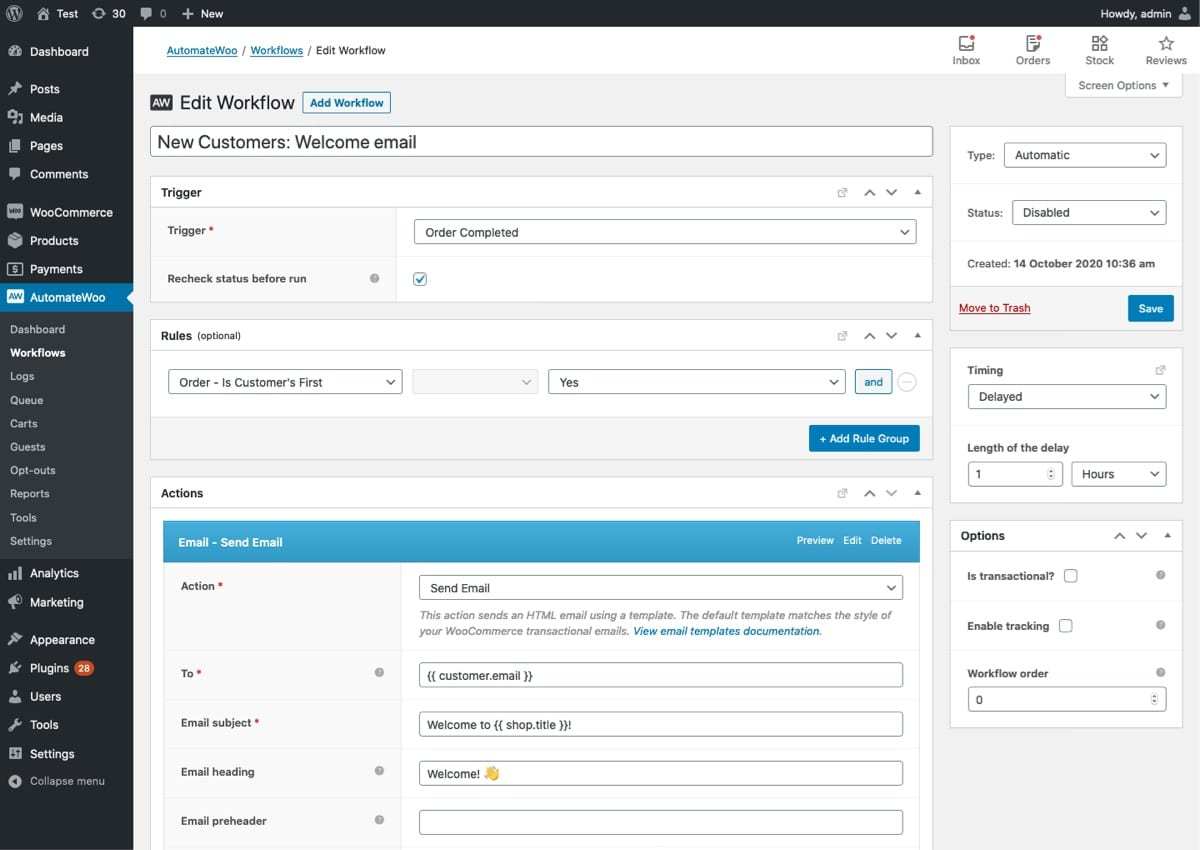
The final stage, optimization, occurs when leadership shifts from reactive problem-solving to proactive automation. By integrating platforms like WooCommerce with specialized tools such as AutomateWoo, merchants can trigger workflows based on customer behavior—such as abandoned cart recovery or post-purchase welcome sequences—without manual intervention. This allows the organization to double its output without doubling its headcount, effectively decoupling revenue growth from labor costs.
Data-Driven Infrastructure and Hosting Constraints
Infrastructure planning represents a significant bottleneck for scaling merchants. Hosting providers typically offer tiered plans, such as those provided by Pressable, where a move from a standard plan to a high-capacity tier can result in a significant leap in monthly fixed costs. A common mistake among growing brands is failing to forecast these "stepped" costs.
Performance testing during peak seasons, such as Black Friday or Cyber Monday, provides a critical data point for infrastructure planning. If a site experiences latency during high-traffic events, the potential loss in conversion rate is far more damaging than the cost of upgrading to a higher-tier hosting environment. Modern, enterprise-grade hosting services often include overage fees for visits and storage, meaning that businesses must maintain a clear understanding of their growth thresholds to avoid unexpected budgetary shocks.
The Total Cost of Ownership (TCO) Benchmark
To assess long-term viability, industry experts increasingly utilize the Total Cost of Ownership (TCO) metric. TCO encompasses not just the subscription fees for a platform, but the cumulative costs of development, third-party integrations, external consultancy, and maintenance.
A widely accepted benchmark in the industry is to keep the platform TCO below 1% of the total GMV. As a business scales, this percentage should ideally remain static or trend downward. If a store’s TCO rises in tandem with revenue, it suggests that the underlying technology stack is becoming bloated or inefficient. Leveraging tools such as TCO calculators allows merchants to simulate different growth scenarios and determine if their current technology choices will support their long-term financial objectives.
Strategic Implications for Future Growth
The shift toward new selling models—such as B2B wholesale, subscription services, or cross-border commerce—introduces new variables into the cost-per-order equation. Each model carries unique economic implications, including currency conversion fees, international shipping logistics, and varying payment processing structures.
Merchants are advised to conduct a "profitability audit" before entering new markets. For instance, a 1% increase in transaction fees on a $100,000 monthly volume represents a $1,000 expense; on a $1,000,000 monthly volume, that same percentage represents a $10,000 impact. Small, seemingly negligible costs at the beginning of a growth cycle can become massive liabilities as a business matures.
Conclusion: The Human Element in Automation
While automation is the primary engine of scalability, it is not a panacea for all operational challenges. Strategic areas such as high-level merchandising, complex customer service inquiries, and creative decision-making require a dedicated human touch. The goal of a scalable business is not the total elimination of labor, but the elimination of "busywork."

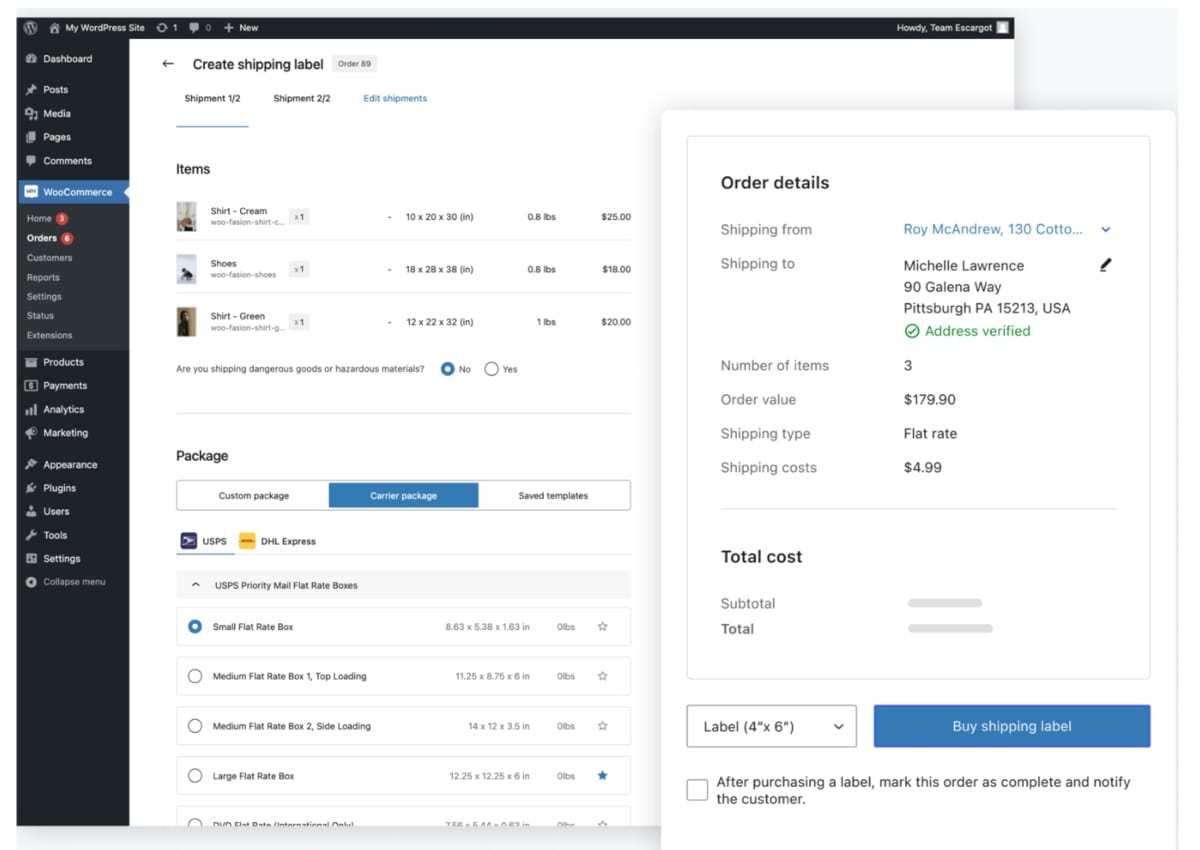
By automating repetitive, rule-based tasks—such as inventory synchronization, transactional email delivery, and shipping label generation—merchants can redirect their human capital toward innovation and brand strategy. This transition from manual task management to a systems-oriented approach is the hallmark of a resilient, modern ecommerce organization. Ultimately, the successful merchant is one who views every operational process through the lens of scalability, ensuring that as the store grows, the infrastructure supporting it grows with it, rather than against it.
As digital commerce continues to consolidate, the businesses that prioritize these efficiency metrics will be the ones best positioned to withstand market volatility and capture long-term market share. Whether utilizing native platform features or third-party integrations, the mandate remains clear: measure the cost of every transaction, identify the friction points in the workflow, and invest in automation that allows the business to do more with less.