Fifth Circuit Court of Appeals Reverses Summary Judgment in Hostile Work Environment Suit Highlighting Failures in Employer Investigations

In a significant ruling that underscores the rigorous standards required for workplace internal investigations, the 5th U.S. Circuit Court of Appeals has reversed a lower court’s grant of summary judgment in a hostile work environment case. The decision, handed down in July 2026, revives claims brought by a plaintiff against her former employer, Corpus Christi Medical Center (CCMC), doing business as Bay Area Healthcare Group. The appellate court found that the plaintiff presented sufficient evidence to suggest that the employer’s response to her reports of racial harassment was "insufficiently prompt and thorough," thereby necessitating a trial to determine the merits of her claims.
The case centers on allegations of a racially charged and abusive workplace culture that the plaintiff claimed was perpetuated by specific "cliques" within the nursing staff. According to court documents, the plaintiff, a Black nurse, was subjected to a series of discriminatory incidents that fundamentally altered her ability to perform her duties. By reversing the district court’s previous dismissal, the 5th Circuit has sent a clear message to employers: merely conducting an investigation is not enough to escape liability under Title VII of the Civil Rights Act of 1964; the investigation must be conducted in good faith, documented meticulously, and result in effective corrective action.
Background of the Dispute and Allegations of Harassment
The plaintiff’s tenure at Corpus Christi Medical Center was allegedly marred by a culture of exclusion and overt hostility. In her deposition testimony, the plaintiff detailed an environment where racial slurs and epithets were not uncommon. She supported her claims with emails documenting specific harassing incidents and testimony from another Black co-worker who witnessed and experienced similar treatment.
The emotional and psychological impact on the plaintiff was profound. She alleged that the ongoing harassment caused her to "question how she could function in such an environment" and left her feeling "less than human." To bolster her claims of a hostile work environment, the plaintiff produced counseling records from mental health professionals. These records indicated that she suffered from significant distress, trauma, and a persistent fear of physical or professional harm as a result of the conduct of her colleagues.
A critical component of the 5th Circuit’s assessment was the inclusion of "secondhand harassment." The court noted that the plaintiff had witnessed her Black co-worker being subjected to similar discriminatory treatment. Citing prior legal precedent, the court ruled that witnessing the harassment of others in one’s protected class "weighs in favor" of the plaintiff when assessing the "totality of the circumstances" of a hostile work environment. This reinforces the legal principle that a workplace can be hostile even if every single act of aggression is not directed at the plaintiff personally, provided the environment as a whole is permeated with discriminatory intimidation.
The Employer’s Defense and the Court’s Critique
Corpus Christi Medical Center defended its actions by asserting that it had fulfilled its legal obligations once the harassment was reported. The employer argued that it took prompt corrective action by conducting interviews with the accused parties and "coaching" the nurses who were allegedly involved in the offending conduct. Furthermore, the hospital noted that it had offered to transfer the plaintiff to a different unit as a means of resolving the conflict.
However, the 5th Circuit was unconvinced by the hospital’s defense, pointing to several glaring deficiencies in how the internal investigation was handled. The appellate court highlighted several key issues:
- Lack of Documentation: During the discovery phase of the litigation, CCMC failed to produce a formal investigation file or contemporaneous notes from the interviews conducted by management.
- Inconsistencies in Testimony: The court noted significant discrepancies between the testimony provided by CCMC staff and the sparse interview records that did exist. This raised questions about the credibility and thoroughness of the hospital’s internal review.
- Managerial Dismissiveness: Perhaps most damaging to the employer’s case was the plaintiff’s allegation that managers told her directly that "the cliques were not going anywhere." Such a statement, if true, suggests that the employer had no intention of dismantling the exclusionary and hostile social structures within the workplace.
- Failure to Stop Harassment: The plaintiff provided evidence that the harassment did not cease following the hospital’s "coaching" sessions. Under Title VII, a corrective action is only considered "effective" if it is reasonably calculated to end the harassment.
The court concluded that the plaintiff had successfully pointed to evidence suggesting the investigation was a mere formality rather than a genuine attempt to address racial discrimination. "Ultimately, the plaintiff has pointed to evidence that CCMC’s investigation was insufficiently prompt and thorough," the court stated in its decision.
Legal Framework: Title VII and the "Knew or Should Have Known" Standard
The 5th Circuit’s decision is rooted in the long-standing interpretation of Title VII of the Civil Rights Act of 1964. Under federal law, an employer is liable for harassment by a co-worker if the employer "knew or should have known" about the misconduct and failed to take "prompt and effective remedial action."
In the context of a hostile work environment, the conduct must be sufficiently severe or pervasive to alter the conditions of the victim’s employment and create an abusive working environment. By reviving this case, the 5th Circuit clarified that the adequacy of an employer’s response is a question of fact that often requires a jury to decide, rather than a judge at the summary judgment stage.
This case follows a trend of appellate courts taking a stricter view of what constitutes a "thorough" investigation. The decision cited several other circuit rulings to provide context. For instance, the 9th Circuit held in 2019 that a manager’s use of just four racial slurs over a one-year period could be sufficient to establish a hostile work environment. Similarly, the 10th Circuit recently revived a case against Walmart, ruling that a series of discriminatory acts, even if spread out, could plausibly create an abusive environment for a plaintiff.

Chronology of Events and Litigation
The timeline of the case illustrates the long road to the appellate victory for the plaintiff:
- 2023–2024: The plaintiff experiences and documents multiple instances of racial harassment at Corpus Christi Medical Center. Reports are made to HR and management.
- Late 2024: CCMC conducts what it characterizes as an investigation, involving "coaching" for certain staff members. The plaintiff alleges the harassment continues and eventually departs her position.
- 2025: The plaintiff files a lawsuit in U.S. District Court alleging a hostile work environment and race discrimination.
- Early 2026: The District Court grants summary judgment in favor of CCMC, ruling that the hospital’s response was legally sufficient to shield it from liability.
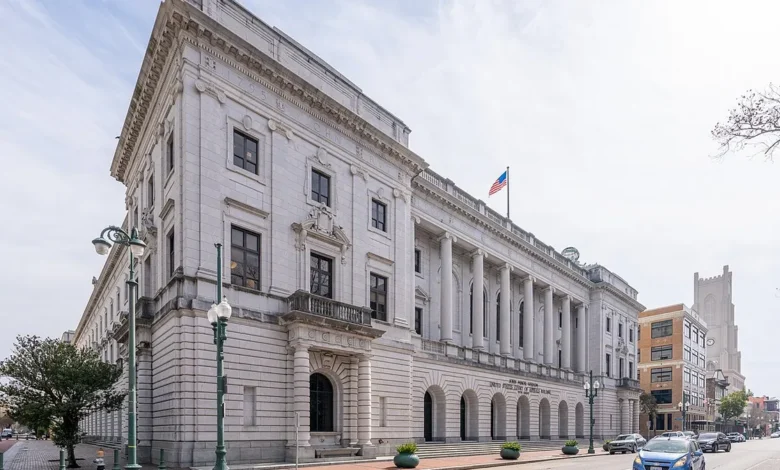
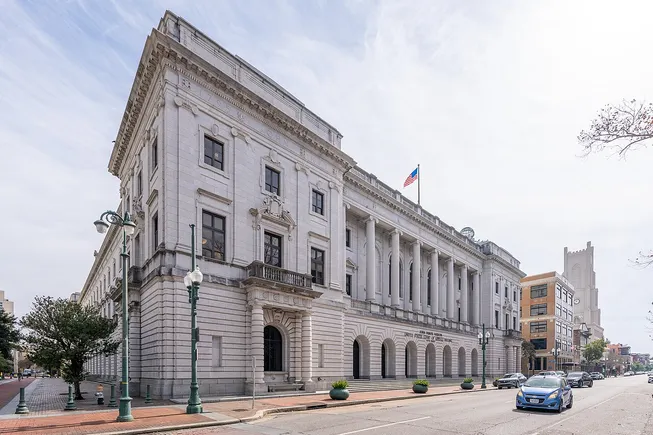
- February 4, 2026: Oral arguments are heard at the John Minor Wisdom U.S. Court of Appeals Building in New Orleans.
- July 17, 2026: The 5th Circuit officially reverses the lower court’s decision, allowing the plaintiff’s hostile work environment claims to proceed to trial.
Broader Implications for Human Resources and Healthcare Administration
The 5th Circuit’s ruling serves as a cautionary tale for Human Resources professionals, particularly in high-stress environments like healthcare where "cliques" and established social hierarchies can often lead to exclusionary behavior.
The Danger of Inadequate Documentation
The hospital’s failure to produce an investigation file was a critical turning point in the appeal. In modern employment litigation, "if it isn’t written down, it didn’t happen." Employers who rely on verbal "coaching" without maintaining a paper trail of the investigation process, the evidence gathered, and the specific disciplinary actions taken are at a significant disadvantage in court.
The "Transfer" Trap
CCMC’s offer to transfer the plaintiff is a common tactic used by employers to resolve harassment complaints. However, courts are increasingly skeptical of this approach. If the victim is the one forced to move units—potentially losing a preferred shift or location—while the harassers remain in place, the "remedy" can look more like retaliation than a solution. The 5th Circuit’s decision suggests that offering a transfer does not automatically absolve an employer of the duty to address the underlying behavior of the harassers.
Addressing Workplace Culture
The comment regarding "cliques" not going anywhere highlights a systemic issue in many organizations. When management views toxic behavior as an unchangeable part of the company culture, they effectively waive their defense against hostile work environment claims. Organizations must demonstrate a top-down commitment to dismantling discriminatory subcultures.
Statistical Context: Workplace Harassment in the 2020s
Data from the Equal Employment Opportunity Commission (EEOC) continues to show that race-based harassment remains a persistent issue in the American workforce. In the years leading up to 2026, race-based charges have consistently accounted for approximately 30% to 35% of all claims filed with the EEOC.

Furthermore, retaliation claims—often stemming from how an employer handles an initial harassment report—now make up over 50% of the EEOC’s private-sector caseload. This underscores the volatility of the investigation phase; if handled poorly, the investigation itself can become the basis for further legal action.
Conclusion: A Reminder of the High Bar for Summary Judgment
The reversal by the 5th Circuit indicates that courts are becoming more hesitant to dismiss harassment claims before they reach a jury, especially when there are questions regarding the integrity of an employer’s internal processes. For the plaintiff in this case, the ruling provides an opportunity to seek justice for an environment that she claimed stripped her of her dignity. For the legal and business community, it serves as a reminder that "prompt and thorough" are not just buzzwords, but legal requirements that demand a high level of professional rigor.
As the case returns to the district court for trial, the focus will likely shift to the specific testimony of the managers involved and the lack of a formal investigative record. The outcome will be closely watched by labor and employment attorneys as a barometer for how "clique culture" in the workplace will be treated under federal law in the coming years.