Former Female Apprentice Electrician Files Lawsuit Alleging Severe Sexual Harassment and Hostile Work Environment at Hanford Vit Plant

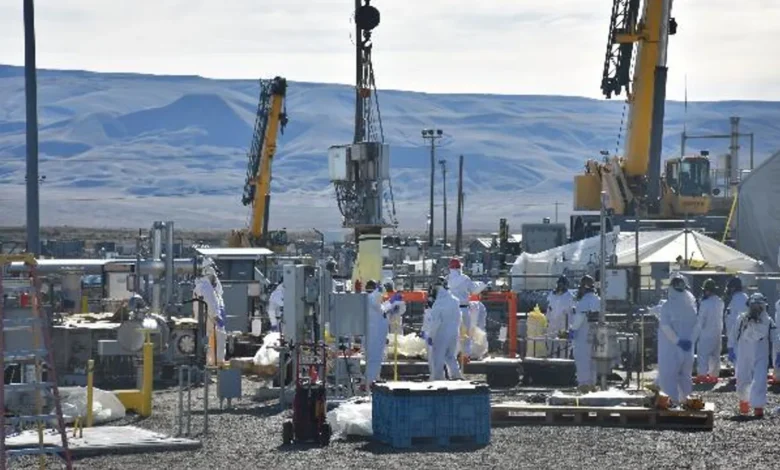
A significant legal challenge has emerged within the massive cleanup operations at the Hanford Site in Richland, Washington, as a former apprentice electrician has filed a lawsuit alleging a pervasive culture of sexual harassment, intimidation, and professional retaliation. The complaint, filed in the U.S. District Court for the Eastern District of Washington, names several high-profile defendants, including Bechtel National—the government services arm of the Reston, Virginia-based global engineering giant—and Waste Treatment Completion Co., a joint venture between Bechtel and AECOM. Also named as a primary defendant is a jobsite foreman whose alleged behavior sits at the center of the litigation.
The plaintiff, identified as the only woman apprentice electrician working at the Hanford Waste Treatment and Immobilization Plant (Vit Plant) during her tenure, claims that the jobsite was not merely unprofessional but actively hostile. According to the court documents, the harassment was not limited to verbal abuse but extended to a systemic environment where she was targeted for her gender, and her husband—also an electrician at the site—was allegedly harassed in a calculated attempt to pressure both out of their positions.
Detailed Allegations of a Hostile Work Environment
The core of the lawsuit details a harrowing experience for the plaintiff, who entered the Hanford Vit Plant seeking to advance her career in the skilled trades. Instead, she alleges she was met with a relentless barrage of sexual harassment from her direct supervisor. The filing describes an environment where professional boundaries were nonexistent, and complaints were met with further intimidation rather than resolution.
One of the most striking elements of the complaint involves the foreman’s alleged claim of being “bulletproof” and “untouchable.” The lawsuit asserts that the foreman frequently boasted about his family’s deep-rooted influence at the Hanford site, citing a five-generation legacy of journeymen working at the facility. This perceived immunity was reportedly bolstered by the foreman’s ties to the International Brotherhood of Electrical Workers (IBEW) Local 112. The complaint notes that the local union hall is actually named after the foreman’s grandfather, a fact the defendant allegedly used to suggest that any internal complaints against him would be futile.
The harassment allegedly extended to the foreman’s father, who also worked at the jobsite in the material tent where the plaintiff was assigned. This family dynamic created a claustrophobic environment for the worker, who felt there were no safe avenues for reporting misconduct. Furthermore, the lawsuit alleges that the plaintiff’s husband was targeted for harassment by the same foreman, creating a dual-front assault on the couple’s professional and personal well-being.
The Hanford Vit Plant Context and Project Scope
To understand the gravity of these allegations, one must look at the scale and importance of the Hanford Vit Plant project. Managed by the U.S. Department of Energy (DOE), the Hanford Site was established in 1943 as part of the Manhattan Project to produce plutonium for nuclear weapons. Today, it is the site of one of the largest and most complex environmental cleanup efforts in the world.
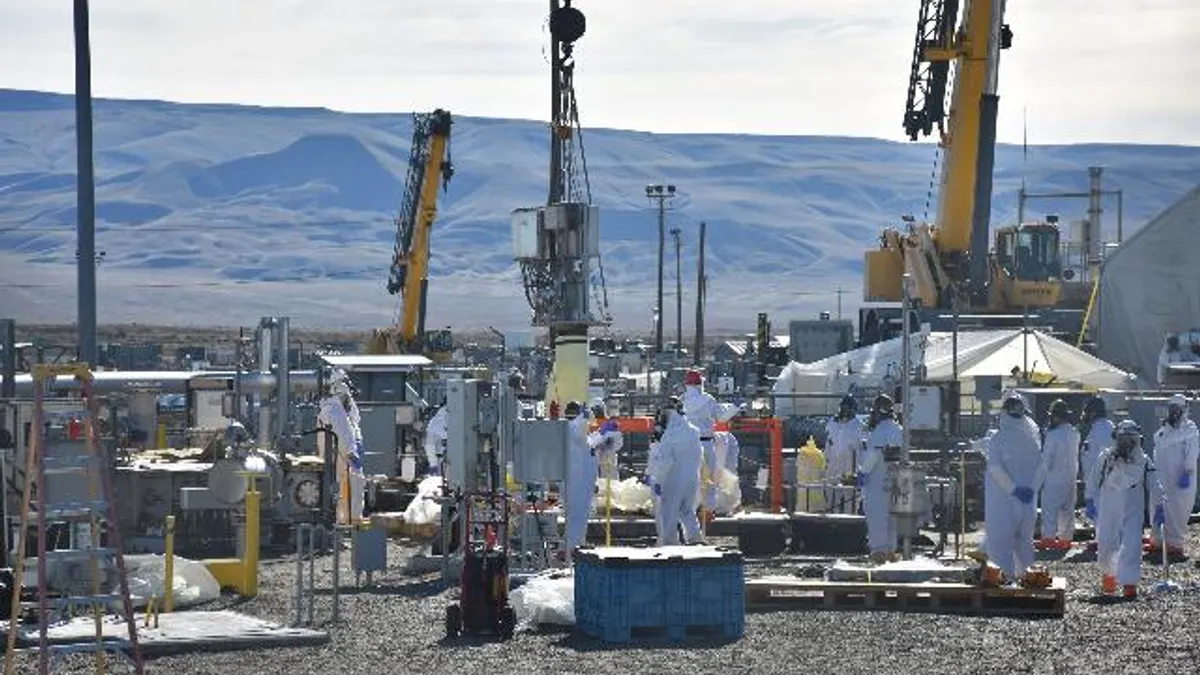
The Waste Treatment and Immobilization Plant, or Vit Plant, is the cornerstone of this cleanup. Its mission is to process and stabilize 56 million gallons of radioactive and chemical waste currently stored in 177 underground tanks. The process, known as vitrification, involves mixing the waste with glass-forming materials and heating it to 2,100 degrees Fahrenheit to create a stable, solid glass form that can be safely stored for thousands of years.
Because of the high-stakes nature of the work—handling radioactive materials—safety and workplace culture are paramount. Bechtel National and its partner AECOM, through the Waste Treatment Completion Co., are tasked with maintaining rigorous standards. The lawsuit, however, suggests a disconnect between corporate safety mandates and the reality of the daily culture on the construction floor.
Chronology of the Incident and Departure
The timeline of the plaintiff’s tenure and eventual departure highlights a deteriorating situation. The plaintiff was active at the site through mid-2024. During this period, the alleged harassment escalated from verbal comments to professional obstruction.

In addition to the harassment claims, the lawsuit brings to light issues regarding workplace injuries and the Americans with Disabilities Act (ADA). The plaintiff reportedly suffered a broken finger during her work, an injury that rendered her unable to perform her standard duties as an apprentice electrician. The complaint alleges that despite her injury, the defendants failed to provide reasonable accommodations, a requirement under both state and federal labor laws.
Feeling the pressure of a hostile environment and a lack of support following her injury, the plaintiff left her position in September 2024. Her husband, who had been subjected to what the suit describes as "collateral harassment" intended to distress the plaintiff, resigned later that same month. The lawsuit seeks redress for lost wages, emotional distress, and attorney fees, while also aiming to hold the corporate entities accountable for their failure to supervise their management personnel.
Corporate and Union Responses
In response to the filing, Bechtel National and Waste Treatment Completion Co. (WTPP) issued a joint statement through spokesperson Staci West. The statement emphasized the companies’ formal stance on workplace conduct: “Bechtel does not tolerate harassment, intimidation, or discrimination of any kind and is committed to maintaining a safe and respectful workplace.”
However, the statement stopped short of addressing the specific allegations, citing the ongoing nature of the legal proceedings. “Given that this matter is the subject of pending litigation, it would not be appropriate for us to comment further at this time,” West added.
The involvement of the IBEW Local 112 name in the lawsuit adds a layer of complexity regarding labor relations at the site. While the union itself is not a primary defendant in the sexual harassment claims, the allegation that the foreman used his family’s union legacy as a shield for misconduct raises questions about the oversight of apprentices within the trade unions.

Broader Industry Trends: Harassment in Construction
The lawsuit at the Hanford site is not an isolated incident but rather reflective of a broader, documented struggle within the American construction industry. Despite decades of efforts to diversify the workforce, women and people of color continue to face significant barriers and hostile environments.
In 2023, the Equal Employment Opportunity Commission (EEOC) released a scathing report on the construction sector. The commission found that the industry remains "notably hostile" to women and men of color. The report highlighted that construction has one of the highest rates of reported sexual harassment and racial discrimination of any private-sector industry.
Supporting this data is a 2021 study from the Institute for Women’s Policy Research (IWPR). The survey of tradeswomen found that 26.5% of female respondents reported being “always or frequently” harassed just for being a woman. Furthermore, many women reported that they were denied the same training opportunities as their male counterparts, or were given "menial" tasks that prevented them from advancing their skills—a claim echoed in the Hanford plaintiff’s description of her assignment to the material tent.
Legal and Social Implications
The outcome of this lawsuit could have significant implications for federal contractors. Companies like Bechtel and AECOM operate under massive government contracts that often include "flow-down" requirements regarding workplace safety and non-discrimination. Evidence of a systemic failure to protect workers from harassment can lead to increased federal oversight, audits by the Office of Federal Contract Compliance Programs (OFCCP), and potential impacts on future bidding capabilities.
Furthermore, the case highlights the specific vulnerability of apprentices. Apprentices are in a transitional phase of their careers, relying heavily on the mentorship and approval of foremen and journeymen to achieve their certifications. When the individual responsible for their education is also their harasser, the power imbalance is absolute.
As the case moves through the U.S. District Court, legal experts will be watching to see how the court handles the "legacy" aspect of the foreman’s defense. If it is proven that a "dynastic" culture at Hanford allowed supervisors to act with impunity, it may force a reckoning for how large-scale industrial projects manage their internal hierarchies.
For now, the Hanford Vit Plant continues its mission to stabilize nuclear waste, but the shadow of this litigation serves as a reminder that the "human element" of engineering is often the most difficult to manage. The plaintiff’s quest for redress is a call for a shift in a culture that, according to the EEOC, has remained stagnant for too long. The resolution of this case will likely serve as a benchmark for future harassment claims within the high-stakes world of federal infrastructure and environmental cleanup.