Managing the In-visible Workforce: The Hidden Influence of AI on Modern Human Resources


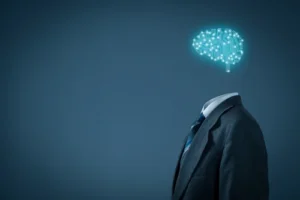
Workplace decisions are often seen as the product of human judgement: a candidate is hired, a promotion is approved, a performance rating is assigned. These moments are only the final step in a longer process. Before a manager or HR team sees the case, information has already been collected, prioritised, and presented. Increasingly, AI is shaping that process. It influences what decision-makers see, how issues are framed, and which insights rise to the surface. This emerging layer of digital labour now sits behind many HR activities, influencing outcomes across the employee lifecycle without appearing on traditional organisational charts.
The Rise of Algorithmic Management
The integration of Artificial Intelligence into human resources was initially marketed as a tool for administrative efficiency. Over the past decade, the industry shifted from manual resume screening to sophisticated Applicant Tracking Systems (ATS) that utilize natural language processing to rank candidates. A 2023 report by the Society for Human Resource Management (SHRM) indicated that nearly 80% of large enterprises now use some form of AI in their talent acquisition processes.
This transition has created a new, largely silent tier of "digital employees." While these systems lack a physical presence, their functional impact is profound. They do not merely store data; they interpret it. When an AI algorithm suggests a shortlist of candidates, it is performing a high-level cognitive task—prioritisation—that was historically the exclusive domain of senior recruiters. Because this happens at the "pre-decision" stage, the final human reviewer is often presented with a curated reality, significantly narrowing the scope of potential outcomes.
Chronology of AI Integration in HR
The adoption of these technologies has followed a distinct trajectory, mirroring broader trends in enterprise digital transformation:

- 2010–2015: Digitisation and Keyword Matching. The primary focus was on converting paper files to digital formats. Basic algorithms began filtering resumes based on specific keyword densities.
- 2016–2019: Predictive Analytics and Early Machine Learning. HR departments began using predictive models to identify "flight risk" employees or predict high-potential candidates based on historical performance data.
- 2020–2022: Pandemic-Driven Automation. The sudden shift to remote work accelerated the adoption of automated scheduling, virtual onboarding assistants, and AI-driven sentiment analysis tools to track employee engagement.
- 2023–Present: Generative AI and Autonomous Workflows. The current era is defined by systems that do not just flag data but generate content, such as drafting performance reviews, creating job descriptions, and summarizing complex personnel files.
The Gap Between Recommendation and Responsibility
A fundamental tension now exists between the technical capability of AI and the legal responsibility of the employer. Most organisations maintain a policy that final decisions regarding hiring, termination, and promotion must be made by human beings. However, this "human-in-the-loop" model is increasingly being challenged by the complexity of the information provided to the human reviewer.
If an AI system filters 500 applicants down to a shortlist of ten, the hiring manager’s decision-making process is fundamentally constrained by the algorithm’s initial criteria. If the algorithm is biased—perhaps by favouring candidates from specific universities or penalising those with gaps in their employment history—the human reviewer may unknowingly perpetuate these biases. This creates a "rubber-stamp" culture where the human is no longer an evaluator, but a final validator for a machine-led process.
Supporting Data and Risk Factors
Research from the Stanford University Human-Centered AI Institute suggests that automated decision-making systems can amplify existing workplace inequalities if not properly audited. In a 2022 study, researchers found that models trained on historical hiring data frequently mirrored the demographic imbalances of the past, effectively automating discrimination.
Furthermore, the lack of transparency in "black box" algorithms presents a significant compliance risk. With the introduction of the EU AI Act, which classifies AI systems used in employment, worker management, and access to self-employment as "high-risk," organisations are now legally obligated to provide explainability. Employers must be able to document exactly why a system reached a specific conclusion. For many, this is a significant operational hurdle, as legacy systems were often purchased for their output efficiency rather than their transparency or auditability.
Governance as a Strategic Priority
To maintain control over the "In-visible Workforce," HR leaders must shift their focus from the procurement of AI tools to the establishment of robust governance frameworks. This requires a multi-layered approach:

- Algorithmic Auditing: Organisations must conduct regular, third-party audits of their AI systems to detect bias and ensure that the logic behind rankings and summaries aligns with company policy.
- Structured Documentation: Effective governance relies on an audit trail. Every decision-making process must be documented, capturing the input data, the AI-generated recommendation, and the final rationale provided by the human decision-maker.
- Defined Permissions: Digital tools should operate within strictly defined parameters. For instance, an AI tool might be permitted to summarise feedback, but it should be prohibited from proposing a final performance rating or salary adjustment.
- Human-Centric Review Stages: Workflow design must ensure that human reviewers are forced to engage with the data rather than simply accepting the AI’s summary. This might include "blind" review phases where human recruiters assess redacted profiles before seeing the algorithm’s ranking.
Broader Implications for Global HR
The shift toward AI-integrated HR is not merely a technical upgrade; it is a fundamental transformation of the social contract between employer and employee. As AI becomes embedded in performance management, the nature of feedback is changing. Data-driven performance management—where AI tracks keystrokes, meeting attendance, and output velocity—can create a high-pressure environment that neglects the qualitative aspects of work, such as collaboration, mentorship, and creative problem-solving.
Regulators are beginning to take note. In the United States, the EEOC has issued guidance on the use of AI in hiring, warning that employers can be held liable for algorithmic bias under the Civil Rights Act. Similarly, state-level privacy laws are increasingly requiring employers to disclose when automated decision-making is being used to evaluate staff.
The Path Forward: Accountability and Control
The challenge for HR leaders is to harness the productivity gains of AI while preserving the human element that is essential to fair and equitable people management. Success will not be measured by the speed at which a hiring process is completed, but by the integrity and defensibility of the decisions made.
Organisations must view their digital infrastructure as a core component of their workforce. Just as an employee is subject to performance reviews, training, and policy compliance, so too must an AI system be governed. This means moving beyond "plug-and-play" technology and towards a document-led workflow where every automated action is tracked, explained, and justified.
Ultimately, the goal is to bring the (In)visible Workforce into the light. By establishing clear guardrails, ensuring human oversight is meaningful rather than symbolic, and maintaining rigorous documentation, HR teams can leverage the power of AI without sacrificing the human judgement that defines their profession. As the boundary between machine recommendation and human responsibility continues to blur, the ability to discern the difference will become the most valuable skill for the next generation of HR professionals. The future of work is not about replacing human judgement; it is about ensuring that technology remains a tool for, rather than a master of, the organisational mission.