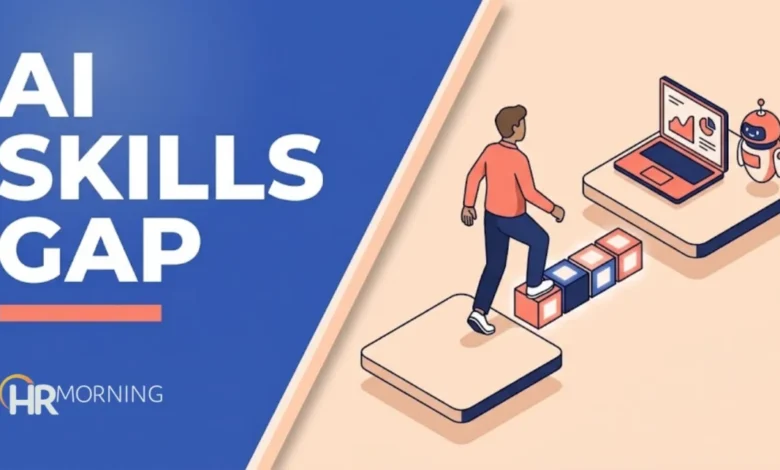
The AI skills gap has transitioned from a theoretical future concern to an immediate operational reality for organizations across the global economy. This shift is manifesting in tangible business challenges: job requisitions that remain stagnant for months, pilot programs that fail to scale beyond localized teams, and a growing disconnect between managerial oversight and the technical output of staff utilizing AI-assisted workflows. As artificial intelligence becomes an embedded layer of the modern corporate infrastructure, HR leaders are moving away from superficial training solutions toward comprehensive, skills-based talent management architectures.
The Evolution of the Skills Crisis
To understand the current state of the AI skills gap, one must look at the rapid acceleration of adoption since 2023. Initially, organizations viewed AI as a peripheral tool—an optional add-on for administrative tasks. By 2025, according to the World Economic Forum’s Future of Jobs Report, AI and big data literacy emerged as the fastest-growing professional requirements globally. This transformation has rendered traditional recruitment and development models obsolete.
The crisis is not merely a lack of technical knowledge; it is a structural failure to adapt internal workforce planning. When a company simply purchases a software license and provides a generic webinar on prompt engineering, they are performing "AI theater" rather than building genuine capability. True organizational maturity in the age of AI requires a fundamental redesign of how talent is identified, nurtured, and deployed.
Beyond the Training Catalog
The most common mistake currently plaguing human resources departments is the over-reliance on training as a panacea. While certifications are valuable, they provide only a snapshot of a candidate’s ability to use a specific tool. They do not account for the organizational shift required to integrate AI into existing business processes.
HR leaders are increasingly recognizing that the AI skills gap is actually a workforce planning challenge. It requires a deep analysis of roles to determine which functions are evolving the fastest. For instance, customer support, finance operations, and marketing departments are often the first to experience the disruption of AI-driven automation. Without a granular understanding of how these specific roles are changing, training efforts remain disconnected from the company’s strategic goals.
Mapping the Gap: A Task-First Methodology
Effective HR strategy in the current landscape prioritizes the "work" over the "org chart." Organizations that are successfully bridging the gap are conducting task-level audits. By evaluating each critical role and identifying the specific tasks currently being augmented by AI, leaders can pinpoint exactly which capabilities are required for the future.
This process involves three critical inquiries for every department:
- Which core tasks are currently being altered by AI integration?
- What specific new capabilities—such as data fluency, algorithmic literacy, or critical judgment—are required to perform these tasks effectively?
- What is the current "capability density" of the existing team regarding these new requirements?
By shifting the focus to these questions, HR departments can move away from vague hiring criteria and toward a data-driven map of the organization’s vulnerabilities. This allows for the surgical allocation of budget and recruiting efforts, ensuring that investments are made where they will provide the most significant competitive advantage.
The Recruitment-Upskilling Dichotomy
A pivotal question for HR directors is whether to prioritize external hiring for AI expertise or to invest in the upskilling of existing personnel. The industry consensus is increasingly shifting toward a hybrid model, with a heavy emphasis on internal mobility.
Updating job descriptions is the first step in this process. Many legacy descriptions screen for outdated credentials or narrow technical specializations. By refocusing these descriptions on adaptability, critical thinking, and data interpretation, recruiters can attract candidates who possess the cognitive flexibility required to evolve alongside the technology.
However, external hiring is often slower and more costly than internal development. Existing employees possess institutional knowledge and business context that cannot be easily replaced. When a role changes due to AI, the most efficient path is often to identify "adjacent skills" within the current workforce. By providing clear development pathways and demonstrating the career progression possible through AI mastery, organizations can convert anxiety into institutional growth. This approach also integrates seamlessly with succession planning, ensuring that critical leadership roles are not left vulnerable as the technological landscape shifts.
The Managerial Imperative
Perhaps the most overlooked element in the AI transition is the role of the mid-level manager. These individuals sit at the critical junction of human and machine performance. They are now tasked with overseeing workflows that are partially executed by algorithms and partially by human employees.
If a manager cannot discern the quality of an AI-assisted report or the validity of an automated data analysis, quality control slips, and institutional risk increases. Furthermore, managers must be equipped to handle the accountability gap: when an AI-assisted project goes wrong, the manager must understand the limitations of the tool used. Without this level of competence, the AI skills gap simply migrates upward, potentially destabilizing entire departments.
Building Trust in an Automated Environment
Perhaps the most subtle but dangerous manifestation of the skills gap is the "Trust Gap." Even in organizations where AI tools are widely available, employees often display a lack of commitment to their use. This is rarely the result of overt resistance; rather, it is characterized by "shadow work," where employees use AI in secret or rely on workarounds because they doubt the accuracy of the tools, fear bias, or harbor concerns regarding data privacy.
This is fundamentally a cultural and leadership issue. To foster genuine adoption, organizations must provide transparency. Employees need to understand how the tools are governed, how the data they provide is handled, and how human oversight is maintained. Plain-language explanations of AI governance, combined with visible human-in-the-loop review processes, help to convert passive compliance into active, confident adoption.
Strategic Roadmap for the Coming Quarter
For organizations looking to address these gaps immediately, the recommendation from industry experts is to start with a "pilot of two." By selecting two or three roles—ideally those where AI is already heavily impacting daily output—HR leaders can complete a comprehensive skills inventory.
From there, the goal is to implement one change to a hiring profile and one change to an internal mobility path. This creates a feedback loop that provides measurable data on what works. These small, visible successes are essential for securing long-term leadership support and funding for a larger, enterprise-wide strategy.
As companies continue to navigate this landscape, resources such as the TriNet Harvard Business Review AI Talent Playbook have become essential tools for leaders. These resources provide a structured approach to identifying critical gaps and distinguishing between AI tools that provide genuine productivity gains and those that merely increase technical complexity.
Ultimately, the AI skills gap is not an insurmountable barrier, but a signal that the organization must evolve its relationship with its workforce. By prioritizing clarity, trust, and a task-oriented approach to talent, HR departments can position their organizations to thrive in an era where AI is not just a tool, but a fundamental component of the business ecosystem.