Anthropic IPO marks the largest public offering in stock market history but fails to insulate major indexes from growing AI skepticism

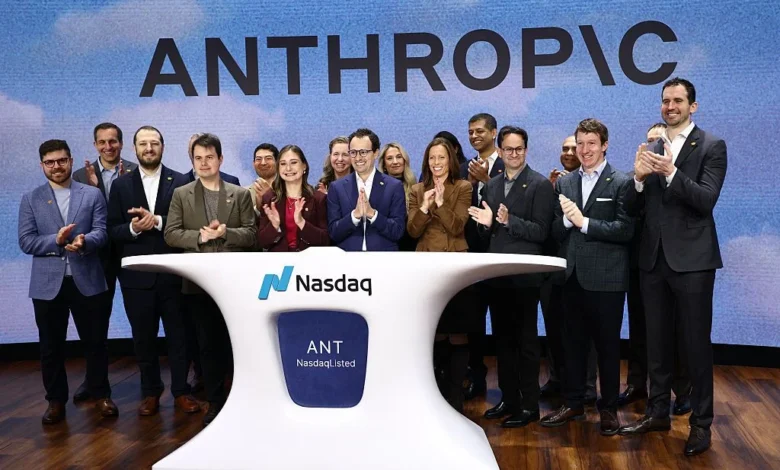
The landscape of the global financial markets shifted significantly on Thursday as Anthropic (ANT) officially commenced trading, securing its position as the largest initial public offering (IPO) in the history of the U.S. stock market. The arrival of the prominent large language model (LLM) developer was met with high anticipation, sparking a notable gap-up open for the major equity indices. However, the initial exuberance surrounding the debut proved insufficient to sustain momentum. By the closing bell, the broader market had retreated, as investors wrestled with a volatile cocktail of rising skepticism toward the artificial intelligence sector and concerns over underlying macroeconomic pressures.
The IPO pricing strategy for Anthropic was aggressive, signaling both the company’s confidence and the market’s continued appetite for high-growth tech assets. Priced at $83 per share—a figure that comfortably exceeded the initial marketed range of $70 to $78—the offering successfully raised $81.3 billion through the sale of approximately 980 million shares. This valuation catapulted the company to a market capitalization of $1.3 trillion, placing it among an elite tier of tech giants. At its debut price, the stock traded at approximately 40 times its trailing 12-month sales, a metric that reflects the premium investors are willing to pay for perceived industry leaders in the generative AI space.
The trading session itself was a study in volatility. Anthropic stock opened at $111.50, marking a 35% surge from its IPO price, before eventually cooling to close with a 17.1% gain. While this double-digit appreciation is objectively a successful market entry, the subsequent performance of the broader market suggested that the "Anthropic effect" was not enough to buoy sentiment for the remainder of the session.
A Comparative Look at Market Giants
The arrival of Anthropic invites inevitable comparisons to previous market-defining events, most notably the June debut of SpaceX. SpaceX, which entered the public markets without a predefined price range, listed at $135 per share to raise $75 billion. At the time of its debut, SpaceX traded at roughly 92 times trailing sales, highlighting a stark contrast in valuation models between the two companies. As of the most recent market close, SpaceX shares settled at $138.43, resulting in a total market capitalization of $1.9 trillion.
The divergence in these valuation multiples—40 times sales for Anthropic versus the historical premium commanded by SpaceX—underscores the shifting investor sentiment regarding AI infrastructure versus aerospace technology. While Anthropic’s debut was record-breaking, it occurred against a backdrop of increasing scrutiny regarding the sustainability of AI capital expenditures.
Market Performance and Institutional Drag
Despite the historic nature of the Anthropic IPO, the primary equity benchmarks struggled to maintain their footing throughout the day. The Dow Jones Industrial Average dropped 2.2% to close at 49,097, while the S&P 500 surrendered 2.0% to settle at 7,175. The tech-heavy Nasdaq Composite fared no better, shedding 2.3% to end the day at 23,879.
The intraday reversal was particularly sharp; the S&P 500 had been trading 1.3% higher earlier in the session, marking its most significant intraday reversal since late November 2025. Several major players contributed to the downward pressure. UnitedHealth (UNH) experienced a 5.6% decline, largely fueled by ongoing anxieties surrounding an audit of its Medicare Advantage payment practices. This decline made the healthcare giant the most significant drag on the Dow Jones Industrial Average.
Furthermore, the "AI cohort" failed to find salvation in the Anthropic launch. Alphabet (GOOGL), which holds a significant stake of 1.8 billion shares in Anthropic, saw its stock slide 3.5%. Amazon (AMZN), another major stakeholder with 1.9 billion shares and associated debt interests, fell 3.9%. Even Nvidia (NVDA), often considered the primary bellwether for the AI chip sector, experienced extreme volatility, swinging between a high of $158.13 and a low of $145.71 before closing down 3.3%.
The "China Problem" and AMD Volatility
Compounding the market’s unease was a dramatic sell-off in Advanced Micro Devices (AMD), which at one point plummeted 11.2%. The decline was triggered by a report from Hunterbrook Media, an affiliate of Hunterbrook Capital, which alleged that IEIT Systems—a Chinese server manufacturer currently on the U.S. export blacklist—had utilized AMD startup firmware in its products as recently as October 19.
Hunterbrook Capital, which confirmed it had taken a short position in the stock, argued that the risks extend beyond immediate regulatory scrutiny. The report draws a provocative comparison between the current state of AI financing and the systemic risks that led to the collapse of Silicon Valley Bank, suggesting that AMD’s business model could be vulnerable to a "capex bank run." Analysts from the firm highlighted that if the major technology customers currently fueling AI growth were to pull back their spending, even momentarily, AMD could find itself facing both a revenue shortfall and a massive burden of outstanding infrastructure commitments.
Strategic Implications and Future Outlook
Industry observers are now forced to parse what the Anthropic IPO signifies for the future of AI investment. According to Renaissance Capital, the long-term investment case for Anthropic hinges on its ability to scale its enterprise business and translate the current hype into consistent, attractive operating economics. However, this optimism is tempered by the reality of "substantial infrastructure obligations" and an unconventional corporate governance structure that limits the influence of public shareholders.
Luke Lango, a prominent tech analyst, characterized the event as a signal that the "AI capital spigot" remains open, albeit at a reduced flow compared to the peak of the recent bull run. "The Anthropic IPO proves that the market is still willing to fund AI, but it is no longer gushing," Lango noted. "It is enough to generate a short-term rally, but it does not, by itself, conclude the ongoing sector-wide sell-off."
The broader economic environment, characterized by higher oil prices—which saw West Texas Intermediate futures rise 0.9% to $83.06 per barrel—offered a rare bright spot for Chevron, the only Dow Jones stock to close in positive territory. Yet, the overall mood of the market remains cautious. Even retail giant Walmart, which exceeded Wall Street’s expectations for its fiscal 2027 third-quarter results and raised its full-year guidance, saw its shares decline 1.0%, reflecting a broader investor trend of "selling the news" in a high-valuation environment.
Conclusion: A Turning Point for Tech?
As the dust settles on the Anthropic IPO, the financial community is left with a complex narrative. The event proved that mega-cap offerings are still viable and that investors possess an appetite for the next generation of AI development. However, the collective performance of the market suggests that the "easy money" phase of the AI boom may be receding.
Investors are increasingly prioritizing profitability, governance, and regulatory compliance over the promise of technological disruption. The coming quarters will be critical for Anthropic as it attempts to justify its $1.3 trillion valuation, and for the broader tech sector, which must prove that its infrastructure-heavy business models can withstand both macroeconomic headwinds and the scrutiny of an increasingly skeptical investor base. The market’s reaction on Thursday served as a stark reminder that even the most anticipated events are subject to the cold, hard logic of valuation, risk, and macroeconomic reality.