Stagwell expands digital advertising dominance through the strategic acquisition of monetization platform Freestar

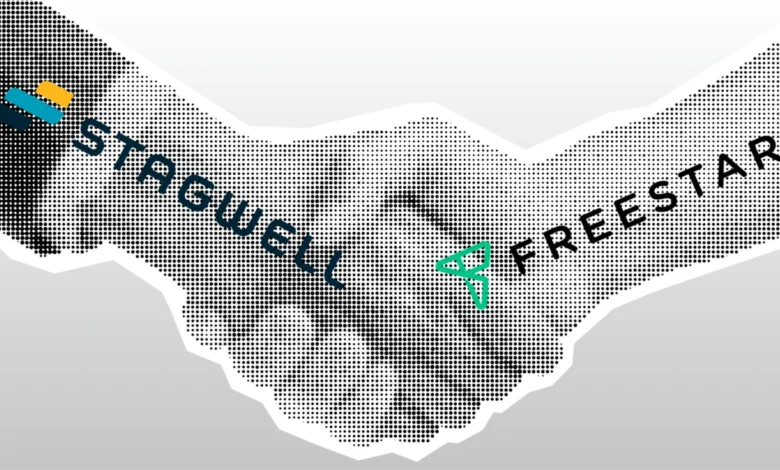
Stagwell, the ambitious marketing services network led by former political strategist and pollster Mark Penn, has announced its acquisition of Freestar, a prominent technology firm specializing in digital publisher monetization. This move marks a significant evolution in Stagwell’s "agentic" strategy, positioning the holding company to command greater control over the digital advertising supply chain. By integrating Freestar’s extensive ad-tech infrastructure, Stagwell intends to bridge the gap between high-quality publisher inventory and the sophisticated AI-driven media buying requirements of its global client base.
The acquisition brings into the Stagwell fold a company that currently processes approximately 50 billion ad requests every month. Freestar’s client roster, which spans over 1,000 digital properties, includes high-traffic media entities such as The Associated Press, Fortune, The Boston Globe, and Essence. For Stagwell, this represents not just an expansion of its technological capabilities, but a deepening of its direct relationships with premium content creators—a critical asset in an era where the decline of third-party cookies has placed a premium on first-party data and direct publisher partnerships.
The Strategic Rationale: Integrating the AI Media Machine
At the core of this acquisition is the integration of Freestar’s technology into Stagwell’s proprietary "AI Media Machine." Stagwell has been vocal about its pivot toward an "agentic" operating system, which utilizes artificial intelligence to automate and optimize media buying, creative production, and audience targeting.
By absorbing Freestar, Stagwell is effectively creating a "streamlined supply path." In the fragmented world of programmatic advertising, supply path optimization (SPO) has become a primary focus for advertisers looking to reduce the "ad tech tax"—the layer of intermediaries that take a cut of ad spend before it reaches the publisher. By owning the technology that manages the publisher inventory, Stagwell can offer its clients a more transparent, efficient, and direct route to high-value audiences. This vertical integration allows Stagwell to move beyond being a traditional agency holding company and toward functioning as an integrated media-tech powerhouse.
A Chronology of Stagwell’s Aggressive Expansion
Stagwell’s rise has been defined by rapid, deliberate acquisition. Since the 2020 merger between Penn’s Stagwell Group and the legacy holding company MDC Partners, the organization has aggressively pursued assets that complement its digital-first philosophy.
- 2020-2021: The formation of the current Stagwell entity, focused on combining data-driven insights with creative output.
- 2022: Stagwell began focusing heavily on the "connected media" ecosystem, acquiring specialized firms to bolster its performance marketing and e-commerce capabilities.
- 2023: The company launched its AI-focused initiatives, centering on the "AI Media Machine" as a core product for its agencies, including Anomaly, 72andSunny, and Assembly.
- 2024: The acquisition of Freestar marks a pivot toward infrastructure ownership. By acquiring the "pipes" of the advertising ecosystem, Stagwell is signaling that it no longer wishes to be a tenant in the programmatic landscape, but rather a landlord.
Data-Driven Value: The Scale of the Deal
To understand the implications of this acquisition, one must examine the scale of Freestar’s operations. Handling 50 billion ad requests monthly puts Freestar in the upper echelon of ad-tech intermediaries. For context, this volume allows for massive data collection regarding user behavior, page performance, and bidding patterns.
For publishers, Freestar provides the "heavy lifting" of header bidding, a technique that allows multiple ad exchanges to bid on a single ad slot simultaneously. By mastering this, Freestar ensures that publishers maximize their revenue yield per impression. For Stagwell, this data-rich environment provides a distinct competitive advantage. Their AI Media Machine can now train its algorithms on a proprietary stream of high-quality publisher data, potentially allowing for more accurate bid predictions and better brand-safety outcomes for its clients.
Industry Perspectives and Market Reactions
While official statements from Stagwell executives emphasize the "streamlined supply path," industry analysts view this move as a defensive and offensive play against the "Big Tech" walled gardens. As Google and Meta continue to dominate the lion’s share of digital ad spend, holding companies are increasingly looking for ways to create their own "walled gardens" of sorts.
"The industry is moving toward a consolidation of the supply chain," says a senior media analyst familiar with the transaction. "Agencies are tired of paying for middlemen who don’t add value. By bringing Freestar in-house, Stagwell is essentially reclaiming a portion of the programmatic margin that used to leak out to third-party exchanges."
From the perspective of publishers like The Associated Press or Fortune, the benefit is equally clear. Joining forces with a global network like Stagwell provides these publishers with more robust demand-side access. It ensures that their inventory is being seen by the high-budget advertisers within Stagwell’s agency network, potentially driving higher eCPMs (effective cost per mille) than they might see on the open exchange alone.
The Impact of "Agentic" Media Buying
The concept of the "AI Media Machine" is not merely marketing jargon; it reflects a fundamental shift in how media is traded. In a traditional agency model, a team of media buyers would manually adjust bids and targets across various platforms. In the Stagwell model, an AI agent takes over the heavy lifting, analyzing the performance of ads in real-time and adjusting budget allocations instantaneously.
Freestar’s technology provides the raw material for this machine. Because Freestar operates at the publisher level, it provides granular data about the context of the ad placement—the content of the article, the device type, and the engagement metrics of the user. This contextual data is becoming increasingly valuable as privacy regulations make it harder to track individuals across the web. If Stagwell can feed this high-quality, contextual publisher data into its AI agents, it may be able to achieve superior performance for clients without relying on invasive tracking mechanisms.
Broader Implications for the Ad-Tech Landscape
This acquisition could signal a trend of "de-intermediation" across the advertising industry. For years, the industry saw an explosion of ad-tech startups, creating a complex, opaque, and expensive supply chain. Now, the pendulum is swinging back toward consolidation. Large holding companies are realizing that to compete with the automated power of Google, they need to own the technology that touches the publisher.
If the Stagwell-Freestar integration proves successful, other holding companies—such as Publicis, Omnicom, and WPP—may feel increased pressure to acquire or build similar supply-side technologies. This could lead to a wave of mergers where media agencies essentially become large-scale software firms that also happen to have creative departments.
Challenges and Future Outlook
Despite the potential synergies, the integration of Freestar will not be without challenges. Maintaining the neutrality of a monetization platform while it is owned by an agency holding company is a delicate balance. Publishers may harbor concerns about whether their data is being used to benefit Stagwell’s clients exclusively, or if their inventory will be prioritized in a way that disadvantages other bidders.
Stagwell will need to navigate these concerns with transparency. To retain Freestar’s 1,000+ publisher clients, they must demonstrate that the platform remains a robust and equitable marketplace. Furthermore, the technical challenge of integrating a legacy platform into a sophisticated AI operating system is significant. Success will depend on the speed with which Stagwell can deploy these AI agents across the Freestar ecosystem.
Conclusion
The acquisition of Freestar by Stagwell is a pivotal moment in the ongoing transformation of the advertising industry. By verticalizing the media supply chain and marrying it with advanced AI, Stagwell is positioning itself at the forefront of a new era of digital media buying. While the immediate focus is on efficiency and "streamlined supply paths," the long-term objective is clear: to build a proprietary ecosystem that can outpace the traditional, fragmented programmatic model. As the industry continues to grapple with the challenges of a post-cookie world, Stagwell’s move serves as a blueprint for how agencies must evolve to survive and thrive in an AI-driven, data-dependent future. The success of this venture will likely be measured by the performance gains for their clients and the retention of their premium publisher partners in the coming fiscal quarters.