Beyond the Checkout: Why Modern Infrastructure is the Final Frontier for E-commerce Growth


Most e-commerce merchants have spent the better part of the last decade optimizing the "front-of-house" experience. They have streamlined navigation, adopted mobile-first design principles, and implemented single-page checkouts to minimize friction. Yet, despite these granular improvements, cart abandonment remains a persistent obstacle to profitability. New research from a collaborative study between WooCommerce and Stripe, which surveyed over 1,400 global consumers across North America, Europe, and the Asia-Pacific region, suggests that the industry may have reached a point of diminishing returns with visual design alone. The data indicates that the true culprit behind modern cart abandonment is not an unsightly button or an extra form field, but rather a set of invisible, backend infrastructure failures that the average merchant is currently ill-equipped to detect.
The research highlights a critical shift in the 2026 digital commerce landscape: 75% of surveyed shoppers abandoned their carts at some point during the buying process. Of those instances, a staggering 63% were attributed to technical or systemic payment friction. Specifically, 28% of all checkout-related abandonment is caused by failed transactions—not because of insufficient funds or fraud, but due to "soft failures" such as network timeouts, routing errors, and failed authorization retries.
The Anatomy of a Soft Failure
In the current global financial ecosystem, the path a transaction takes to reach an issuing bank is highly complex. Every time a consumer clicks "pay," the data must travel through various gateways, acquiring banks, and authorization networks. If a merchant’s payment stack is configured to use a single, static route, any disruption along that path results in a failed transaction.

Industry experts note that this is a "silent killer" of revenue. A merchant sees a failed transaction and assumes the customer changed their mind, when in reality, the system simply failed to process the request due to a transient network error. Advanced infrastructure now allows for "adaptive retries," where a payment processor can intelligently reroute a failed attempt through a different, more stable path. This technical nuance is the difference between a completed sale and a lost customer. Without the ability to detect and automatically resolve these soft failures, merchants are inadvertently leaving money on the table, often blaming their marketing or pricing strategies for a loss that was entirely preventable.
Regional Nuances and the Localization Mandate
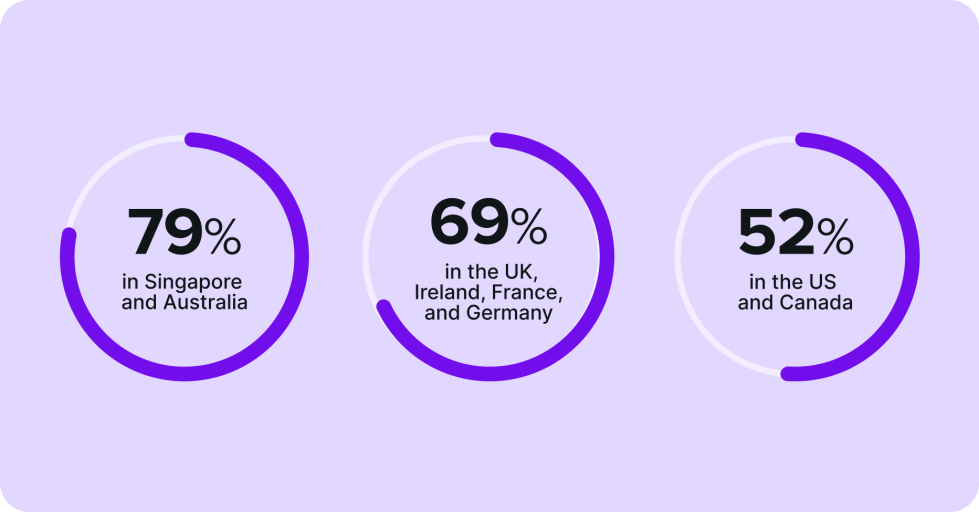
As digital commerce becomes increasingly global, the "one-size-fits-all" approach to payments is becoming obsolete. The 2026 data confirms that 59% of shoppers engaged in at least one international purchase within the past year. However, cross-border success is tethered to the availability of local payment methods. The research found that 80% of international shoppers consider the availability of their preferred payment method a decisive factor in whether they complete a purchase.
The discrepancy between regional preferences is stark. For example, in the Netherlands, the local payment method iDEAL is a cornerstone of consumer trust; integrating it has been shown to increase conversion rates by an average of 39%. Similarly, in China, the adoption of Alipay is nearly mandatory for market entry, with data suggesting conversion boosts as high as 91% when it is offered.
This trend is most pronounced in the Asia-Pacific region, where mobile-first infrastructure has led to a dominant reliance on digital wallets. In this market, 40% of consumers favor digital wallets, and 20% prioritize one-click checkout options. For merchants looking to expand globally, the report suggests that payment localization must be treated with the same strategic priority as logistics, language translation, and tax compliance. It is no longer enough to simply accept international credit cards; the checkout must "speak the local language" of the consumer’s financial ecosystem.
The Evolution of Payment Modality: BNPL and Digital Wallets
Beyond geography, the type of product and the price point of the purchase dictate the payment preference. The rise of "Buy Now, Pay Later" (BNPL) services has transformed the purchasing power of the average consumer, particularly regarding high-ticket items. According to the study, 60% of global shoppers have utilized BNPL services, with usage scaling in direct correlation to the cart value.
For purchases exceeding $250, 28% of shoppers prefer installment-based payments. Perhaps more importantly, 18% of consumers state they are less likely to finalize a high-value purchase if such financing is not an available option. This creates a clear implication for retailers: the absence of flexible financing on expensive goods is a direct deterrent to conversion.
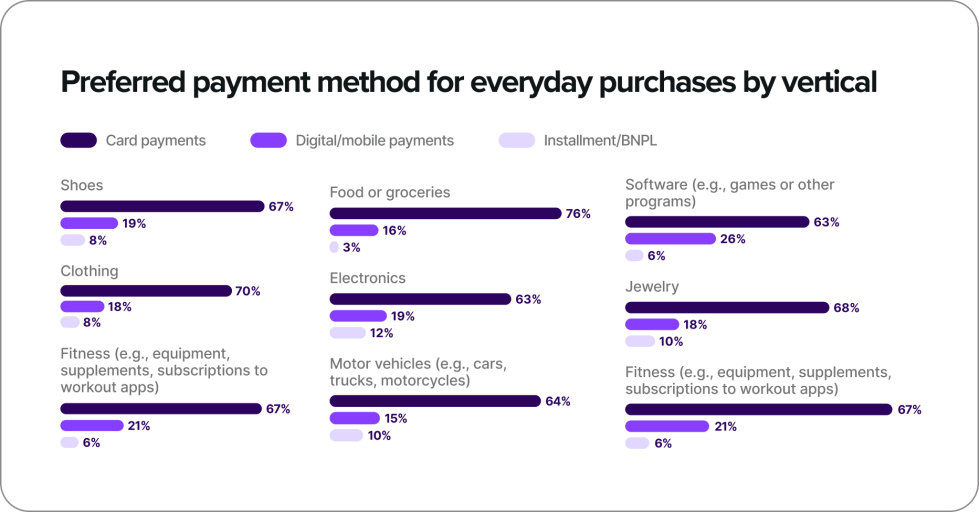
Furthermore, category-specific preferences have emerged. Digital wallets are the preferred method for software and fitness-related purchases, where speed and the avoidance of manual data entry are prioritized. Conversely, BNPL maintains a stronger foothold in electronics, furniture, and jewelry sectors. These findings underscore a broader trend: the modern consumer expects their checkout experience to be context-aware. They expect the system to present the most relevant options based on the items in their cart, the device they are using, and their geographical location.
Generational Shifts and Future-Proofing
The demographic data suggests that younger consumers—specifically those aged 18 to 29—are the primary drivers of these shifts. These shoppers adopt alternative payment methods at rates roughly 40% higher than the general population. They are the most frequent users of digital wallets, one-click checkouts, and installment plans.
Historical trends in e-commerce, such as the transition to free shipping and the rise of social commerce, suggest that the preferences of younger cohorts eventually become the standard for all age groups. Therefore, the infrastructure that retailers build today is an investment in their future competitiveness. Retrofitting a checkout system every time a new payment trend emerges is inefficient and costly. Instead, the report advises a modular architectural approach. By utilizing platforms that allow for the seamless integration of new payment methods and intelligent routing, merchants can ensure their checkout remains relevant without undergoing a complete digital overhaul.
Strategic Implications for Merchants
The evidence provided by the WooCommerce and Stripe collaboration suggests that the next phase of e-commerce optimization will move away from front-end design and toward back-end intelligence. To address these findings, merchants should focus on three critical diagnostic steps:
- Auditing Authorization Rates: Merchants must demand transparency from their payment processors. It is essential to differentiate between "hard declines" (genuine fraud or insufficient funds) and "soft declines" (network errors or routing issues). If the processor cannot provide this split, the merchant is essentially flying blind.
- Aligning Payment Methods with Traffic: Retailers should perform a gap analysis comparing their current payment offerings with the geographic origin of their traffic. If a store receives significant traffic from a region but fails to offer the local payment method dominant in that area, it is experiencing "leakage" that will not appear in traditional sales reports.
- Stress-Testing High-Value Conversions: For stores with an average order value above $200, it is vital to test how the absence of BNPL impacts checkout completion. Analyzing drop-off rates specifically at the final stage of the checkout process for higher-value carts can reveal if financing is the missing link.
Conclusion: The Infrastructure Advantage
The digital marketplace of 2026 is defined by high consumer expectations and intense competition. The research confirms that the barrier to growth is no longer just about attracting traffic, but about ensuring that the conversion path is technically robust enough to handle the complexities of a globalized, multi-modal payment environment.
As businesses continue to navigate this landscape, the emphasis on flexible, open-source commerce infrastructure will likely grow. By leveraging automated payment intelligence—such as intelligent routing, adaptive retries, and localized payment suites—merchants can transform their checkout from a simple collection point into a dynamic, high-converting engine. The data is clear: the path to growth lies in the details of the transaction, where invisible infrastructure, when optimized correctly, can recover millions in lost potential.