Salesforce Launches Landmark Initiative to Bridge UK Digital Skills Gap by Providing Free Slack Enterprise Access to Millions of Students


In a strategic move to address the widening digital divide and prepare the next generation of the British workforce for an AI-centric economy, Salesforce has announced a global-first initiative to provide free access to Slack Enterprise for millions of higher and further education students across the United Kingdom. This ambitious project, which serves as a cornerstone of the company’s $6 billion investment in its UK operations through 2030, aims to integrate professional-grade collaboration tools directly into the academic lifecycle. By doing so, Salesforce intends to equip students with the practical AI literacy and digital fluency required by modern enterprises, effectively bridging the gap between theoretical classroom learning and the demands of the contemporary workplace.
The initiative comes at a critical juncture for the UK labour market. Recent data indicates that approximately 61% of current UK workers receive no formal training in artificial intelligence, a deficiency that threatens national productivity as the economy shifts toward an "agentic" era of work. Simultaneously, the UK faces the persistent challenge of supporting the one million young people currently classified as NEET—not in education, employment, or training. By embedding Slack—the same operating system used by over 200,000 global organisations—into the daily routine of university and college students, Salesforce is creating a "sandbox" environment where students can master collaborative AI workflows before they even enter the job market.
Chronology of Investment and Strategic Growth
The launch of this student access program follows a series of significant infrastructure and educational investments made by Salesforce in the UK over the past eighteen months. The timeline of these developments reflects a deliberate attempt by the technology giant to solidify its footprint in the British AI ecosystem:
- Early 2026: Salesforce launches the "Future Trailblazers" initiative, an employee-led programme designed to deliver foundational AI literacy. The programme achieves significant momentum, training 14,500 students in its first few months.
- May 2026: The company unveils its expanded London Campus, featuring a dedicated AI Centre at Devonshire Square. This facility serves as a hub for workshops and professional development, bridging the gap between the firm and local academic communities.
- October 2026: Salesforce formalises the nationwide rollout of free Slack Enterprise access for higher and further education institutions, marking a transition from sporadic workshop-based training to systemic, platform-wide integration.
- 2030 Horizon: The current initiatives are aligned with Salesforce’s broader $6 billion UK investment pledge, which focuses on sustainable digital growth, AI research, and human capital development.
Addressing the Skills Deficit: A Data-Driven Approach
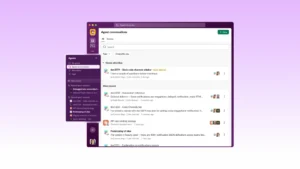
The rationale behind providing Slack Enterprise to students is rooted in the necessity of workplace "digital fluency." While students are often described as digital natives, there is a stark difference between personal digital usage and the complex, AI-integrated collaborative environments found in enterprise settings. Slack Enterprise facilitates this transition by providing a centralised workspace where students can interact with AI agents, manage academic projects, and streamline campus services in a manner that mirrors real-world business operations.
The inclusion of Slackbot—a native AI tool that provides instant, plain-language answers based on workspace discussions and documentation—is particularly significant. By using this tool, students learn how to query internal knowledge bases effectively, a skill that is increasingly synonymous with modern project management and research. Furthermore, the ability for universities to deploy custom AI agents within channels allows for the automation of administrative tasks, such as coordinating study groups or managing library queries, thereby exposing students to the practical application of agentic AI.
Official Perspectives on the Digital Transition
Zahra Bahrololoumi CBE, President and CEO of Salesforce UK & Ireland, has emphasised that the initiative is not merely about software distribution, but about long-term economic resilience. "Young people will define the next decade of UK business," Bahrololoumi noted. "It is imperative that students across all disciplines learn to use AI responsibly. By bringing Slack and AI-powered tools directly into further and higher education, we are giving young people hands-on experience with the exact technology used by leading organisations. This creates a stronger talent pipeline and ensures that the benefits of technology are felt across every postcode in the UK."
Academic leadership has responded with similar urgency. Professor Ashley Braganza, Chair in Business Transformation and Director of the Centre for AI: Social and Digital Innovation at Brunel University of London, underscored the importance of this shift. "Students need to translate theory into hands-on experience that reflects the changes AI is driving," he stated. "For universities, embedding enterprise-grade technology directly into everyday learning provides a secure, trusted platform to modernise campus collaboration and align curricula with fast-moving industry needs, ensuring students leave as confident, job-ready graduates."
Security, Compliance, and Administrative Sovereignty
A primary concern for educational institutions regarding the adoption of new digital tools is data privacy and security. Salesforce has addressed these concerns by maintaining that every participating institution retains full administrative control over its workspace. The platform is designed to be fully compliant with UK data protection regulations, ensuring that student information is siloed and protected. Crucially, the company has pledged that student data generated within these educational workspaces is never utilised to train external AI models, providing a "walled garden" approach that balances innovation with necessary privacy safeguards.
This administrative autonomy allows colleges and universities to set their own guardrails, customising permissions based on the unique needs of their faculty and student bodies. Whether used for research collaboration, student support services, or cross-departmental communication, the platform functions as an extension of the university’s existing IT infrastructure rather than an intrusive third-party service.
Broader Implications for the UK Economy
The long-term success of this initiative will likely be measured by its contribution to the UK Government’s national goal of upskilling 10 million workers by 2030. As the UK attempts to maintain its position as a global leader in artificial intelligence and technology, the pipeline of talent graduating from higher education becomes the primary variable in the equation.
If students are accustomed to AI-augmented workflows upon graduation, the "onboarding" period for new employees in the private sector will be significantly reduced. Employers will no longer need to spend extensive resources teaching basic AI etiquette and collaborative platform usage, as these skills will have been honed during the undergraduate years.
Furthermore, the democratisation of access—ensuring that students in various regions and types of institutions have the same access to top-tier enterprise software—is a vital step toward geographical equality in the technology sector. By focusing on the "everyday conversations" that define academic life, Salesforce is attempting to lower the barrier to entry for students who might otherwise be intimidated by the rapid pace of AI advancement.
Future Outlook and Scalability
As Salesforce continues to roll out this initiative, the focus will likely shift toward the integration of more sophisticated agentic workflows. With the London AI Campus already serving as a focal point for industry-academic collaboration, it is expected that the company will continue to refine its pedagogical offerings to match the evolving landscape of AI.
The initiative represents a shift in the corporate social responsibility model: rather than providing one-off grants or hardware donations, Salesforce is providing the infrastructure for a digital-first educational experience. Whether this model will be adopted by other enterprise technology firms remains to be seen, but the scale of the investment suggests that Salesforce is setting a new standard for how private corporations should interact with the public education system in the 21st century.
In summary, the provision of Slack Enterprise to millions of UK students is a calculated, long-term investment in the national workforce. By aligning academic tools with industry-standard practices, Salesforce is attempting to create a seamless transition from the lecture hall to the office, ensuring that the UK’s next generation of professionals is not only familiar with AI, but is capable of leveraging it to drive productivity and innovation from their very first day of employment.