The Evolution of Executive Search: Tim McNicholas on Shaping Global Leadership and the Rise of Strategic HR

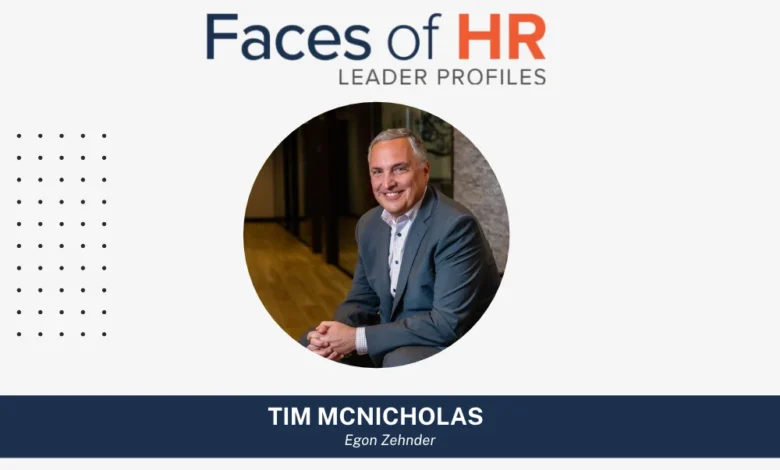
Tim McNicholas never imagined that a career initially rooted in management consulting would eventually lead him to become one of the most influential figures in global executive search and human resources leadership. Today, as a veteran leader heading the U.S. human resources practice at Egon Zehnder, McNicholas stands at the intersection of corporate transformation, organizational culture, and talent advisory. His journey spans continents, high-stakes corporate turnarounds, and a profound shift in how major global organizations view the human resources function.
As corporate landscapes grow increasingly complex—driven by technological disruption, shifting workforce demographics, and global economic volatility—the role of human resources has undergone a radical metamorphosis. No longer confined to administrative compliance and payroll management, modern HR is a core driver of enterprise strategy. McNicholas’s career trajectory mirrors this evolution, offering a unique vantage point on what it takes to identify, cultivate, and place the visionary leaders required to steer multinational corporations through turbulent times.
Early Roots and the Siemens Turning Point
McNicholas’s entry into the upper echelons of corporate talent strategy was forged during his tenure at Siemens Corporation’s global headquarters in Munich, Germany. Working within a massive multinational enterprise provided him with a panoramic view of organizational dynamics that few young consultants experience.
At Siemens, McNicholas was entrusted with a high-stakes mandate: designing a high-potential recruiting program reporting directly to the CEO. This pivotal assignment required identifying future leaders capable of scaling complex international operations. The success of that project catalyzed a broader portfolio of talent initiatives, culminating in a comprehensive redesign of the education and leadership development programs for the corporation’s senior executives.
As his tenure in Munich concluded, McNicholas faced a career crossroads. Preparing for his return to the United States, he sought an environment where he could scale his expertise in organizational design and leadership development. Encouraged by a senior Siemens executive who recognized his aptitude for talent advisory, McNicholas transitioned into the executive search industry, eventually finding his professional home at Egon Zehnder.
Navigating Misalignment: The Value of Career Resilience
Every distinguished career is shaped by critical inflection points, including professional missteps. Reflecting on his early professional hurdles, McNicholas identifies taking a role at a management consultancy with a misaligned cultural framework as his most valuable mistake.
As a young parent balancing grueling hours across nights and weekends, McNicholas found himself deeply unsatisfied in an environment where company values clashed with his personal priorities. With the unwavering support of his wife, he embarked on a process of rigorous self-evaluation. This period of introspection prompted him to seek out organizations whose core philosophies aligned with his own.
That corrective action ultimately opened the door to international assignments, cultural immersion, and a permanent shift toward executive search—proving that professional resilience and value alignment are essential prerequisites for long-term career sustainability.
The Modern Evolution of Human Resources
Throughout his tenure leading Egon Zehnder’s U.S. human resources practice, McNicholas has witnessed a fundamental paradigm shift in how corporations perceive and utilize human capital.
For decades, human resources fought for a "seat at the table," advocating for a voice in executive-level decision-making. According to McNicholas, that battle has largely been won. Chief Human Resources Officers (CHROs) and Chief People Officers (CPOs) are no longer invited into boardroom discussions as an afterthought; they are expected to co-author corporate strategy, spearhead large-scale digital transformations, and anchor organizational culture.
"CEOs now want greater impact from their human resources teams, and they want those teams to drive transformation and culture," McNicholas observes. "Human resources has never had a greater opportunity to impact company strategy."
Despite this elevated status, the industry faces a significant structural bottleneck: a talent shortage. Organizations across sectors are rapidly expanding their expectations for HR leadership, yet the pipeline of strategic human resources professionals equipped to handle multifaceted global transformations remains constrained. McNicholas points out that the greatest challenge facing the industry today is not a lack of recognition for HR’s value, but a shortage of seasoned leaders at all levels capable of meeting these evolving demands.
From Search to Fit: The Human Element in Executive Recruitment
The executive search industry has itself undergone a massive transformation. Historically transactional, executive search focused primarily on matching a candidate’s resume and technical skill set to a specific job description. Today, McNicholas notes that the discipline has pivoted toward a philosophy of holistic "fit."
Modern executive search demands a deep, nuanced understanding of a candidate’s core values, underlying drivers, psychological makeup, and self-identity. In an era where corporate culture can make or break a merger or a market expansion strategy, identifying leaders who can authentically integrate into an organization while challenging its status quo is paramount.
This evolution requires search consultants and corporate leaders alike to prioritize psychological safety and empathy. McNicholas emphasizes that professionals entering the executive search and HR domains must genuinely care about people, helping candidates find environments where they can bring their authentic selves to work. The most satisfying aspect of the profession, he notes, is witnessing the compounding impact of placing the right leader in the right role—sparking organizational change that drives superior business performance.
The Future of Executive Search: Artificial Intelligence and Human Judgment
As the corporate world looks toward the next five years, the integration of artificial intelligence (AI) is set to reshape every facet of the executive search and human resources landscape. Predictive analytics, automated sourcing algorithms, and machine learning models are already streamlining candidate identification and talent mapping.
However, McNicholas cautions against over-reliance on technology in domains where human judgment remains irreplaceable. While the mechanics of how executive search is conducted will likely be unrecognizable within a decade, the core pillars of success will remain unchanged: human judgment, empathy, and trusted relationships.
Organizations that successfully balance technological efficiency with deep, interpersonal evaluation will dominate the market. For practitioners entering the field, McNicholas advises cultivating high levels of resilience to navigate ongoing technological and structural disruption.
Legacy and Ongoing Impact
Reflecting on a career dedicated to shaping the leadership rosters of the world’s most prominent organizations, McNicholas measures his success not just in completed mandates, but in human impact. Whether mentoring the next generation of HR executives, helping candidates navigate complex career transitions, or advising CEOs on organizational restructuring, his focus remains steadfastly human-centric.
In an era defined by rapid technological change and market uncertainty, the insights of veteran leaders like Tim McNicholas serve as a vital roadmap for corporations seeking to harness the full potential of their people. As human resources continues to cement its status as a primary engine of corporate strategy, the demand for thoughtful, values-driven talent advisory will only continue to grow.