EEOC Rescinds Criminal Background Check Guidance Signaling Shift in Disparate Impact Enforcement

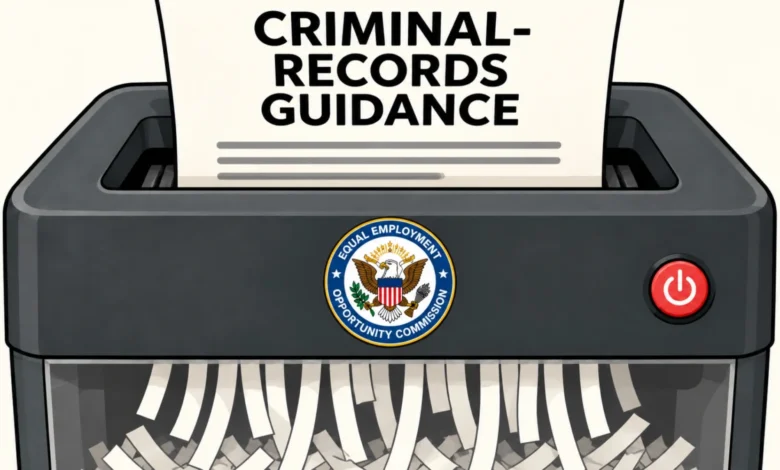
The Equal Employment Opportunity Commission (EEOC) has officially rescinded its 2012 enforcement guidance regarding the use of arrest and conviction records in employment decisions. This move, announced on October 29, 2026, marks a significant departure from over a decade of federal oversight strategy. While the rescission aligns with the current administration’s broader efforts to curtail the use of disparate-impact theories in civil rights litigation, it creates a complex legal landscape for employers who must now navigate a web of conflicting federal, state, and local mandates.
Chronology of the EEOC’s Regulatory Shift
The 2012 guidance served as the primary regulatory framework for how employers evaluated criminal histories for over 14 years. It was born out of a desire to prevent what the commission termed "disparate impact"—a legal theory holding that employment practices, even if neutral on their face, are discriminatory if they disproportionately exclude protected classes such as Black and Latino applicants.
The erosion of this guidance did not occur in a vacuum. The timeline of this regulatory reversal is as follows:
- April 2012: The EEOC publishes its "Enforcement Guidance on the Consideration of Arrest and Conviction Records in Employment Decisions Under Title VII of the Civil Rights Act of 1964." The document encouraged individualized assessments and cautioned against blanket hiring bans.
- April 2025: President Trump issues an executive order titled "Restoring Equality of Opportunity and Meritocracy," which explicitly instructs federal agencies to deprioritize disparate-impact enforcement and suggests the elimination of such frameworks where legally permissible.
- June 2026: The Department of Justice (DOJ) Office of Legal Counsel releases an opinion arguing that the EEOC’s interpretation of disparate-impact liability, particularly regarding criminal background checks, lacks a firm constitutional basis and overreaches the agency’s statutory authority.
- October 28, 2026: The EEOC votes to formally rescind the 2012 guidance.
- October 29, 2026: The commission issues a public statement confirming the rescission, noting that previous, superseded policies would not be automatically reinstated.
The Rationale Behind the Rescission
The core of the legal debate centers on the interpretation of Title VII of the Civil Rights Act of 1964. The 2012 guidance was rooted in the premise that because arrest and incarceration rates are higher for certain racial minorities, a policy that automatically excludes anyone with a criminal record inherently discriminates against those groups.
The current administration’s shift, as outlined in the June 2026 DOJ opinion, suggests that Title VII requires evidence of intent to discriminate. By moving away from the disparate-impact model, the EEOC is signaling that federal regulators will no longer seek to penalize employers for hiring practices that are neutral on their face, even if those practices yield statistically unequal outcomes across demographic groups. This change in philosophy reflects a broader movement within the federal government to prioritize "colorblind" regulatory enforcement over outcomes-based oversight.
The Persistence of Disparate Impact Liability
Despite the EEOC’s change in stance, legal experts warn that employers should not interpret this as a "blank check" to implement discriminatory hiring practices. The rescission of federal guidance does not equate to the repeal of the underlying statute. Title VII remains the law of the land, and private plaintiffs maintain the right to sue employers for discriminatory hiring practices under the disparate-impact framework.
Courts are not bound by the EEOC’s internal enforcement policies. If a private litigant brings a class-action lawsuit alleging that a company’s criminal background check policy disproportionately screens out protected groups without a legitimate business necessity, federal courts will still apply established jurisprudence—such as the precedents set in Griggs v. Duke Power Co.—to determine if the practice is discriminatory. Consequently, the EEOC’s new posture does not eliminate the risk of litigation; it merely shifts the burden of defense from agency-led investigations to private lawsuits.
The Patchwork of Local and State Obligations
Perhaps the most significant challenge for human resources departments in the wake of this announcement is the proliferation of state and local "Fair Chance" laws. Over the past decade, many jurisdictions have codified the principles formerly found in the EEOC’s 2012 guidance into local ordinances.

Cities such as Philadelphia, New York, and Los Angeles, along with various states, have enacted laws that mandate individualized assessments, prohibit the inquiry into criminal history until a conditional offer of employment is made, and require a "nexus" analysis—an assessment of whether the specific criminal conviction is directly related to the duties of the position. These local laws are unaffected by the EEOC’s decision. Employers operating in multiple states will now find themselves in a position where federal enforcement is lax, but local enforcement is stringent, necessitating a hyper-localized approach to background screening.
Compliance Strategies in a Changing Environment
For organizations reviewing their hiring protocols in light of the rescission, legal counsel suggests a three-pronged approach to mitigate risk:
1. Maintaining the Business Necessity Test: Even without federal pressure to conduct individualized assessments, companies should continue to document why certain criminal offenses preclude employment in specific roles. A policy that disqualifies a candidate for a decade-old misdemeanor non-related to the job duties remains a high-risk liability if challenged in court.
2. Auditing Automated Workflows: Many modern applicant tracking systems (ATS) are programmed with automatic "hard stops" that flag or reject candidates based on criminal records. If these systems are not carefully calibrated, they may trigger an automatic rejection that bypasses the mandatory notices required by the Fair Credit Reporting Act (FCRA). The FCRA, which is a federal law overseen by the Federal Trade Commission, requires specific disclosures and a "pre-adverse action" notice process that cannot be ignored simply because the EEOC has changed its enforcement focus.
3. Regional Compliance Mapping: HR departments must maintain a map of all jurisdictions in which they operate. If an employer removes an individualized assessment requirement because it is no longer "required" by the EEOC, they may inadvertently violate a municipal ordinance in a city like Philadelphia, which explicitly mandates such reviews.
Future Implications and Data Trends
While the immediate impact of the rescission is administrative, the long-term consequences involve how corporate America balances risk management with workforce expansion. Statistical data from the last five years indicates that approximately 90% of large U.S. employers perform some form of criminal background check. Before 2012, many of these checks were binary—a "yes" or "no" based on the presence of a record.
The 2012 guidance forced a shift toward nuanced, case-by-case analysis. With this requirement removed, some companies may be tempted to return to simpler, cheaper, and faster binary screening methods. However, analysts suggest that the talent acquisition landscape—characterized by historically low unemployment rates and a competitive labor market—may naturally discourage overly restrictive hiring practices. Employers who ignore the potential of qualified candidates due to minor or irrelevant criminal history may find themselves at a competitive disadvantage, regardless of the regulatory climate.
Ultimately, the rescission of the EEOC guidance represents a fundamental change in the "tone at the top" of federal civil rights enforcement. While it offers employers more flexibility, it also creates a vacuum where the responsibility for equitable hiring rests more heavily on the shoulders of private corporations and local legislative bodies. As the dust settles, legal observers will be watching to see if the DOJ’s narrow interpretation of Title VII holds up in federal court or if it invites a new wave of private litigation that seeks to redefine the standards of workplace equality.