New Tools for Merchants: A Roundup of Q4 Ecommerce Innovations and Agentic Commerce Advancements


The ecommerce landscape is undergoing a profound transformation as businesses pivot from traditional automation to agentic commerce—systems capable not just of executing repetitive tasks, but of reasoning, making decisions, and managing complex workflows autonomously. This week’s release cycle highlights a surge in AI-integrated tools designed to optimize B2B discovery, streamline cross-border payments, and provide granular control over marketing and tax compliance. As merchants navigate an increasingly fragmented digital environment, these tools aim to consolidate operations, reduce operational overhead, and enhance the customer experience through intelligent, data-driven orchestration.
The Rise of Agentic Commerce: From Automation to Autonomy
The most significant trend defining the current retail technology wave is the integration of "agentic" capabilities. Unlike standard chatbots that simply retrieve information, these new agents are being embedded directly into the merchant’s core tech stack.

Lightspeed Commerce, for instance, has introduced agentic features into its point-of-sale platform. By analyzing a retailer’s historical inventory, purchasing patterns, and sales data, the Lightspeed AI agent can now recommend specific procurement steps or marketing pivots, preparing these actions for human review. This shift represents a move toward "managed autonomy," where the software identifies revenue opportunities that might otherwise go unnoticed by busy staff.
Similarly, Marklo has secured $5 million in seed funding to bring similar agentic marketing logic to Shopify brands. By monitoring weekly sales and inventory levels, the platform constructs comprehensive campaign strategies. The implications for mid-sized merchants are substantial; such tools effectively democratize high-level data analysis, allowing small teams to operate with the strategic depth of larger enterprises.
This trend extends to the restaurant sector, where Square has launched a new Kiosk featuring a conversational voice layer. By utilizing AI that understands menu intricacies in real-time, Square is addressing labor shortages while simultaneously attempting to increase order accuracy and upsell efficiency at the point of sale.

Enhancing B2B Discovery and Market Access
B2B ecommerce has long lagged behind its B2C counterpart in terms of user experience, but that gap is narrowing. Algolia’s new native integration with Shopify B2B is a critical development for wholesalers and distributors. By creating a search interface that dynamically adjusts to a buyer’s specific contractual terms—hiding non-authorized products and displaying negotiated pricing—Algolia is effectively digitizing the traditional, high-touch sales representative experience.
For brands looking to scale internationally, the infrastructure for cross-border commerce is also being simplified. Fiserv’s launch of Commerce Hub arrives at a time when global merchant compliance and payment orchestration are becoming increasingly complex. The Hub provides a centralized API for managing local payment methods and settlement options, reducing the friction that often prevents merchants from entering new markets. This is complemented by the launch of EasyShop, a marketplace targeting 21 European countries. By automating VAT calculations and logistics, EasyShop allows retailers to tap into European demand without the prohibitive costs of maintaining independent international infrastructure.
Financial Infrastructure and Regulatory Compliance
As the regulatory environment regarding digital transactions tightens, startups and established firms are focusing on "compliance-as-a-service." FinStackk’s introduction of SalesTaxx is a direct response to the post-Wayfair v. South Dakota era, where the burden of tracking sales tax nexus across multiple U.S. states has become a significant liability for growing ecommerce companies. By integrating with major accounting and storefront platforms like QuickBooks and Shopify, SalesTaxx provides real-time monitoring of tax thresholds, effectively turning a complex accounting headache into an automated, proactive compliance workflow.

Furthermore, Oracle NetSuite has unveiled its QuickStart platform to provide startups with an AI-first financial foundation. By automating the full lifecycle of accounting—from accounts receivable to subscription management—NetSuite is positioning itself as the primary operating system for the next generation of tech-forward merchants, attempting to standardize financial health from the pre-revenue stage through to IPO.
Marketing and Audience Targeting Evolution
The landscape of performance marketing is also undergoing a fundamental shift, moving away from broad keyword bidding toward intent-based audience targeting. Nectar’s launch of "Customer Atlas" for Amazon Marketing Cloud is a prime example of this transition. By shifting the focus from keywords to shopper segments, Nectar allows brands to index their own purchase data against Amazon’s vast audience insights. This shift allows for the creation of sophisticated targeting and suppression lists, ensuring that advertising budgets are spent only on the highest-probability customers.
In the realm of influencer marketing, ShopBack has introduced SparkHub. Recognizing that Gen Z shoppers are increasingly influenced by creator-led content, the platform aims to solve the "tracking problem." By providing an end-to-end management tool for brands to approve content and attribute sales directly to specific creator links, SparkHub bridges the gap between top-of-funnel awareness and bottom-of-funnel conversion.

The Institutional Shift Toward Unified Systems
Perhaps the most ambitious development this week is the $3.5 million funding round for Loops, a company building an "AI operating system" for commerce. The objective is to unify the disparate tools merchants currently use—marketing, inventory, discovery, and customer service—under a single, agentic layer.
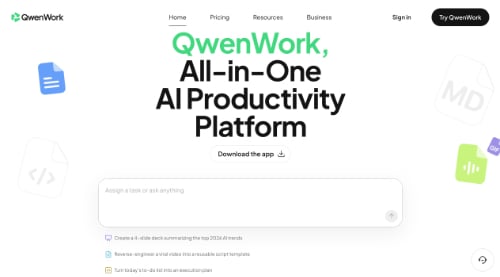
The rationale behind this move is based on the growing "tool fatigue" reported by retailers. According to industry data, the average enterprise merchant utilizes upwards of 20 distinct software platforms to run their business. Loops, along with platforms like QwenWork (Alibaba’s new productivity tool for China-based merchants), aims to reduce this complexity by serving as the central nervous system of the business.
Broader Implications and Future Outlook
The convergence of these technologies suggests a future where the role of the "merchant" is redefined from an operational manager to a strategic orchestrator. As AI agents begin to handle the "how" of business—the tax filings, the search result rankings, the inventory reorders, and the campaign scheduling—human effort is increasingly concentrated on the "why": brand identity, product innovation, and long-term customer relationships.
However, this transition is not without risk. The reliance on agentic platforms increases the need for robust data governance and oversight. If an AI agent makes a systematic error in pricing or tax calculation, the financial impact could be compounded across thousands of transactions before detection.
Moreover, as platforms like Google continue to integrate the "Universal Cart" into Search and Gemini, the boundary between the merchant’s own digital storefront and the aggregator’s interface is blurring. While this provides a frictionless experience for the consumer, it forces merchants to decide how much control they are willing to surrender to third-party AI interfaces in exchange for increased discoverability.
Conclusion
The current wave of ecommerce innovation is defined by the quest for efficiency through intelligence. Whether through the democratization of high-end B2B discovery tools, the automation of complex global tax compliance, or the rise of agentic marketing platforms, the message to merchants is clear: the era of manual operational management is drawing to a close. As these tools continue to mature and integrate into the broader digital ecosystem, the competitive advantage will go to those who can effectively leverage these AI-driven systems to create more personalized, seamless, and efficient shopping experiences. For now, the rapid infusion of capital into these sectors—evidenced by the significant rounds raised by Miracly, Marklo, and Loops—indicates that investors and developers alike believe the future of commerce is, above all else, autonomous.