A critical cybersecurity incident has sent shockwaves through the digital marketing, SEO, and web development communities following the revelation that attackers successfully hijacked the domain name system (DNS) records of DebugBear, a popular Real User Monitoring (RUM) and performance-tracking tool. The breach enabled malicious actors to covertly serve harmful JavaScript to websites relying on the service to track Core Web Vitals and user experience metrics. The incident has exposed the inherent vulnerabilities of third-party script dependencies, triggering urgent security audits across major enterprise websites, most notably resulting in a high-profile exploit against the international prediction market platform Polymarket.
The breach was officially brought to light on October 29, when DebugBear leadership issued an urgent advisory instructing all customers to immediately strip its monitoring scripts from their source code. Subsequent technical investigations conducted by cybersecurity firms, including Hudson Rock, revealed that the hijacked infrastructure was weaponized to inject malicious code designed to exploit authenticated browser sessions, execute unauthorized trades, and drain user funds. As technical teams scramble to remediate the fallout, the attack has reignited fierce industry debates regarding supply chain security, the trustworthiness of external performance widgets, and the overarching risks third-party integrations pose to modern web architecture.
Anatomy of a Supply Chain Attack: How the DNS Hijack Unfolded
The security compromise did not stem from a vulnerability within DebugBear’s internal application servers or cloud infrastructure. Instead, the attackers executed a targeted DNS hijacking campaign by compromising DebugBear’s account at its third-party domain registrar. By gaining unauthorized access to the registrar management console, the threat actors modified the domain’s DNS settings, redirecting specific asset requests to external servers controlled by the attackers.
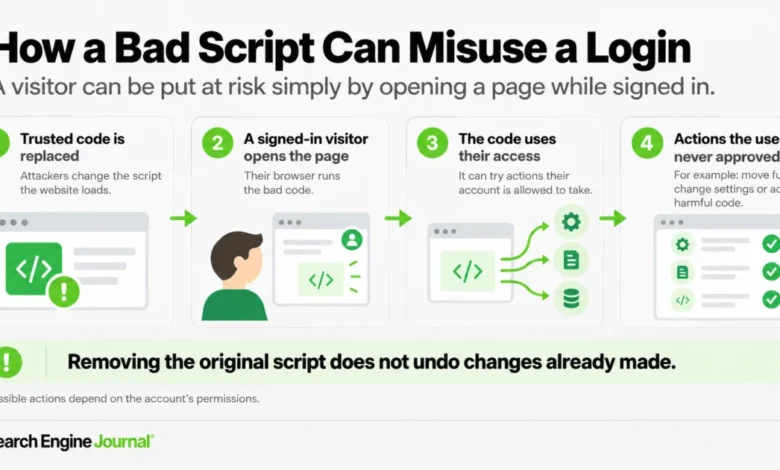
This sophisticated vector allowed the perpetrators to replace legitimate performance-monitoring scripts with weaponized payloads. Because web browsers automatically download and execute scripts hosted on trusted external domains referenced in a website’s header, the malicious code was seamlessly delivered to the end-users of any site embedding the DebugBear RUM script. The compromise effectively weaponized a trusted analytics tool into a distribution channel for malware, turning passive website visitors into targets without requiring direct breaches of the individual host servers.
Chronology of the Incident
The sequence of events unfolded rapidly across a 48-hour window in late October, catching both platform operators and enterprise security teams off guard:
- October 29: DebugBear detects anomalous behavior relating to its domain resolution and realizes its DNS records have been altered. The company immediately issues an emergency advisory via LinkedIn and other active channels, instructing all clients to strip the RUM tracking script from their websites without delay.
- October 29 (Later): Cybersecurity firm Hudson Rock publishes an analysis identifying malicious JavaScript payloads injected into the DebugBear script URL utilized by Polymarket. Concurrently, Polymarket reports a sudden platform outage on its international exchange and halts trading operations.
- October 30: Polymarket releases a comprehensive incident report confirming that the injected script exploited active user sessions to sell positions and illicitly move funds from customer accounts. DebugBear posts a follow-up update confirming the DNS registrar breach, noting that inbound email services to its domain are temporarily disrupted and directing users to official updates via its corporate X (formerly Twitter) account.
- Late October to Present: Affected website owners conduct sweeping forensic audits, rotating API keys, checking administrative access logs, and permanently dismantling third-party performance monitoring dependencies that lack subresource integrity (SRI) protections.
The Polymarket Exploit and the Threat of Session Hijacking
The most destructive consequence of the DebugBear DNS hijacking materialized on Polymarket, a prominent international prediction market and trading exchange. According to incident logs and forensic security disclosures, the malicious JavaScript injected via the compromised script was specifically tailored to scan the browser environment of any visitor who was already logged into the platform.

Rather than attempting traditional credential harvesting—such as phishing for passwords or logging keystrokes—the payload bypassed authentication barriers entirely by leveraging the permissions, session tokens, and trading clients already active in the victim’s browser. Once executed, the malicious code initiated unauthorized financial transactions, liquidated user positions, and drained funds from wallets associated with signed-in accounts.
This specific mechanism underscores a terrifying reality for modern web security: third-party script compromises do not merely threaten passive data collection; they can weaponize a trusted visitor’s active privileges against them. If a user maintains an open, authenticated session on a high-value platform—whether it is a financial exchange, an enterprise content management system, or an internal dashboard—a compromised auxiliary script gains the ability to act on the user’s behalf within the scope of their existing permissions.
Immediate Actions Required for Website Owners and SEO Teams
For SEO professionals, developers, and site reliability engineers who utilized DebugBear, the immediate priority has been damage control and comprehensive forensic verification. Security experts emphasize that simply removing a malicious script stops future code execution, but it does nothing to remediate unauthorized actions, database alterations, or data exfiltration that may have occurred while the script was active.
Development teams managing websites that integrated the tool have been advised to execute a rigorous, multi-step containment protocol:
- Immediate Script Removal: Purge all instances of the DebugBear Real User Monitoring script from HTML templates, tag management systems (such as Google Tag Manager), and content delivery networks.
- Access Control Audits: Review administrative logs across all connected platforms and databases for unauthorized user creation, modified permission structures, or suspicious API key generations during the window of vulnerability.
- Session Invalidation: Force a global logout for all active user sessions, resetting session tokens, cookies, and authentication keys to sever any persistence the attackers might have established.
- Credential Rotations: Update passwords, service account keys, SSH keys, and database credentials associated with the affected web properties as a standard defensive precaution.
- Forensic Log Analysis: Inspect server access and application logs for anomalous outbound requests, unusual data transfers, or unauthorized administrative actions executed while the compromised script was rendering on pages.
Broader Implications for Website Security and SEO
The DebugBear incident serves as a stark reminder of the fragile nature of modern web ecosystems. In the pursuit of granular performance metrics, Core Web Vitals optimization, and real-time user monitoring, organizations routinely inject third-party scripts with broad permissions directly into their Document Object Model (DOM). Every external script represents an inherent trust vector—a single point of failure that bypasses traditional perimeter defenses.
For SEO teams, whose primary focus traditionally centers on site speed, indexability, and ranking algorithms, this event highlights the convergence of marketing technology and enterprise security. Technical SEOs are increasingly responsible for auditing the third-party tags, tracking pixels, and performance widgets that populate modern web pages. When a performance-monitoring tool is successfully weaponized via DNS hijacking, the distinction between marketing infrastructure and cybersecurity vulnerability collapses entirely.
Industry analysts predict that this breach will accelerate the adoption of stricter security measures across the digital landscape. Organizations are expected to widely implement Subresource Integrity (SRI) hashes—which allow browsers to verify that fetched scripts have not been manipulated—alongside strict Content Security Policies (CSPs) that limit the execution domains of external scripts. Furthermore, SaaS vendors and performance monitoring providers will undoubtedly face heightened scrutiny from enterprise clients demanding transparent DNS security practices, multi-factor authentication locks on registrar accounts, and decentralized script delivery mechanisms.
As the digital community continues to process the fallout of the DebugBear attack, the overarching takeaway is clear: convenience must no longer supersede vigilance. The modern web requires a zero-trust approach to third-party dependencies, where every external line of code is treated as a potential vulnerability until continuously proven otherwise.
Related posts: