From Prima Ballerina to Billionaire Innovator: How Luana Lopes Lara and Kalshi Rewrote the Rules of Prediction Markets

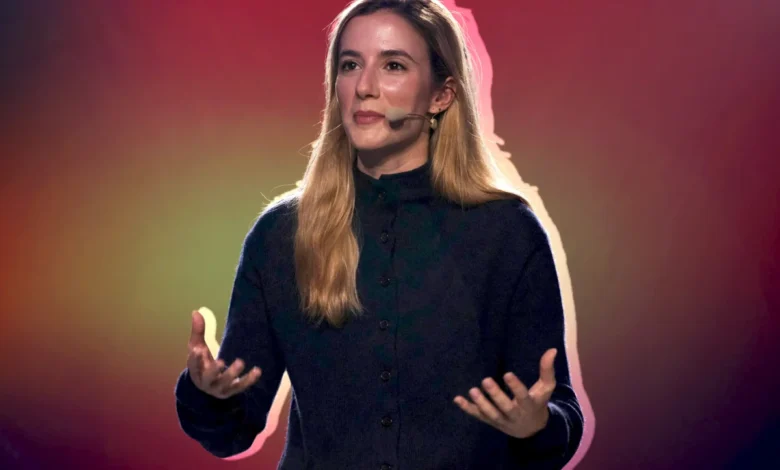
Long before she was managing billions of dollars in transaction volume or commanding global headlines, Luana Lopes Lara was spending her adolescent years in the unforgiving, hyper-competitive corridors of the Bolshoi Theater School in Brazil. While other teenagers navigated standard high school social dynamics, Lopes Lara balanced intensive morning technical schooling with grueling ballet training that stretched from early afternoon deep into the night. In this high-stakes artistic environment, the pressure was not merely emotional—it was fiercely physical. The competition was so cutthroat that students occasionally resorted to extreme tactics, such as hiding sharp glass fragments inside each other’s dance shoes, to gain an edge.
That early baptism by fire forged a resilient psychological armor. It taught the young Brazilian dancer discipline, endurance, and an unwavering tolerance for high-risk environments. Looking back on her formative years, Lopes Lara noted in a recent podcast appearance on Confession with Ali Partovi that ambition had always been her primary driver. Since she was very little, she wanted to do big things. That foundational grit ultimately propelled her out of the performing arts and into the stratosphere of global finance and technology, culminating in a historic milestone that redefined the modern billionaire landscape.
At the age of 30, Lopes Lara stands as the world’s youngest self-made female billionaire, boasting an estimated net worth of $2.6 billion according to Forbes data. Her ascent to this elite financial tier in late 2025 notably unseated prominent cultural and technological figures such as pop superstar Taylor Swift and tech entrepreneur Lucy Guo. Yet, Lopes Lara’s path to unprecedented wealth was not paved by pop culture hits or standard software-as-a-service enterprises. Instead, she achieved her fortune by co-founding Kalshi, a federally regulated financial exchange that has fundamentally altered how society interacts with future outcomes, economic data, and real-world event forecasting.
The Genesis of a Market Maker: From Celebrity Gossip to Financial Innovation
The conceptual framework for Kalshi did not emerge in a sterile corporate boardroom, but rather out of a casual conversation sparked by pop culture speculation. While serving a college internship at the prominent New York trading firm Five Rings, Lopes Lara found herself immersed in an office debate regarding rumors about the pregnancy of media personality and entrepreneur Kylie Jenner. Eager to back her convictions with financial stakes, Lopes Lara realized a glaring friction point in the modern economy: while millions of people held passionate, definitive views about upcoming cultural, political, and economic events, there existed virtually no standardized, legal financial mechanism to wager on those beliefs outside of unregulated offshore sportsbooks or informal peer-to-peer bets.
In that singular moment of consumer frustration, Lopes Lara identified a multi-billion-dollar market inefficiency. She recognized that human opinion regarding the future was an untapped asset class. People did not merely want to discuss possibilities; they wanted to price them.
She joined forces with Tarek Mansour, a fellow student whom she met during their undergraduate studies. Both were academic powerhouses at their institution, graduating in 2018. Lopes Lara pursued a rigorous course load majoring in computer science and mathematics, while Mansour specialized in electrical engineering, computer science, and mathematics. Their partnership was forged in the academic trenches—legend has it that Mansour, noting Lopes Lara’s habit of consistently securing a seat at the very front of their shared lecture halls, deliberately began sitting next to her to match her academic intensity. Together, this intellectual pairing laid the structural groundwork for what would become Kalshi.
Navigating Regulatory Frontiers and Rapid Valuation
Launched in 2018, Kalshi entered uncharted territory. The startup set out to establish the first federally regulated financial exchange in the United States dedicated exclusively to trading on the binary outcomes of future events. Unlike traditional stock markets where participants buy shares of companies, or commodities exchanges focused on physical goods, Kalshi pioneered a marketplace where users could buy and sell simple "yes" or "no" contracts tied to real-world occurrences. These contracts span a vast spectrum of human interest, encompassing macroeconomic indicators like inflation rates and Federal Reserve interest rate cuts, meteorological milestones such as hurricane landfalls and temperature anomalies, political election outcomes, and high-profile entertainment and sports events.
The journey to federal compliance was neither swift nor straightforward. Operating within the strict purview of the Commodity Futures Trading Commission (CFTC) required immense legal navigation, regulatory compliance infrastructure, and institutional patience. Many venture capitalists and financial analysts initially doubted whether a retail prediction market could successfully navigate American regulatory hurdles without running afoul of federal gambling statutes. However, Lopes Lara and Mansour maintained regulatory compliance as a core pillar of their business model, positioning Kalshi as a legitimate, transparent alternative to unregulated prediction platforms.
The strategy paid off exponentially. Bolstered by shifting public interest in data-driven forecasting, particularly during high-stakes election cycles and economic volatility, Kalshi’s transaction volumes surged. By mid-2026, the company achieved a reported private valuation of $22 billion, a testament to the staggering appetite for alternative financial assets. Subsequent reports in late 2026 indicated that the platform was finalizing new funding rounds valuing the company at a staggering $40 billion in anticipation of a potential initial public offering (IPO). This meteoric valuation expansion directly fueled Lopes Lara’s personal net worth, cementing her status as a historic financial trailblazer.
The Philosophical Core: Rejecting the Probability Trap
Despite presiding over a multi-billion-dollar enterprise predicated entirely on mathematical probabilities, Lopes Lara has frequently warned against the psychological pitfalls of over-analyzing data within a startup environment. During her podcast appearance, she highlighted what she termed a common trap that ensnares many brilliant founders and early-stage employees: becoming overly obsessed with mathematical probabilities to the detriment of action.
According to Lopes Lara, hyper-fixating on the mathematical likelihood of failure can paralyze a founding team. You can psych yourself out of doing anything, she noted, emphasizing that going for it, taking calculated risks, and maintaining an internal belief that obstacles can be surmounted are essential prerequisites for entrepreneurial breakthroughs. She cautioned that if a company’s workforce spends its time obsessing over the cold math of survival rather than building product value, it rapidly cultivates a toxic, reactive corporate culture. In her view, overreacting to every incremental piece of negative data suffocates innovation. Consequently, she advocates for intentionally fostering a workplace culture populated by resilient, highly optimistic builders who prioritize execution over endless probabilistic hand-wringing.
Broader Economic Implications and the Future of Prediction Markets
The rise of Kalshi under Lopes Lara’s leadership signifies a profound structural shift in how society extracts and values collective intelligence. For decades, economists have studied the predictive power of prediction markets—often referred to as information markets or prediction exchanges—frequently finding that aggregated market forecasts outperform traditional expert polling, corporate forecasting models, and journalistic projections. By allowing individuals to put financial skin in their analytical game, these platforms synthesize millions of disparate data points, insider insights, and analytical perspectives into a single, real-time probability metric.
The broader implications of this phenomenon extend far beyond corporate boardrooms and speculative trading. Federal policymakers, institutional investors, and academic researchers increasingly monitor prediction markets like Kalshi as leading economic indicators. When financial capital moves swiftly in response to upcoming geopolitical shifts, regulatory approvals, or climate events, it generates a transparent, consensus-driven forecast that traditional delayed reporting mechanisms cannot replicate.
Furthermore, Lopes Lara’s achievement as the youngest self-made female billionaire signals a generational changing of the guard within the global tech and financial sectors. Her success illustrates a growing appetite for platforms that democratize financial speculation, shifting power away from centralized institutional gatekeepers and distributing it directly to retail participants equipped with internet connections and analytical insights.
As Kalshi eyes future expansion, international market penetration, and an eventual public offering, Luana Lopes Lara remains a defining archetype of modern entrepreneurship. Her journey—from dodging physical sabotage in a Brazilian ballet academy to navigating complex federal regulatory frameworks in Washington and building a $40 billion financial exchange—serves as a masterclass in resilience, visionary execution, and the immense power of betting on the future.