Beyond the Bill of Materials: Why Welding Fumes Require a New Regulatory Paradigm in Manufacturing Compliance

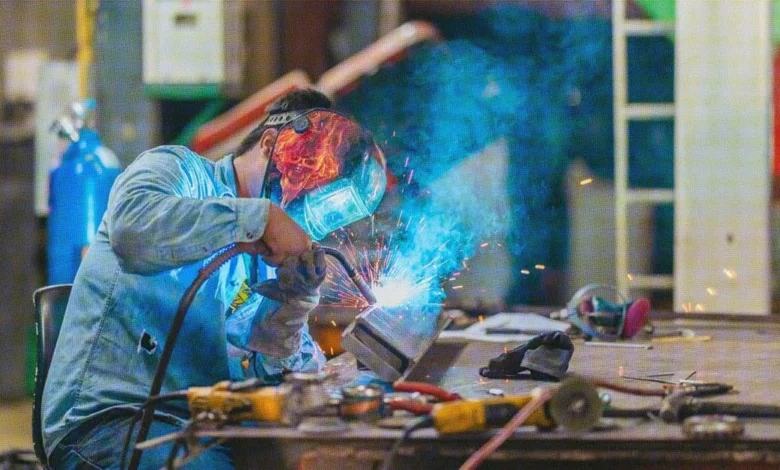
The recent decision by California’s Office of Environmental Health Hazard Assessment (OEHHA) to add welding fumes to the Proposition 65 list of chemicals known to cause cancer has sent a clear, albeit challenging, signal to the global manufacturing sector. For decades, product compliance professionals have relied on a relatively static model of governance: auditing the bill of materials (BOM), collecting supplier declarations, and verifying chemical compositions against regulatory lists. However, the designation of welding fumes as a carcinogen exposes a critical flaw in this approach. Unlike a lead-based solder or a restricted phthalate, welding fumes are not an inherent ingredient of a product; they are a process-generated hazard. This fundamental shift requires companies to evolve from being passive document checkers to active governance integrators.
The Shift in Regulatory Landscape
In July, OEHHA finalized the inclusion of welding fumes on the Proposition 65 list, a move that follows the rigorous scientific assessment published by the International Agency for Research on Cancer (IARC). The IARC monograph, which served as a foundational document for this classification, highlights that welding fumes are generated during the thermal joining of metals. Because the chemical composition of the fumes depends entirely on the base metals, filler materials, and coatings involved, the risk profile is dynamic rather than static.
This regulatory evolution is not confined to California. Globally, industrial hygiene standards are tightening at an unprecedented rate. In the European Union, the sixth revision of the Carcinogens, Mutagens and Reprotoxic Substances Directive (CMRD) reached a provisional agreement this past June. This directive explicitly brings welding fumes under its scope, mandating that the European Commission investigate the necessity of establishing stricter exposure limits across member states. Similarly, Australia has moved aggressively, reducing its workplace exposure standard for welding fumes by 80% in 2024, with further adjustments to aluminum welding fume standards implemented in 2025. These international movements confirm that the regulatory burden is shifting toward a granular, process-oriented understanding of workplace safety and product stewardship.
The Anatomy of the Compliance Blind Spot
The traditional compliance model, which centers on the bill of materials, creates a significant blind spot regarding process-generated risks. A product’s design specifications might remain identical for years, yet the actual risk of exposure during its lifecycle can fluctuate wildly. For instance, a manufacturer might relocate a fabrication process to a facility with different ventilation capabilities, or a supplier might pivot to a new welding technique without updating the material declaration provided to the primary manufacturer.
Under the current, siloed organizational structure, this information rarely reaches the compliance team. Engineering departments focus on product performance and cost-efficiency; Environmental, Health, and Safety (EHS) teams track worker exposure levels; and procurement teams manage supply chain logistics. Because these data streams remain disconnected, compliance teams are often the last to know when a manufacturing change creates a new regulatory liability.
The complexity is compounded by the lack of a "no significant risk level" (NSRL) for welding fumes under Proposition 65. Without a clear safe-harbor number to benchmark against, organizations cannot simply rely on simple calculations. Instead, they must conduct rigorous, evidence-based exposure assessments that account for operational reality. In the absence of such assessments, companies leave themselves vulnerable to the "private enforcement" mechanism unique to Proposition 65, where third-party plaintiffs can initiate lawsuits based on a lack of proper warning labels.
Chronology of the Regulatory Pivot
- 2018: The International Agency for Research on Cancer (IARC) publishes a comprehensive monograph identifying welding fumes as carcinogenic, providing the scientific basis for international regulatory bodies to act.
- 2024: Australia executes an 80% reduction in its workplace exposure standards for general welding fumes, signaling a global trend toward lower tolerance for airborne contaminants.
- 2025: Australia further updates standards for aluminum welding fumes, moving toward a broader workplace exposure limit (WEL) framework.
- July 2025: California’s OEHHA officially adds welding fumes to the Proposition 65 list, triggering new requirements for businesses operating within or selling to the California market.
- June 2025: The European Union reaches a political agreement on the sixth revision of the CMRD, integrating welding fumes into the directive’s regulatory oversight.
- 2027 (Anticipated): The deadline for mandatory Proposition 65 warning compliance for products and facilities associated with welding fume exposure.
Engineering a Cross-Functional Governance Channel
To mitigate these risks, compliance leaders must dismantle the walls between functional departments. The objective is not to centralize all engineering decisions under the compliance department, but rather to create a "governance integrator"—a durable channel that ensures information flows from the factory floor to the regulatory compliance office.
This requires an architecture where process changes are treated as triggers for regulatory review. When engineering teams modify a welding procedure, or when procurement shifts a fabrication contract to a new third-tier supplier, that change must automatically trigger an impact assessment. If the process generates fumes, the EHS team’s existing exposure-monitoring data should serve as a primary input for the compliance team’s determination of whether a warning is required.
Furthermore, field-service activities present a significant, often overlooked, risk. Many products are welded during installation, maintenance, or repair long after they have left the factory floor. If a product’s service documentation does not account for these risks, the manufacturer remains liable for the exposure created by its own service technicians or third-party contractors. Incorporating "service compliance" into the broader product stewardship lifecycle is an essential, yet frequently missing, component of modern manufacturing governance.
Economic and Operational Implications
The financial implications of failing to adapt are substantial. Beyond the potential for litigation and administrative fines, the reputational risk associated with chemical exposure is growing. Investors and institutional stakeholders are increasingly incorporating "S" (social) and "G" (governance) metrics into their evaluation of manufacturing firms. A company that is caught off guard by a process-generated hazard is often viewed as having poor internal controls.
Data from existing industrial hygiene programs suggest that the cost of proactive monitoring and ventilation upgrades is significantly lower than the costs associated with remediation, litigation, and mandatory product recalls. For instance, high-efficiency particulate air (HEPA) filtration systems and source-capture ventilation technology have become standard requirements in facilities aiming to meet these new international benchmarks. Integrating these systems is a technical challenge, but documenting their effectiveness is the compliance challenge.
The Path Forward: Beyond the Checklist
The era of relying on static checklists to ensure regulatory compliance is drawing to a close. For process-generated hazards like welding fumes, the bill of materials is merely the starting point, not the destination. The most resilient organizations will be those that view compliance as a living, breathing component of their operational architecture.
This transformation requires a cultural shift where compliance is integrated into the earliest stages of product and process development. Rather than viewing the 2027 Proposition 65 deadline as a finish line, forward-thinking compliance teams should see it as a mandate to build better communication channels between engineering, supply chain, and EHS. By creating a unified governance framework that bridges the gap between the design office and the assembly line, companies can ensure that they are not merely "running on fumes," but are instead building a robust, defensible, and safe manufacturing ecosystem that can withstand the scrutiny of both regulators and the evolving global market.
Ultimately, the lesson is clear: if a company’s compliance program cannot account for how its products are actually made and serviced, it is not actually managing risk—it is merely managing paperwork. In a world of tightening chemical regulations, the ability to trace the physical process of manufacturing will be the defining characteristic of the successful enterprise.
Related posts: