End of an Era: Warren Buffett Steps Down as Chairman of Berkshire Hathaway at Age 96

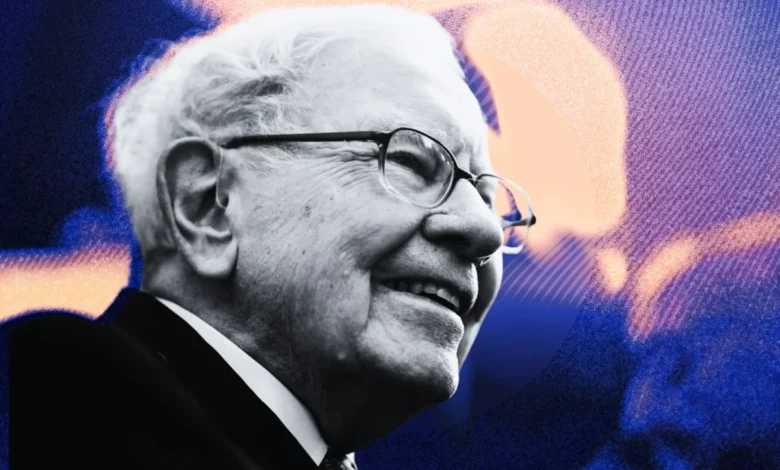
The landscape of global finance is shifting away from its most iconic figure as legendary investor Warren Buffett officially steps down as chairman of the board of Berkshire Hathaway. Announcing his departure in a shareholder letter released on a Friday following his 96th birthday, the move marks the final chapter of a monumental leadership tenure that spanned more than six decades. Buffett, who famously joked that watching his one-year-old great-grandchild move faster than him cemented his decision to slow down, will transition into the role of chairman emeritus while remaining on the board of directors.
This historic announcement follows a measured and deliberate succession plan that has unfolded over several years. With Greg Abel already firmly established as the chief executive officer and Howard Buffett stepping up to assume the role of board chairman, Berkshire Hathaway is officially entering a new era. For a conglomerate that grew from a struggling New England textile mill into a multi-trillion-dollar economic titan under Buffett’s singular vision, this leadership transition is the most significant test of the company’s institutional resilience in its modern history.
The Anatomy of a Transition: Passing the Torch to Abel and Howard Buffett
Buffett’s decision to relinquish the chairmanship effective immediately does not come as a complete surprise to Wall Street, though the timing underscores the reality of aging. In his characteristic self-effacing style, the billionaire investor wrote to his shareholders, "Father Time always wins." Yet, he expressed profound gratitude for having lived to see Berkshire reach a pinnacle of financial health and operational stability, noting that the enterprise is positioned securely for the future.
The operational leadership of the trillion-dollar conglomerate now rests entirely in the hands of Greg Abel, who formally assumed the CEO role earlier this year. Abel, long heralded as the operational mastermind behind Berkshire’s vast non-insurance businesses—ranging from energy and utilities to manufacturing and retail—has already begun putting his stamp on the corporate culture. Buffett praised Abel in his shareholder letter, noting that initial expectations were "sky high" and that his successor had consistently exceeded them. Abel signaled this changing of the guard earlier in the year when he authored the annual shareholder letter—breaking a decades-old tradition held exclusively by Buffett—and presided over the annual shareholder meeting in Omaha.
Meanwhile, oversight of Berkshire’s distinct corporate culture will transition to Buffett’s eldest son, Howard Buffett. At 71 years old, Howard brings a deep familiarity with the company’s foundational ethos, having served as a Berkshire director for 33 years. In his letter, the senior Buffett drew a distinction between operational execution and cultural preservation, writing, "Greg runs the company; Howard will guard its culture and values—both worth more than anything on our balance sheet." Howard Buffett, who splits his time managing agricultural operations across Illinois and Nebraska, enters the chairmanship with an apprenticeship that outlasts even his father’s tenure prior to taking the helm in 1965.
A Chronology of Berkshire’s Evolution Under Buffett
To understand the magnitude of this leadership shift, one must look back at the improbable trajectory of Berkshire Hathaway. When Warren Buffett first acquired a controlling interest in the failing textile manufacturer in 1965, the American industrial landscape looked fundamentally different. Over the next 61 years, Buffett systematically repurposed the company, transforming it from a declining regional business into an economic behemoth that mirrors the broader health of the United States economy.
The timeline of Buffett’s stewardship is a masterclass in long-term value investing:
- 1965: Warren Buffett takes control of Berkshire Hathaway, pivoting its capital away from the struggling textile operations and toward undervalued equities and insurance float.
- 1967: Berkshire enters the insurance industry by acquiring National Indemnity Company, establishing the bedrock of capital that would fund decades of future acquisitions.
- 1970s–1980s: The firm acquires iconic consumer brands and industrial players, including GEICO, See’s Candies, and Nebraska Furniture Mart, proving the efficacy of Buffett’s buy-and-hold philosophy.
- 1990s–2000s: Berkshire expands into massive capital-intensive sectors, acquiring Burlington Northern Santa Fe (BNSF) railway and Berkshire Hathaway Energy, anchoring the conglomerate deeply into America’s infrastructure.
- May 2025: During the annual shareholder meeting in Omaha, Buffett formally outlines the definitive succession timeline, naming Greg Abel as the incoming CEO for January 1, 2026.
- July 2025: Buffett updates his philanthropic roadmap, outlining plans to distribute his remaining personal stock holdings—valued at approximately $140 billion—to four charitable foundations by the end of 2034.
- September 2026: Celebrating his 96th birthday, Buffett officially steps down as chairman of the board, assuming the title of chairman emeritus and completing his retreat from executive governance.
Financial Footprint and the Scale of the Conglomerate
As Buffett steps away from the boardroom’s center seat, Berkshire Hathaway remains an economic juggernaut. The company’s sheer scale is underscored by its financial performance leading up to this transition. In its most recent full-year financial reporting, Berkshire generated $44.5 billion in operating earnings, alongside a formidable $46 billion in operating cash flow. While operating earnings dipped slightly from the $47.4 billion reported the previous fiscal year, the conglomerate’s balance sheet remains one of the strongest in corporate history, bolstered by a massive cash reserve that gives management immense flexibility to deploy capital at a moment’s notice.
The conglomerate model that Buffett pioneered relies on decentralized management, where subsidiary CEOs operate with near-total autonomy while remitting excess capital back to Omaha for reallocation. This structure has allowed Berkshire to weather economic downturns, inflationary cycles, and high interest rate environments with remarkable consistency. Abel inherits a portfolio that touches almost every facet of modern commerce, from freight rail and residential real estate brokerages to chemical manufacturing, industrial supply, and massive stakes in blue-chip public equities like Apple and American Express.
Philanthropic Legacy and Wealth Distribution
Beyond his corporate achievements, Buffett’s life work is increasingly defined by his commitment to philanthropy. True to his long-standing pledge to give away more than 99% of his accumulated wealth, Buffett has systematically divested his Berkshire stock through multi-billion-dollar annual donations to the Susan Thompson Buffett Foundation, as well as foundations run by his children: the Sherwood Foundation, the Howard G. Buffett Foundation, and the NoVo Foundation.
With his announcement in July confirming his intention to allocate his entire remaining stake—valued at roughly $140 billion at the time—by December 31, 2034, Buffett is orchestrating the largest philanthropic transfer of wealth in human history. His departure from the chairman role signals that his focus is now entirely fixed on completing this monumental charitable mission while ensuring that his corporate legacy endures.
Implications for Shareholders and the Broader Market
Wall Street analysts and institutional investors have spent years gaming out the post-Buffett era, frequently referring to the "Buffett premium"—the market valuation cushion traditionally attributed to his personal oversight, investment acumen, and market credibility. However, because the succession plan has been communicated transparently and executed over an extended timeline, the market reaction to his departure from the board has been largely muted and orderly.
The primary challenge for Greg Abel and Howard Buffett will not be managing day-to-day operations—areas where Abel has already proven exceptionally capable—but rather capital allocation in a market saturated with private equity capital and soaring equity valuations. Finding "elephant-sized" acquisitions that can meaningfully move the needle for a trillion-dollar company remains a distinct challenge that even Buffett found difficult in his final decade at the helm.
Nevertheless, Buffett leaves behind an institutional culture deeply rooted in risk management, long-term perspective, and uncompromised ethical standards. As he transitions to chairman emeritus, watching from the shareholder ranks alongside millions of everyday investors who followed his financial gospel, the Oracle of Omaha leaves behind a corporate structure designed to outlive its creator. Father Time may have claimed the final step in Buffett’s corporate retirement, but the economic architecture he built over 61 years stands more durable than ever.